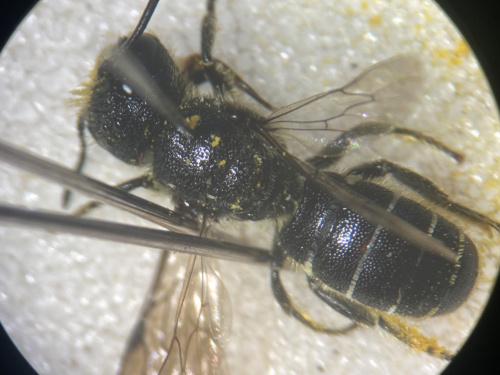
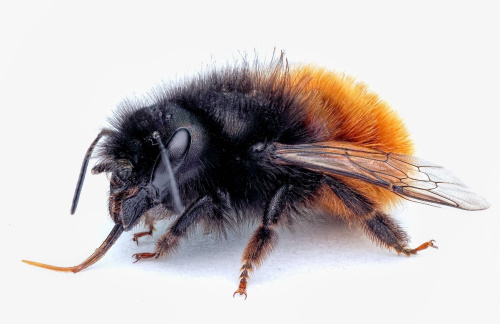
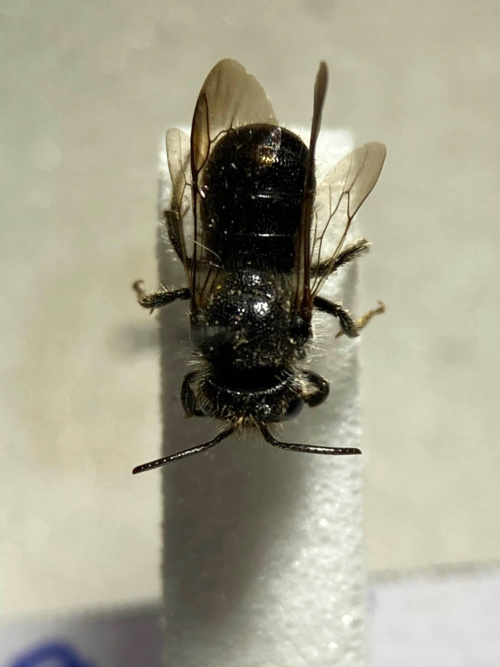
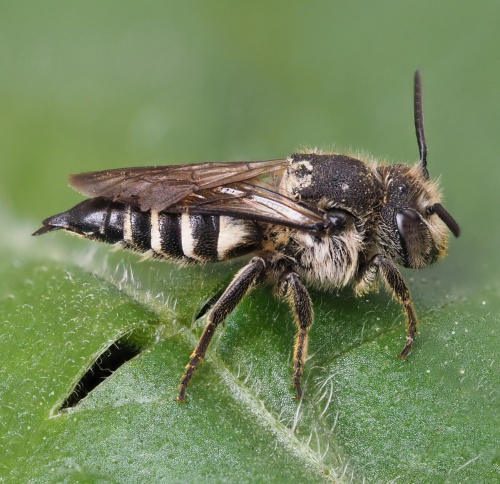
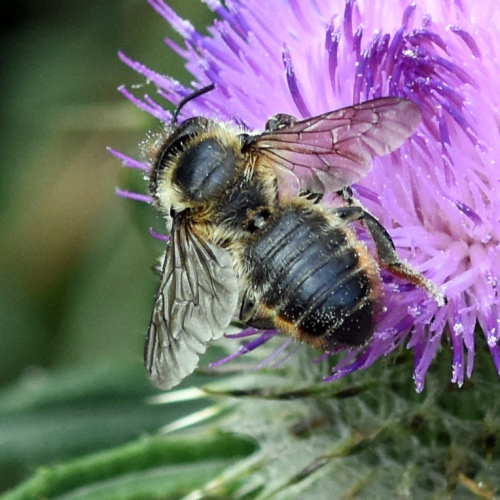
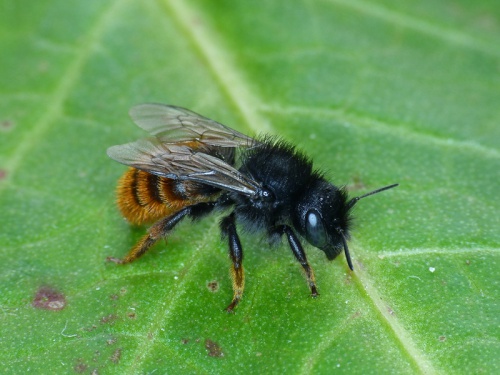
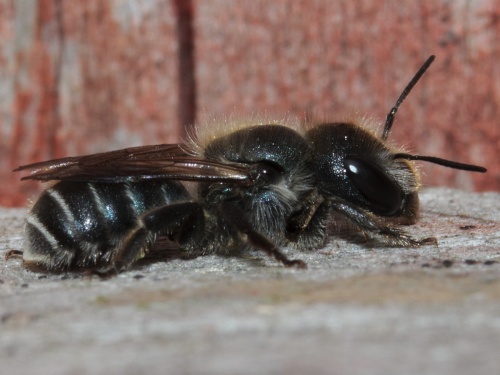
All images on this website have been taken in Leicestershire and Rutland by NatureSpot members. We welcome new contributions - just register and use the Submit Records form to post your photos. Click on any image below to visit the species page. The RED / AMBER / GREEN dots indicate how easy it is to identify the species - see our Identification Difficulty page for more information. A coloured rating followed by an exclamation mark denotes that different ID difficulties apply to either males and females or to the larvae - see the species page for more detail.
Bees, Wasps, Ants
Solitary bees
Megachilidae - Leaf-cutter, Mason and Sharp-tail Bees, etc.
A large and diverse family of bees, including Leaf-cutter bees, Mason bees, Resin bees, Dark bees, Scissor bees, Wool-carder bees and Sharp-tail bees. All have two submarginal cells in the forewing.
Stelis (Dark bees) and Coelioxys (Sharp-tail bees) are cleptoparasites, laying their eggs inside a host's nest cells. Their larva consume the food stored there by the host for its larvae.
Other species make nests in cavities in wood, walls and plant material such as hollow stems and galls - even snail shells. The nest cells of Scissor bees (Chelostoma), Leaf cutters (Megachile) and Mason bees (Osmia and Hoplitis) are made out of mud mixed with saliva and other materials. The eggs are laid and food is stored for the larva, and then the cell is sealed up. The females of these species have a pollen brush beneath the abdomen.
The single UK species of Wood Carder bees (Anthidium manicatum) nests in cavities, but makes the cells out plant fibres gathered form furry-leaved plants like Mullein (Verbascum), Lamb's-ears (Stachys lanata) and Yarrow (Achillea).