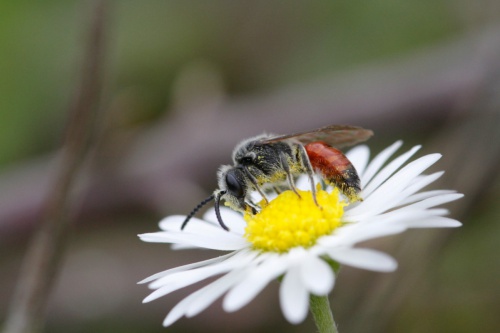
Halictidae - Furrow bees and Blood bees
All images on this website have been taken in Leicestershire and Rutland by NatureSpot members. We welcome new contributions - just register and use the Submit Records form to post your photos. Click on any image below to visit the species page. The RED / AMBER / GREEN dots indicate how easy it is to identify the species - see our Identification Difficulty page for more information. A coloured rating followed by an exclamation mark denotes that different ID difficulties apply to either males and females or to the larvae - see the species page for more detail.
Bees, Wasps, Ants
Solitary bees
Halictidae - Furrow bees and Blood bees
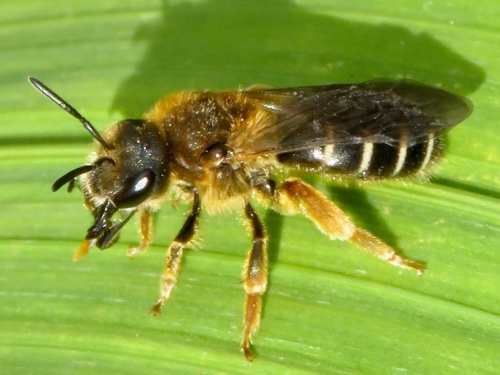
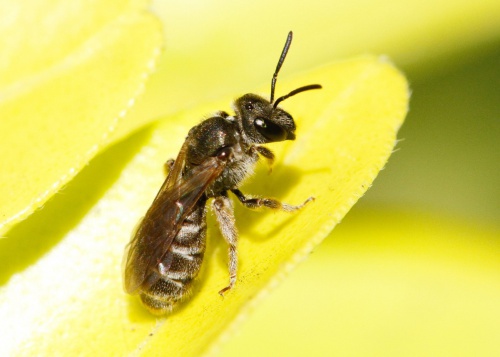
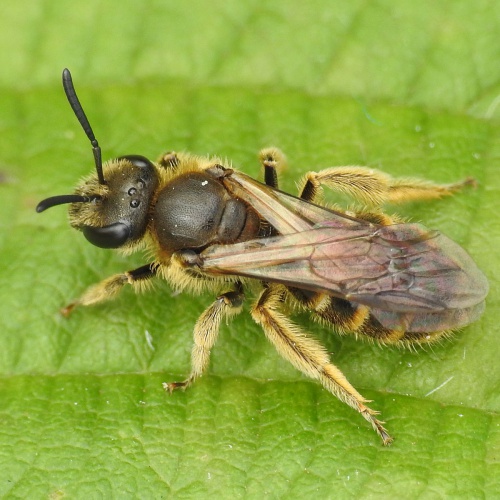
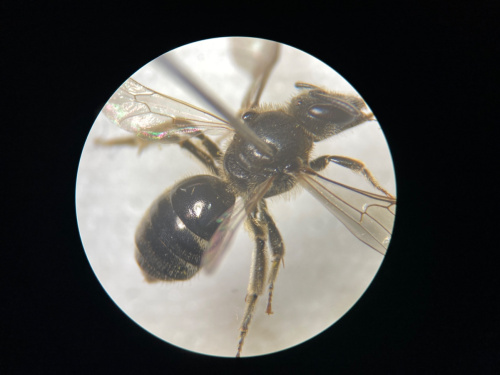
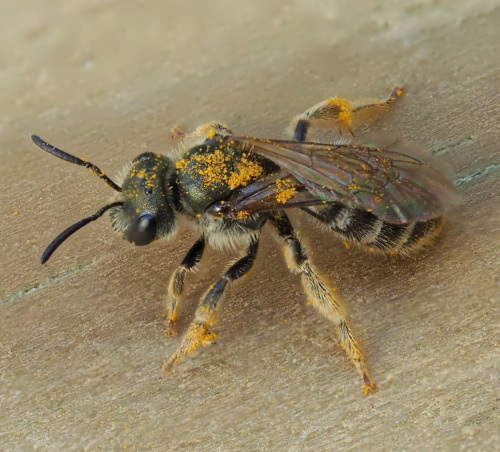
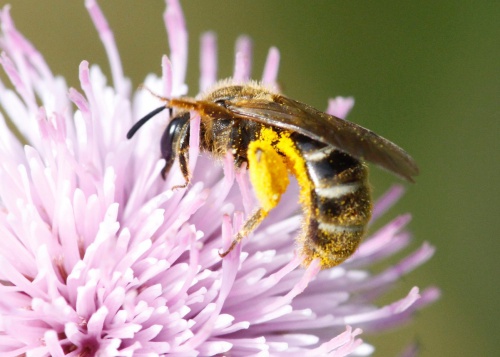
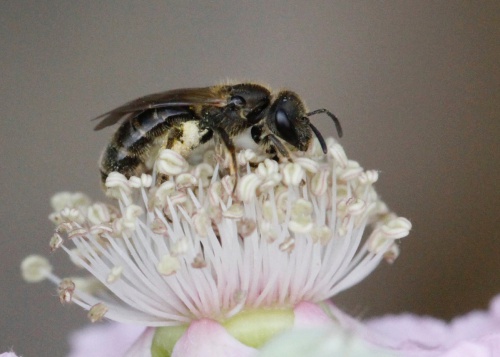
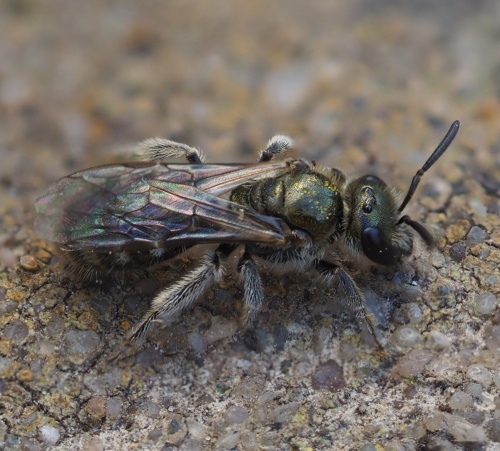
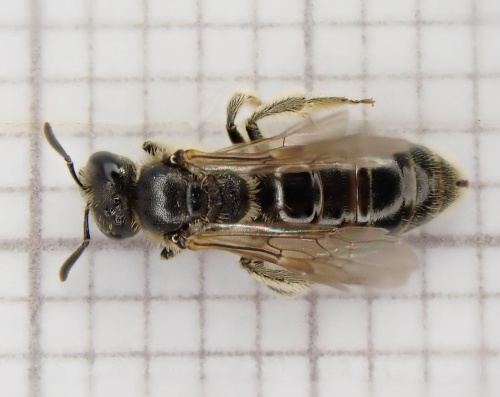
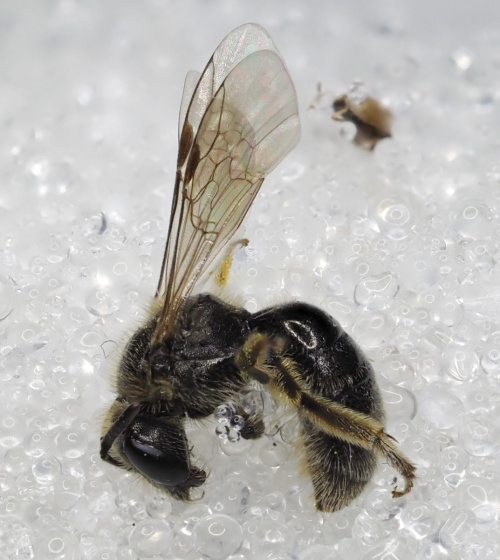
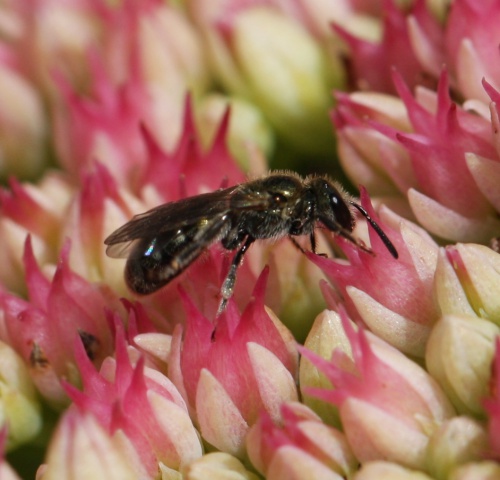
A large family that includes the Furrow-bees - Halictus and Lasioglossum. The females of both these genus have a median 'furrow' or rima on the tergite at the end of the abdomen. Both have patches of pale hairs on the abdominal tergites. In Lasioglossum species, the hairs are along the base of the tergite, hence the common name Base-banded Furrow bees. In Halictus species the hairs are on the hind margin, plus sometimes the base of the tergites - hence the common name of End-banded Furrow bees.
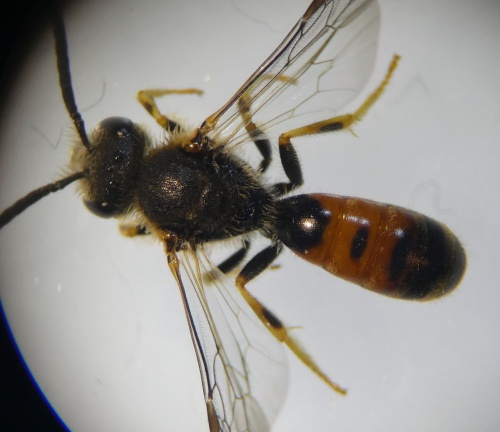
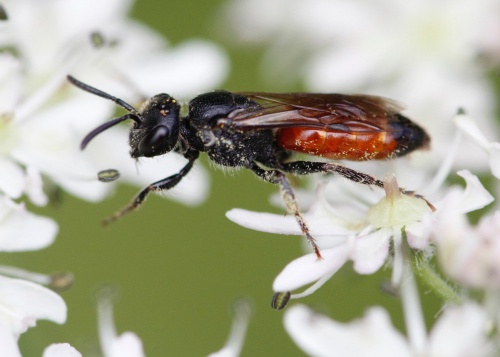
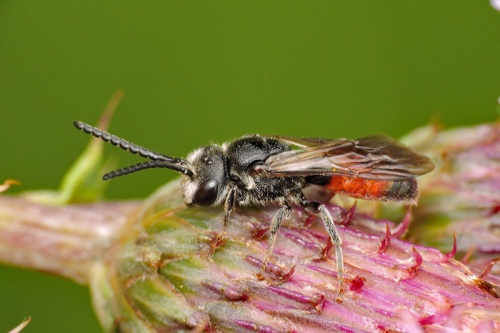
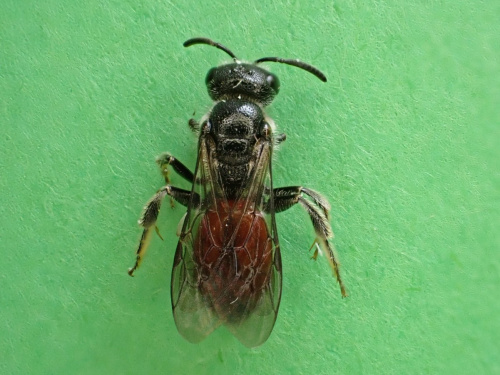
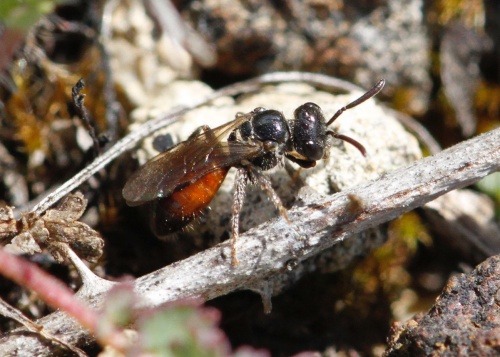
The Blood bees (Sphecodes) usually have red and black abdomens. They are cleptoparasites of ground-nesting solitary bees, including Halictus, Lasioglossum and Andrena. The female enters a host's nest and breaks into the cell, killing the egg or grub. She lays one of her own eggs and reseals the cell. When the egg hatches, the grub consumes the food intended for the host species' larva. Identification help is in Steven Falk's note from the Sphecodes Identification Workshop held by BWARS (2019).