

Agrimony - Agrimonia eupatoria
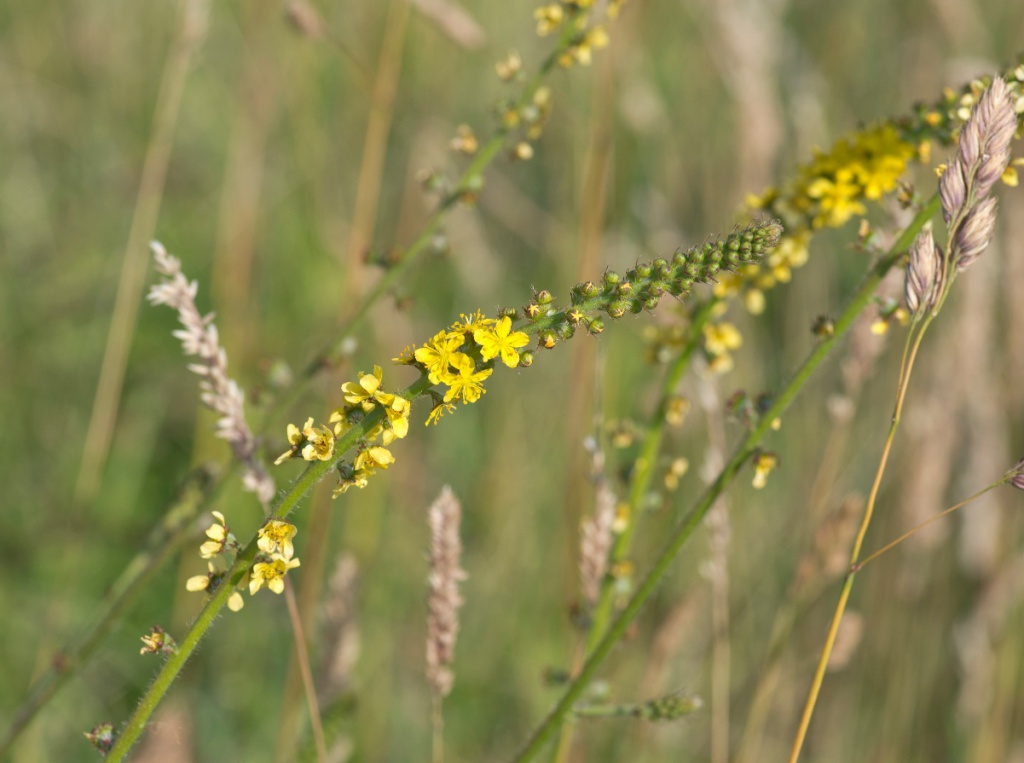
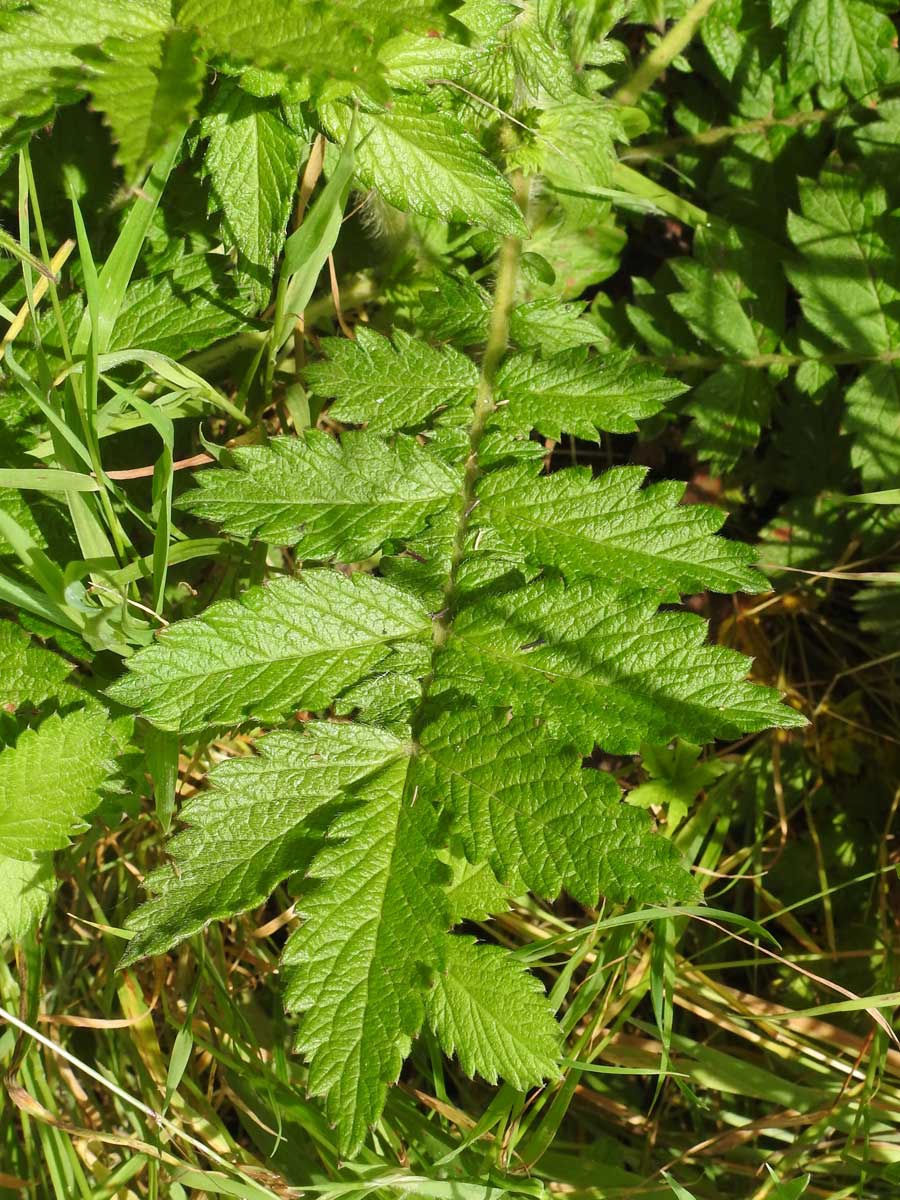
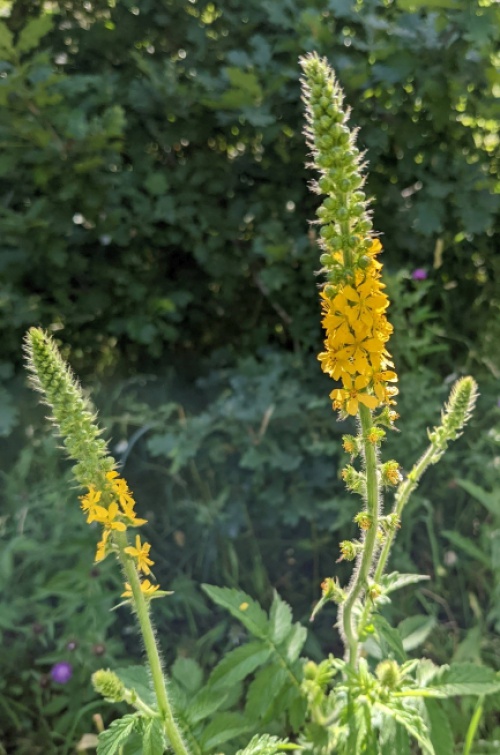
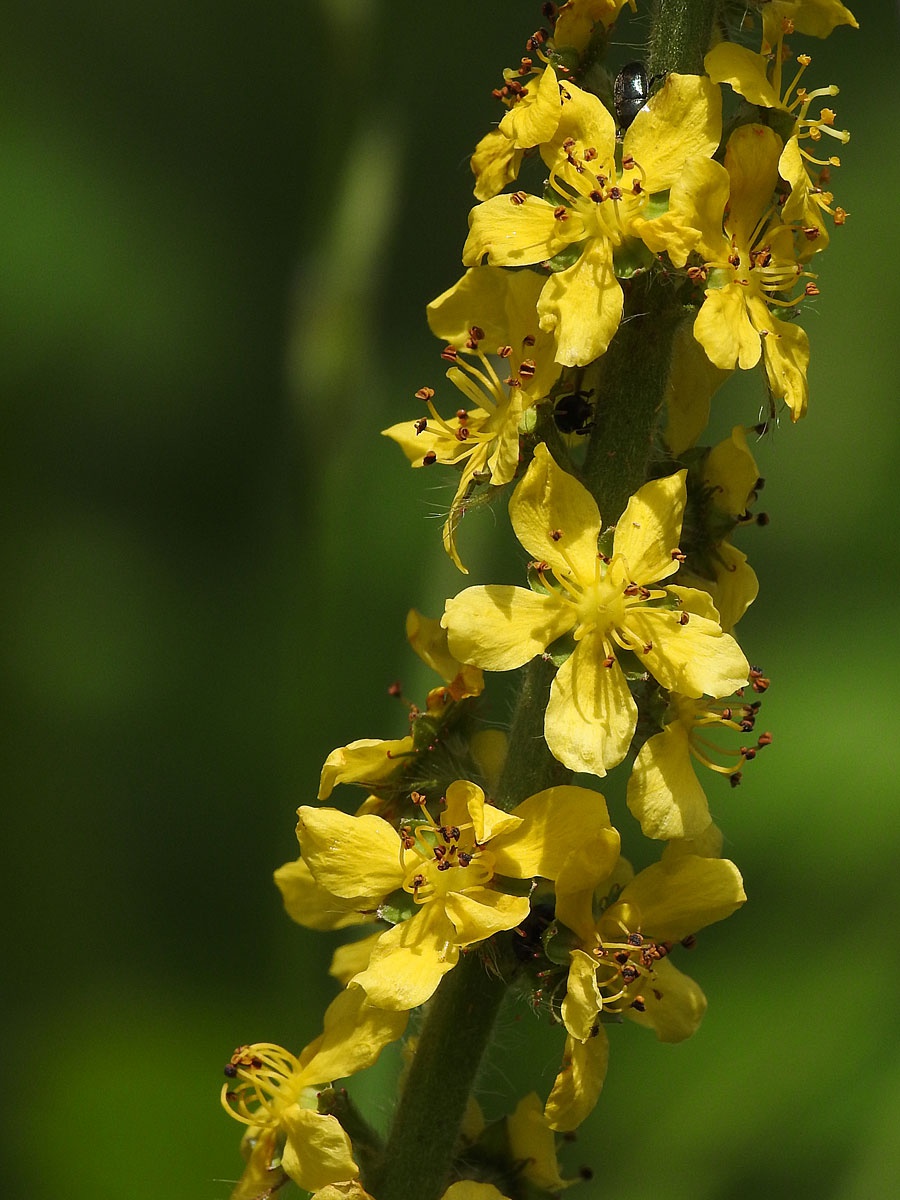
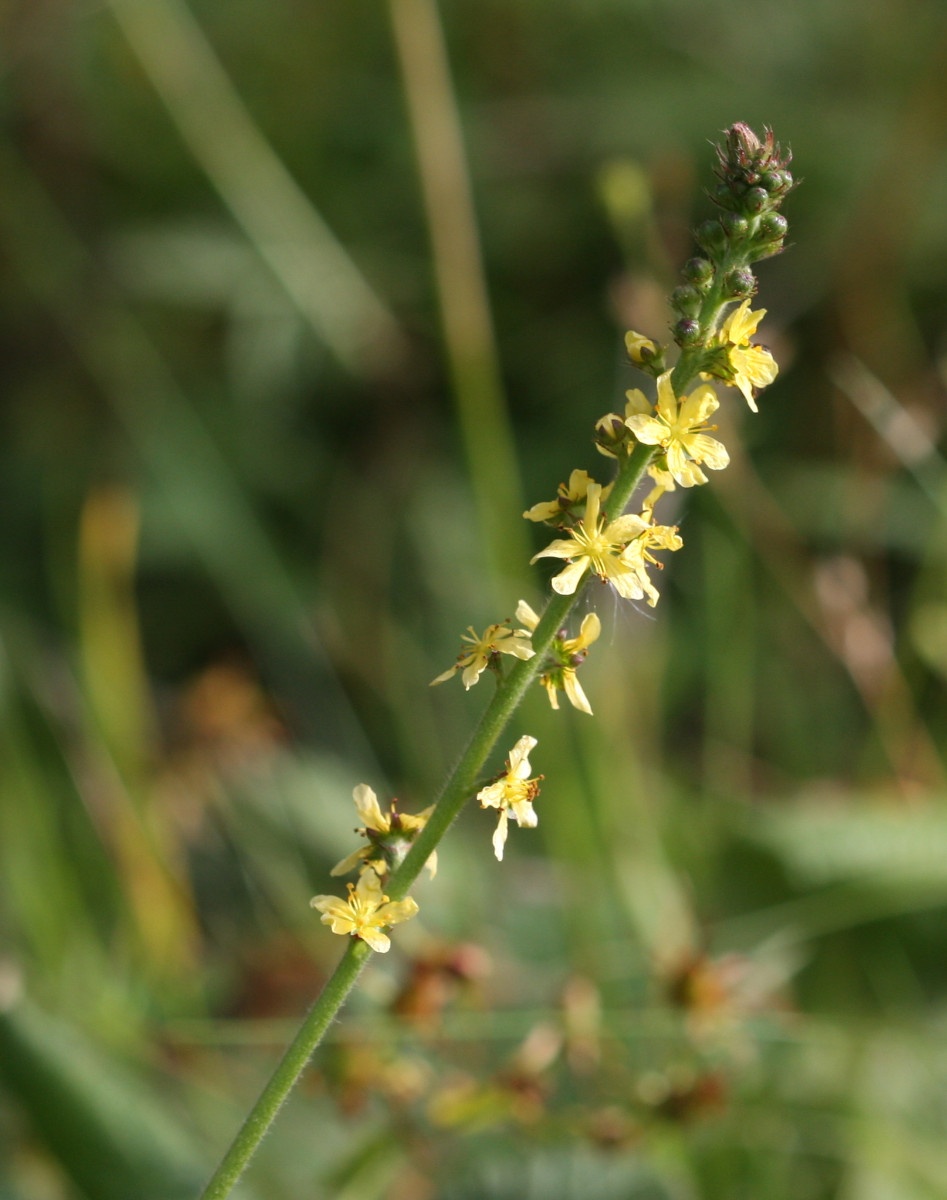
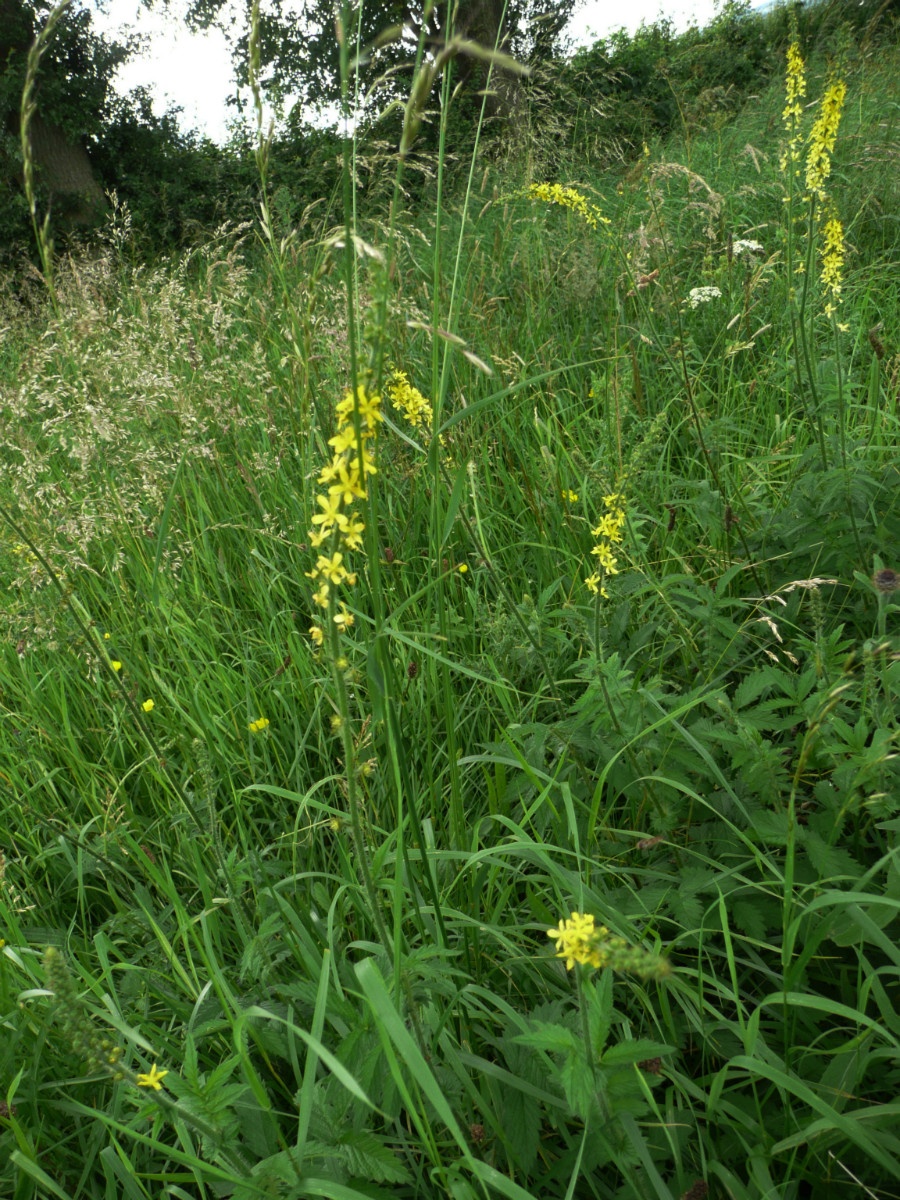
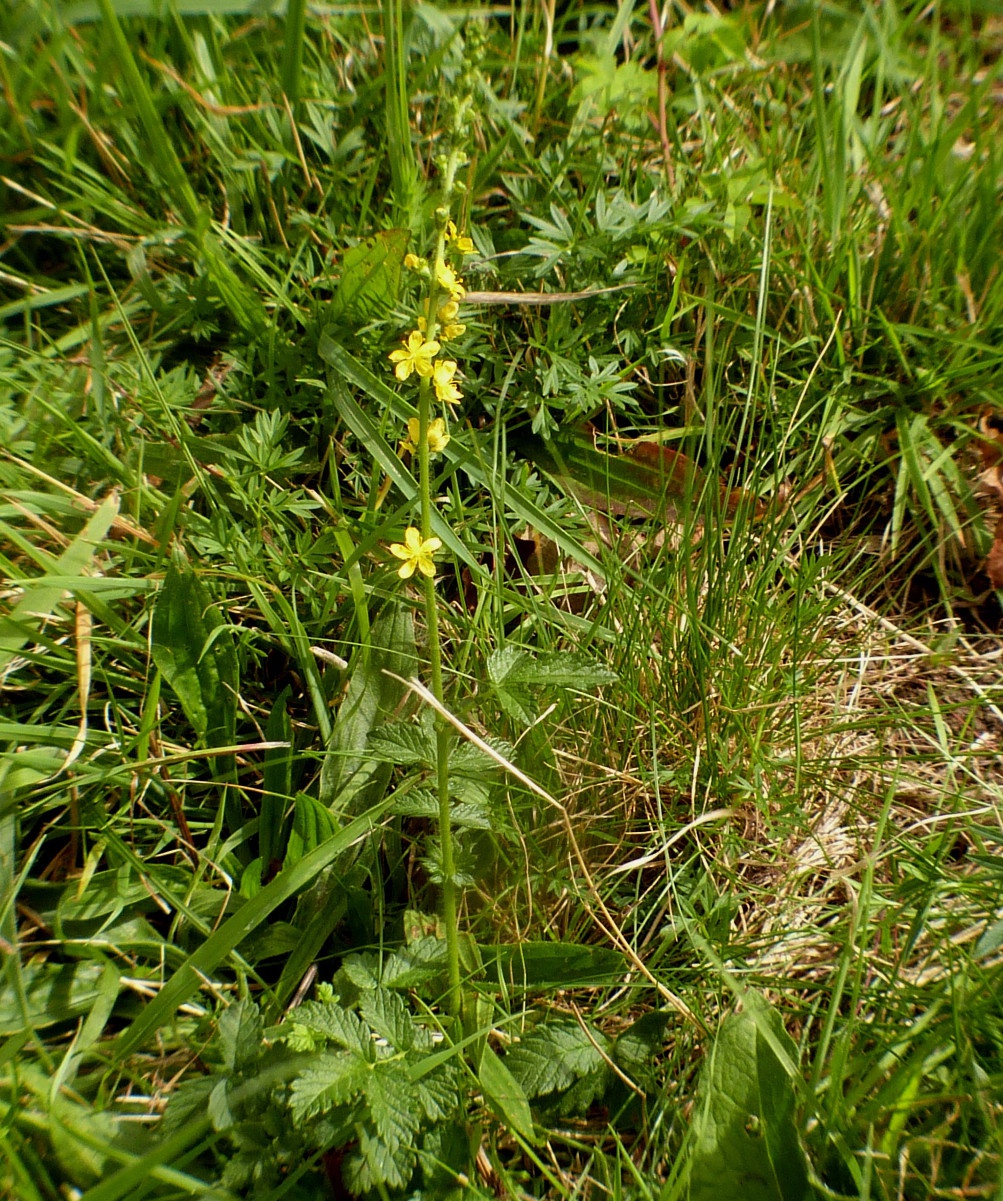
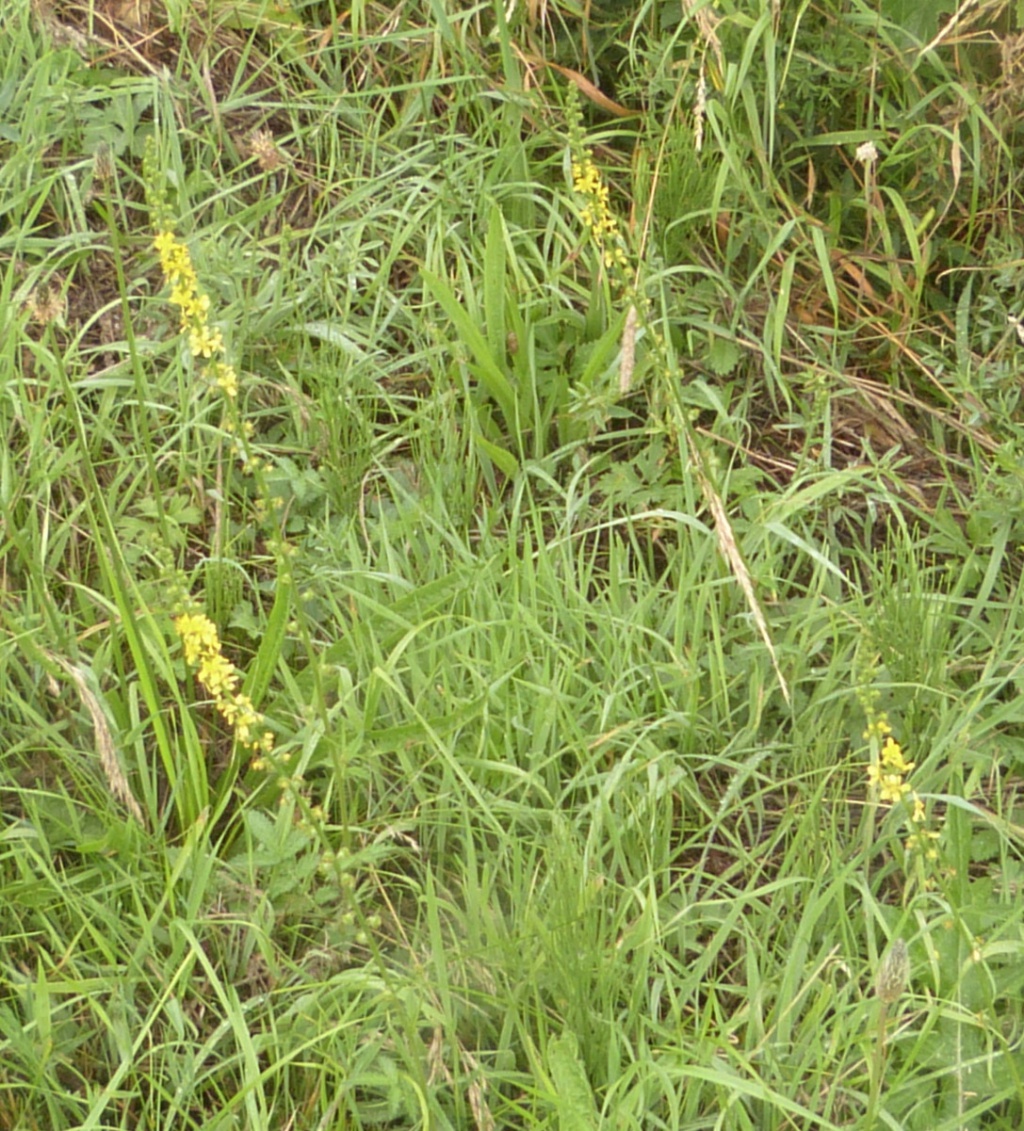
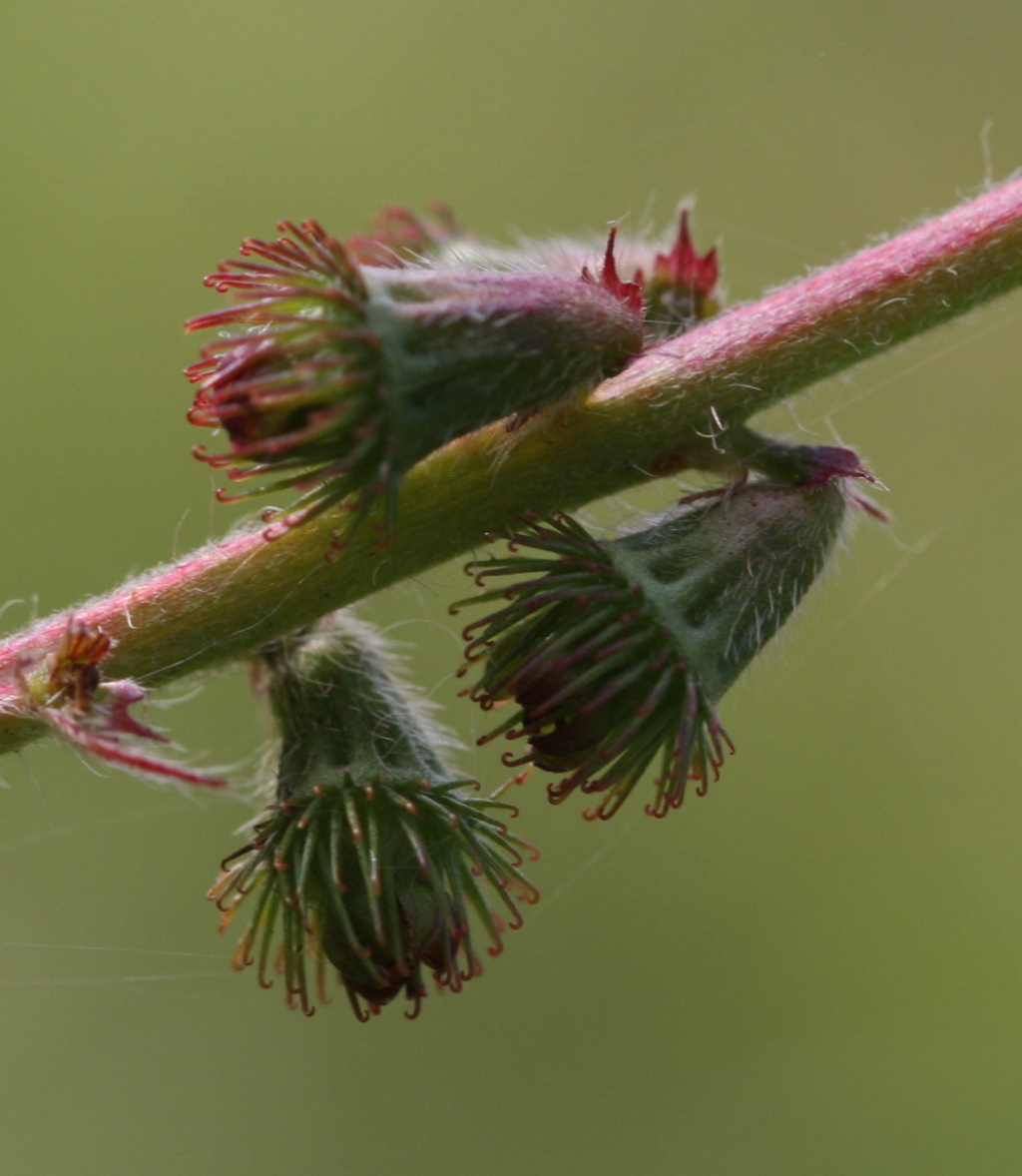
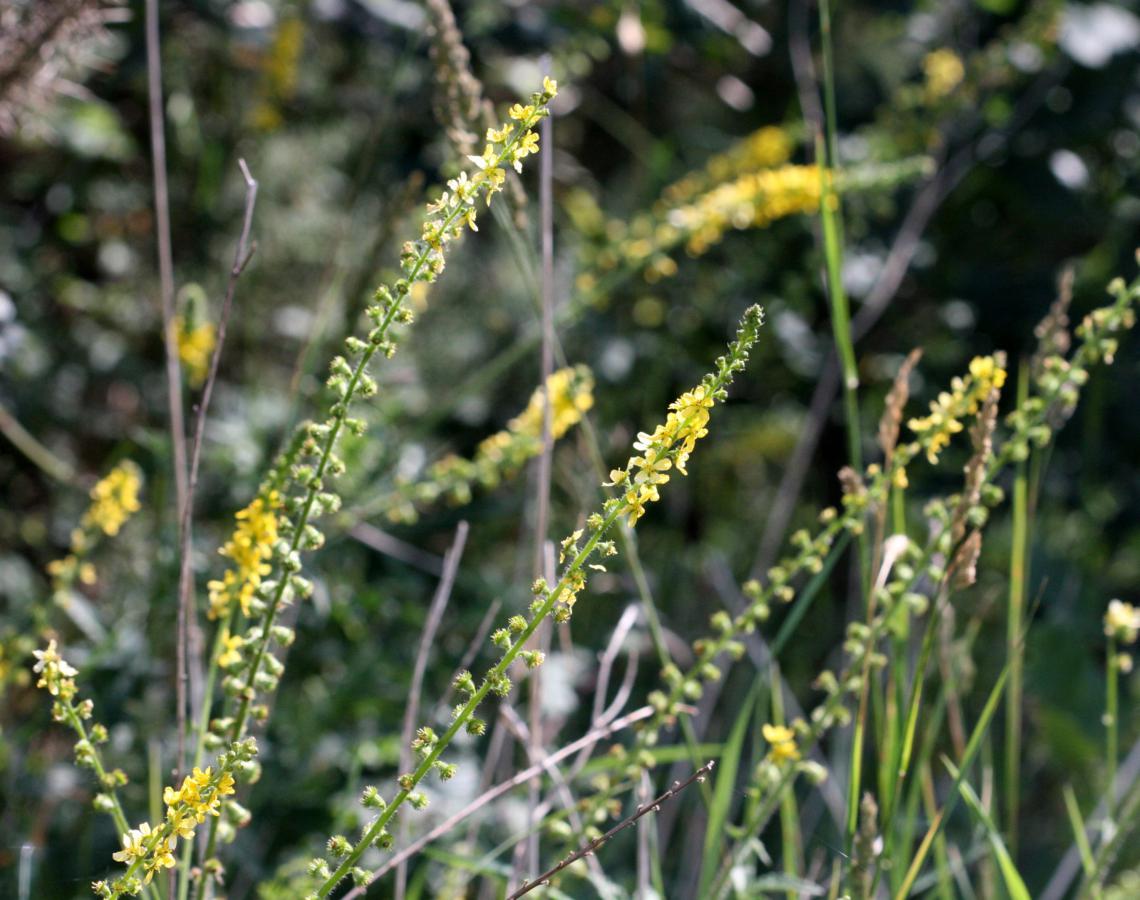
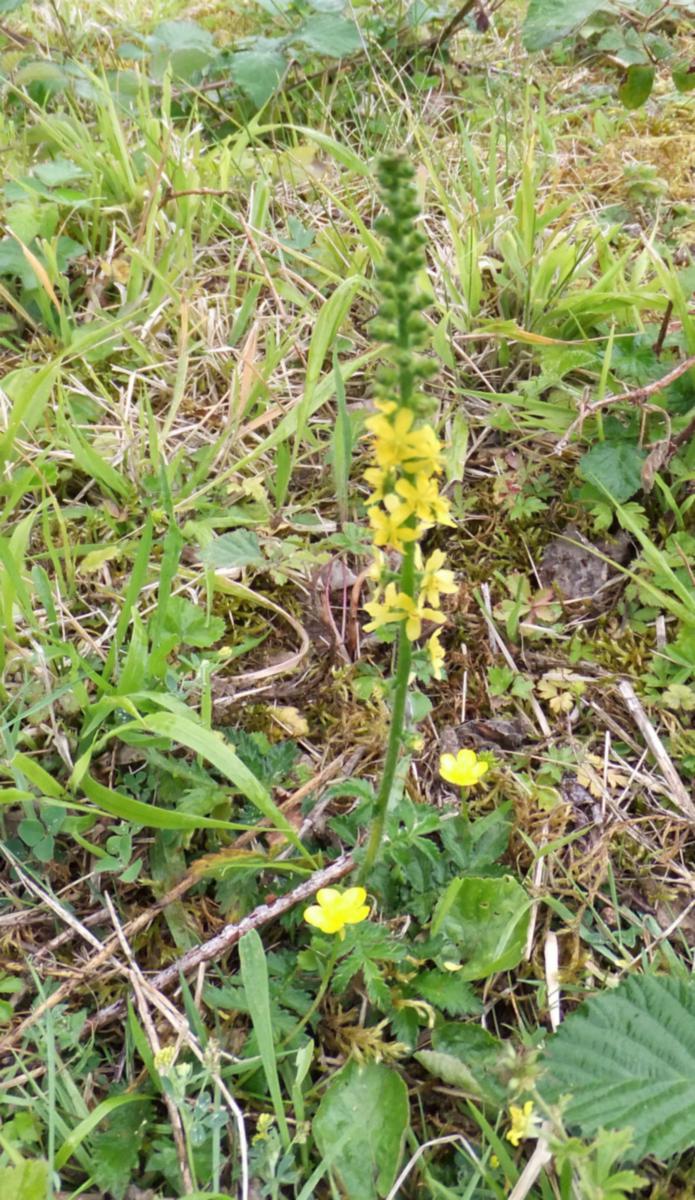
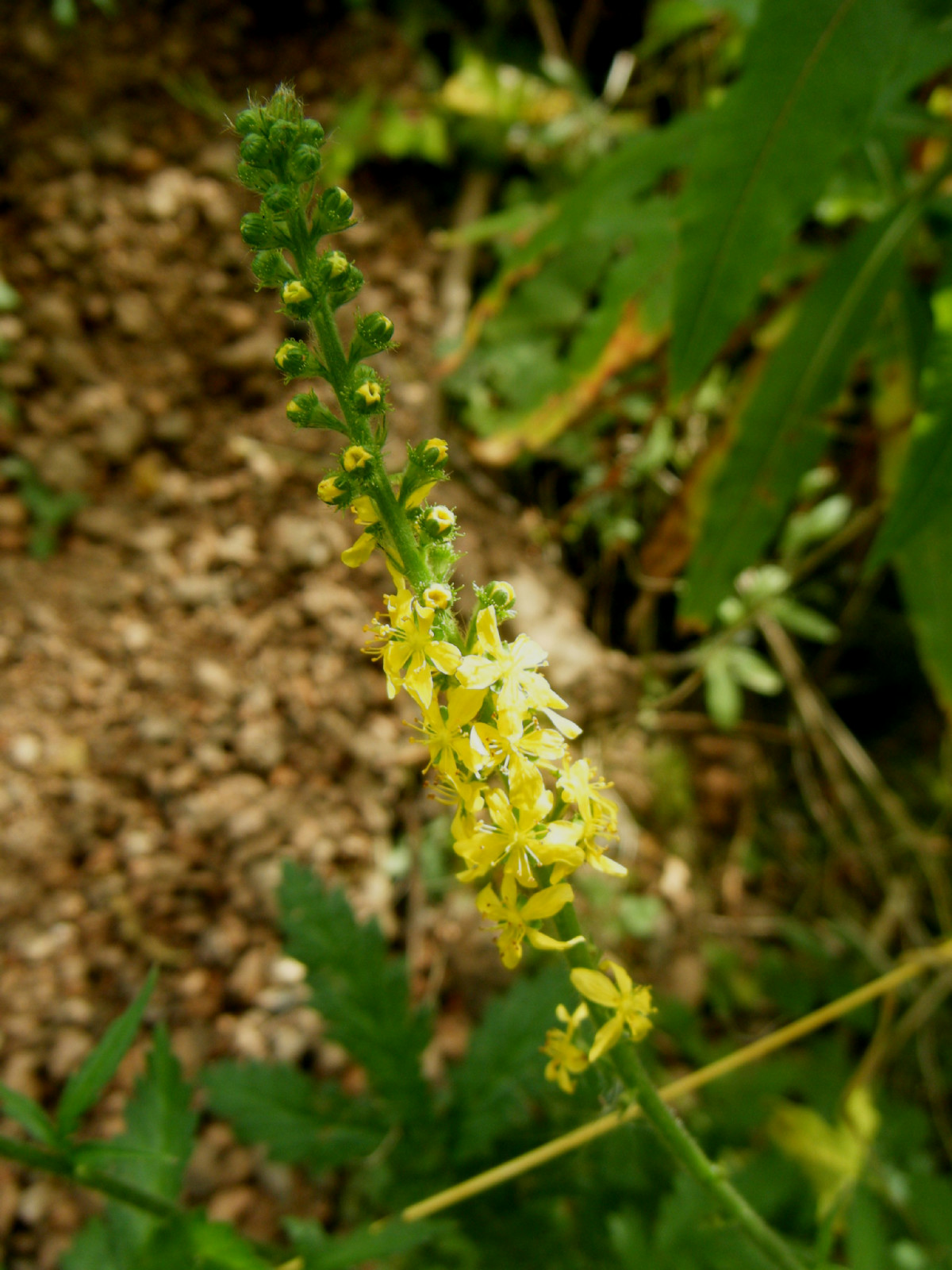
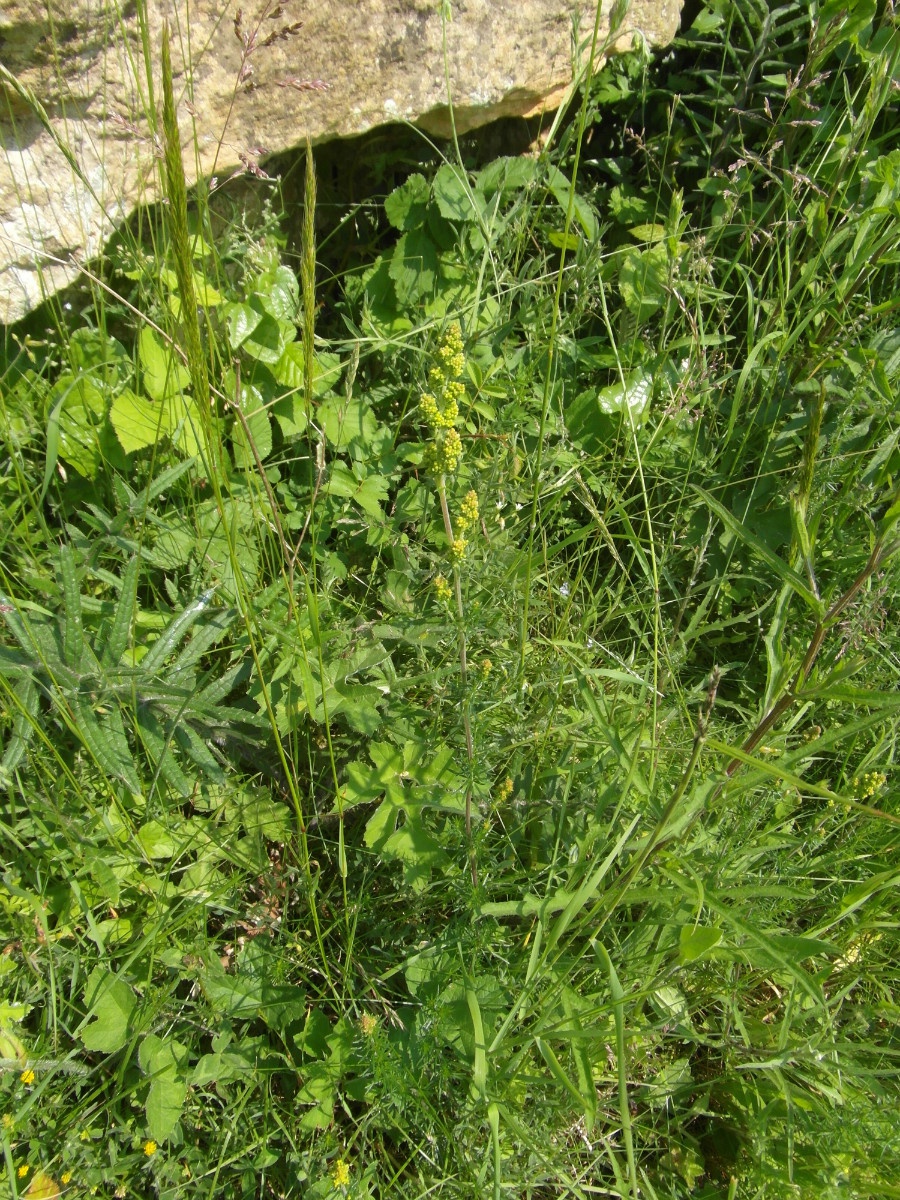
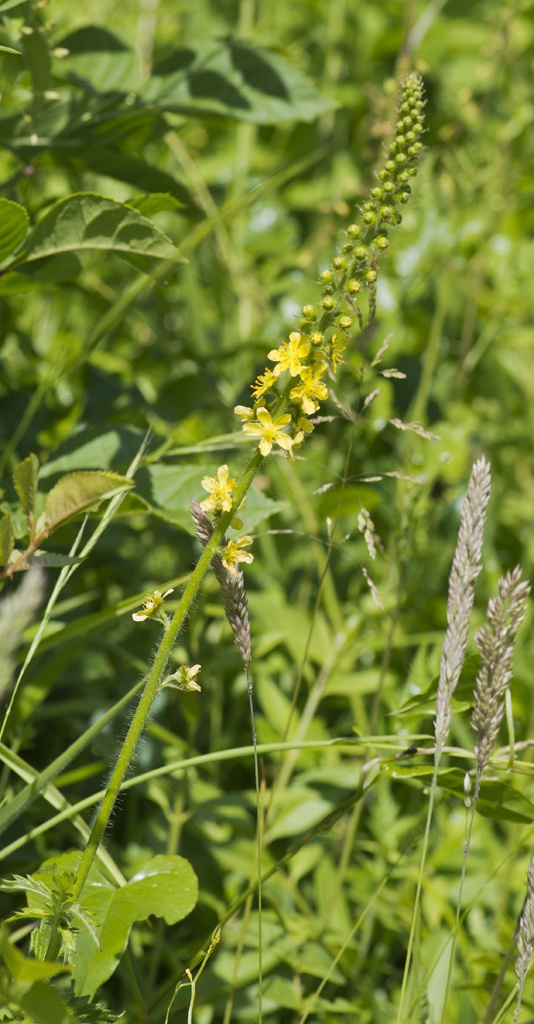
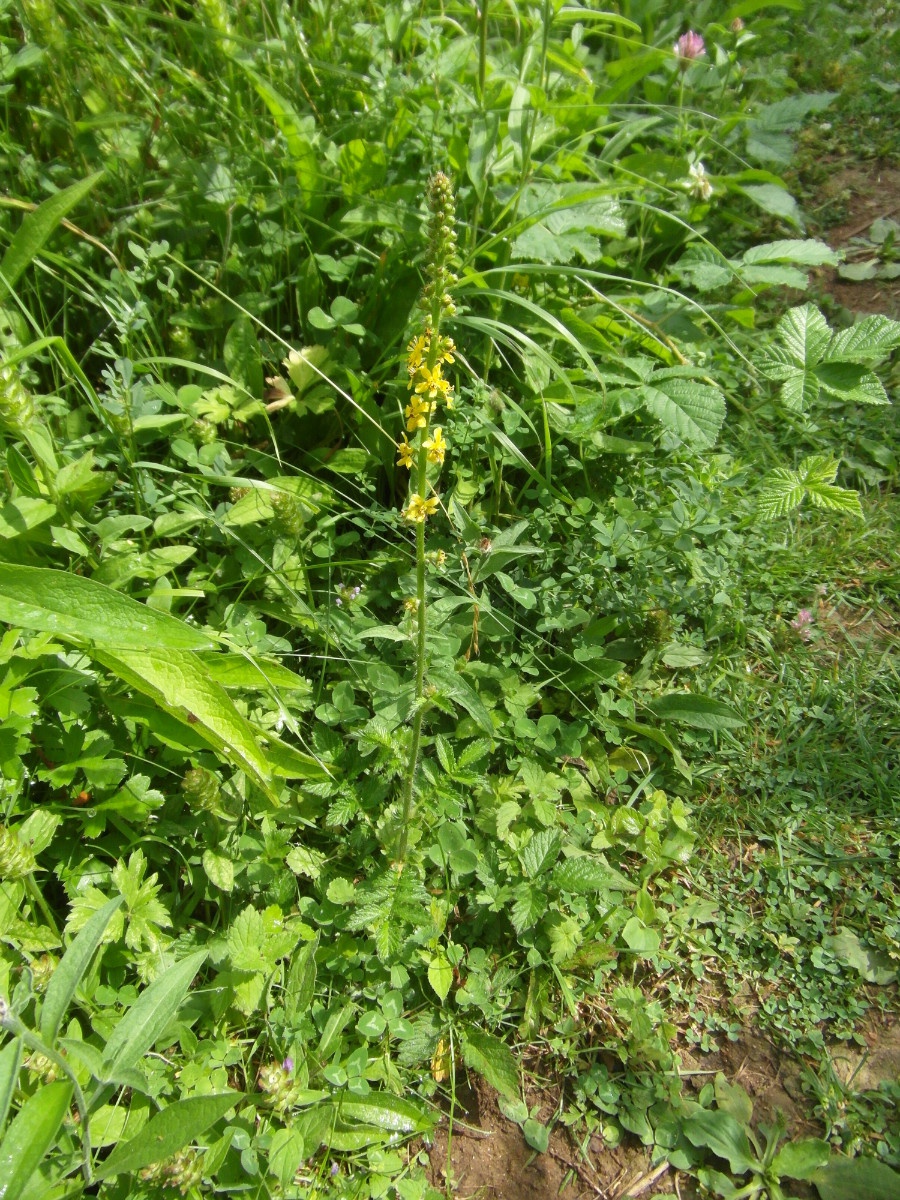
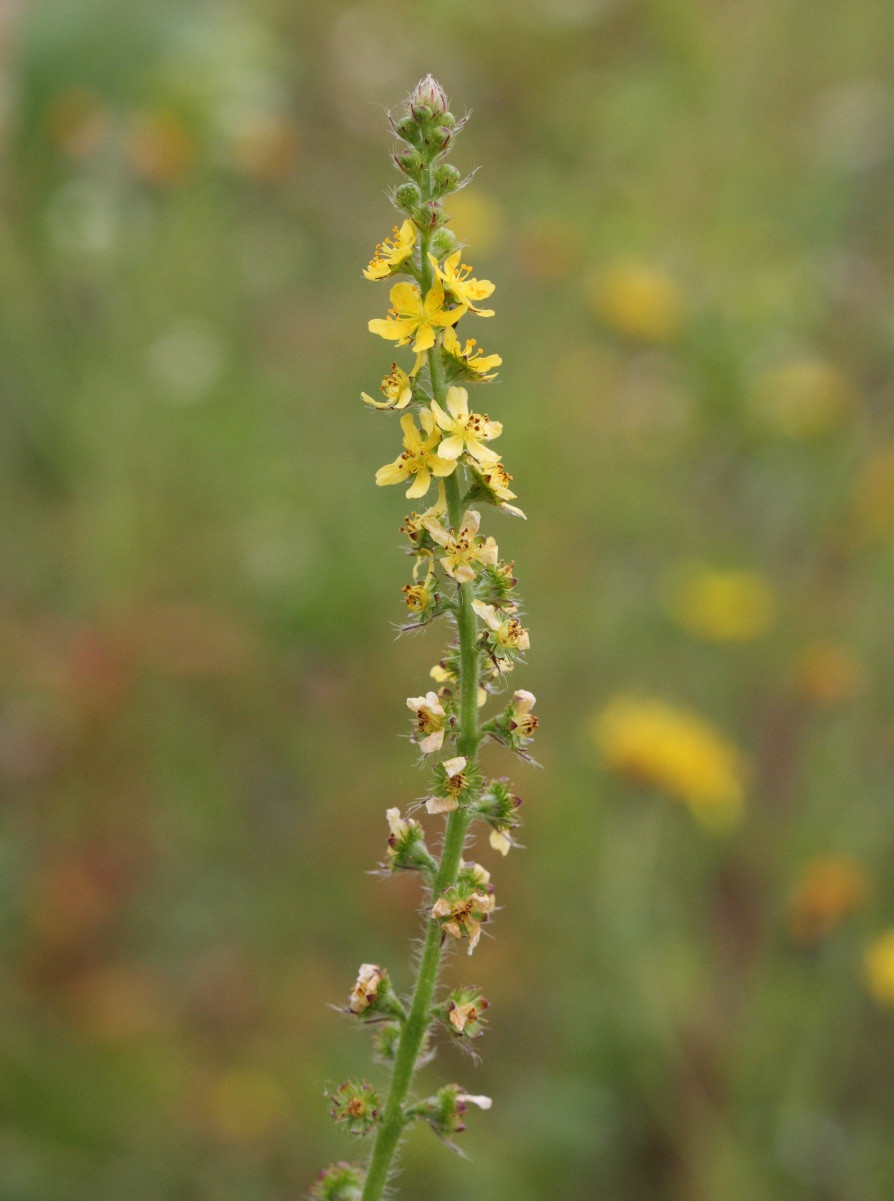
Height 30-60 cm. A hairy plant with golden yellow flowers of 5 to 8 mm in slender spikes. Fruit grooved with erect hooks at the top.
Fragrant Agrimony also occurs in our area and looks similar. Follow the link to see the differences. http://www.plant-identification.co.uk/skye/rosaceae/agrimonia-procera.htm

Dry grassy habitats, field borders and roadside verges.
June to August.
Perennial. Seed dispersal by hooking on to animals or humans.
Fairly frequent in much of Britain except in the extreme north.
Fairly frequent in Leicestershire and Rutland. In the 1979 Flora survey of Leicestershire it was found in 363 of the 617 tetrads.
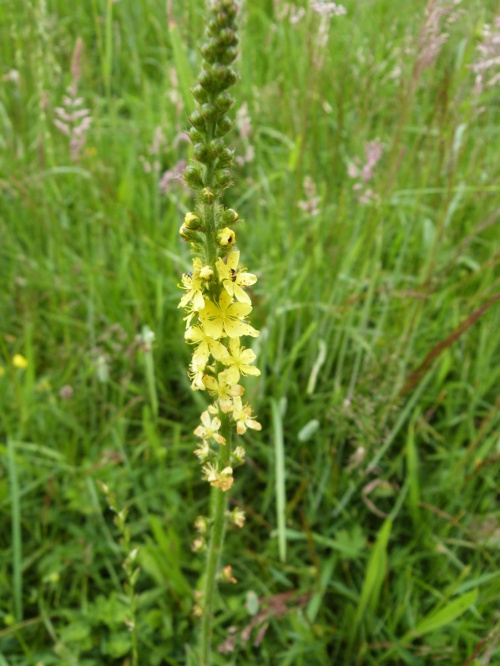 Graham Calow
Burbage Common
30 June 2016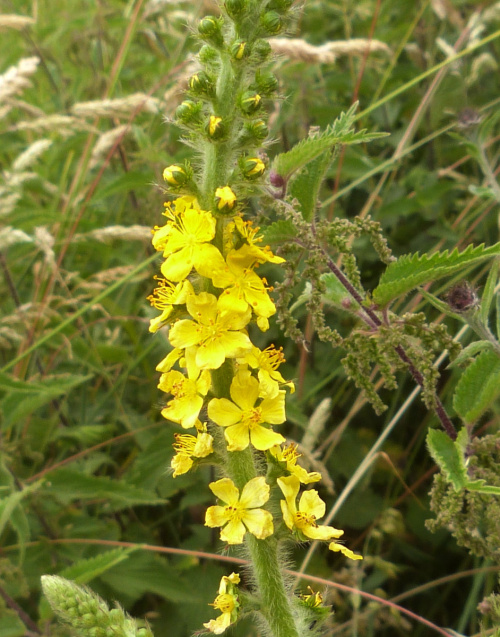 Graham Calow
Broughton Astley, drainage area off Soar Mill Lane
05 July 2024 near M69 Roundabout Sapcote SP 4620 9382 (taken 23.7.2008).JPG) Graham Calow
Graham Calow
M69 Island, Sapcote
23 July 2008 Graham Calow
Jubilee Walk, Leire
16 September 2014
seeds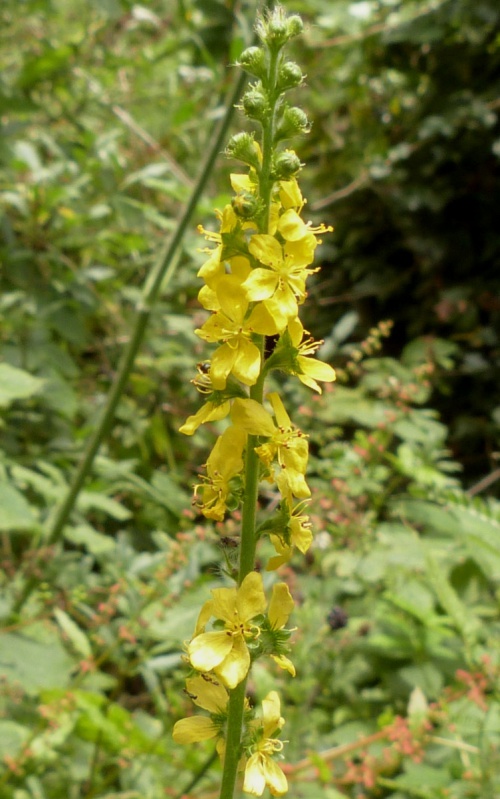 Graham Calow
Burbage Common
16 August 2015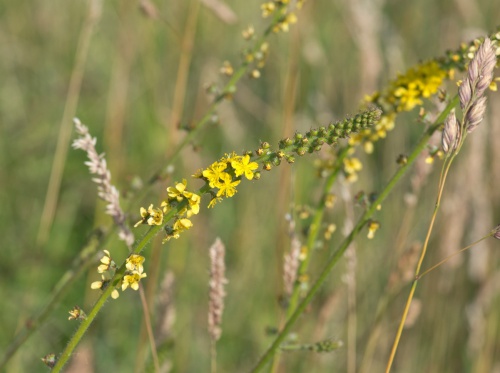 AJ Cann
Stonesby Quarry
23 July 2016 David Nicholls
Bloody Oaks Quarry
08 July 2016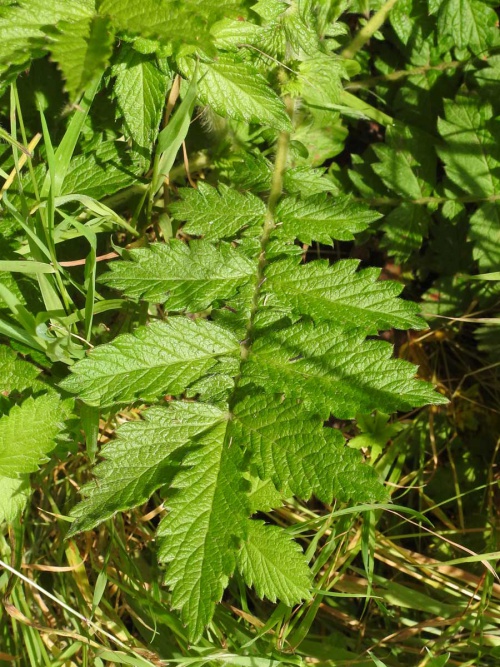 David Gould
Croft Hill, Leics
27 June 2016
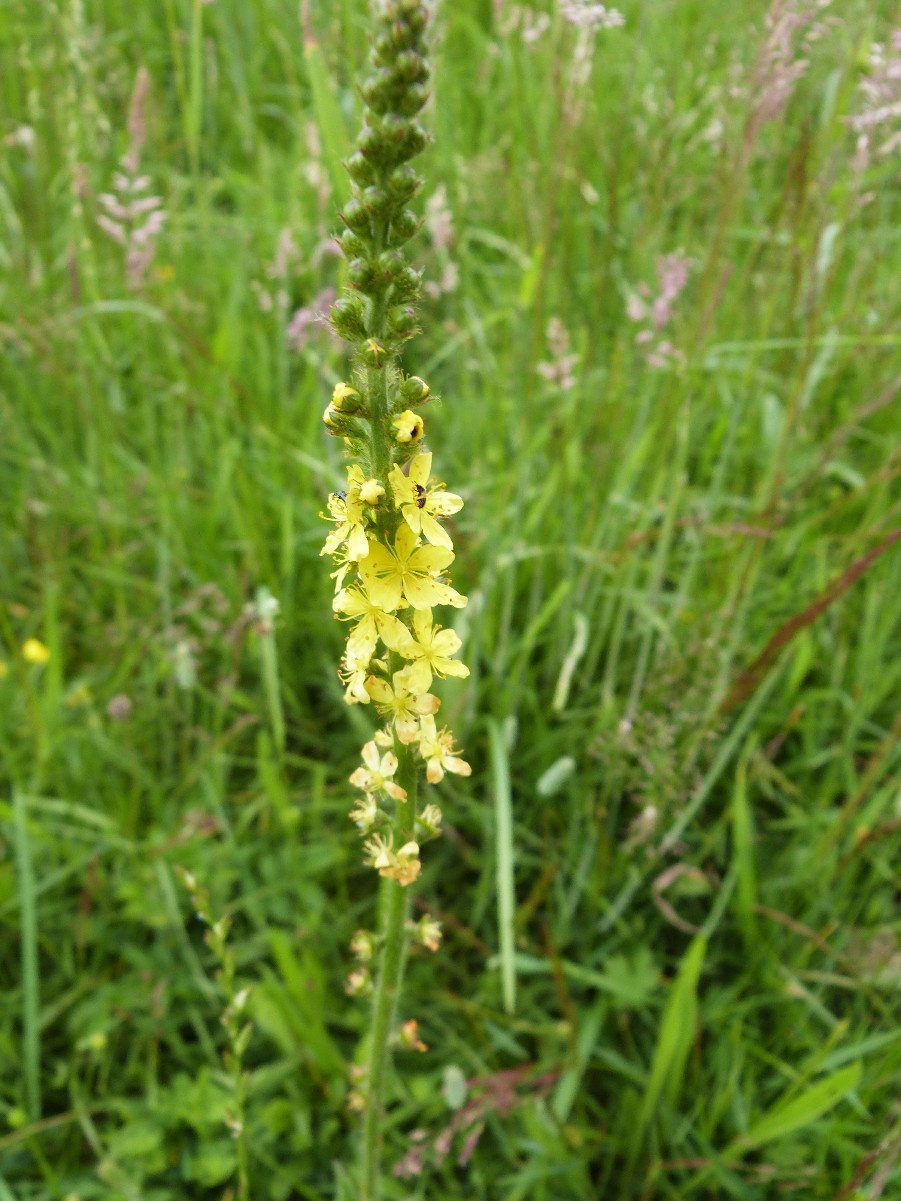
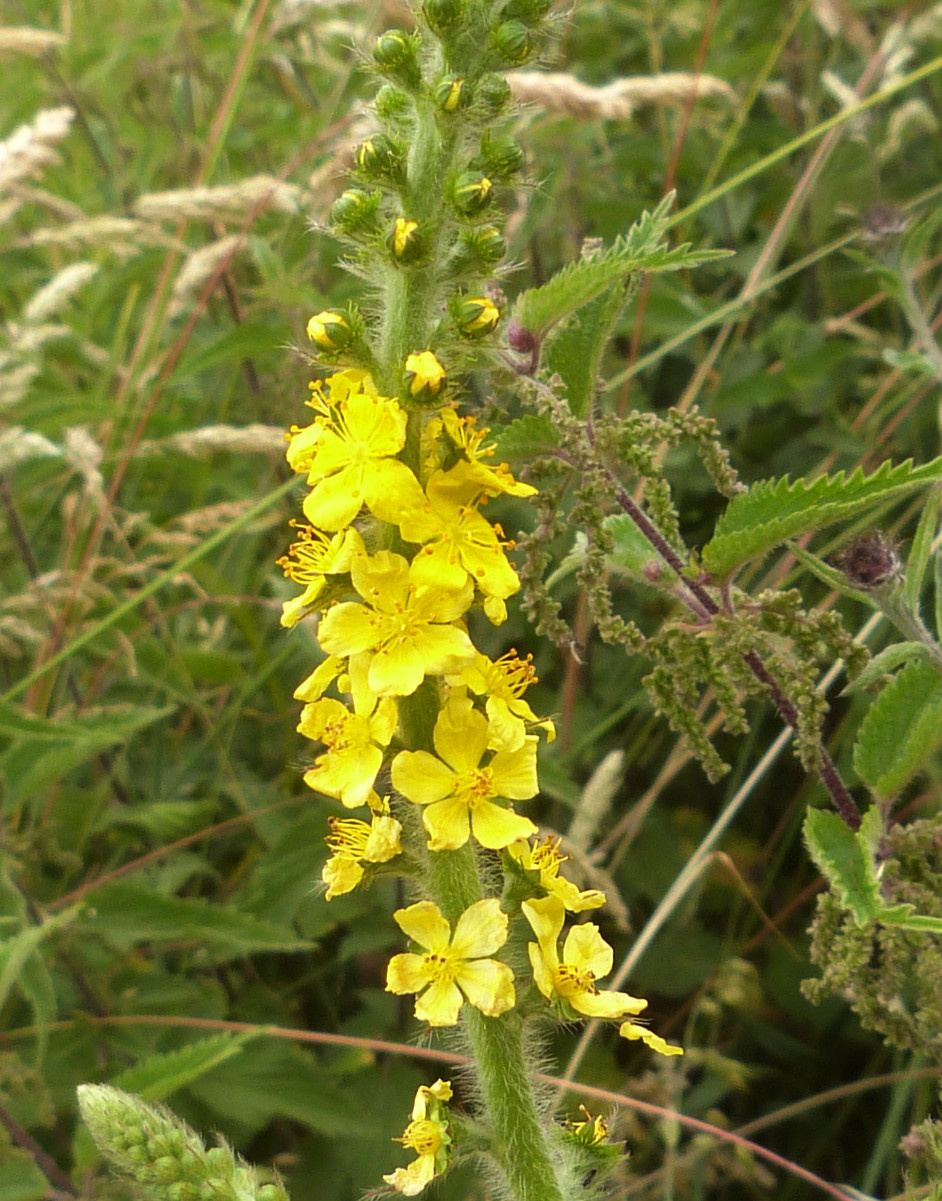
 near M69 Roundabout Sapcote SP 4620 9382 (taken 23.7.2008).JPG)

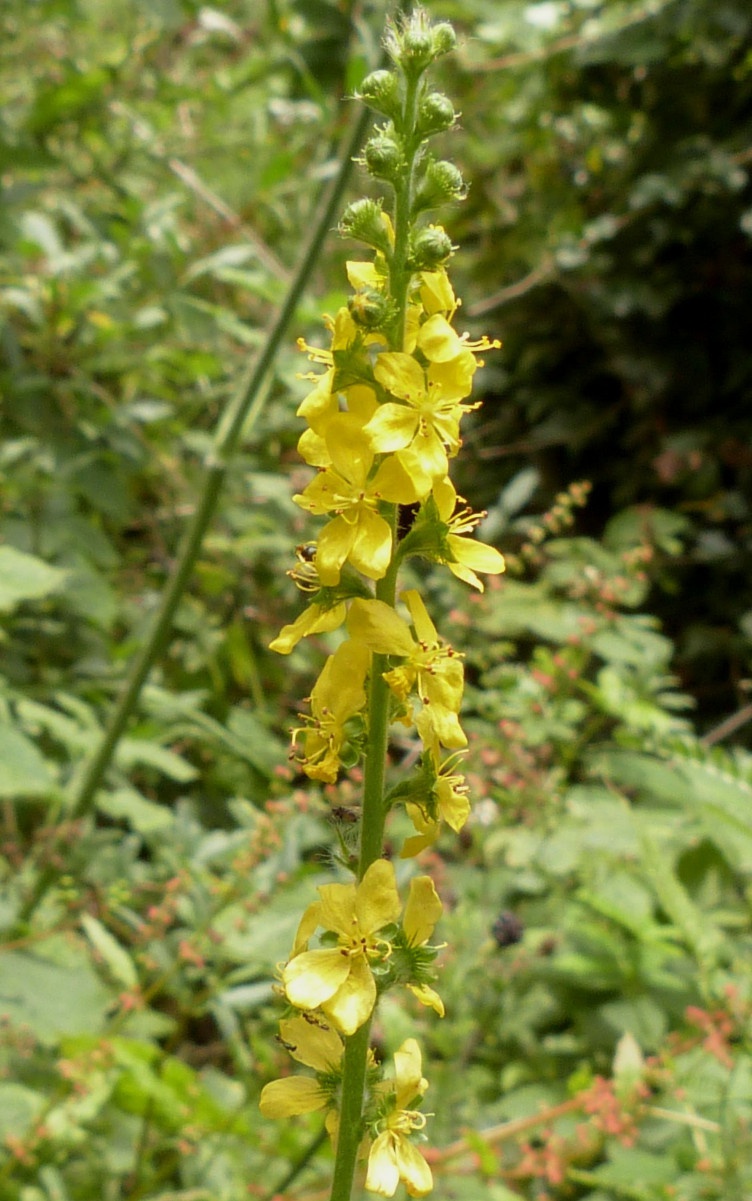

Leicestershire & Rutland Map
Enter a town or village to see local records
MAP KEY:
Yellow squares = NBN records (all known data)
Coloured circles = NatureSpot records: 2025+ | 2020-2024 | pre-2020
UK Map
Species profile
- Common names
- Agrimony
- Species group:
- flowering plant
- Kingdom:
- Plantae
- Order:
- Rosales
- Family:
- Rosaceae
- Records on NatureSpot:
- 183
- First record:
- 21/09/2005 (Lizzy Peat)
- Last record:
- 16/08/2025 (Graves, Hazel)
Total records by month
% of records within its species group
10km squares with records
The latest images and records displayed below include those awaiting verification checks so we cannot guarantee that every identification is correct. Once accepted, the record displays a green tick.
In the Latest Records section, click on the header to sort A-Z, and again to sort Z-A. Use the header boxes to filter the list.
Latest images
Latest records
 Groby John
Beacon Hil country Park
09 July 2022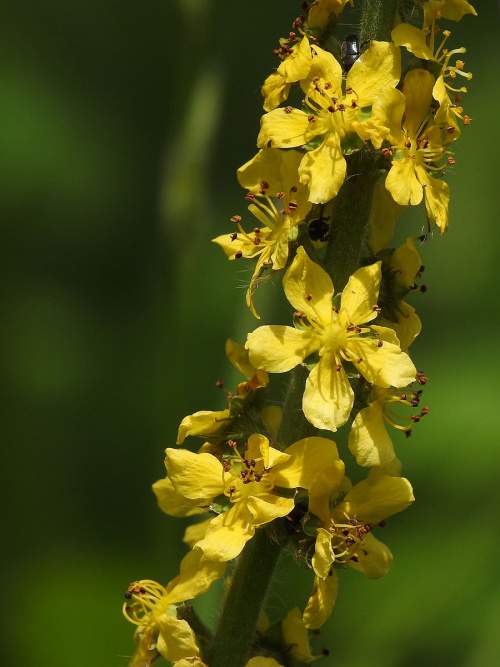 David Gould
Croft Hill, Leics
27 June 2016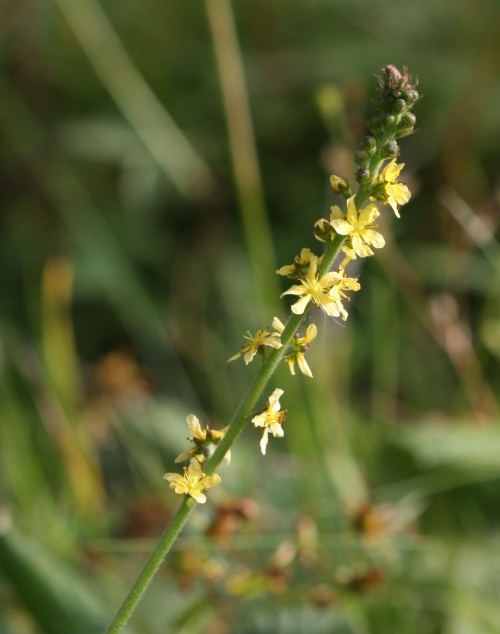 David Nicholls
New Lount
27 September 2012 near M69 Roundabout (taken 27.7.2008).JPG) Graham Calow
Graham Calow
Sapcote
31 January 2007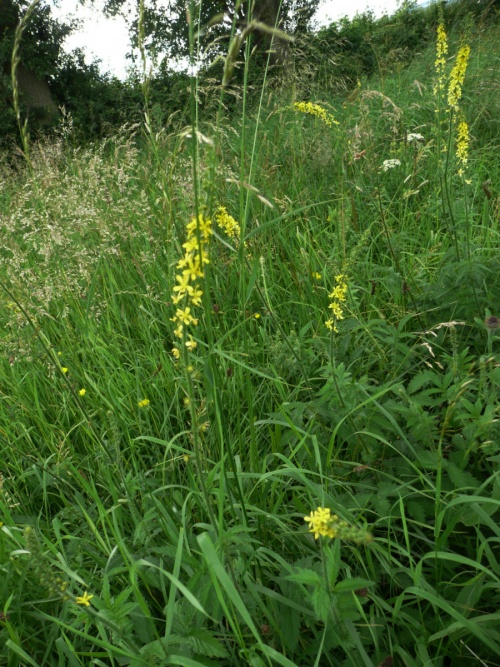 Barbara Cooper
Clawson Hill
12 July 2012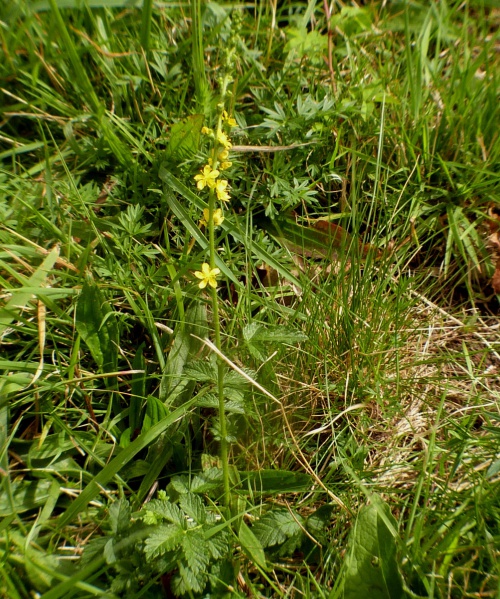 Graham Calow
Burbage Common and Woods
16 September 2013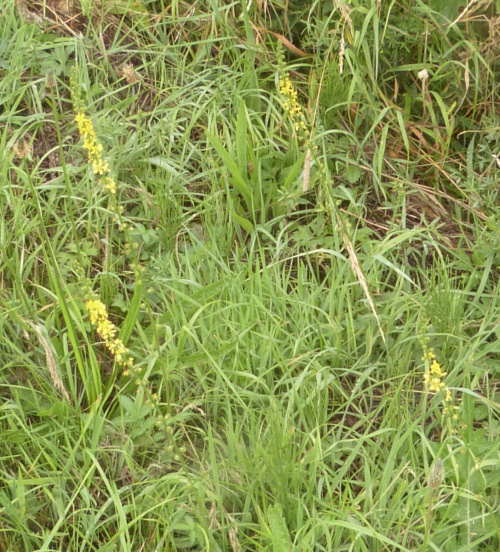 Graham Calow
Leire Road, Frolesworth
23 July 2015 Granitethorpe Sapcote SP 4949 9360 (taken 1.8.2006).JPG) Graham Calow
Graham Calow
Granitethorpe Quarry, Sapcote
01 August 2006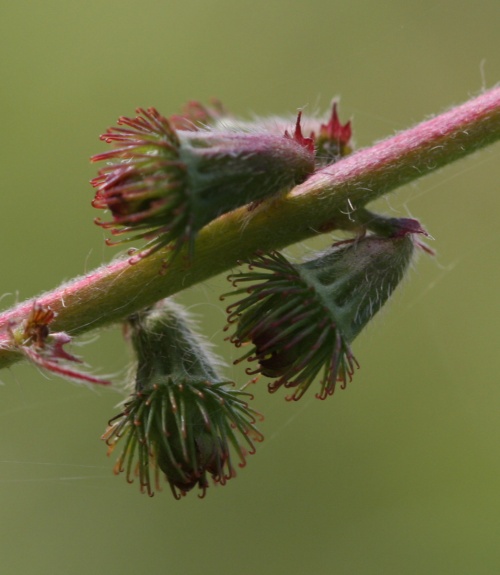 David Nicholls
New Lount
27 September 2012
fruits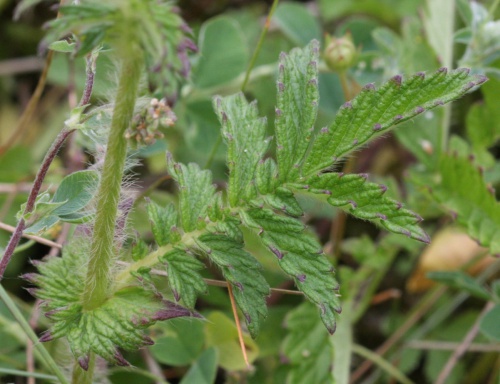 David Nicholls
Bloody Oaks
02 July 2015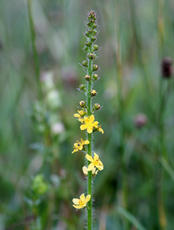 David Nicholls
Burbage Common
01 July 2011 David Nicholls
Burbage Common
01 July 2011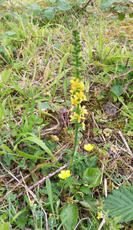 Ron.stevens
Ketton Quarry NR
30 June 2011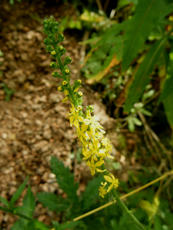 Graham Calow
Jubilee Walk, Leire
10 August 2011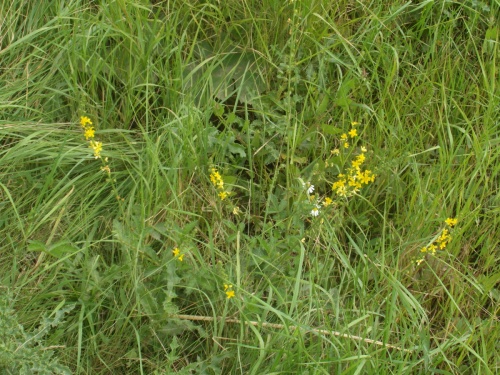 Alan Semper
Harby, roadside verge
11 August 2012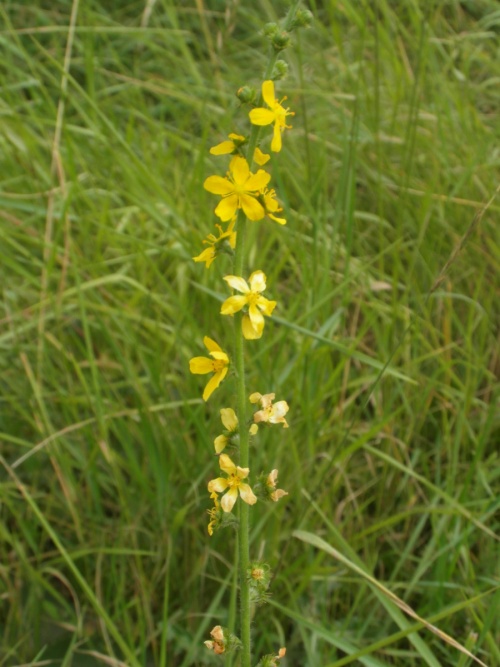 Alan Semper
Harby, roadside verge
11 August 2012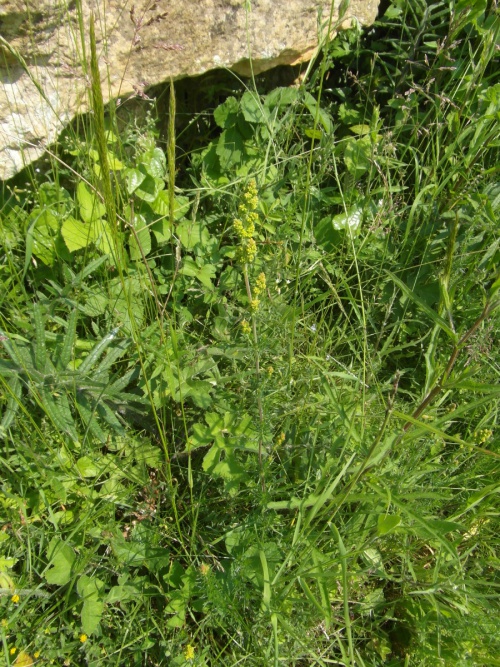 Alan Semper
Stonesby Quarry
26 June 2013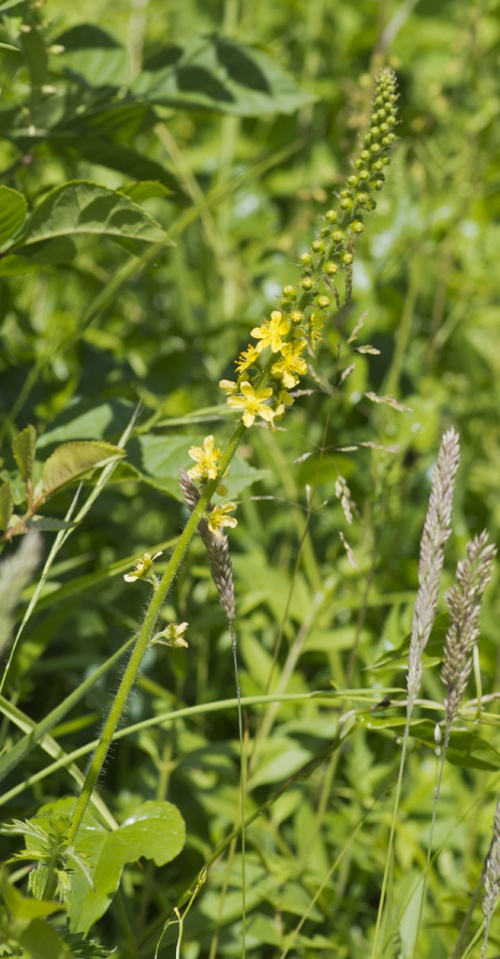 AJ Cann
Ketton Quarry
21 June 2015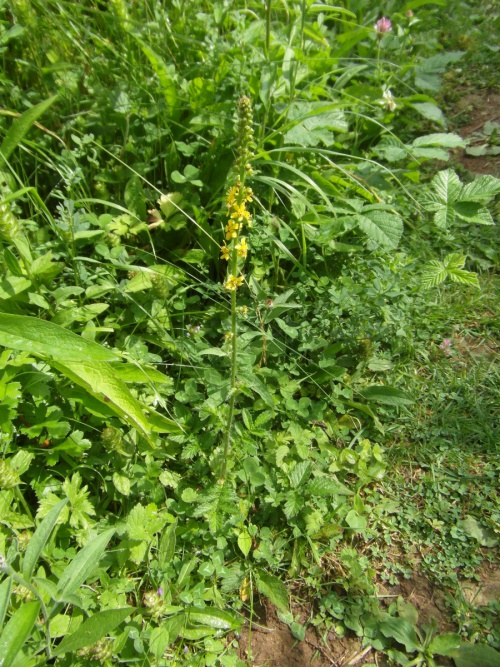 Alan Semper
Stonesby Quarry
24 July 2013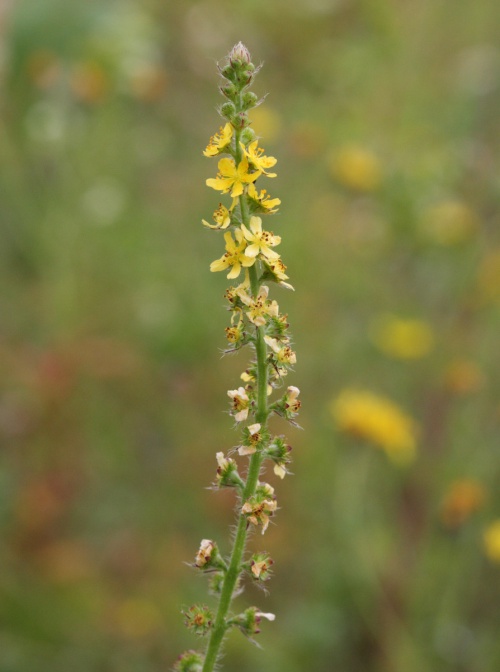 David Nicholls
Bloody Oaks
02 July 2015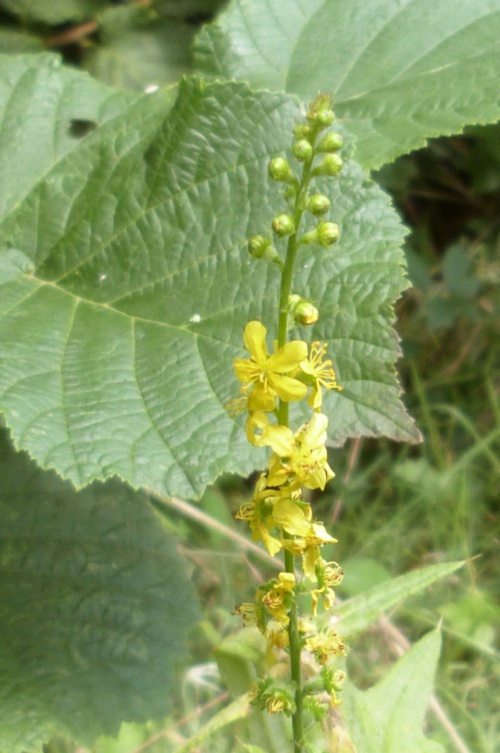 Graham Calow
Fosse Meadows, Sharnford
15 August 2014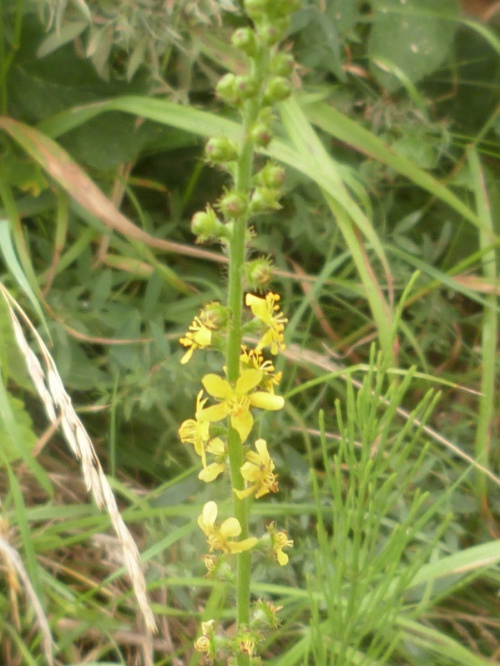 Graham Calow
Leire Road, Frolesworth
23 July 2015 AJ Cann
Bloody Oaks
21 June 2015

 near M69 Roundabout (taken 27.7.2008).JPG)
 Granitethorpe Sapcote SP 4949 9360 (taken 1.8.2006).JPG)






Fenella nigrita
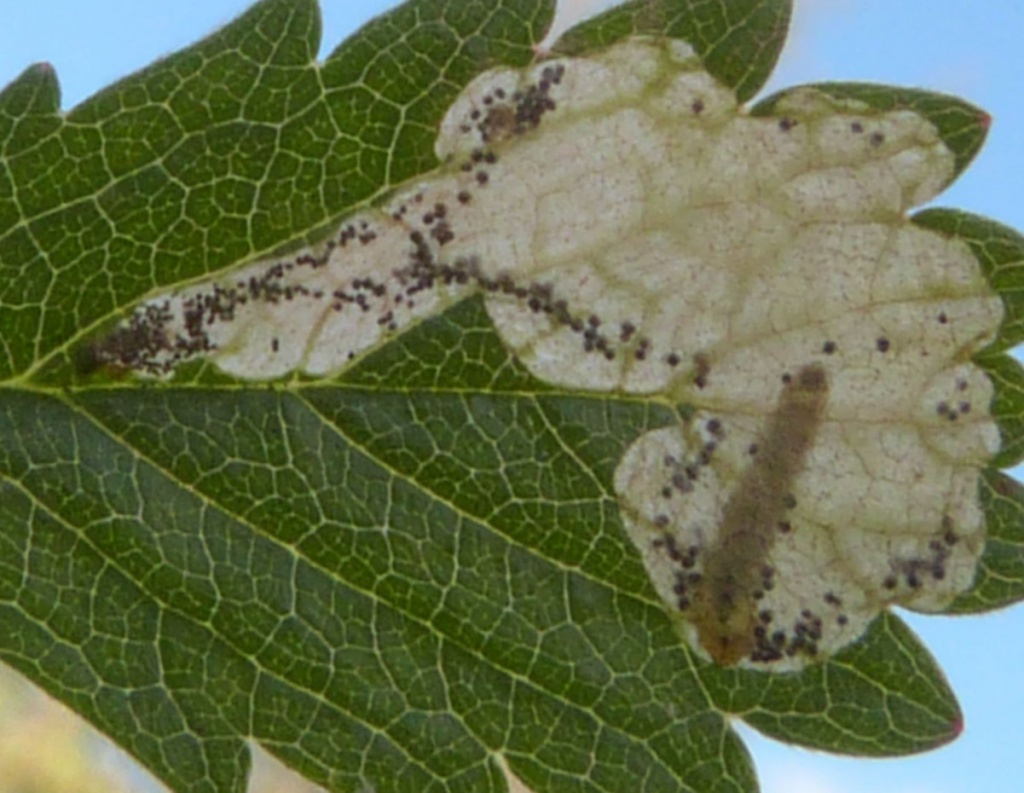
The larva of the sawfly Fenella nigrita mines the leaves of Agrimony, Cinquefoils and Brambles. The mine is a full depth transparent blotch without a clear preceding corridor, quickly and strongly widening from the start. Frass in sausage-shaped granules. The larva has a series of black dots on the underside of the thorax.
Stigmella aurella
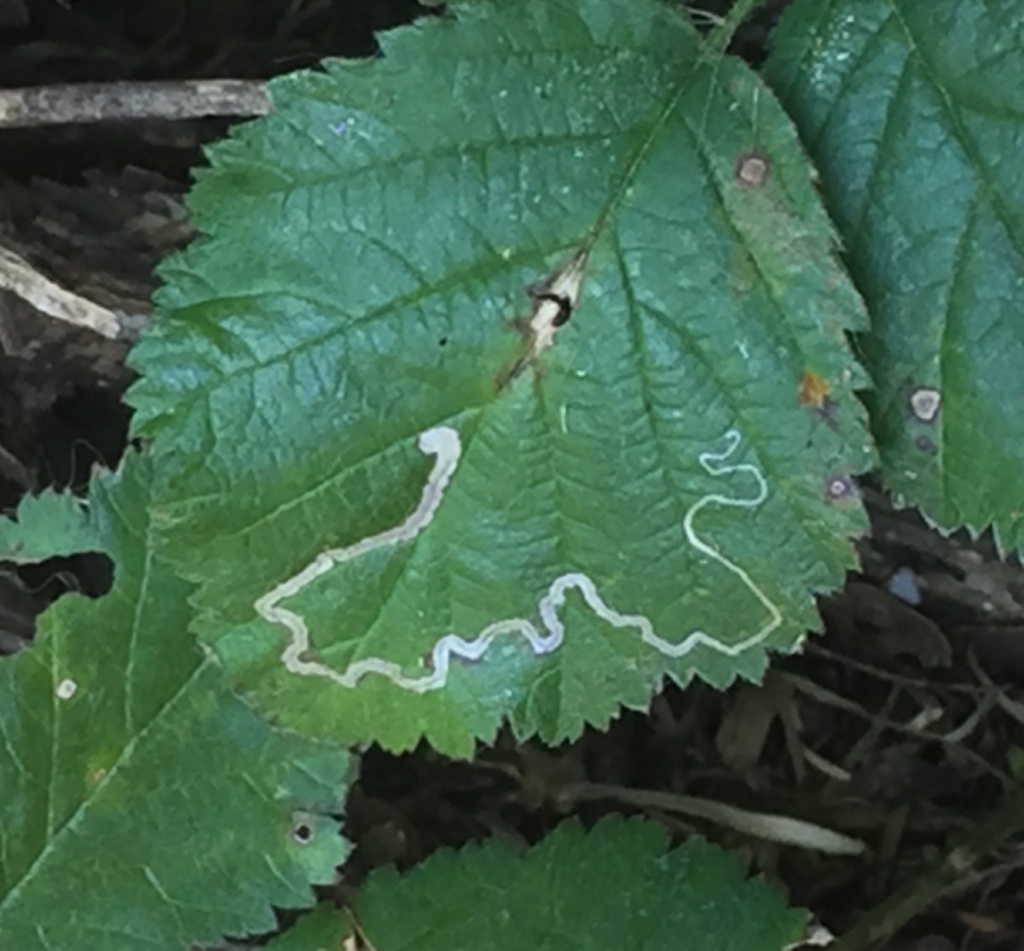
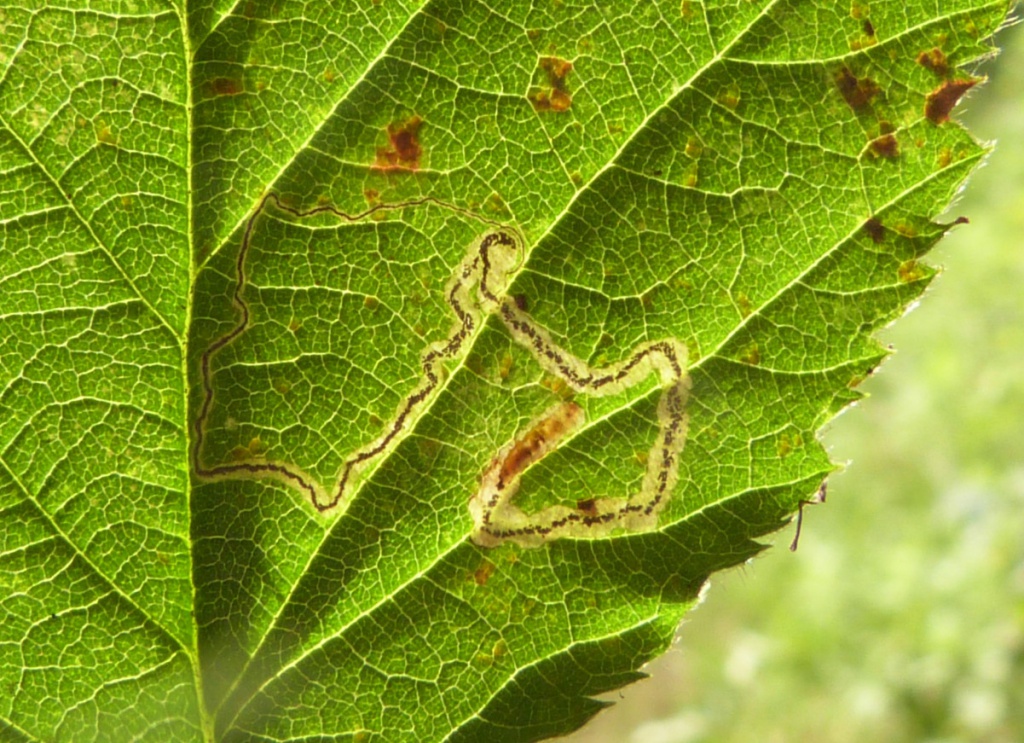
There are a number of moths in the Stigmella genus and most look very similar. However their caterpillars feed on various plants creating leafmines that can help with identification. Stigmella aurella specialises on Bramble, but will also use Agrimony. The long, thin leafmines can be very common on Bramble and are even recognisable in winter when they become white.
Stigmella splendidissimella
The larva of the moth Stigmella splendidissimella mines the leaves of Geum species, Bramble, Agrimony and Wild Strawberry. The mine is a long meandering gallery with a neat central frass line. S. aurella produces similar mines usually with dispersed frass, but can produce mines that are very similar to S. splendidissimella. Therefore all leaf mine records of either species where the frass line is central and not dispersed should be tenanted and reared through to adult.
Agromyza idaeiana
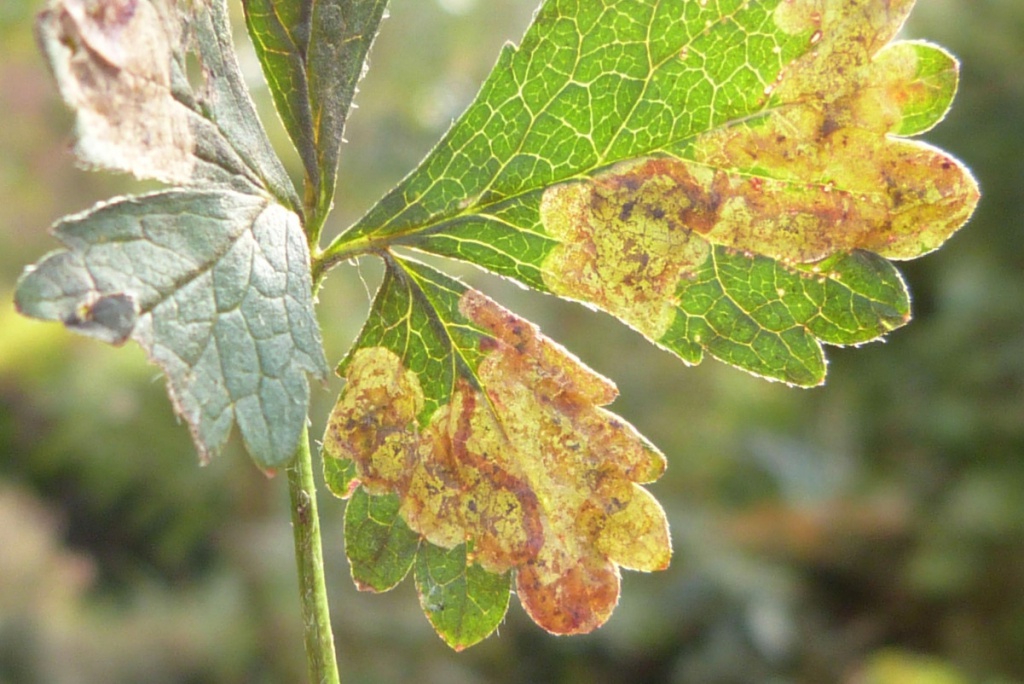
The larvae of the fly Agromyza idaeiana often mine the leaves of Creeping Cinquefoil although many other species in the Rosaceae are used. The mine is variable; it may be linear, with frass in a double row, or develop into a blotch obscuring the initial corridor.