Torymus
Torymus
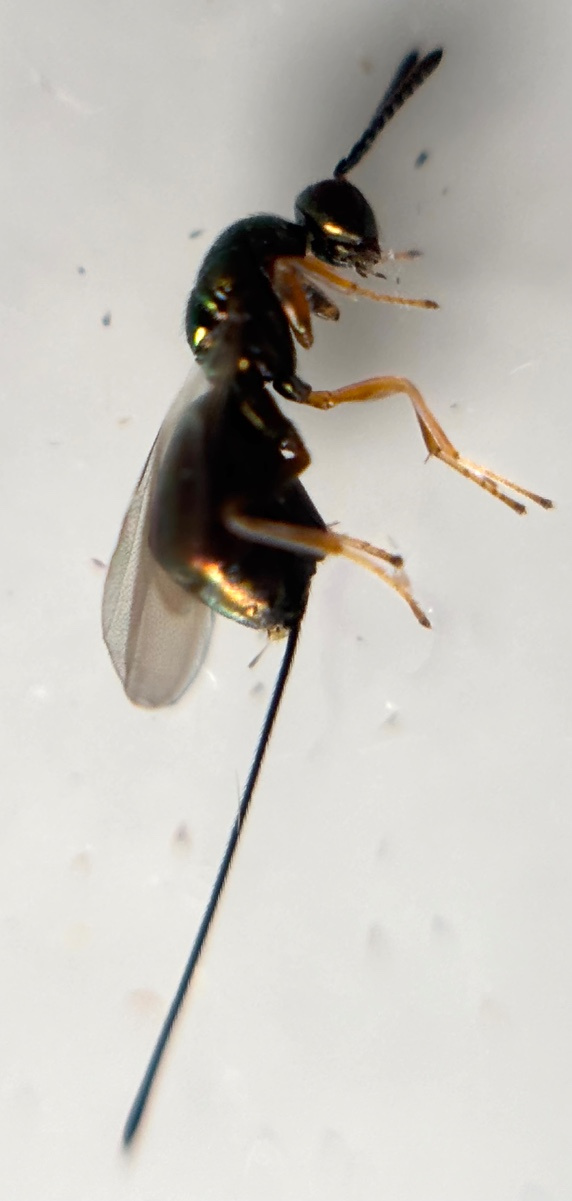
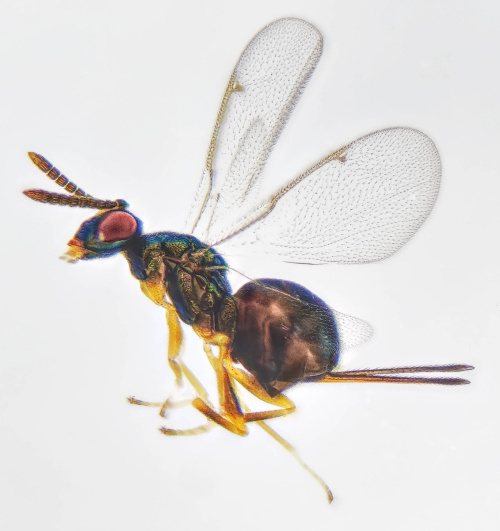
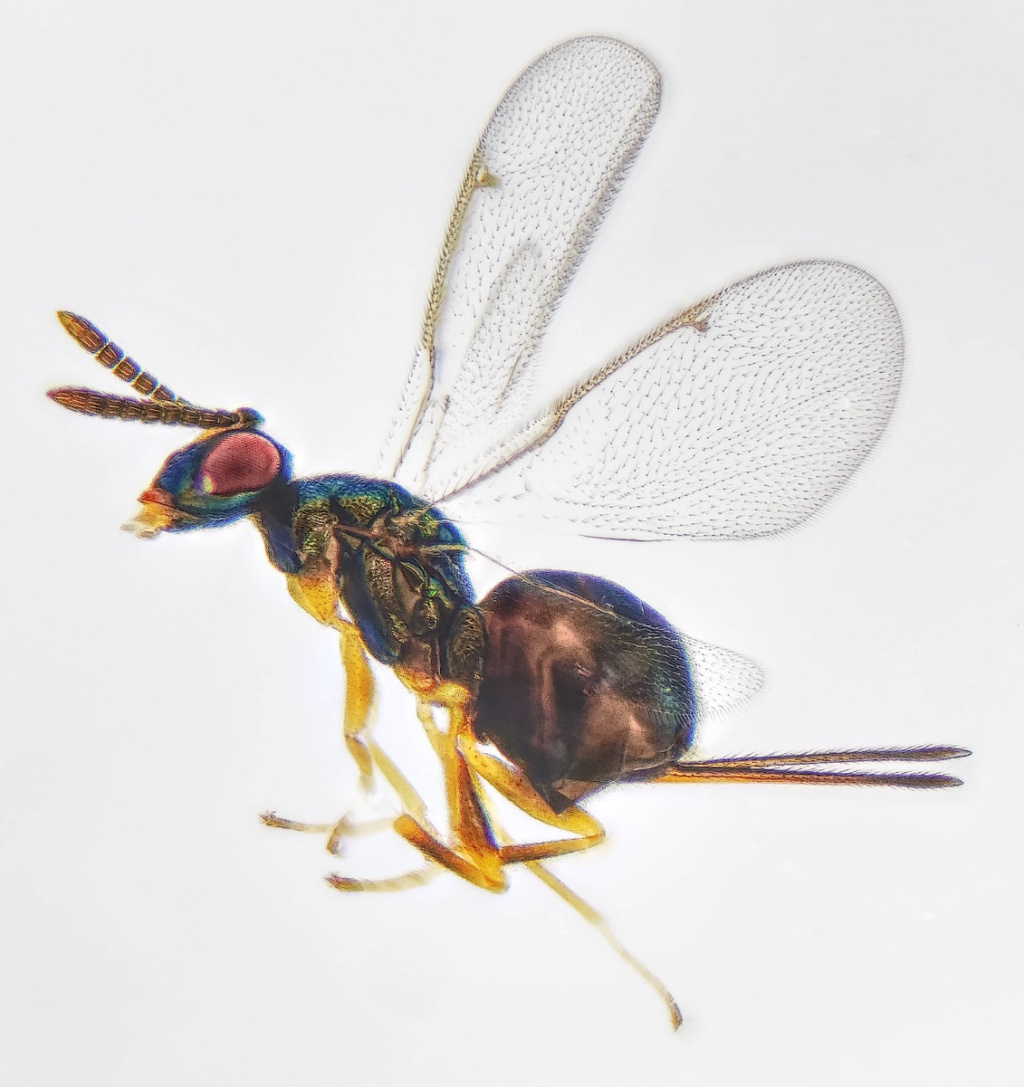
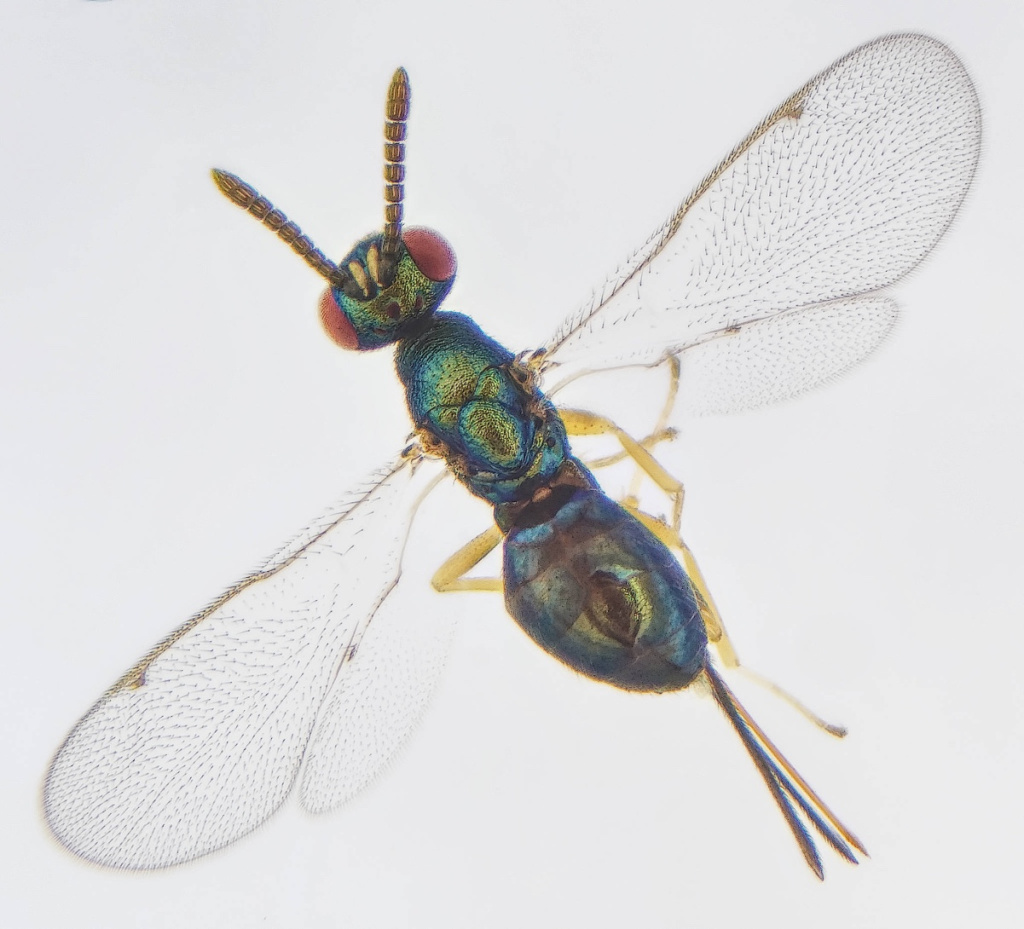
Torymus is the largest and type genus of the family Torymidae containing over 400 described species worldwide and over 80 in the UK. Without rearing from the host they are very difficult to identify to species level. Most are small, metallic-colored ectoparasitoids of concealed gall-forming insects primarily gall midges (Cecidomyiidae) and gall wasps (Cynipidae) though a few have secondarily evolved phytophagous or seed-feeding habits. Adults typically measure 25mm in body length (excluding the ovipositor). The body almost always exhibits a bright metallic sheen, most commonly metallic green, bluish-green, bronze, or coppery occasionally paired with pale yellow markings on the legs, scape, or base of the metasoma. Females are immediately recognizable by a long, rigid, prominently exserted ovipositor used to pierce plant galls. Males lack the ovipositor, are often slightly smaller, and frequently have thicker antennal flagella and darker legs. To separate Torymus from other chalcid wasps and from closely related genera within Torymidae:
- Occipital carina present and distinct on the back of the head; lower margin of the clypeus straight or gently curved (not deeply incised or toothed).
- Antennae 13-segmented formula (11173): scape, pedicel, 1 transverse ring segment (anellus), 7 funicular segments, and a 3-segmented clava (club).
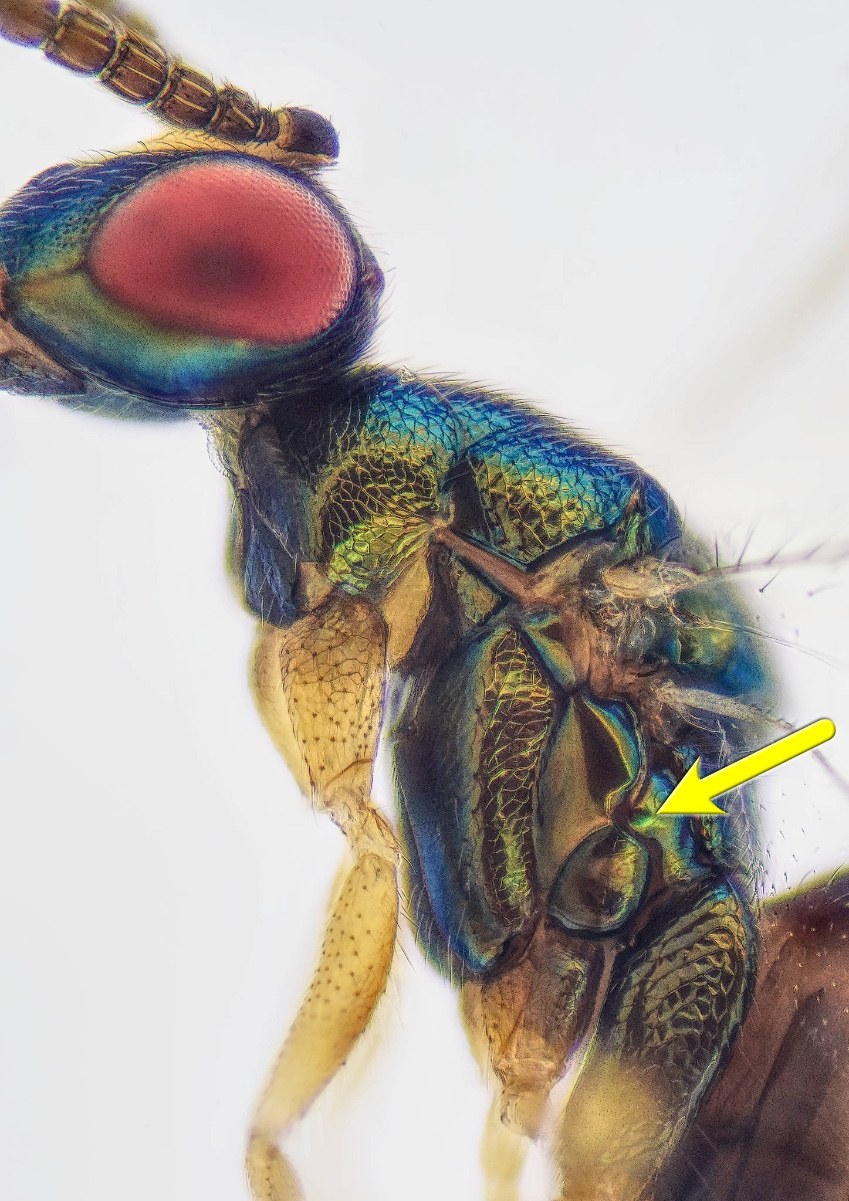
- Mesosoma (Thorax) notauli complete and deeply impressed; upper anterior margin of the metapleuron projects forward as a distinct lobe into the mesepimeron (a key feature of the tribe Torymini).
- Scutellum posterior third often marked off by a transverse frenal groove (or line), though in several species groups this groove is faint or absent; the frenal area is typically smoother and less setose than the anterior scutellum.
- Metacoxa (hind coxa) markedly enlarged (roughly half the length of the hind femur and triangular in cross-section); metafemur slender to moderately swollen and smooth ventrally. Hind tibia bears 2 apical spurs; all tarsi 5-segmented.
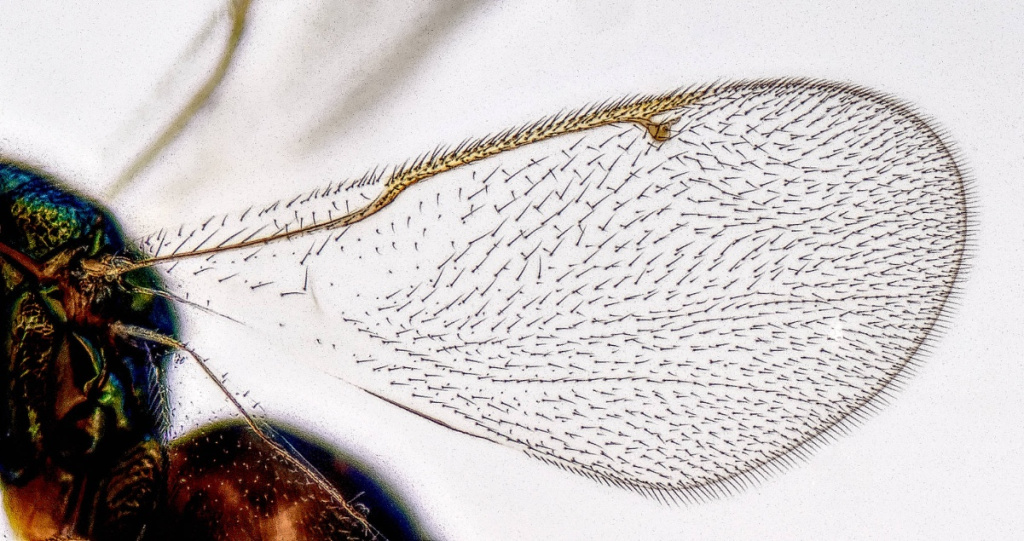
- Forewing marginal vein very long, at least 3.5-8X as long as the postmarginal vein, stigmal vein very short.

Unless identified by a recognised expert, a photo is required and the specimen should be examined with a microscope. In the comments box, state the key or ID method used and describe the size and identifying characters.
Common and widespread.
Common but under recorded due to identification difficulty.
de Vere, M.W.R., & Gijswijt, M. (1998) Revision of the European species of Torymus Dalman (Hymenoptera: Torymidae). Zoologische Verhandelingen, 317(1), 1-202.
 AJ Cann
Fosse Meadows
27 October 2026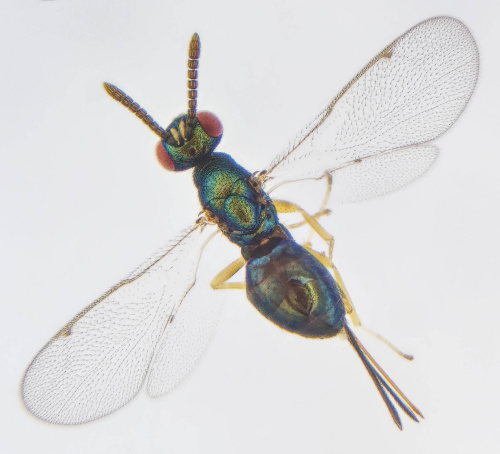 AJ Cann
Fosse Meadows
27 October 2026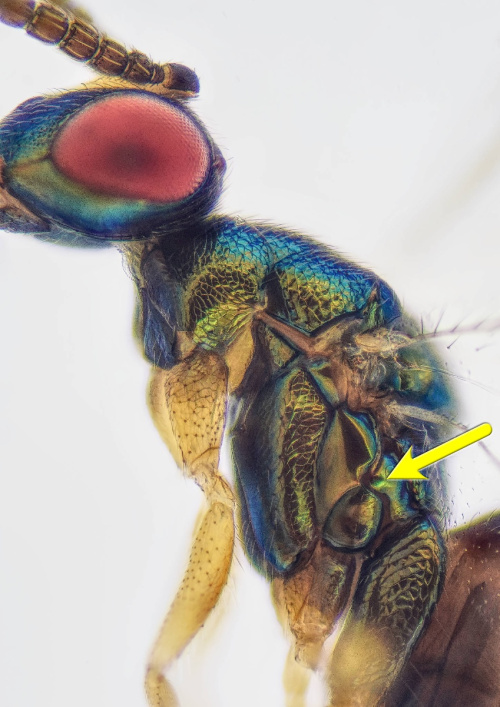 AJ Cann
Fosse Meadows
27 October 2026
upper anterior margin of the metapleuron projects into mesepimeron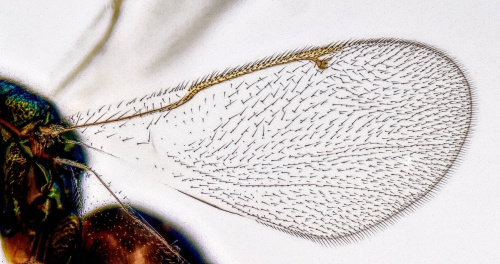 AJ Cann
Fosse Meadows
27 October 2026
Leicestershire & Rutland Map
Enter a town or village to see local records
MAP KEY:
Yellow squares = NBN records (all known data)
Coloured squares = NatureSpot records: 2025+ | 2020-2024 | pre-2020
UK Map
Additional images