

Sycamore - Acer pseudoplatanus
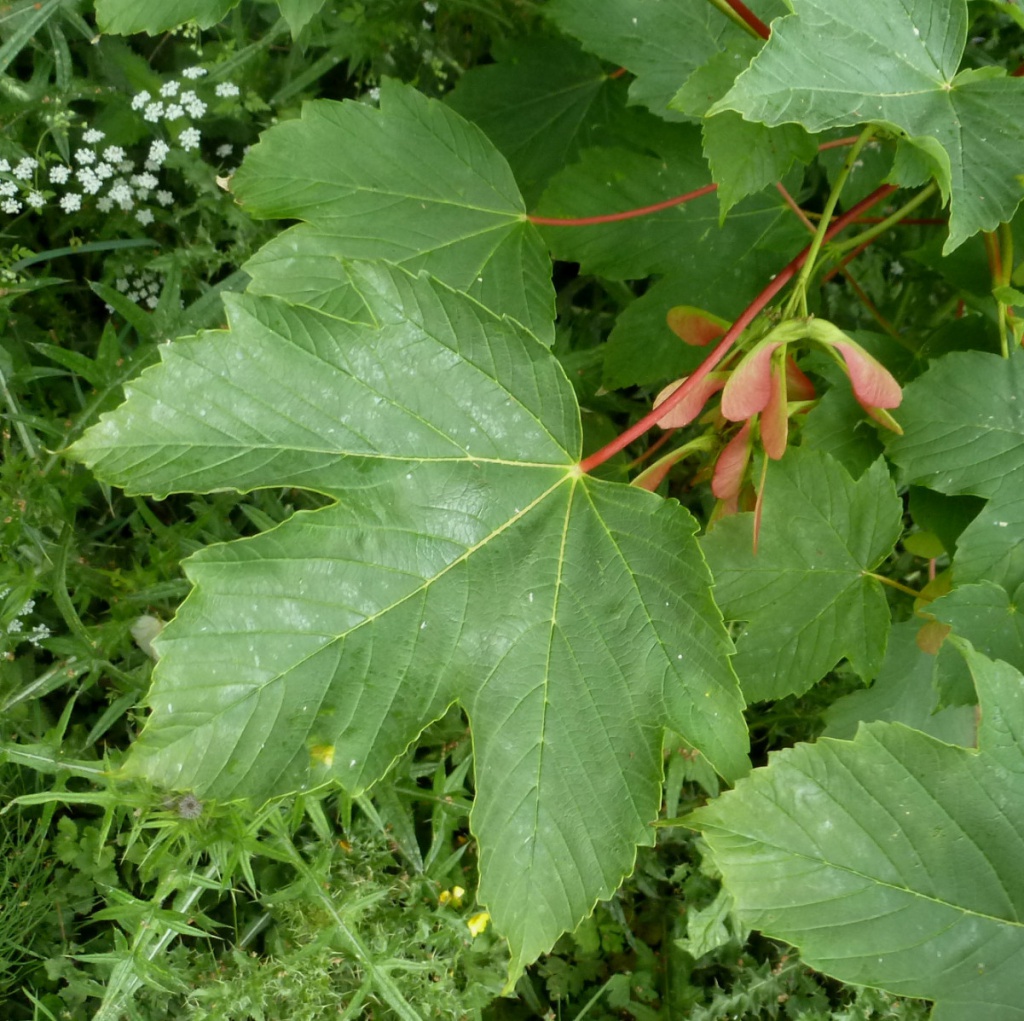
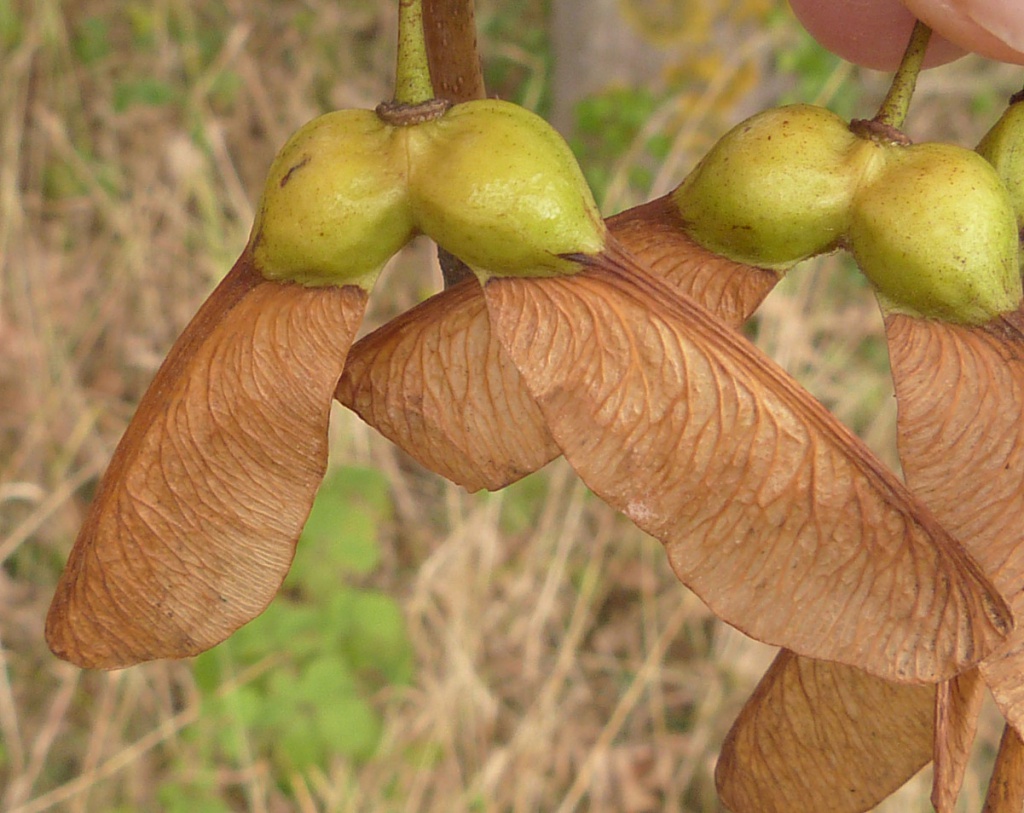
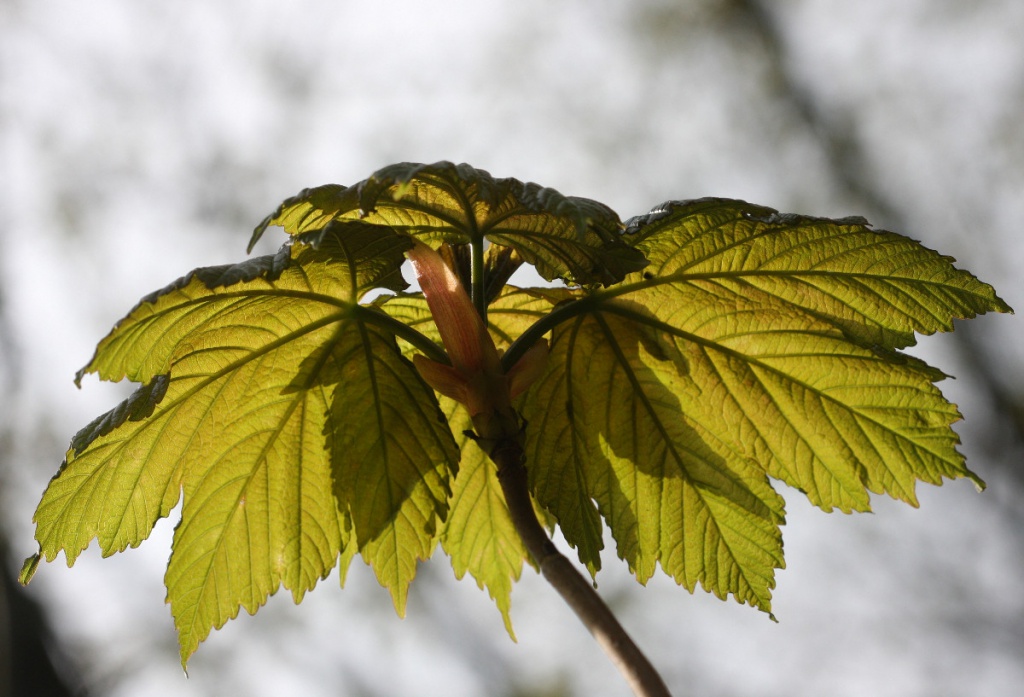
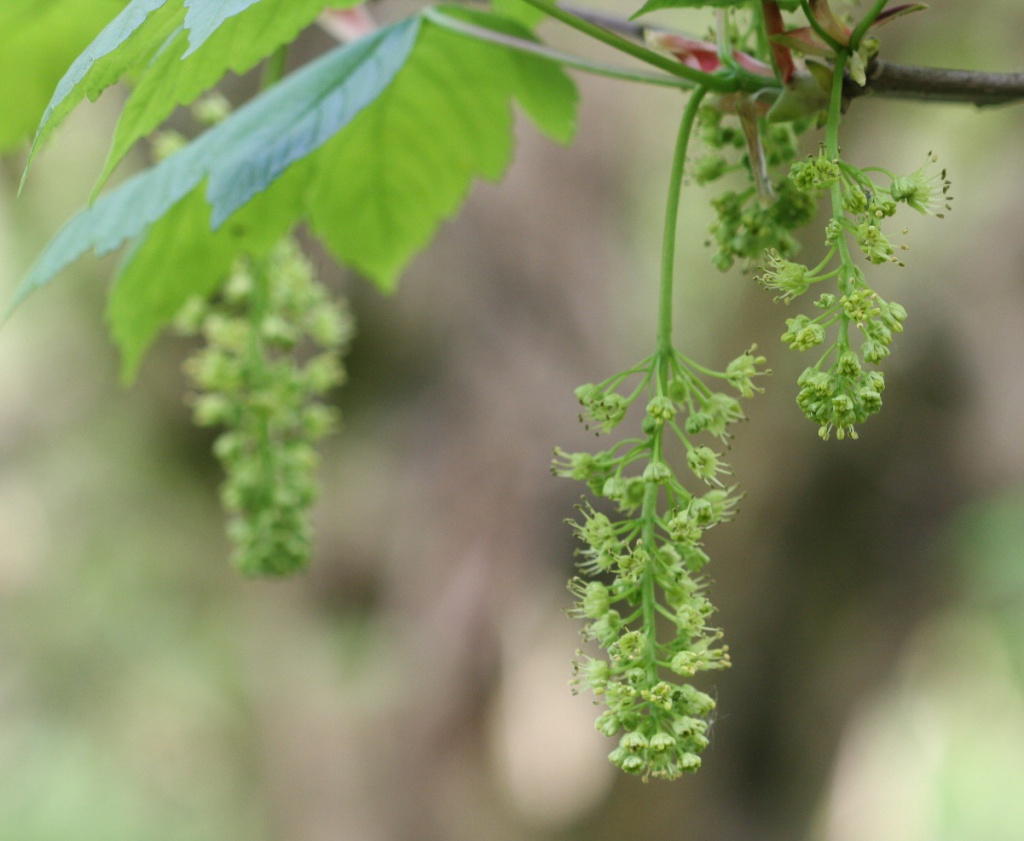
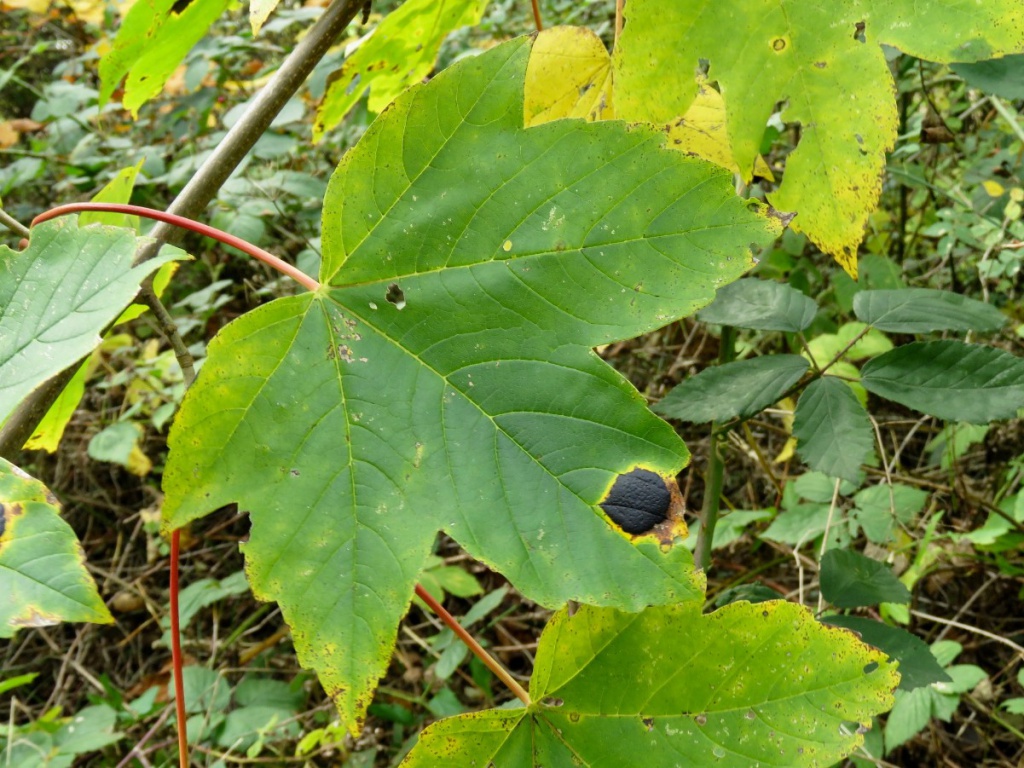
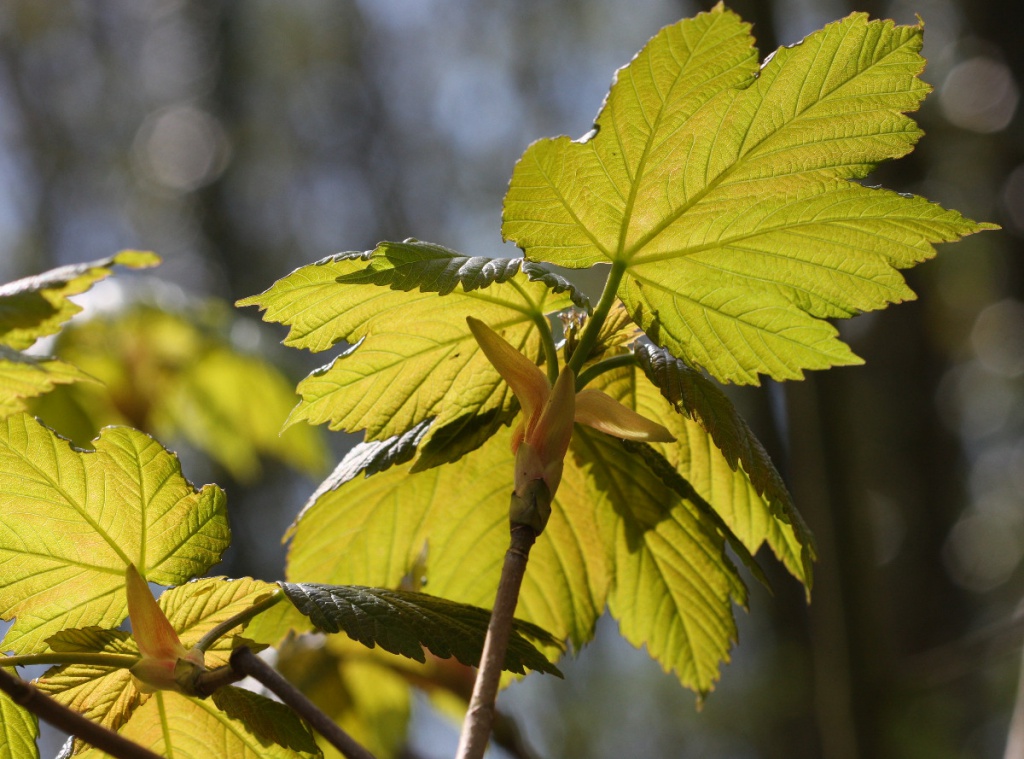
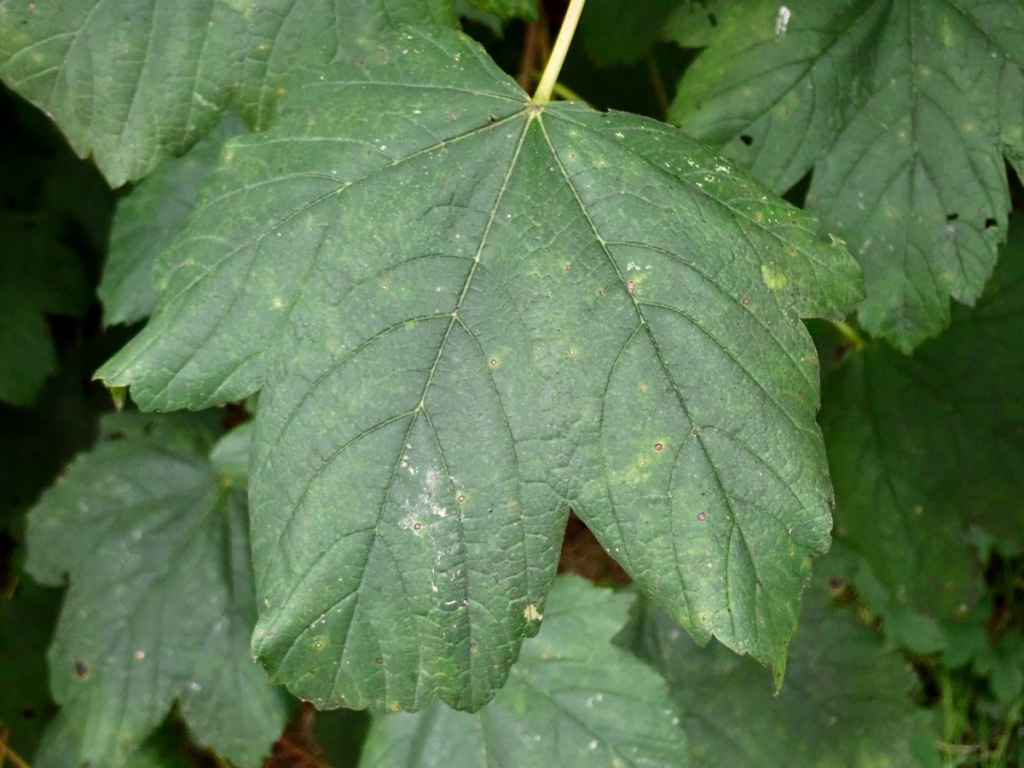
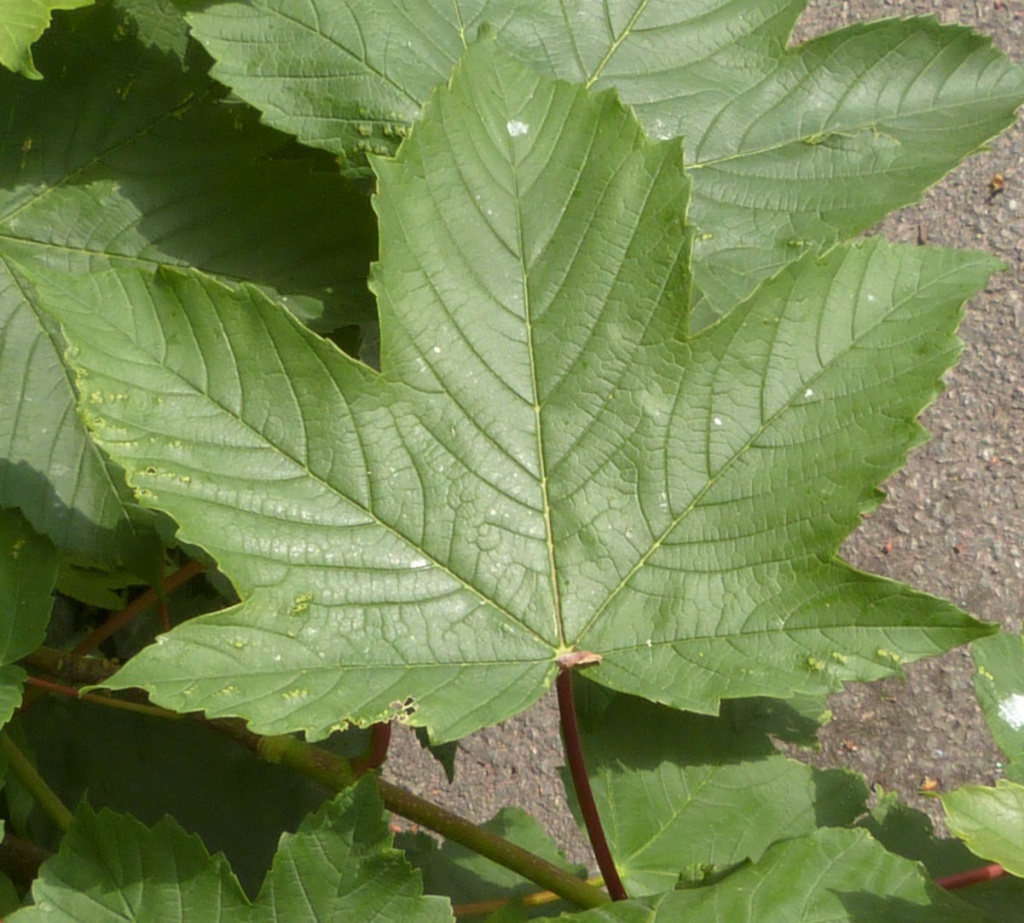
Large spreading tree to 30 metres. Leaves large, 10 to 25 cm across, palmately 5 to 7 lobed, the lobes pointed and coarsely toothed. Flowers yellowish green, 6 to 7 mm in narrow pendant panicles usually borne with the leaves. Fruit with wings at right angles.

Hedgerows, roadsides, woods.
April and May.
Deciduous.
Naturalised and common throughout just about the whole of Britain.
Very common in Leicestershire and Rutland. In the 1979 Flora survey of Leicestershire it was found in 546 of the 617 tetrads.
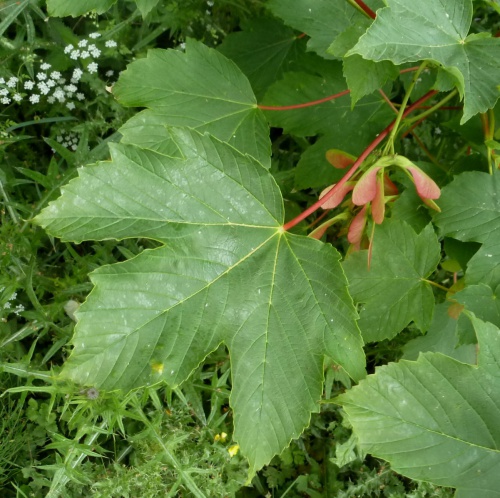 Craig Mabbett
Lutterworth Land Near Aldi
12 June 2022. Old Fosse Sapcote SP 5034 9294 (taken 20.4.2009).JPG) Graham Calow
Graham Calow
Sapcote
20 April 2009
Flowers and leaves Old Fosse Sapcote SP 5034 9294 (taken 13.4.2008).JPG) Graham Calow
Graham Calow
Sapcote
13 April 2008
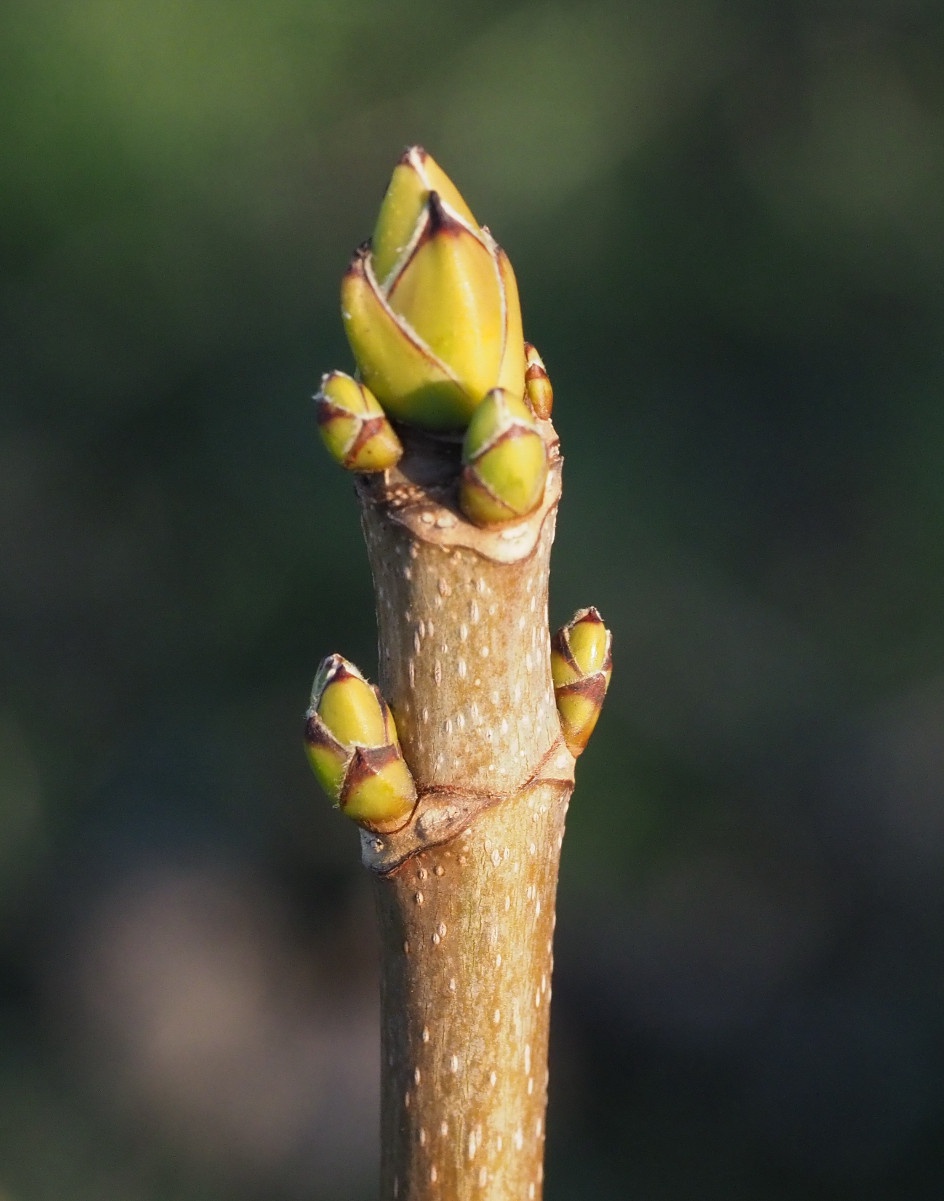
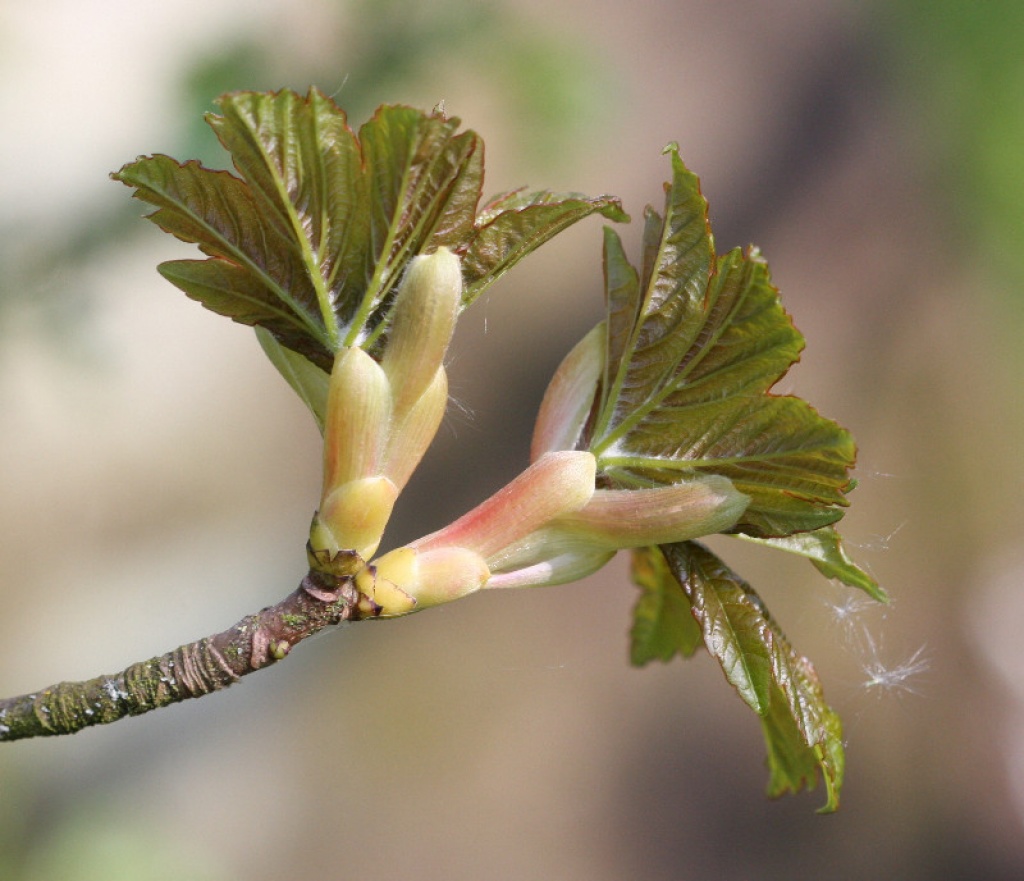
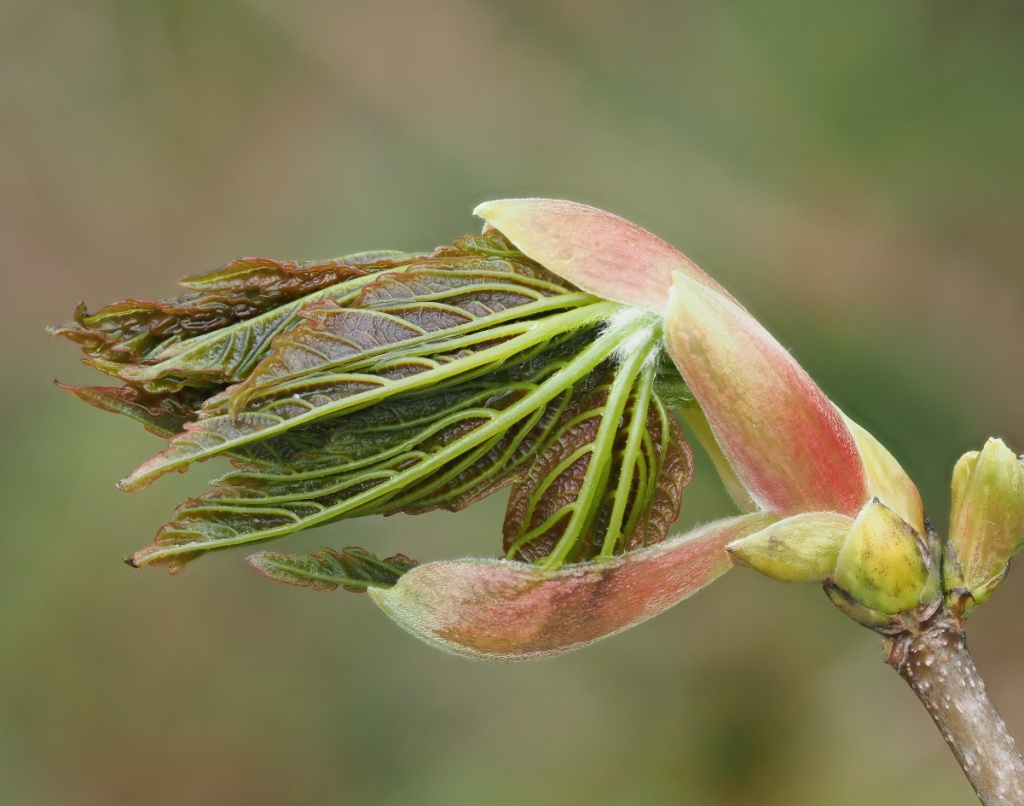
Buds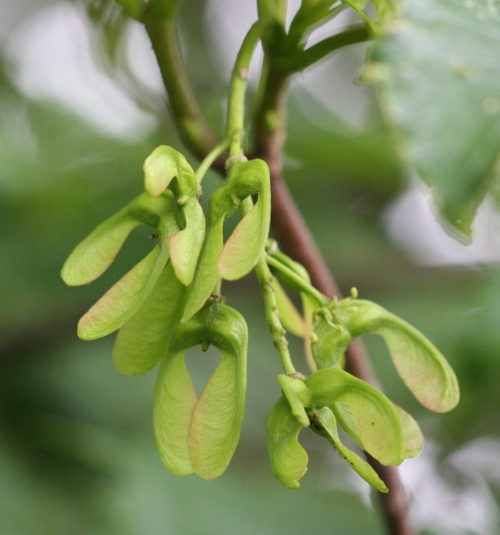 David Nicholls
Thornton Reservoir
05 June 2012
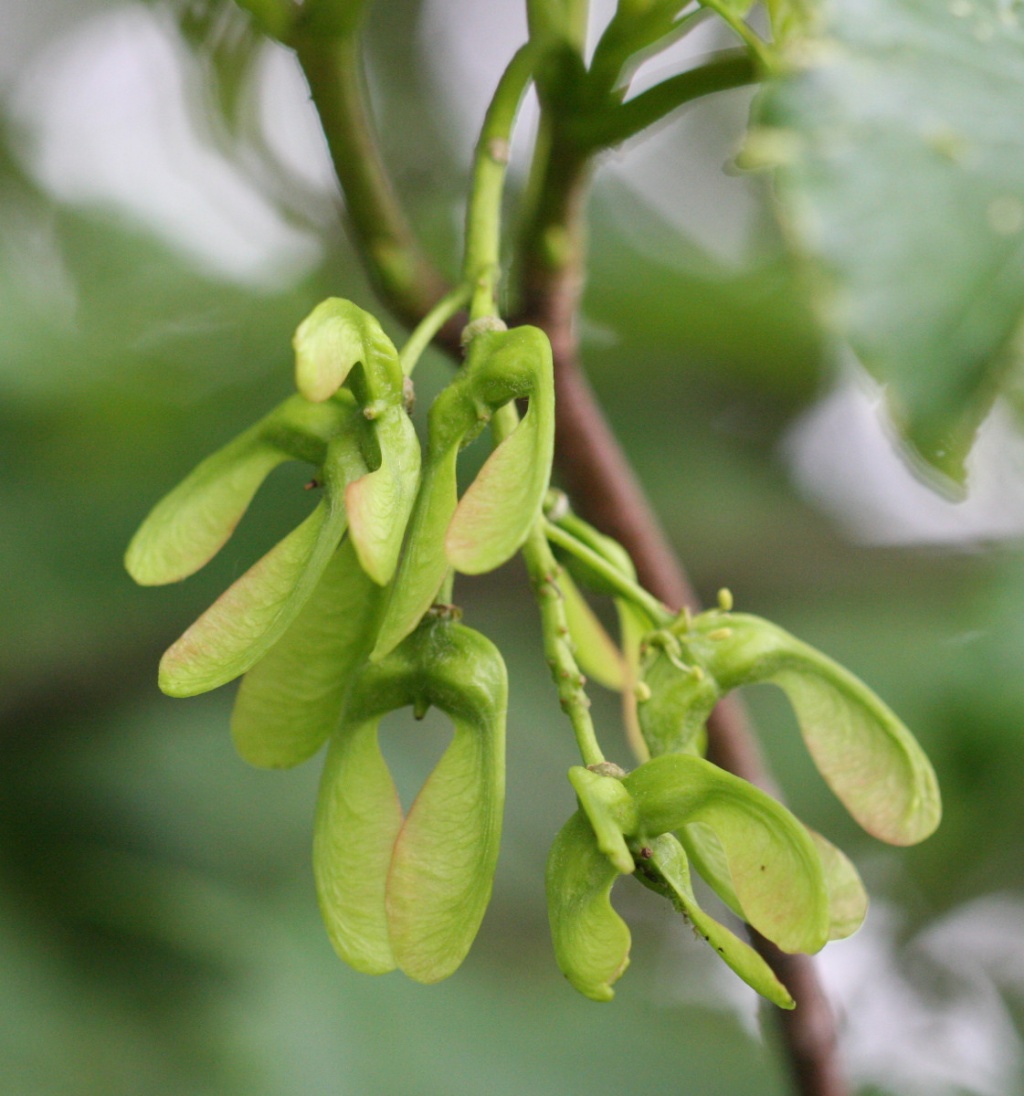
young seeds (keys)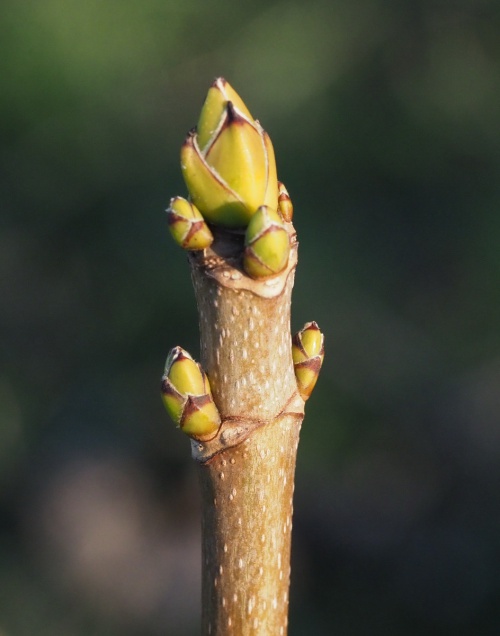 David Nicholls
Leicester, Abbey Park
20 January 2023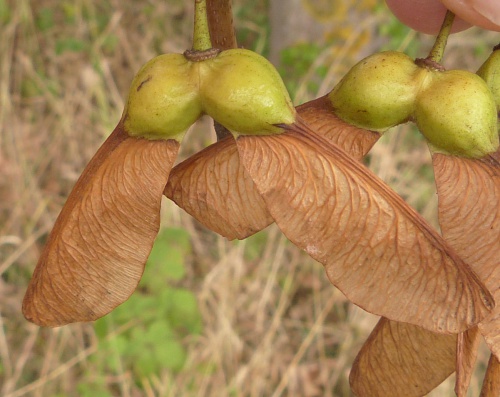 Graham Calow
A5 near High Cross
22 August 2016
winged seeds
. Old Fosse Sapcote SP 5034 9294 (taken 20.4.2009).JPG)
 Old Fosse Sapcote SP 5034 9294 (taken 13.4.2008).JPG)
Leicestershire & Rutland Map
Enter a town or village to see local records
MAP KEY:
Yellow squares = NBN records (all known data)
Coloured circles = NatureSpot records: 2025+ | 2020-2024 | pre-2020
UK Map
Species profile
- Common names
- Sycamore
- Species group:
- flowering plant
- Kingdom:
- Plantae
- Order:
- Sapindales
- Family:
- Sapindaceae
- Records on NatureSpot:
- 461
- First record:
- 01/01/1979 (Patricia Evans)
- Last record:
- 28/06/2026 (Mabbett, Craig)
Total records by month
% of records within its species group
10km squares with records
The latest images and records displayed below include those awaiting verification checks so we cannot guarantee that every identification is correct. Once accepted, the record displays a green tick.
In the Latest Records section, click on the header to sort A-Z, and again to sort Z-A. Use the header boxes to filter the list.
Latest images
Latest records
 Old Fosse Sapcote SP 5034 9294 (taken 3.8.2007).JPG) Graham Calow
Graham Calow
Sapcote
03 August 2007
Seeds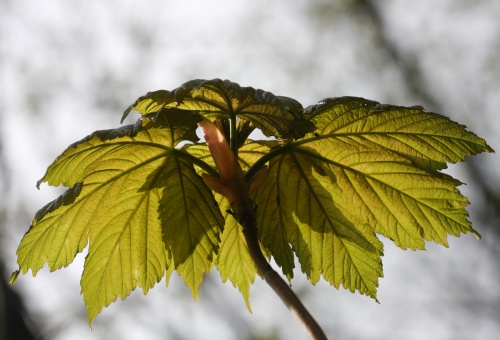 David Nicholls
Thornton Reservoir
27 April 2013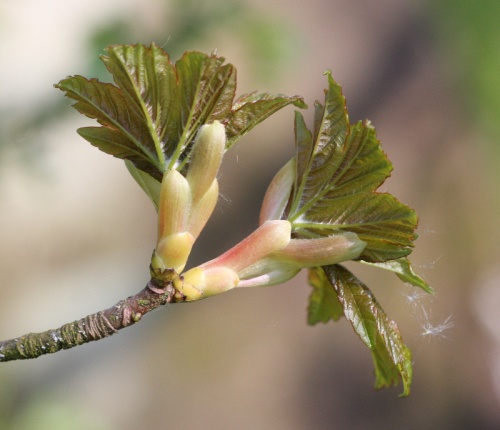 David Nicholls
Gilroes Cemetery
06 May 2012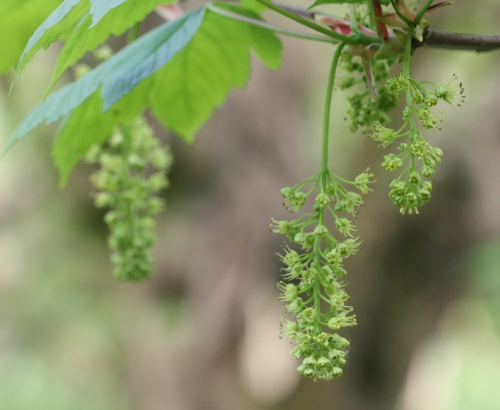 David Nicholls
Sheet Hedges Wood
02 May 2014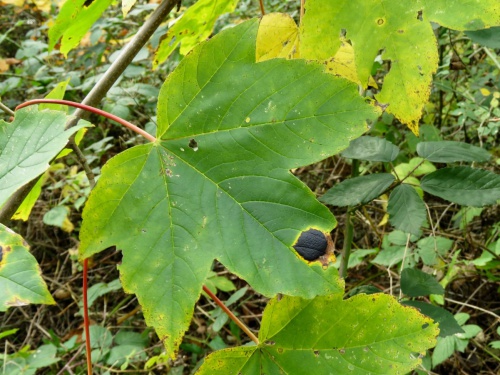 egaten
Shenton Station
31 October 2019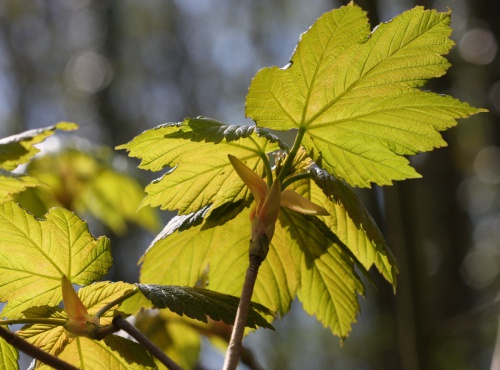 David Nicholls
Thornton Reservoir
27 April 2013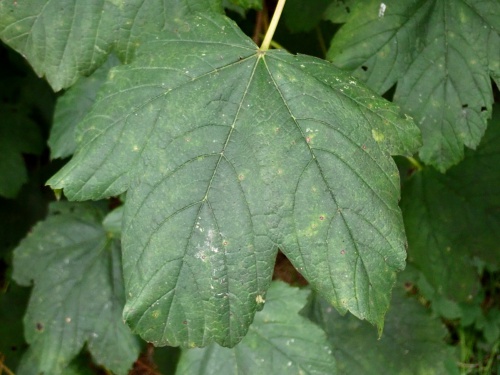 egaten
Beacon Hill Country Park
01 September 2021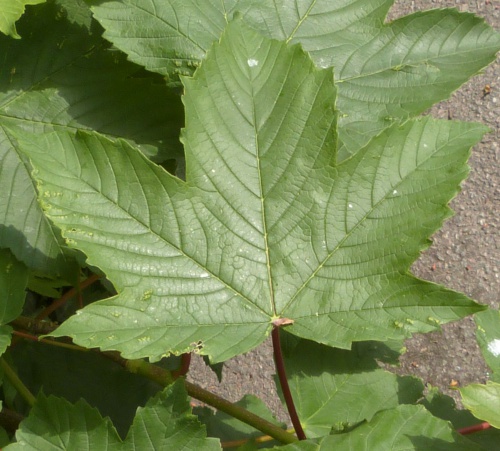 Graham Calow
Cambridge Road, Cosby
15 May 2016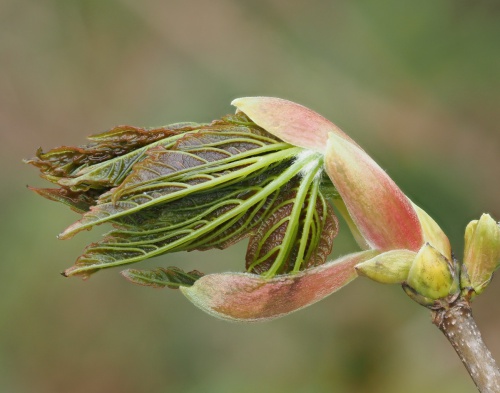 David Nicholls
Piper Wood, Shepshed
15 April 2023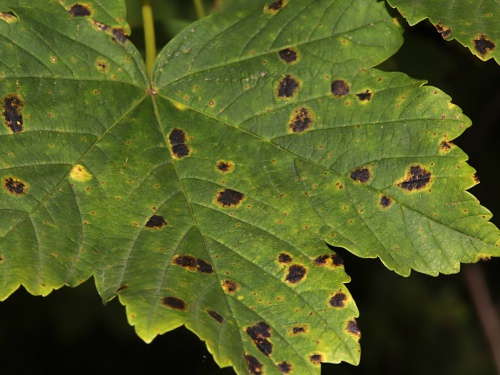 Mike Higgott
Loughborough University
18 July 2023
 Old Fosse Sapcote SP 5034 9294 (taken 3.8.2007).JPG)
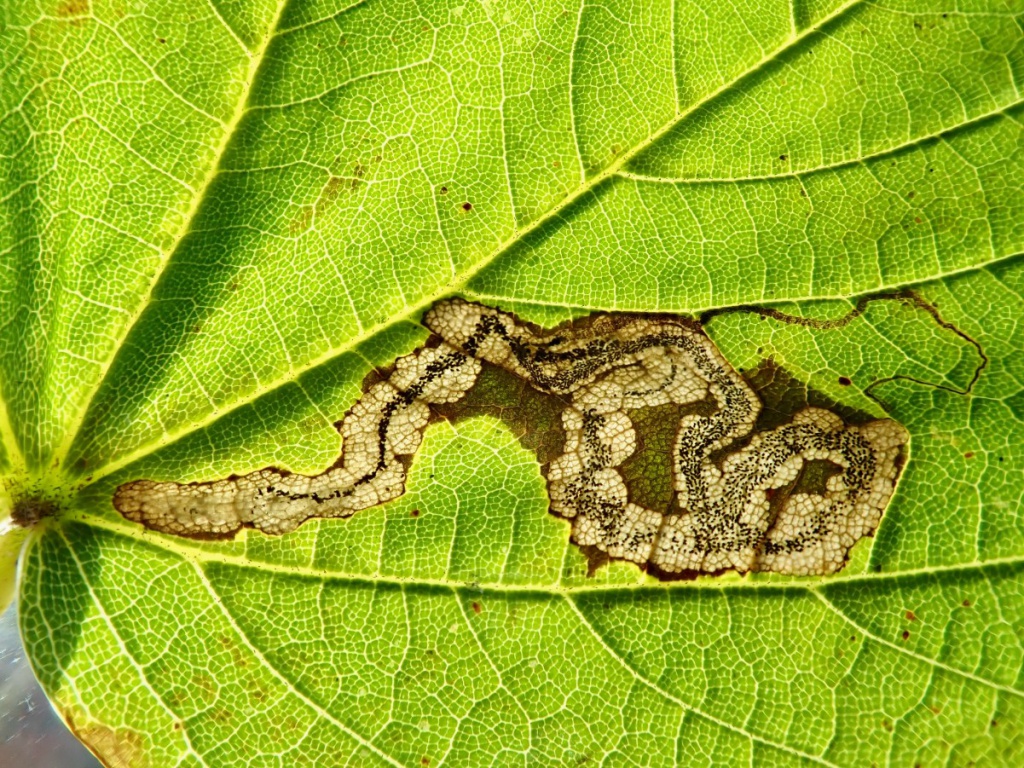
Stigmella speciosa
A small moth with a wingspan of 4 to 5 mm. The adults of this tiny species have bronzy wings tinged with purple and a narrow silvery fascia. The larvae mine the leaves of Acer species, usually Sycamore. The mine is a full depth corridor, quite variable in length and width. Also the frass pattern is very variable: sometimes a narrow continuous line, sometimes a broad zone. Always there remains a clear zone between the frass and the side of the mine; also the frass is never coiled.
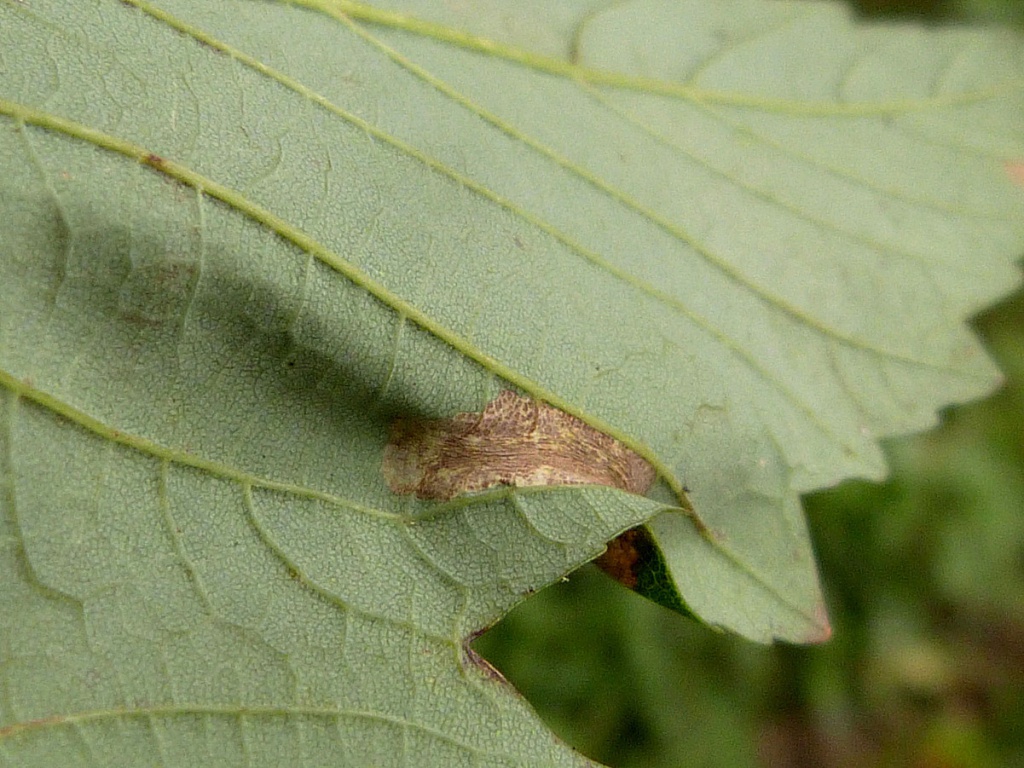
Phyllonorycter geniculella
Phyllonorycter geniculella is a small moth with a wingspan of 8 mm. It is a beautiful but tiny species, having a white base colour with rufous, darker-edged chevrons, the first of which often 'extrudes' into the next. The larva mines the leaves of Sycamore. The mine is rounded, between the veins.
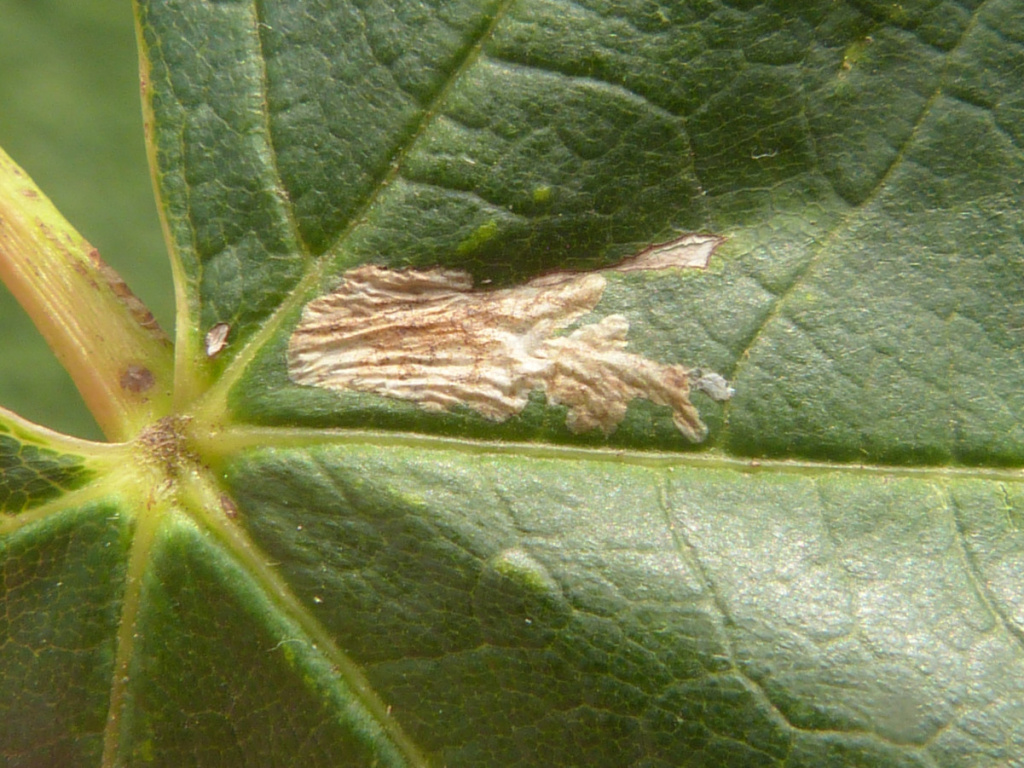
Caloptilia honoratella
Caloptilia honoratella is a small moth. It's general colouration is a deep cream colour with brown ‘inverted V’ and other markings. The larva feeds on Sycamore producing a silvery upper surface leafmine.
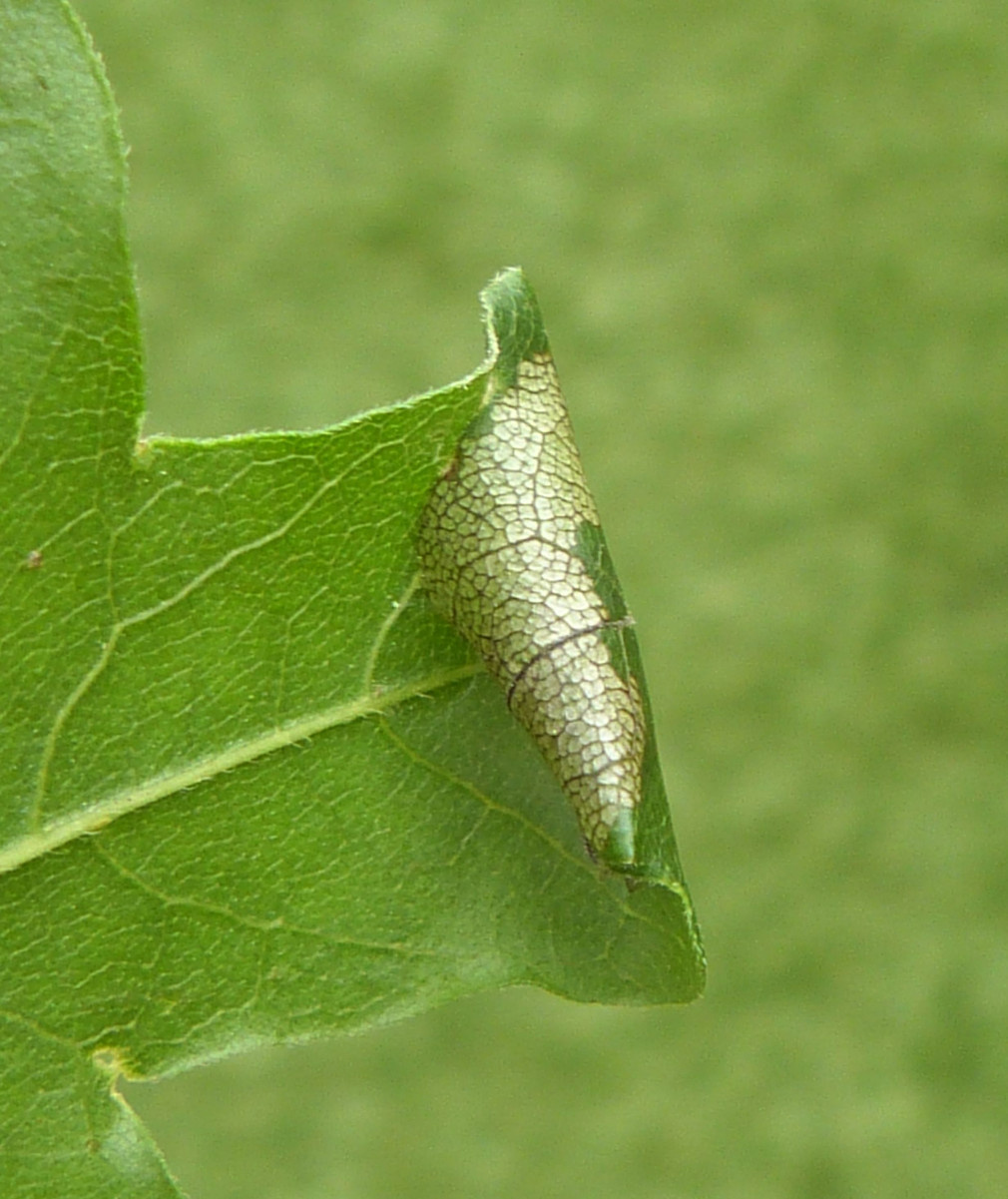
Caloptilia semifascia
Caloptilia semifascia is a small moth with a wingspan of 10 to 12 mm. The angled light streak starting at the leading edge of the forewing is characteristic, but it can be obscured on darker specimens. The larva mines the leaves of Sycamore, Field Maple and Norway Maple. The early mine is a gallery leading to a squarish blotch. It later forms up to three successive tubes or cones by folding the tips of leaves downwards . The moth must be bred to identify to species.
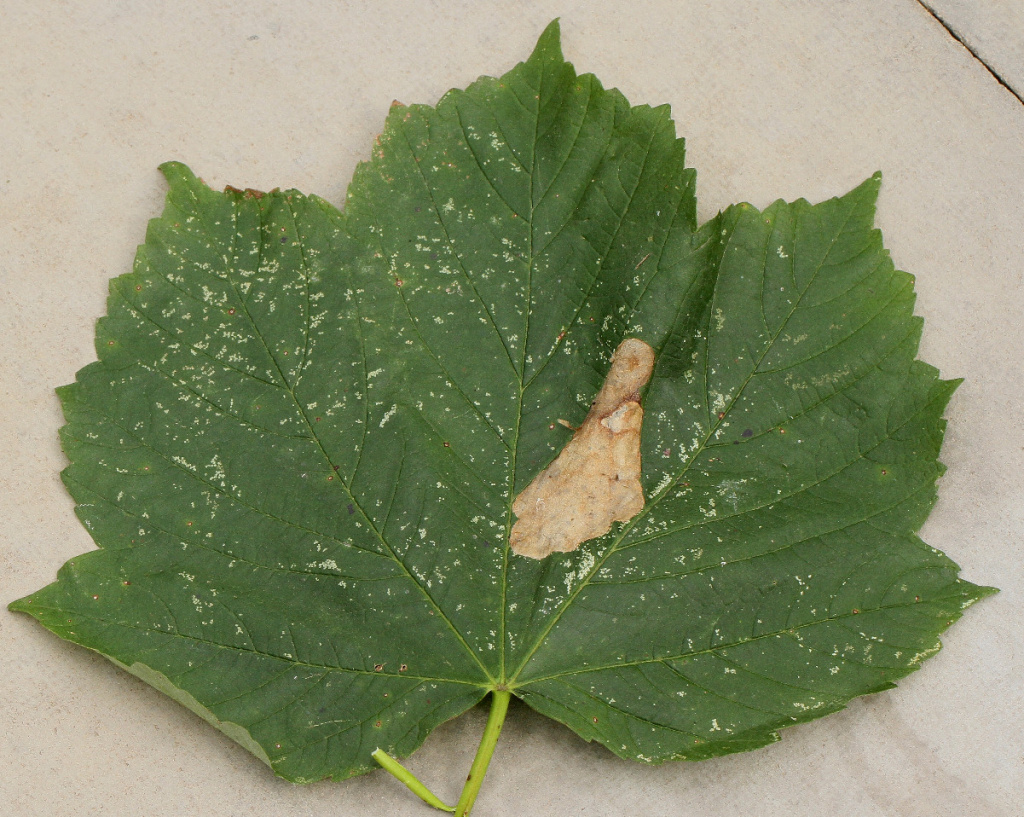
Heterarthrus cuneifrons
The larvae of the sawfly Heterarthrus cuneifrons mine the leaves of Sycamore, forming a large, central blotch mine, rarely reaching the edge of the leaf.

Heterarthrus fiora
The larvae of the sawfly Heterarthrus fiora mine the leaves of Sycamore (Acer pseudoplatanus) producing a large upper-surface (often almost full depth) blotch, without a trace of an initial corridor, beginning in the very tip of a leaf segment. The full grown larva spins itself a disc shaped cocoon within the mine having previously has made a circle of perforations in the upper epidermis with its mandibles. The cocoon is formed, attached to the upper epidermis, and the larva becomes immobile. The perforated circle of epidermis starts to dry, warps, and finally becomes detached from the surrounding tissue and drops to the ground. The resulting excision has a diameter of about 7 mm, and is best seen when the leaf is held against the light (Bladmineerders van Europa).
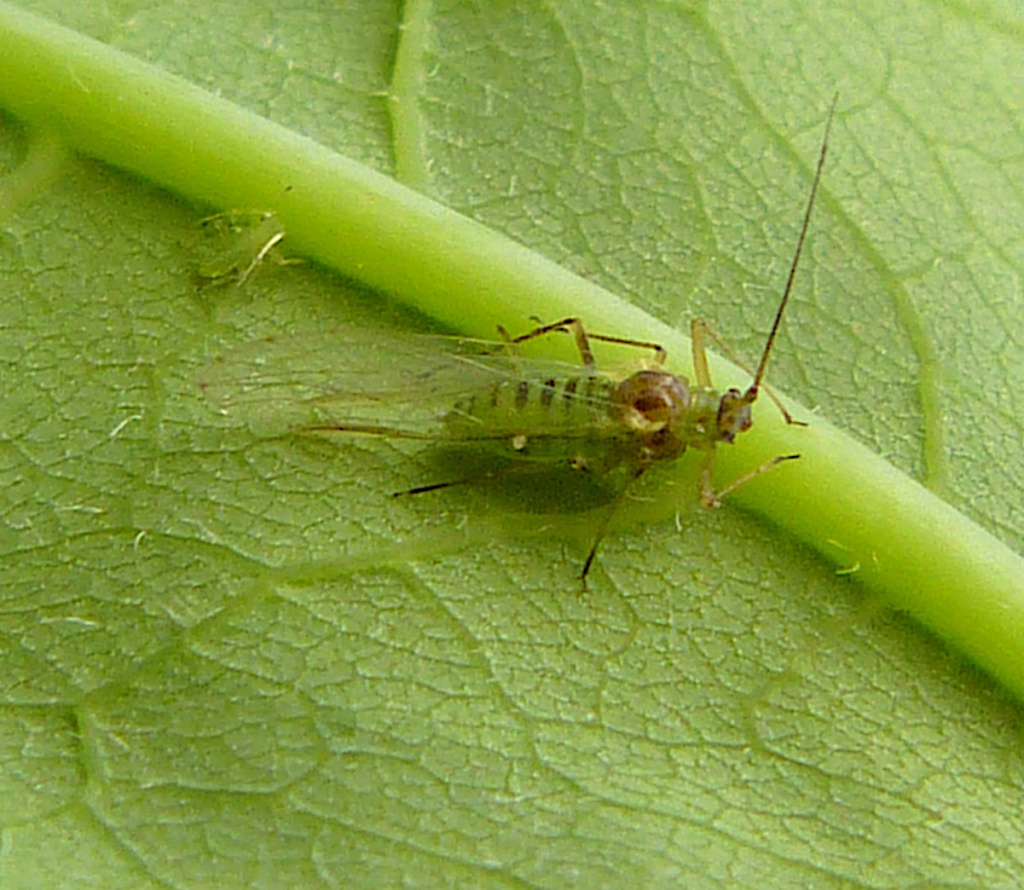
Drepanosiphum platanoidis
All adult Drepanosiphum platanoidis aphids are winged and range in size from 3.2 to 4.3 mm long. They have red eyes, a brown thorax, and a pale green abdomen. The upper surface of the abdomen has up to 5 or 6 variably developed dark cross-bars. Early in the year these cross bars may be reduced or absent altogether. The two tubes (siphunculi) at the rear end are pale, long and thick. Nymphs lack wings and are all green. This aphid spends all year on Sycamore.
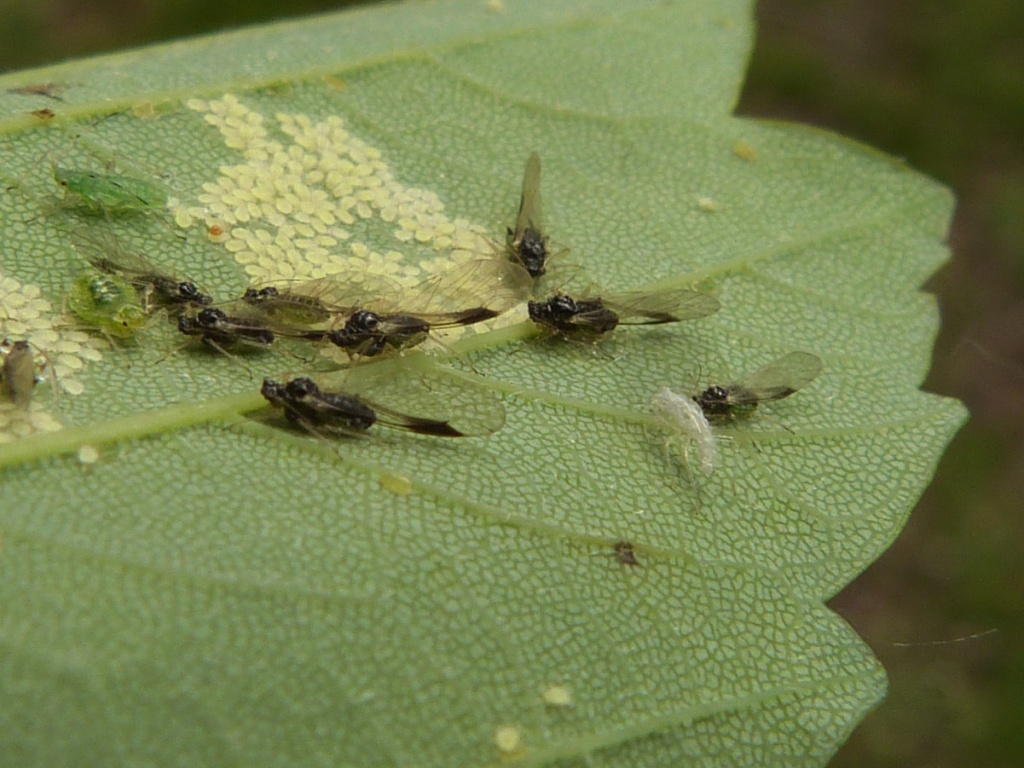
Periphyllus acericola
Periphyllus acericola colonies occur on the undersides of Sycamore leaves. Alates with closely spaced, black, abdominal cross-bars and black pterostigmata. White "dimorph" nymphs in dense groups.
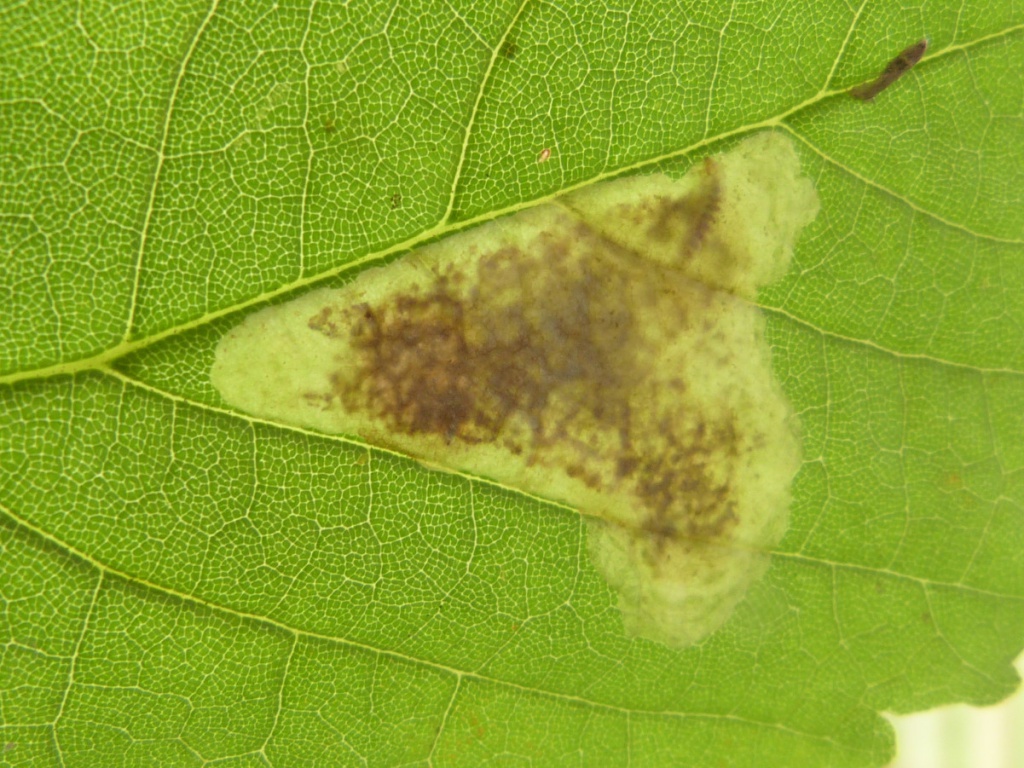
Horse-chestnut Leaf-miner
The larva of the Horse-chestnut Leaf-miner moth (Cameraria ohridella) mines the leaves of Horse-chestnut and occasionally Sycamore and other species. On its main host, Horse-chestnut, there can be many mines on a leaf and this moth can cause serious defoliation.
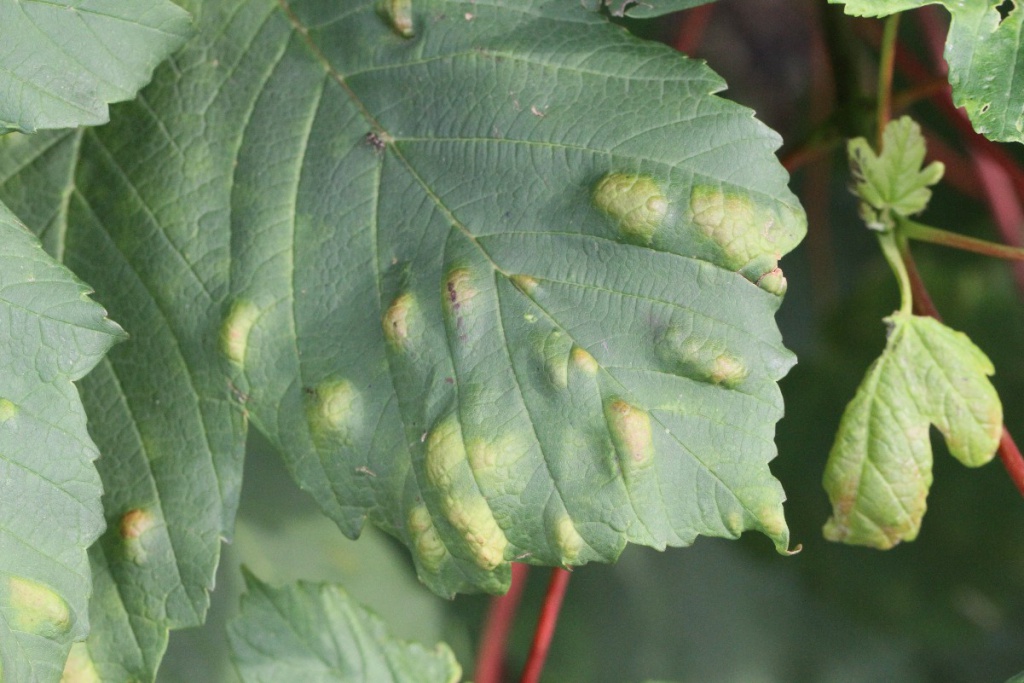
Aceria pseudoplatani agg.
Aceria pseudoplatani agg. mites cause an erineum to form on Sycamore, usually on the leaf underside. The mites live amongst the hairs of the erineum, which is pale to begin with and brown later; the individual hairs (use a hand lens) are long and tapering. On purple-leaved varieties, the erineum is flushed pink. There are often corresponding blister like, yellowish bumps on the upper leaf surface.

Aceria cephalonea
The mite Aceria cephalonea causes small red pouch galls on the upper surface of Sycamore leaves. When fullty developed in summer, the galls are less than 3mm high with a rounded apex.
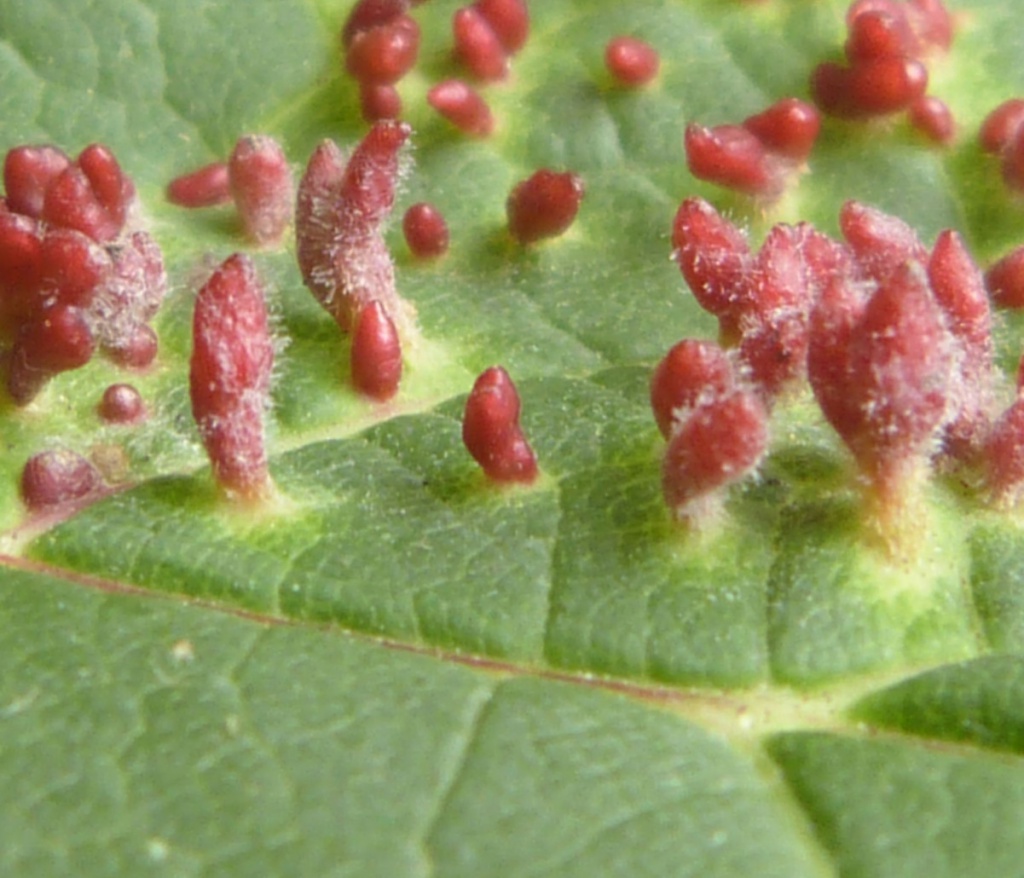
Aceria macrorhyncha
The mite Aceria macrorhyncha causes a red pouch gall on the upper surface of Sycamore leaves. When fully developed in late summer, the galls are up to 6mm high, with a pointed apex.