

Small Nettle - Urtica urens
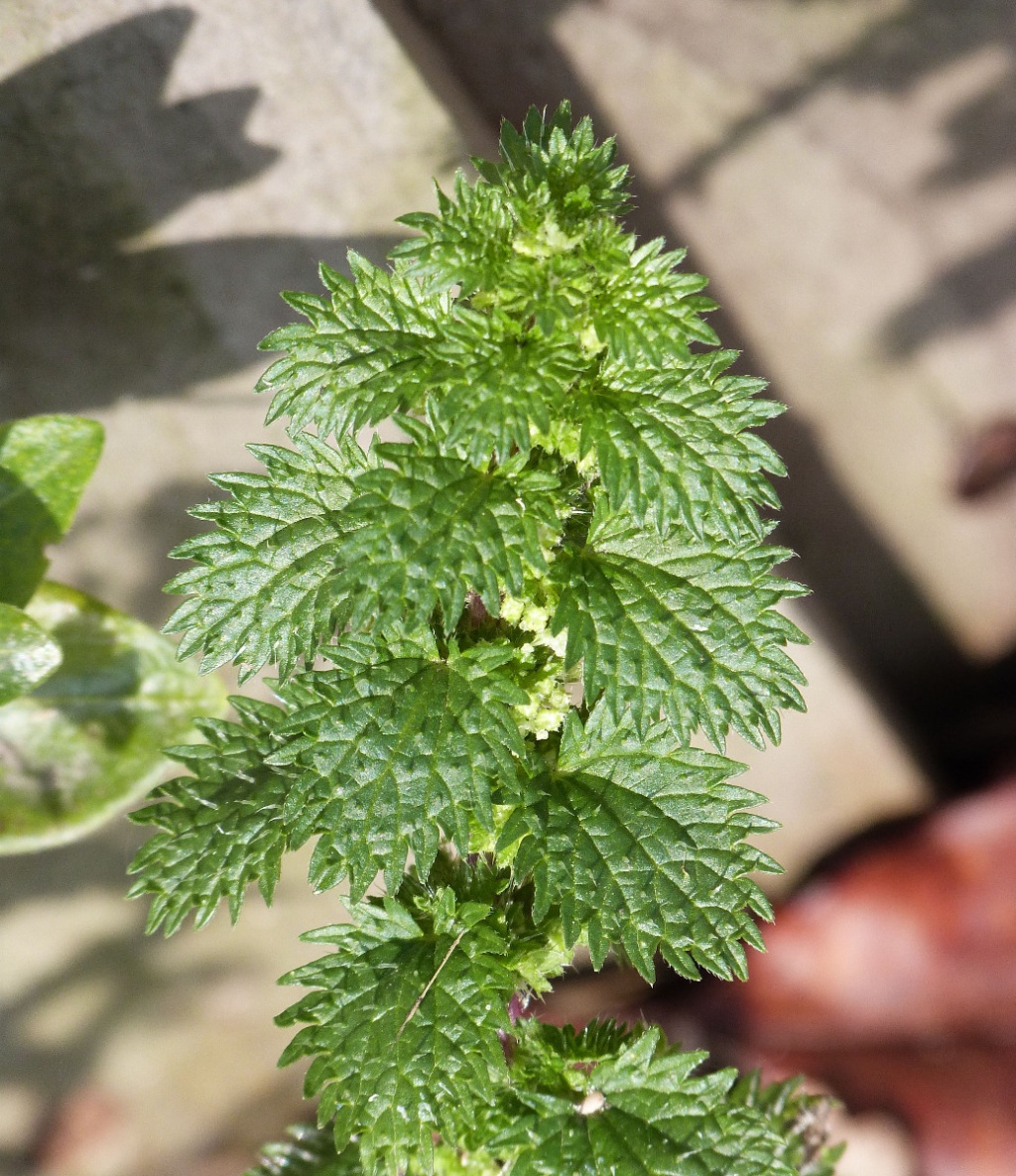
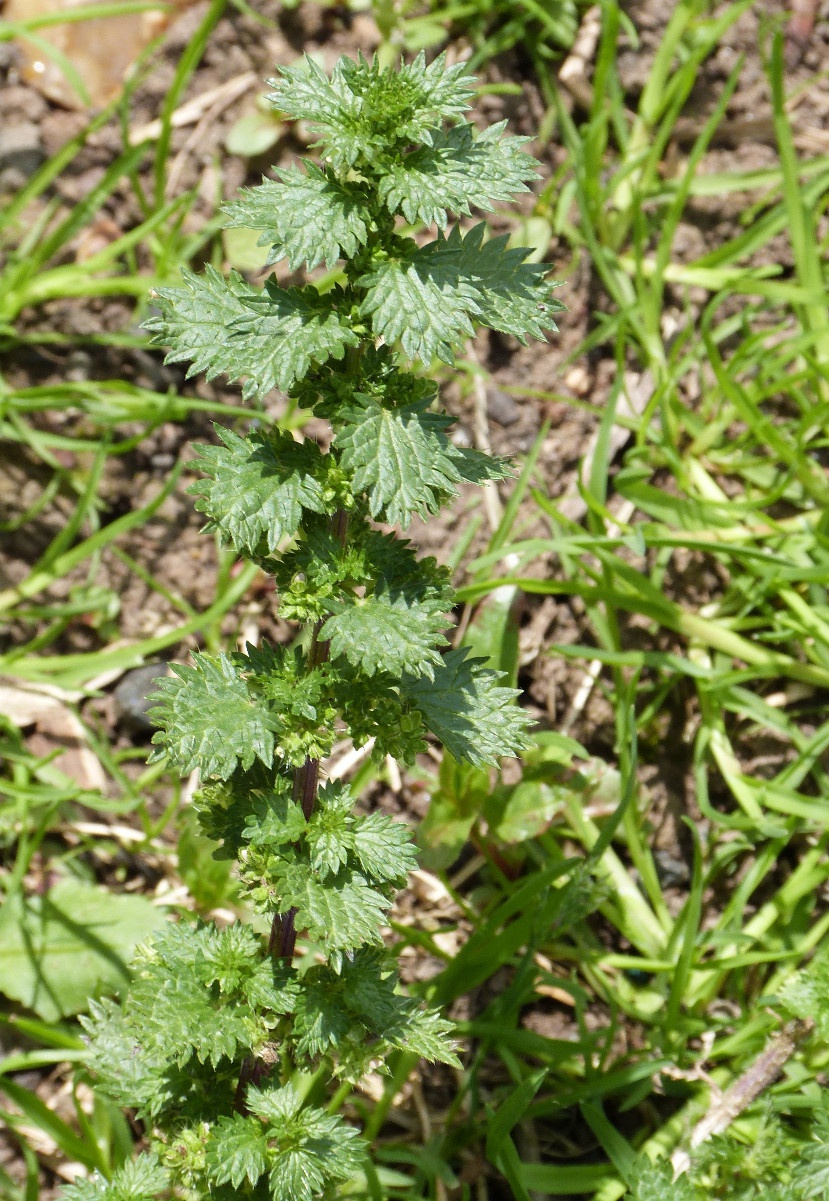
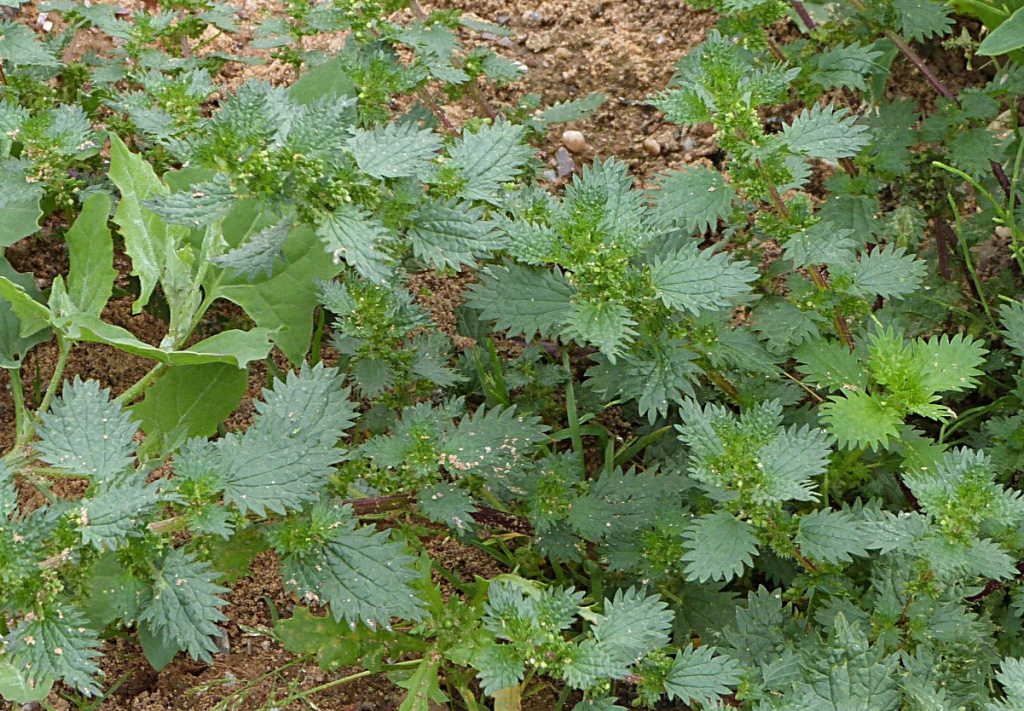
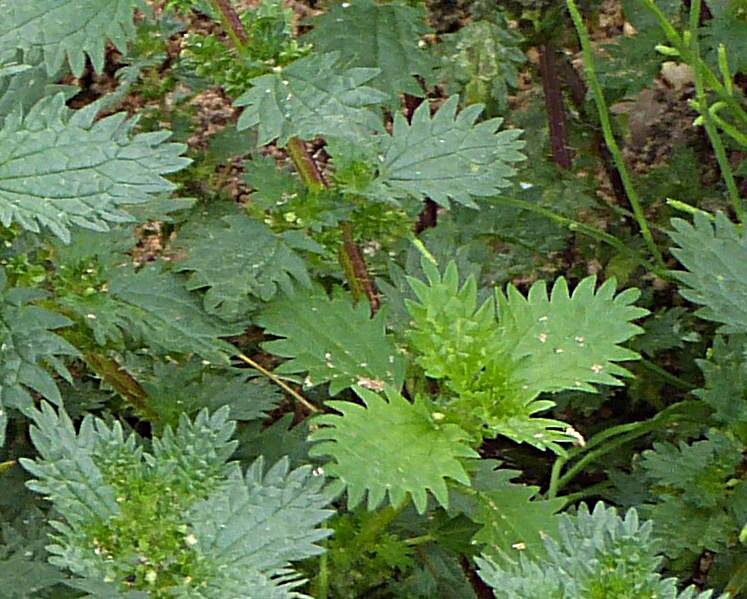
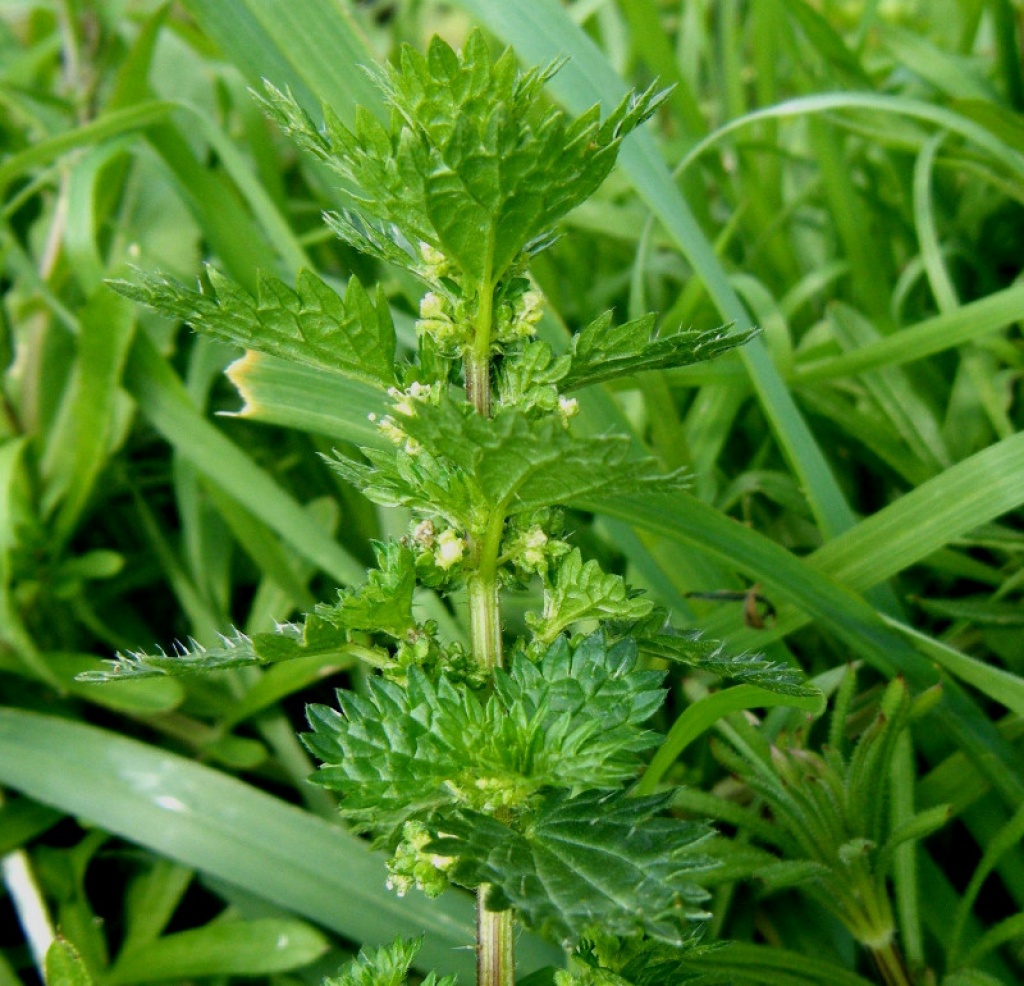
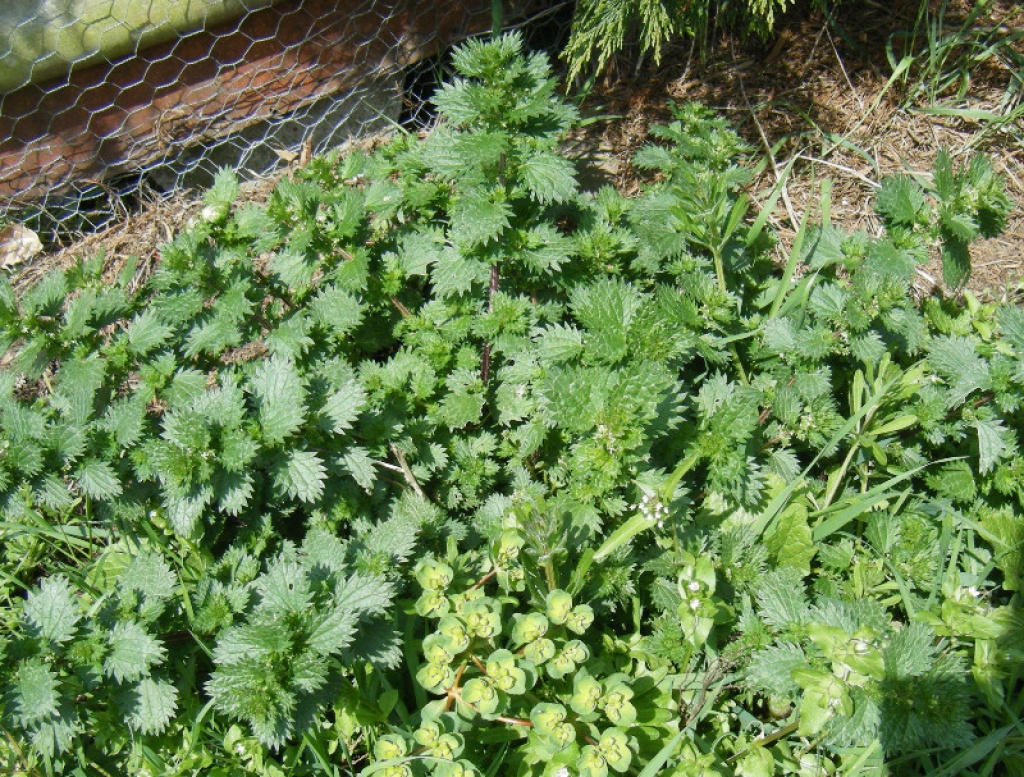
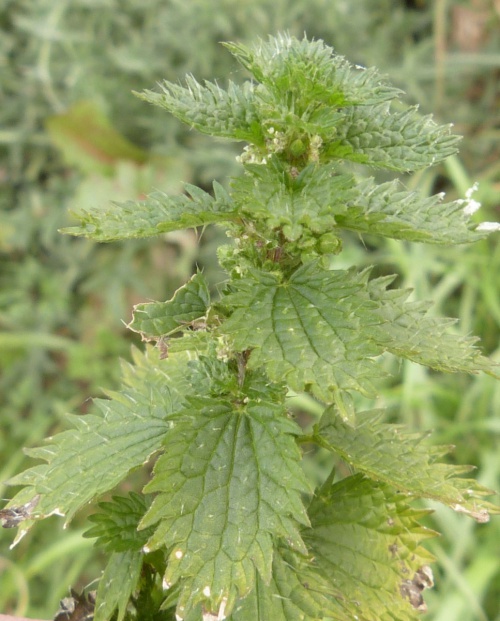
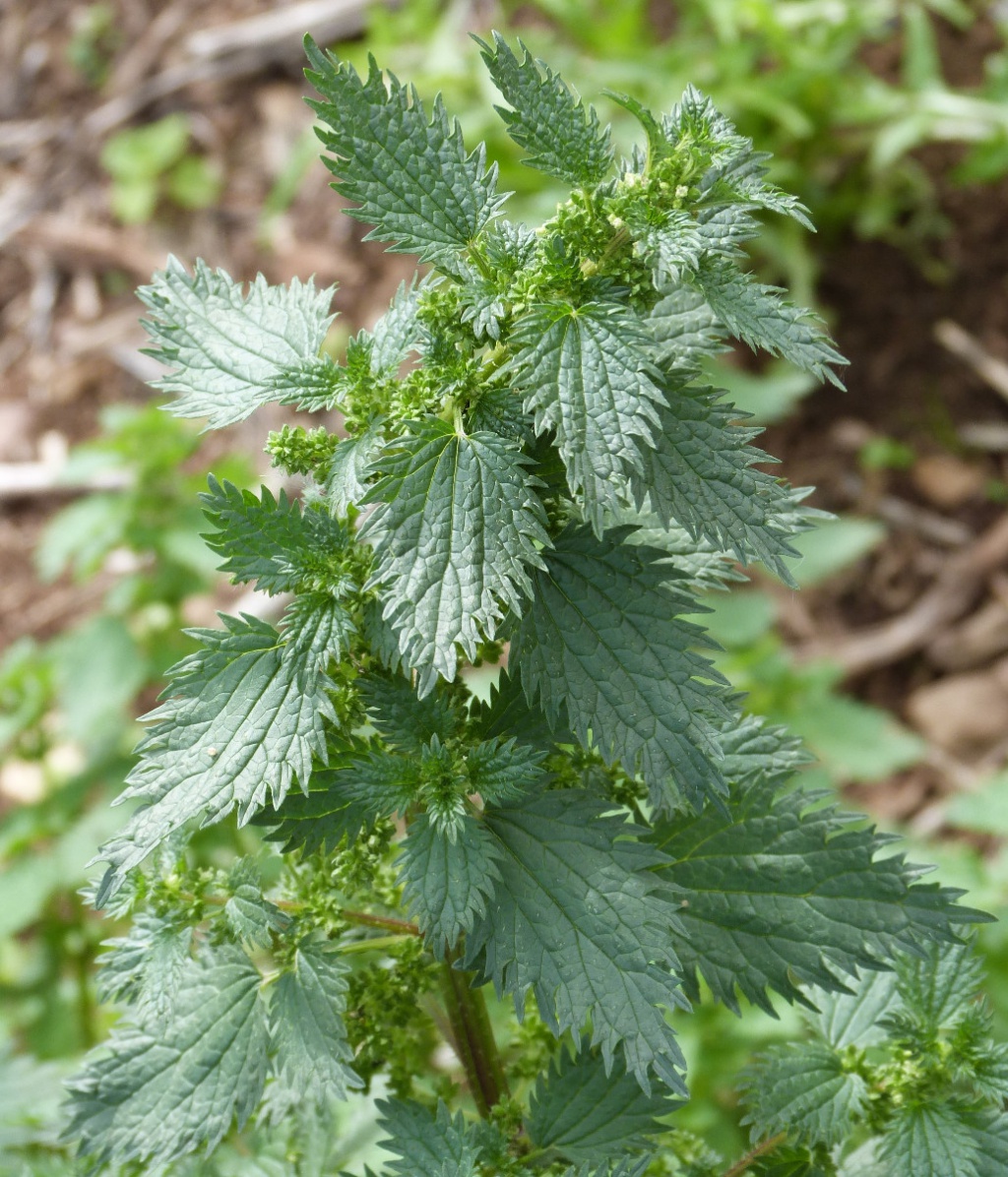
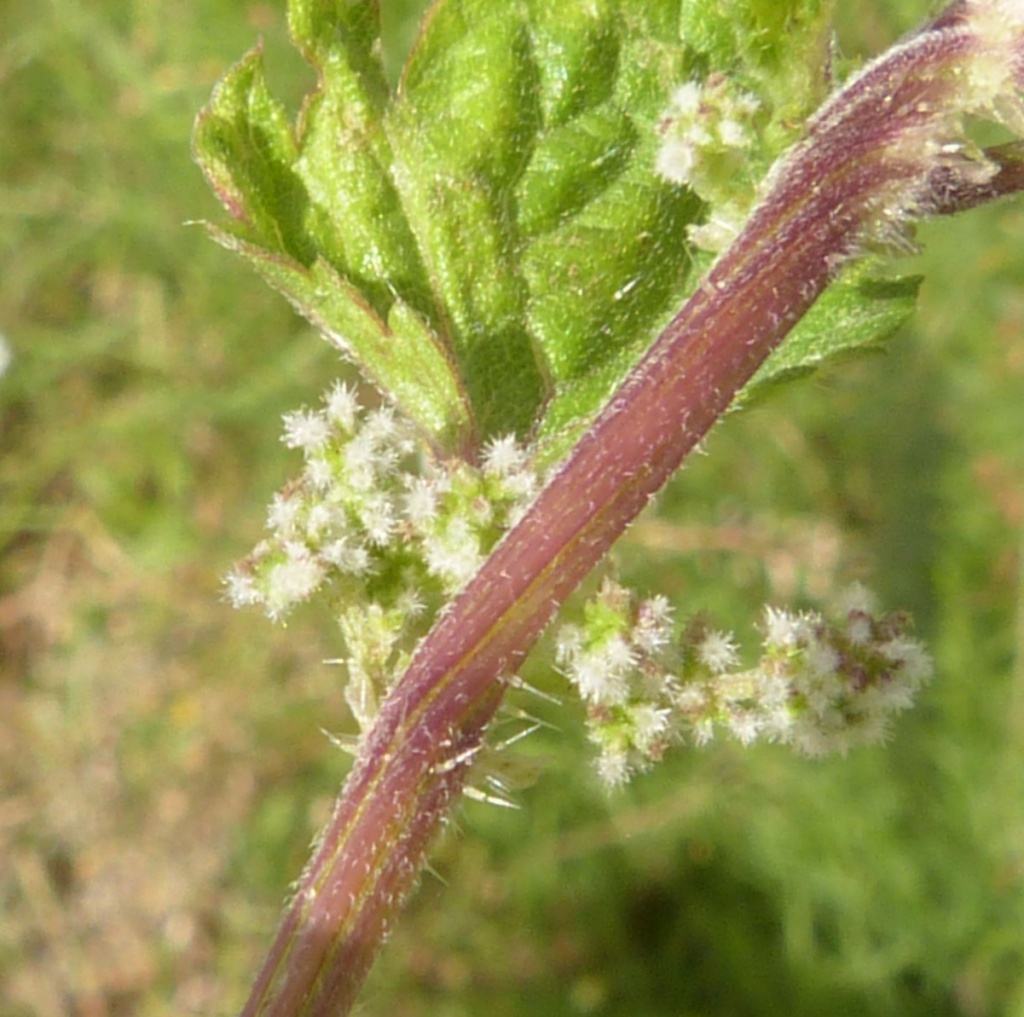
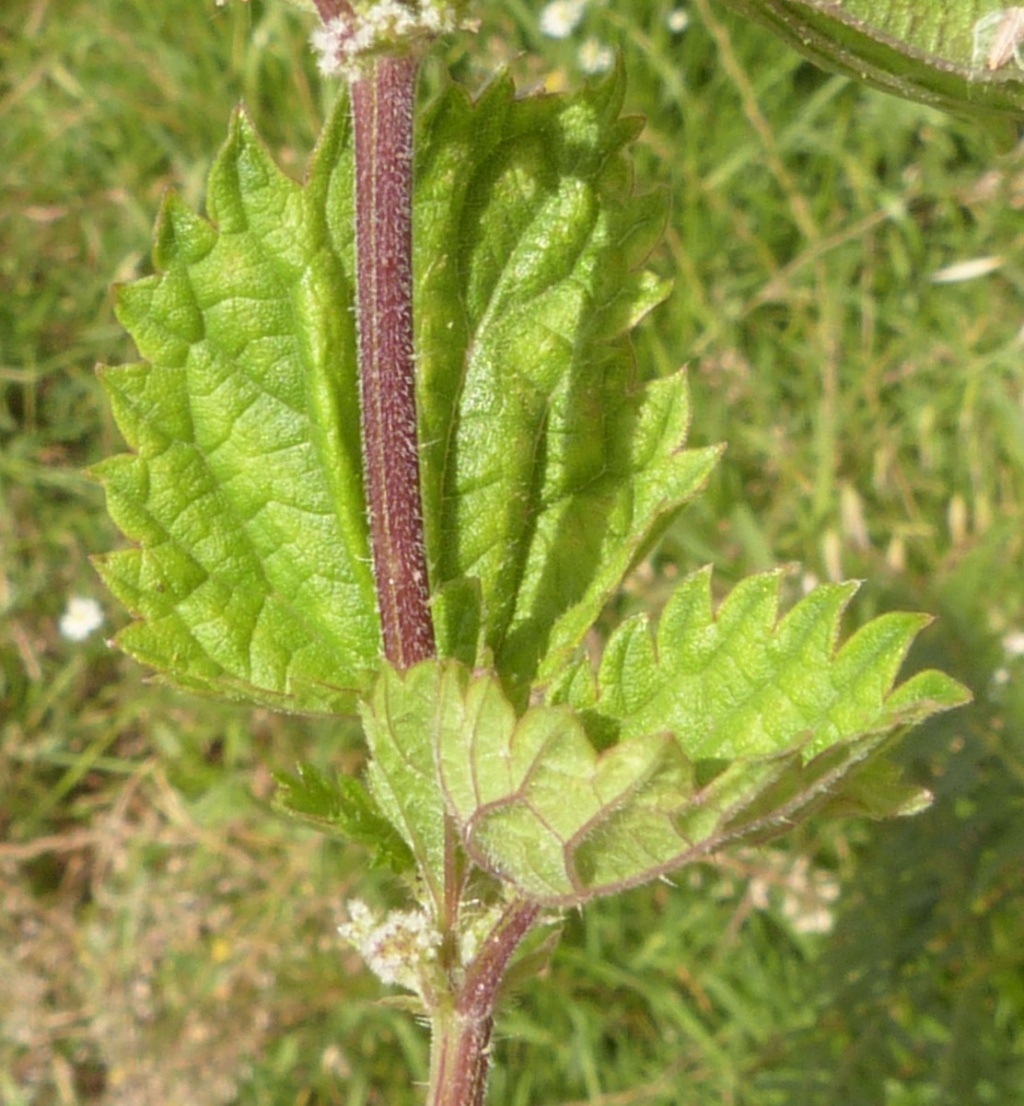
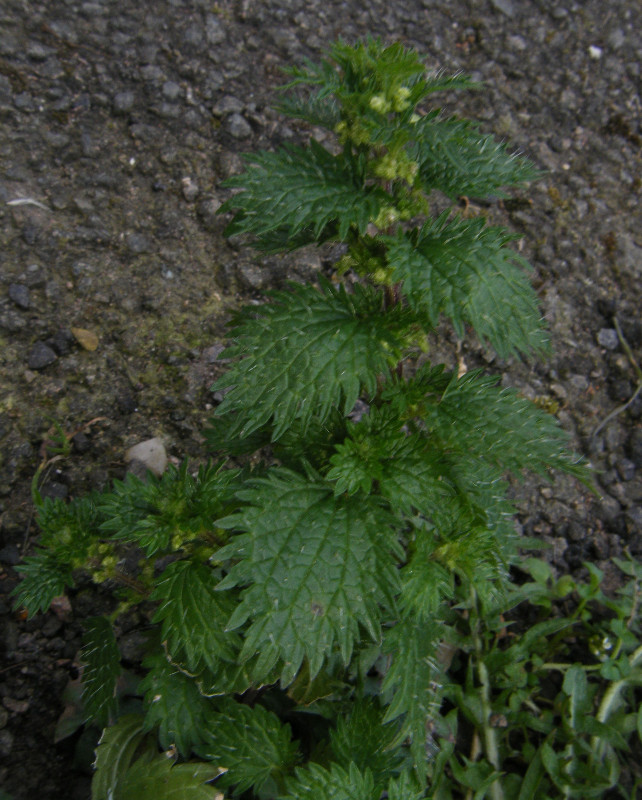
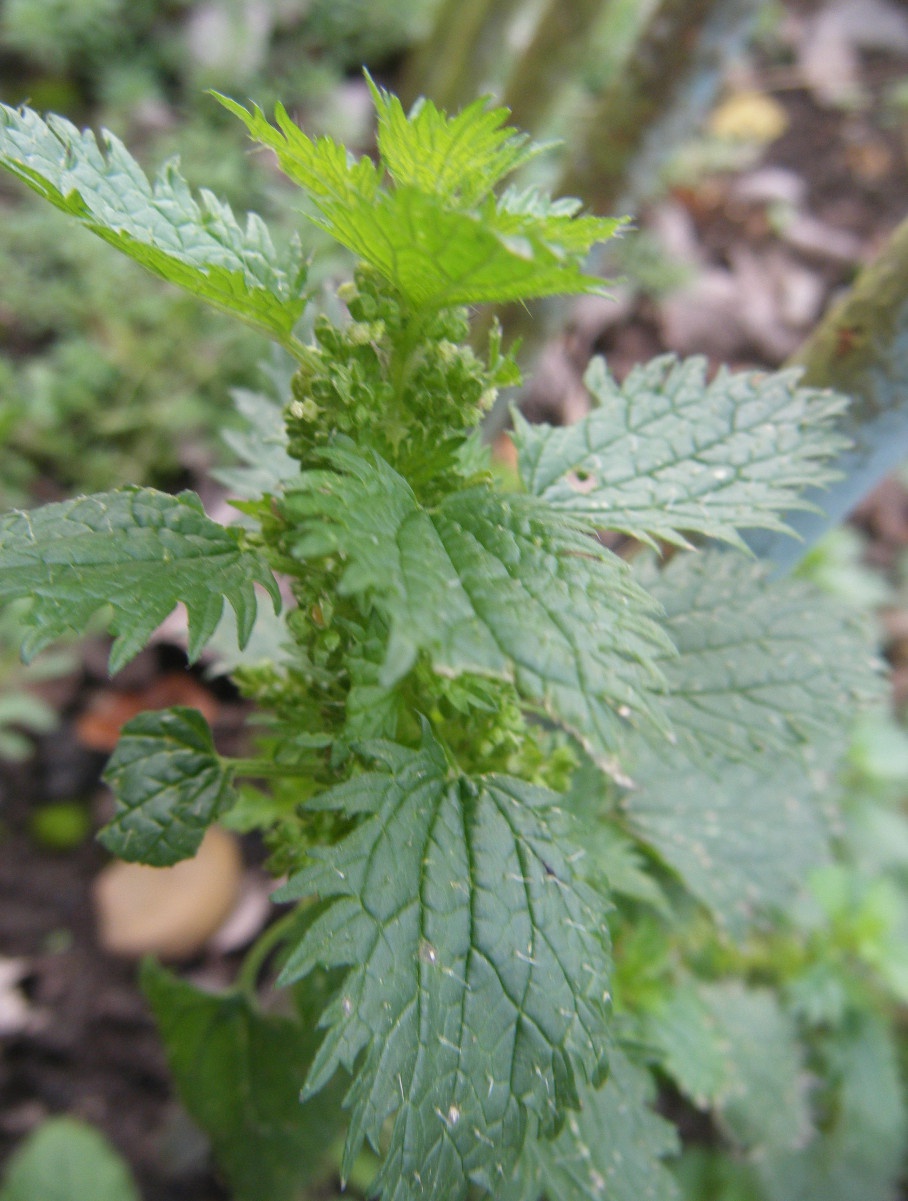
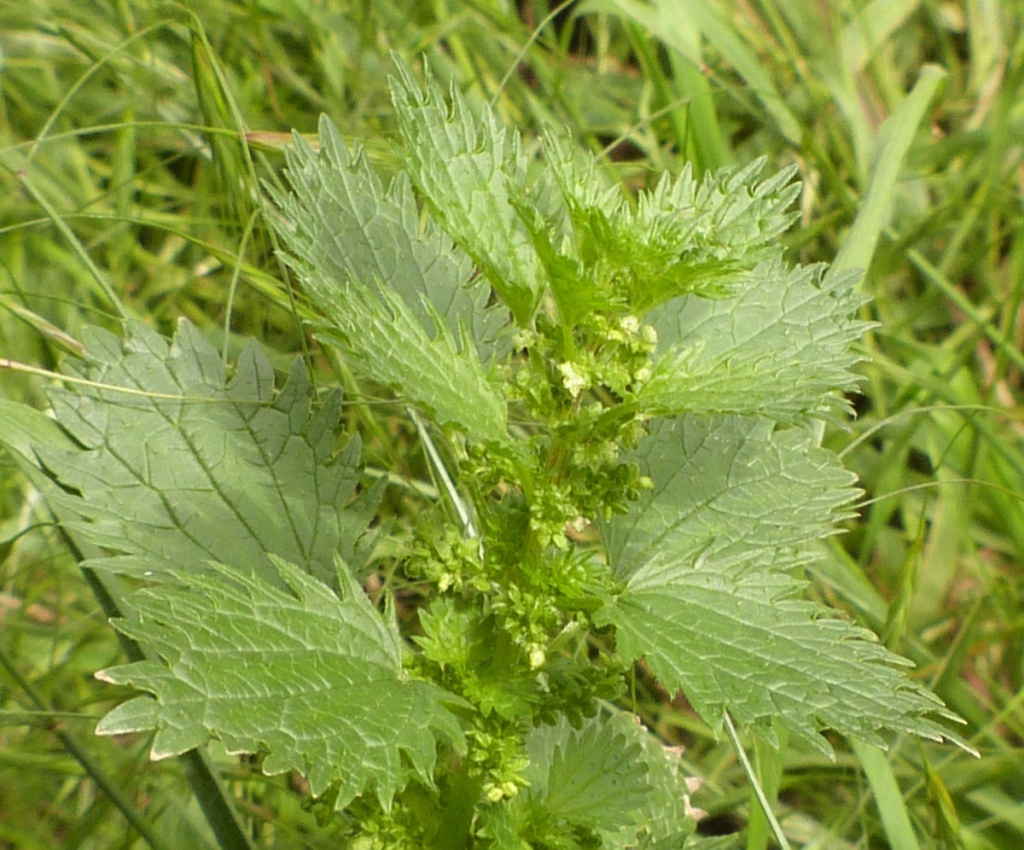
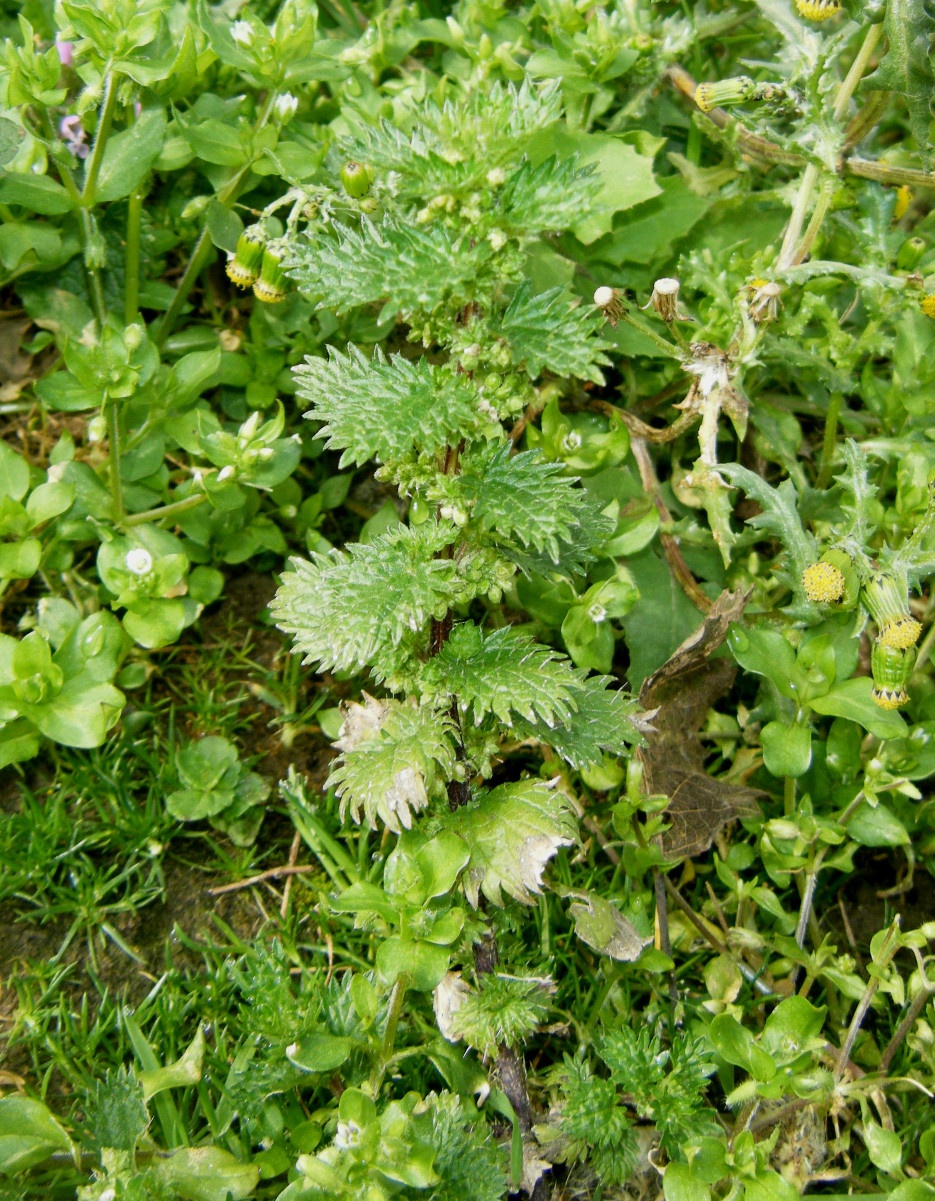
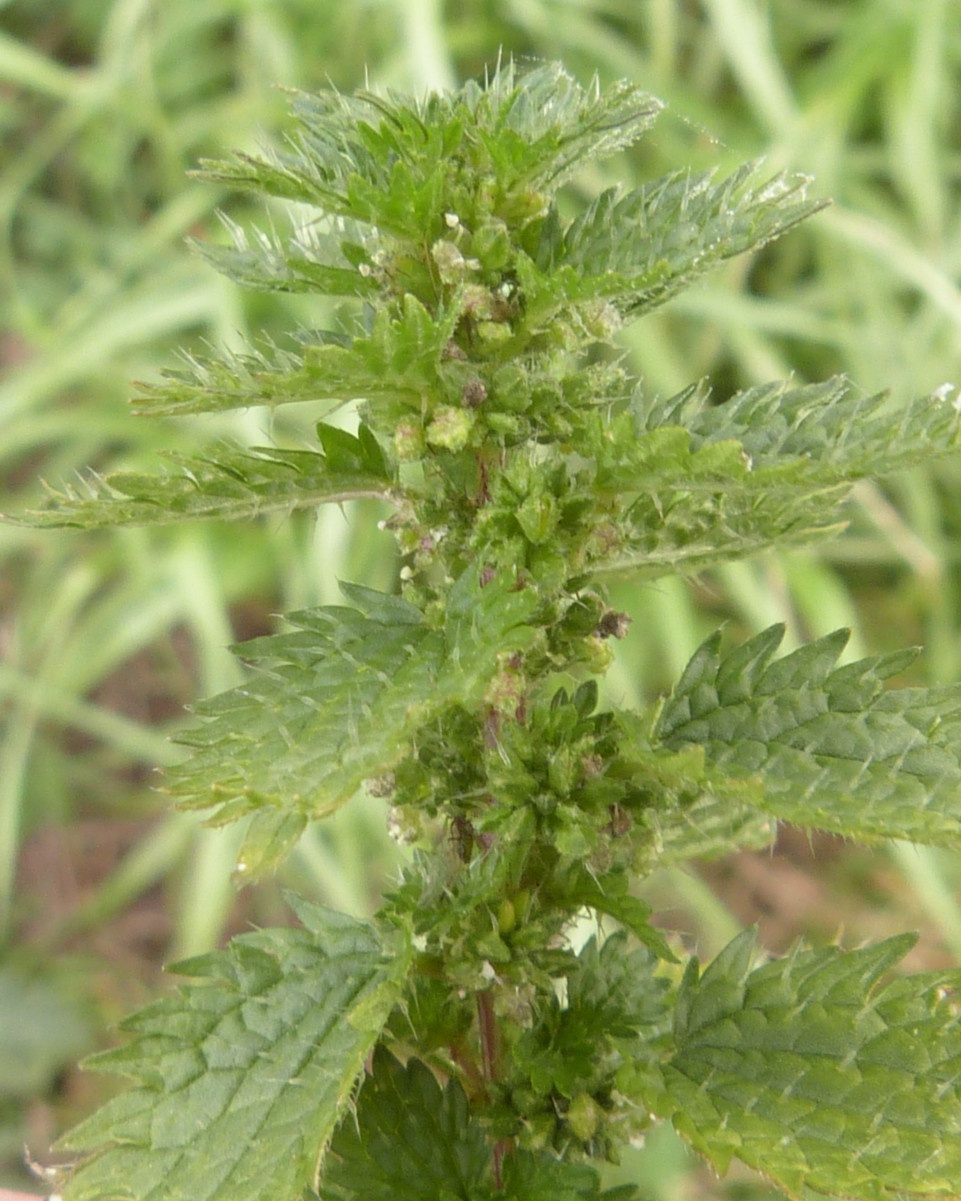
Short to medium plant with weakly stinging hairs, the leaves more coarsely toothed than U. dioica and the lower leaves shortly stalked, not long stalked. Male and female flowers on the same plant, many female and few male, in ascending spikes.
Urtica dioica

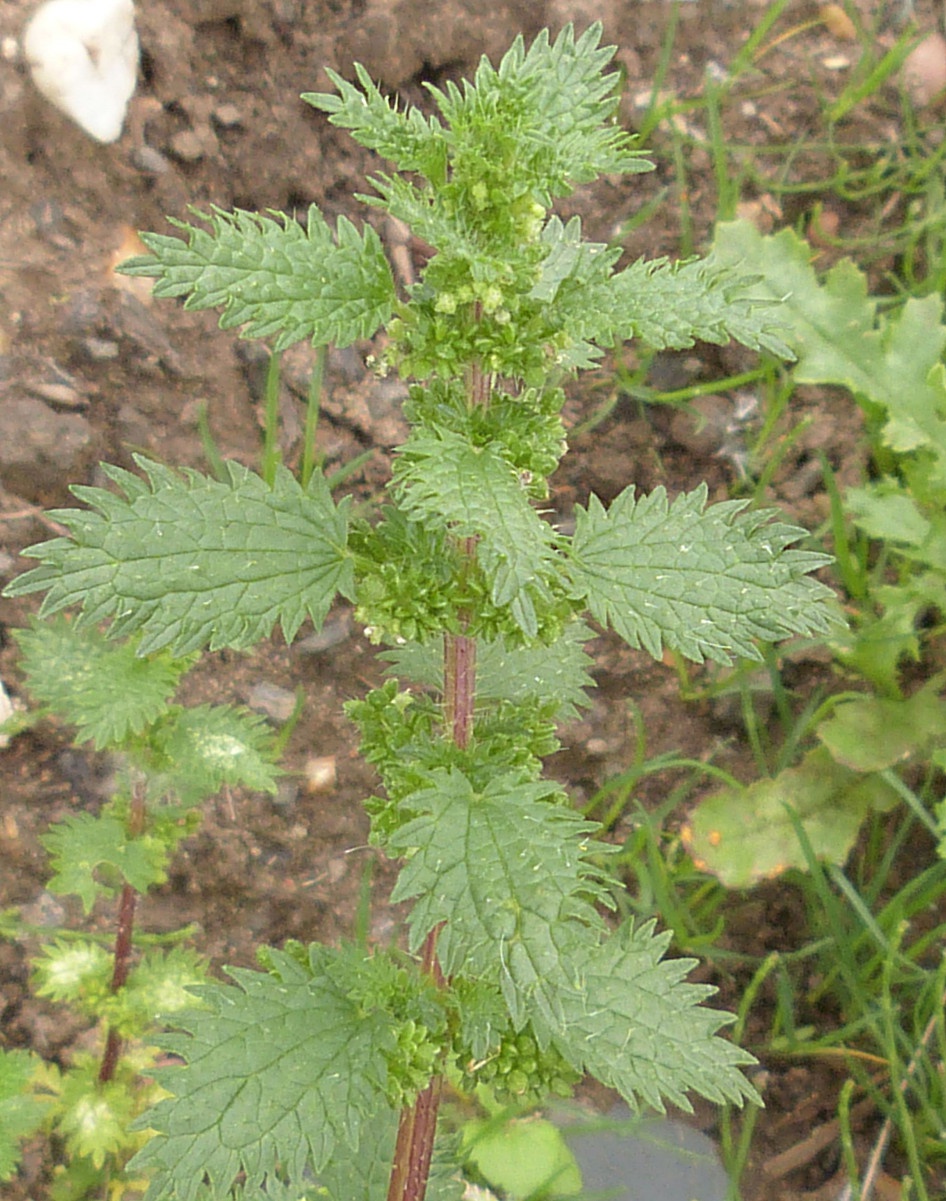
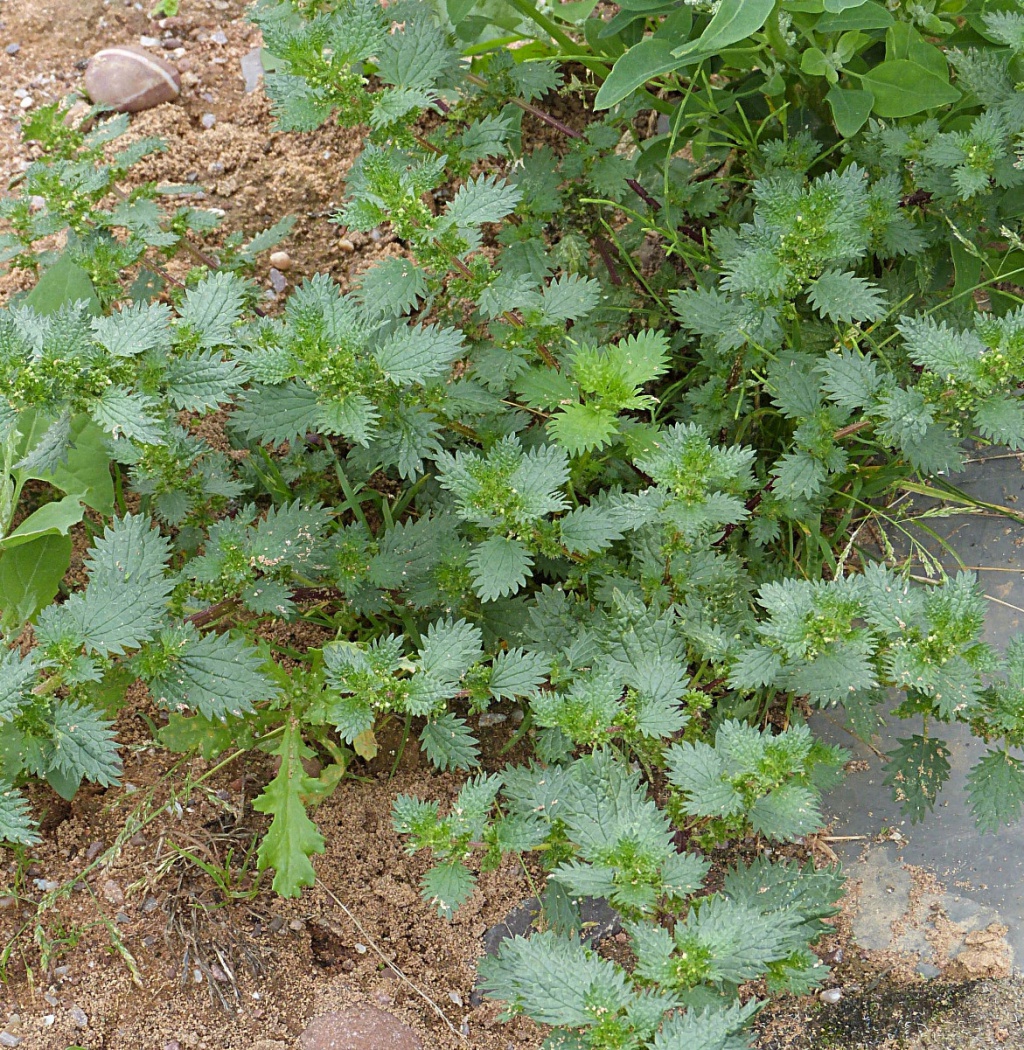
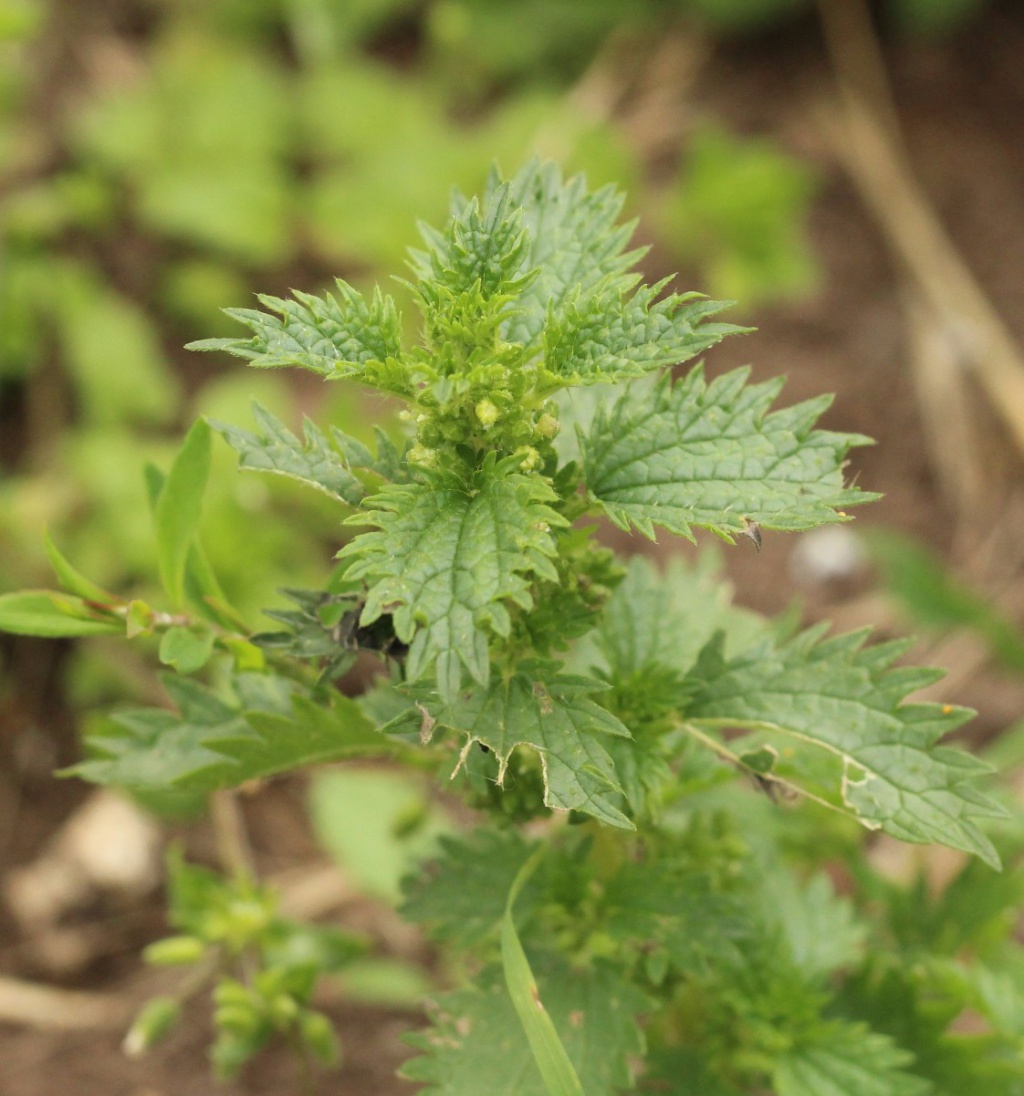
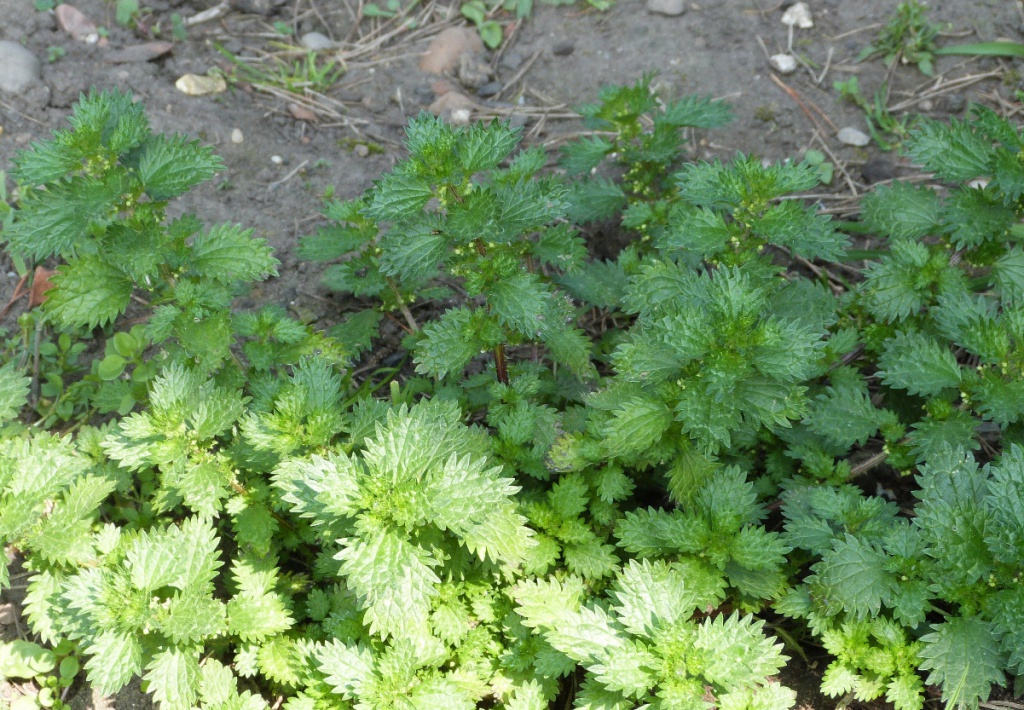
Annual. Usually smaller and more compact than Common Nettle (although this is very variable in size) with more jaggedly toothed leaves; terminal leaf-tooth about as long as adjacent laterals (terminal leaf-tooth is longer in common nettle)
Cultivated, waste and disturbed ground, gardens.
June to October.
Annual.
Common throughout Britain, especially in the east.
Fairly frequent in Leicestershire and Rutland. In the 1979 Flora survey of Leicestershire it was found in 267 of the 617 tetrads.
 Graham Calow
Stoke Golding
23 March 2017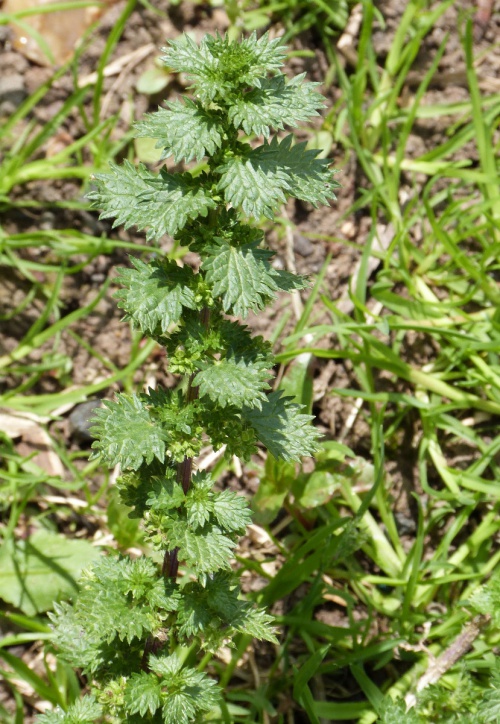 Graham Calow
Cosby Allotments
16 May 2016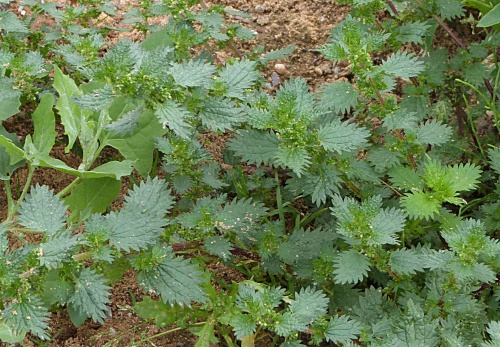 Graham Calow
Higham on the Hill
18 August 2015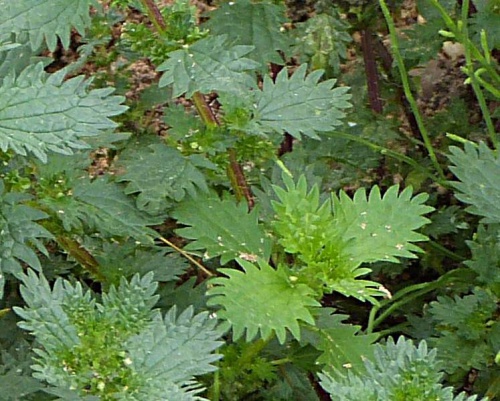 Graham Calow
Higham on the Hill
18 August 2015
deeply toothed rounded leaves with
terminal leaf-tooth roughly equal to the lateral ones.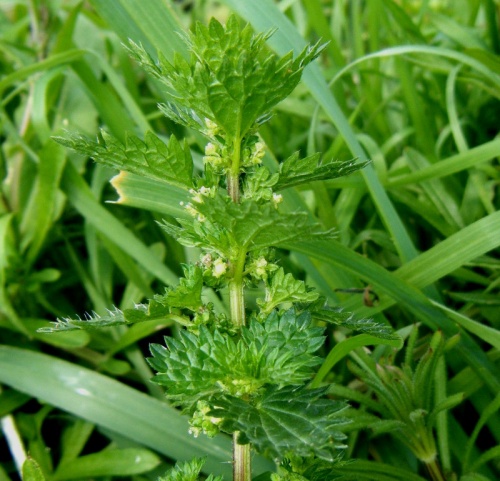 Graham Calow
Sapcote
21 April 2012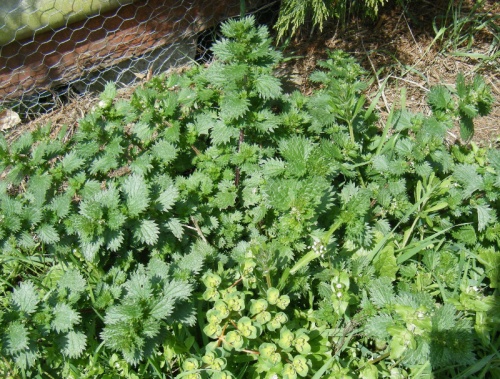 Graham Calow
Sapcote
21 April 2012
Leicestershire & Rutland Map
Enter a town or village to see local records
MAP KEY:
Yellow squares = NBN records (all known data)
Coloured circles = NatureSpot records: 2025+ | 2020-2024 | pre-2020
UK Map
Species profile
- Common names
- Small Nettle
- Species group:
- flowering plant
- Kingdom:
- Plantae
- Order:
- Rosales
- Family:
- Urticaceae
- Records on NatureSpot:
- 47
- First record:
- 22/07/2010 (Calow, Graham)
- Last record:
- 05/10/2024 (Bell, Melinda)
Total records by month
% of records within its species group
10km squares with records
The latest images and records displayed below include those awaiting verification checks so we cannot guarantee that every identification is correct. Once accepted, the record displays a green tick.
In the Latest Records section, click on the header to sort A-Z, and again to sort Z-A. Use the header boxes to filter the list.
Latest images
Latest records
 Graham Calow
Springwell Lane,Whetsone
11 April 2016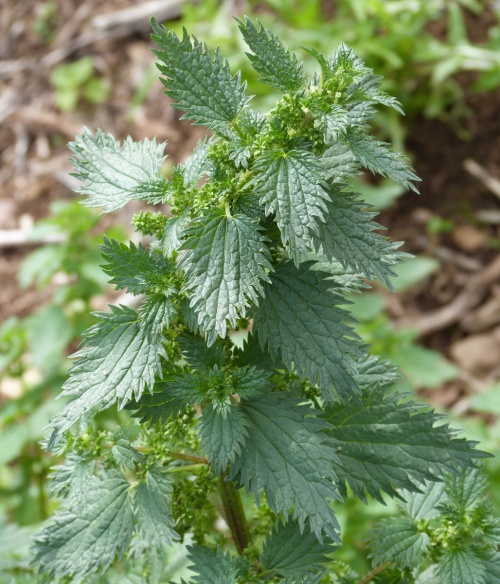 Graham Calow
Wigston Parva Footpath
12 September 2016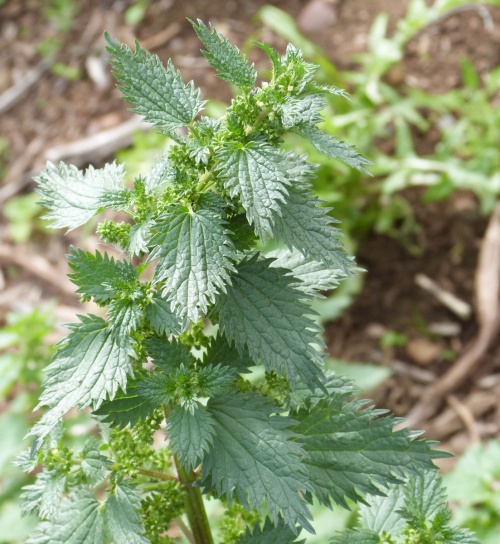 Graham Calow
Wigston Parva Footpath
12 September 2016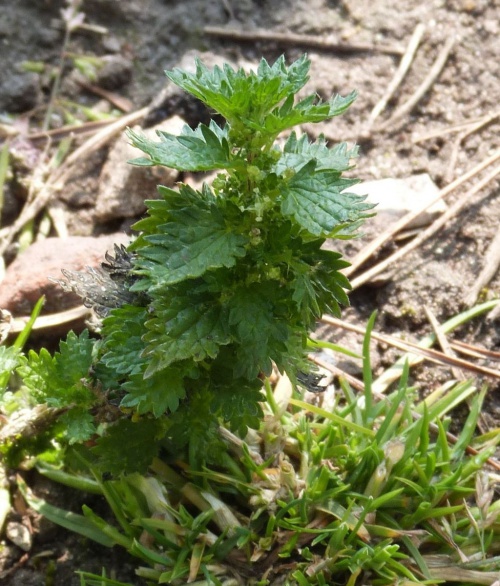 Graham Calow
Wigston Parva Old Churchyard
07 May 2016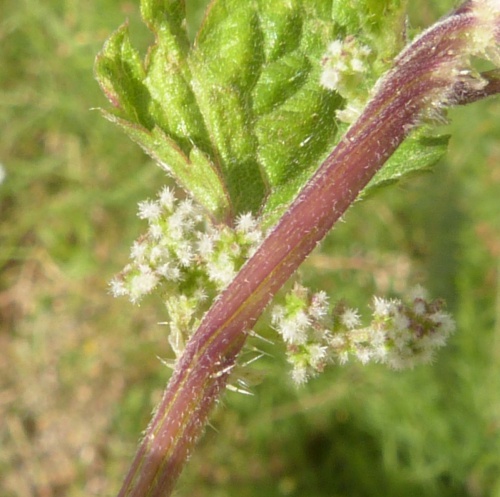 Graham Calow
Witherley
01 August 2015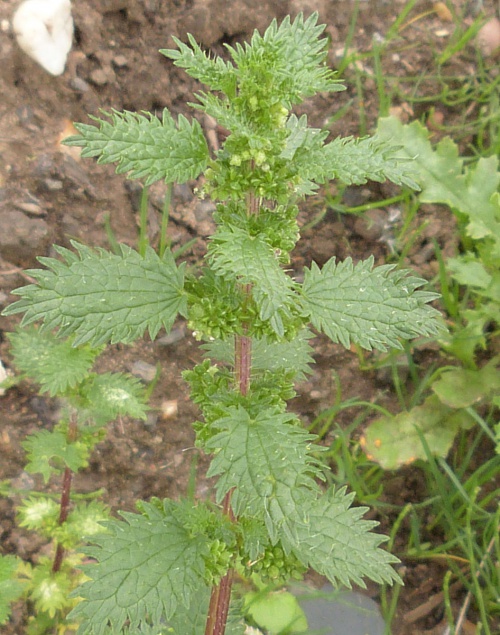 Graham Calow
Higham on the Hill
18 August 2015 Field margin near Spring Gardens Sapcote SP49189386 (taken 22.7.2010).JPG) Graham Calow
Graham Calow
Sapcote
22 July 2010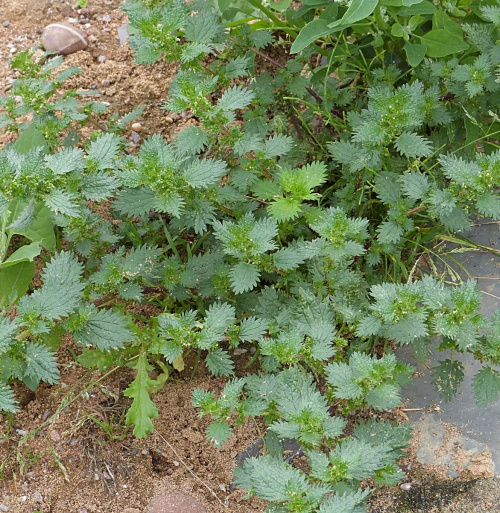 Graham Calow
Higham on the Hill
18 August 2015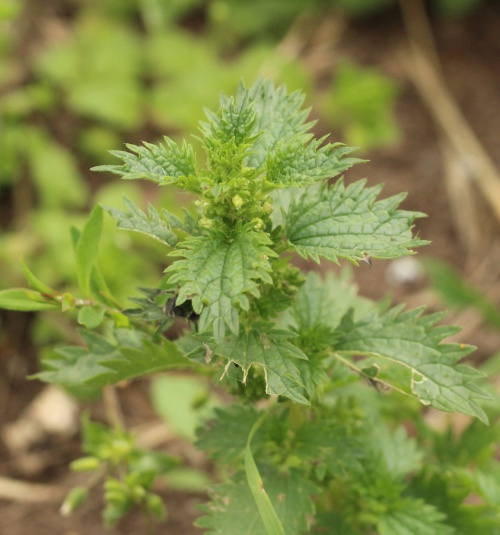 Ron.stevens
Broughton Astley Allotments
30 July 2016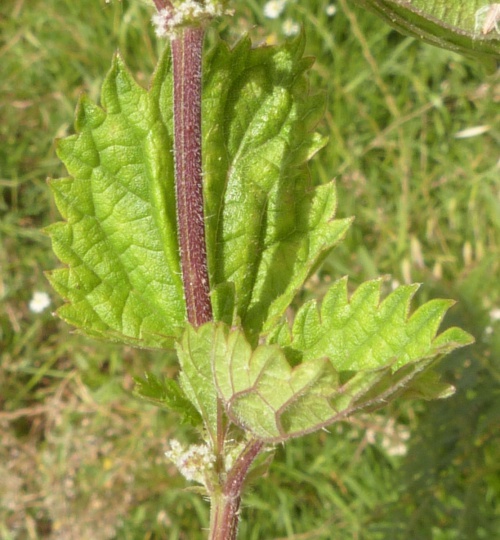 Graham Calow
Witherley
01 August 2015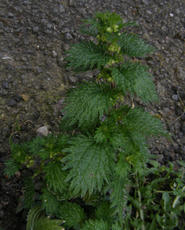 Graham Calow
Sapcote
12 March 2012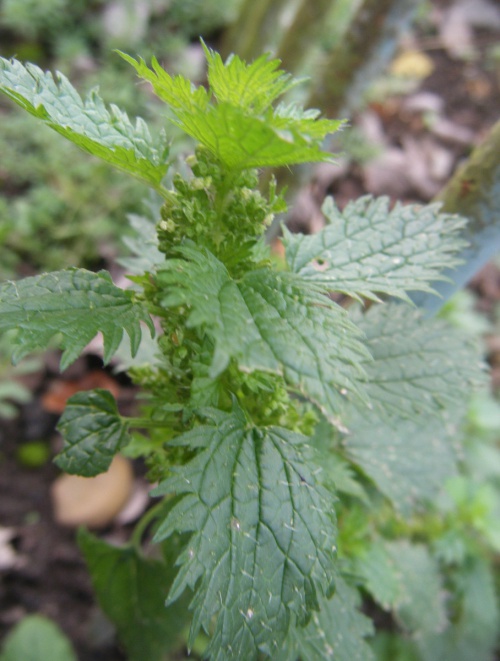 Graham Calow
Sapcote
31 October 2014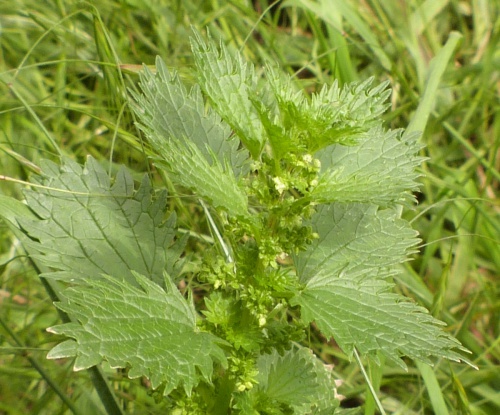 Graham Calow
Sapcote
24 June 2013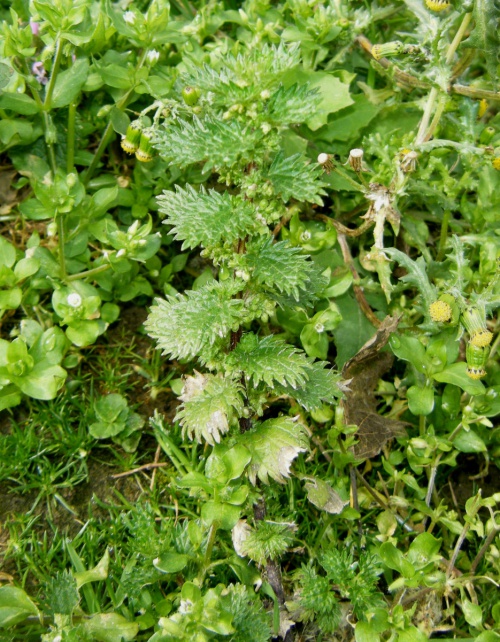 Graham Calow
Sapcote
31 March 2014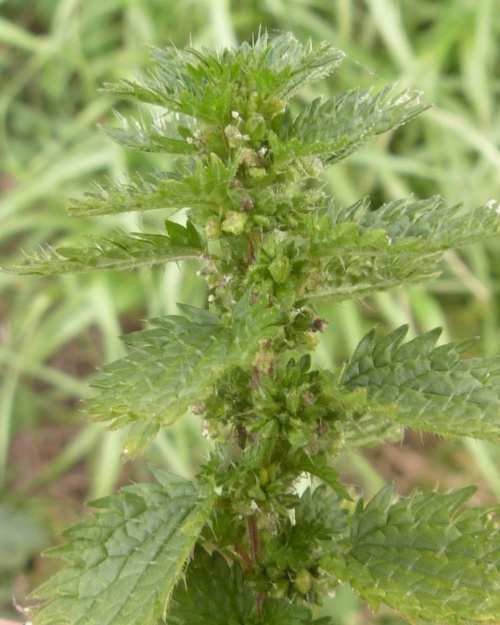 Graham Calow
Springwell Lane, near Whetsone
11 April 2016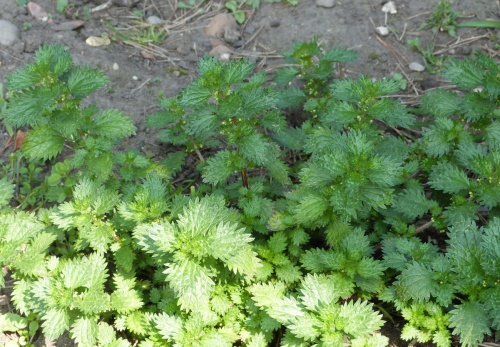 Graham Calow
Wigston Parva Old Churchyard
07 May 2016


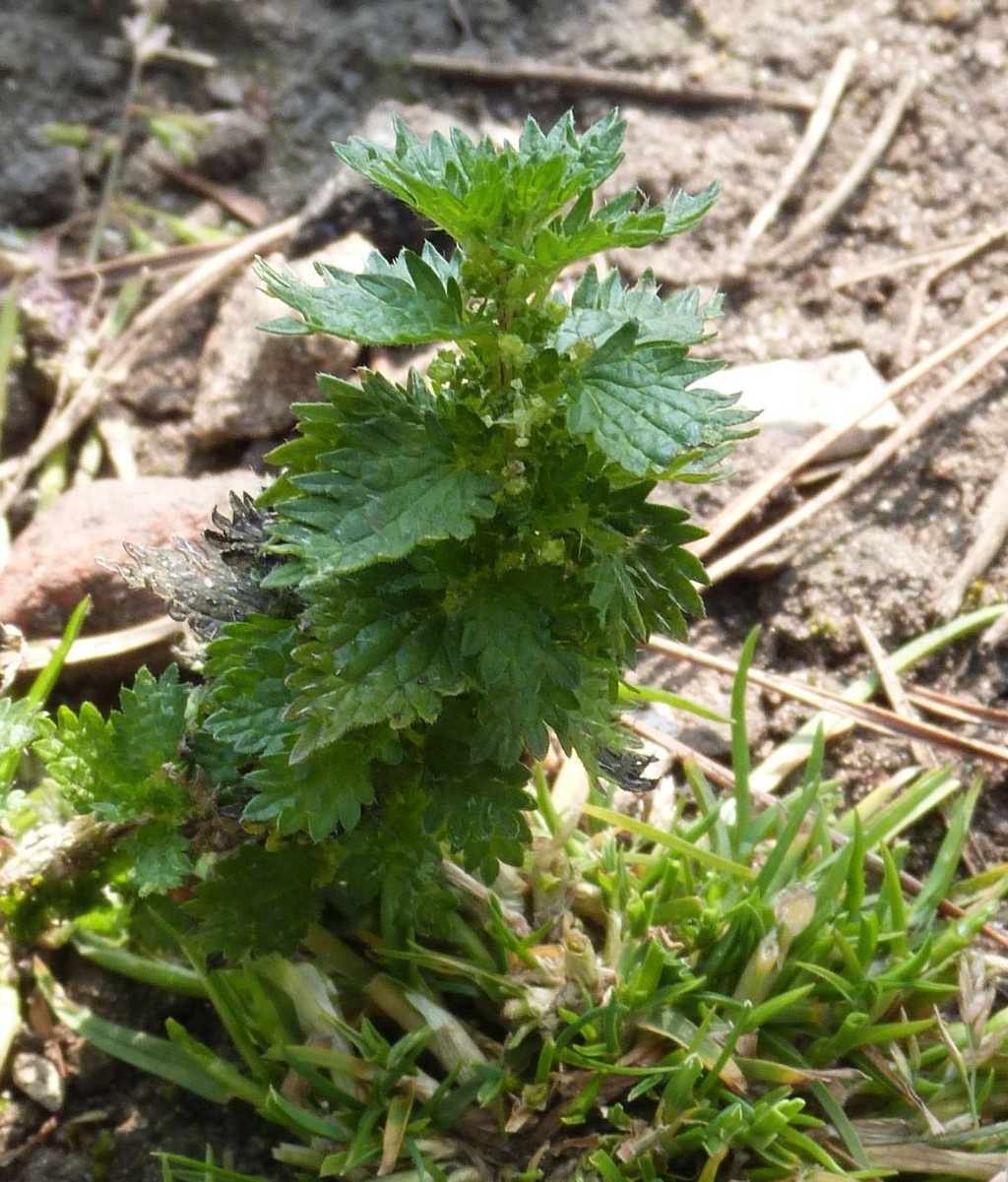
 Field margin near Spring Gardens Sapcote SP49189386 (taken 22.7.2010).JPG)

Agromyza anthracina
The larva of the Agromyzid fly Agromyza anthracina mines the leaves of Common Nettle and other related host plants. The mine usually starts away from the leaf edge and has a coiled intestine like start; it has frass in long threads in the broader part of the mine.
Agromyza pseudoreptans/reptans agg.
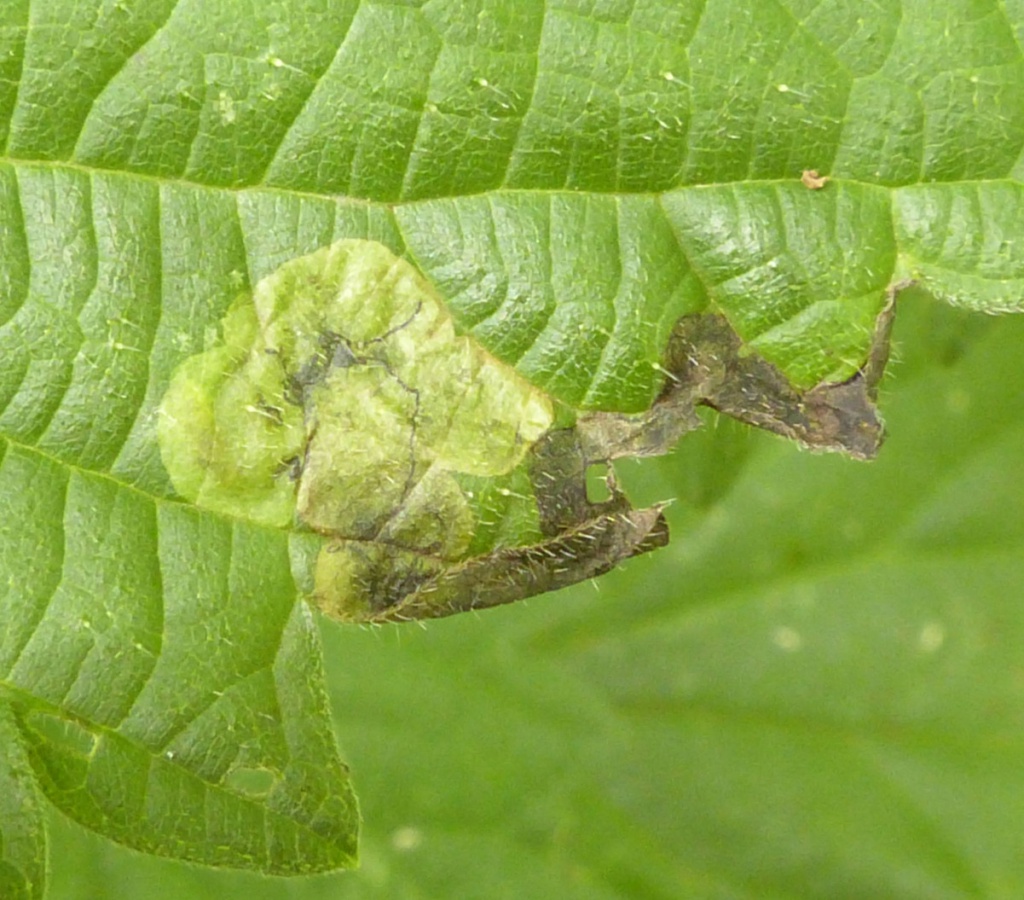
The larvae of the Agromyzif flies comprising the Agromyza pseudoreptans/reptans agg. mine the leaves of Common Nettle and other related host plants. The mine is a long blotch mine, usually adjacent to the edge of the leaf, which turns black. The mines of the two species cannot be reliably separated to species level and for this reason we treat them as an aggregate.
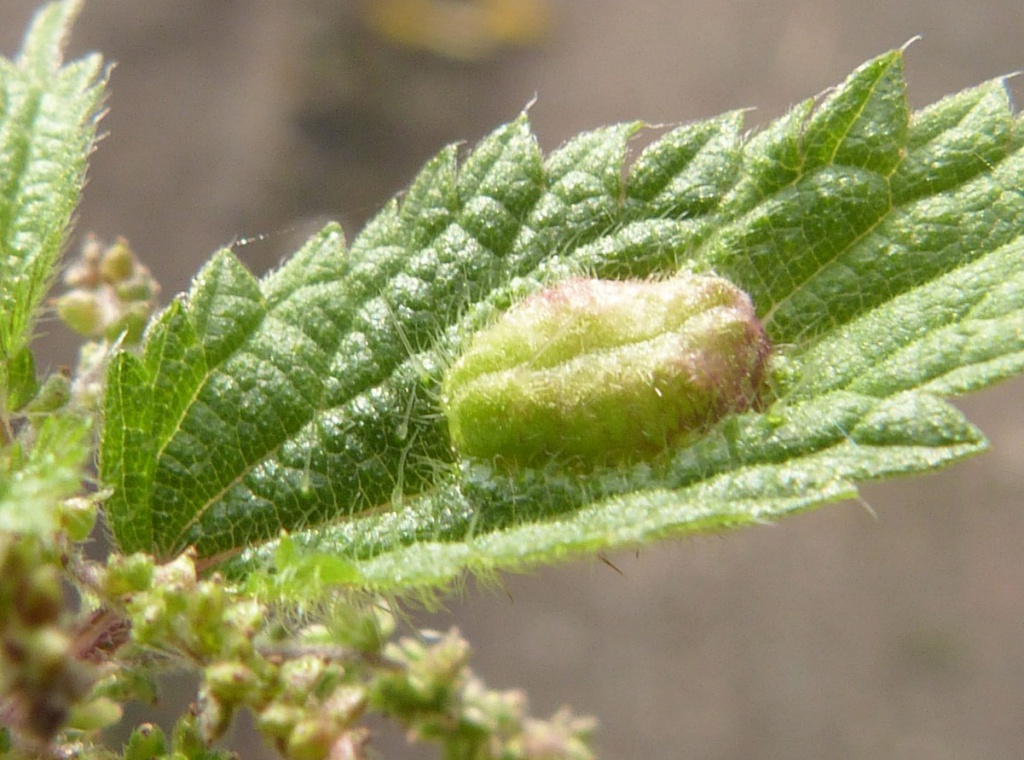
Dasineura urticae
The larva of the gall-midge Dasineura urticae causes galls to form on the leaves of Common (Stinging) Nettle and Small (Annual) Nettle. The galls are pouch swellings of midrib, leaf, petiole or flower stalk. Occasionally they are found in flowers or stem. There is an opening on the upperside. The larva is white, but according to Redfern and Shirley (2011) there may be pink, orange or red inquiline larvae inside. .
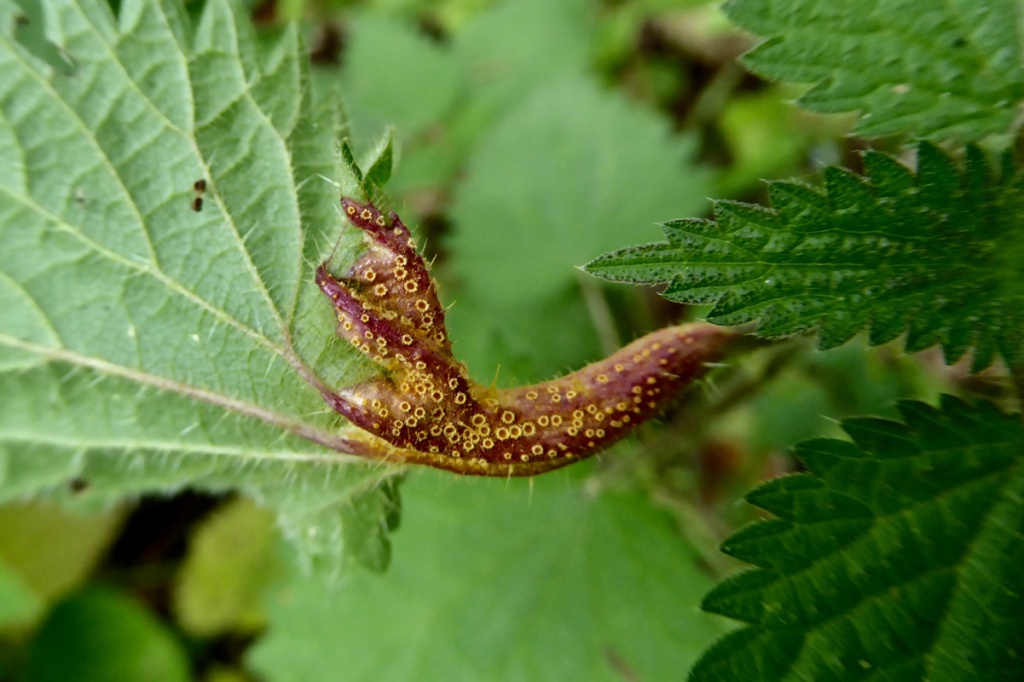
Puccinia urticata
Puccinia urticata is a rust fungus which causes galls on the stems and leaves of the alternate host, nettles (Common Nettle and Small Nettle). The galls are reddish and can be large, causing considerable swelling and distortion of stem and petioles. Orange aecia and spermogonia are borne on the swollen areas and leaf undersides.