

Primrose - Primula vulgaris
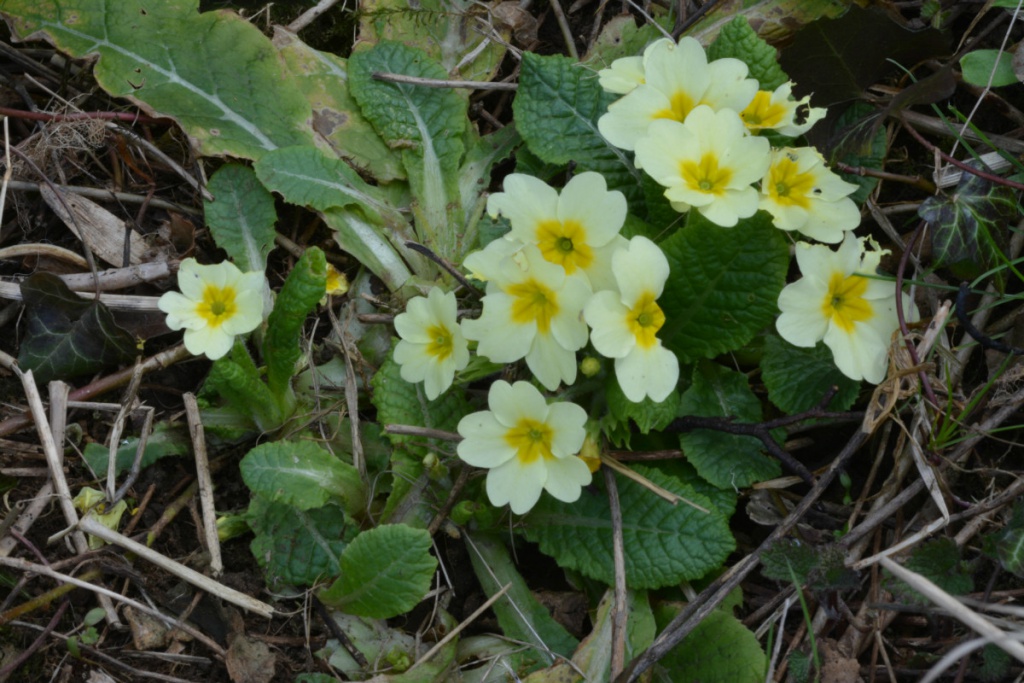
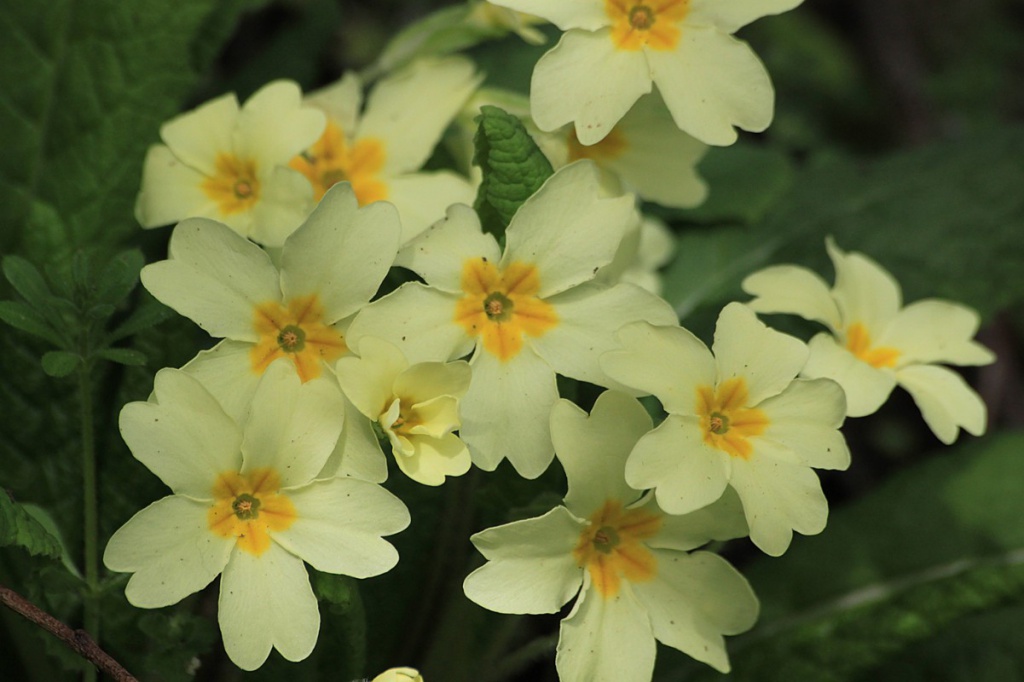
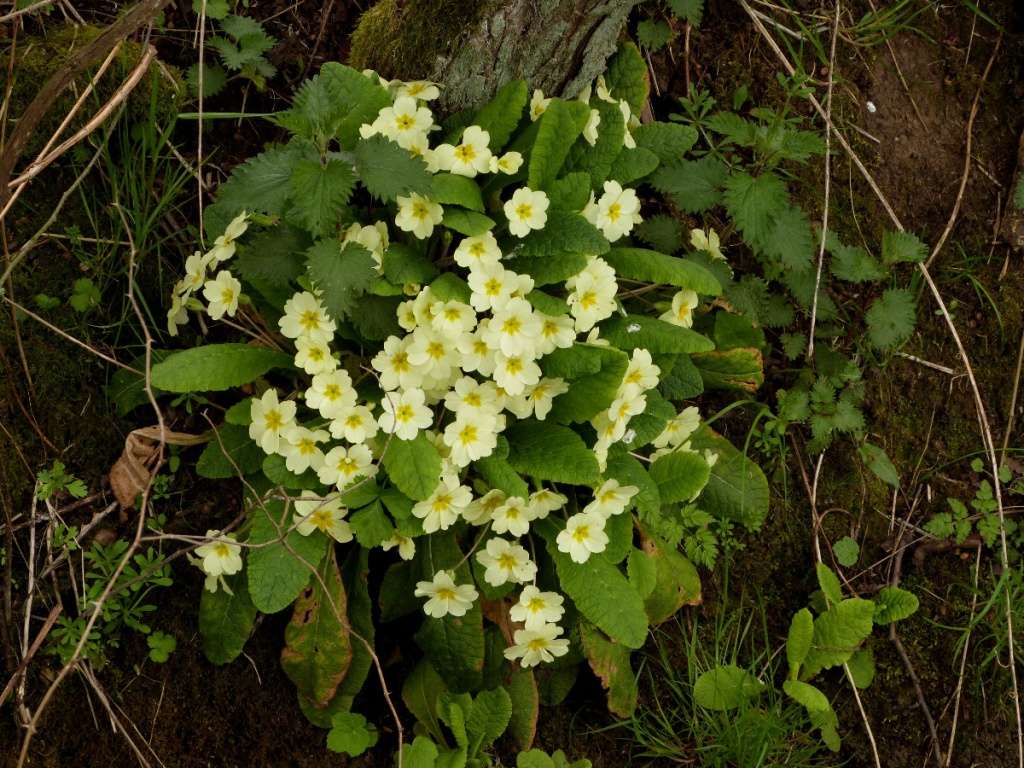
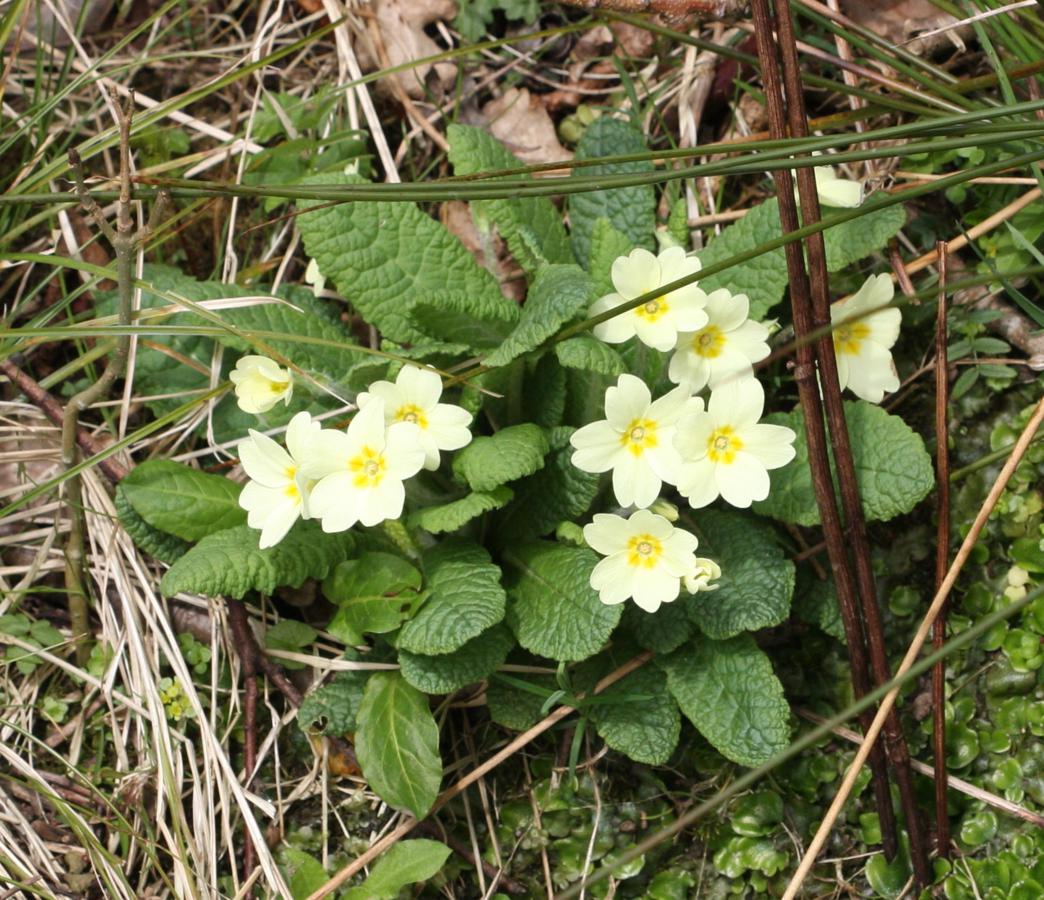
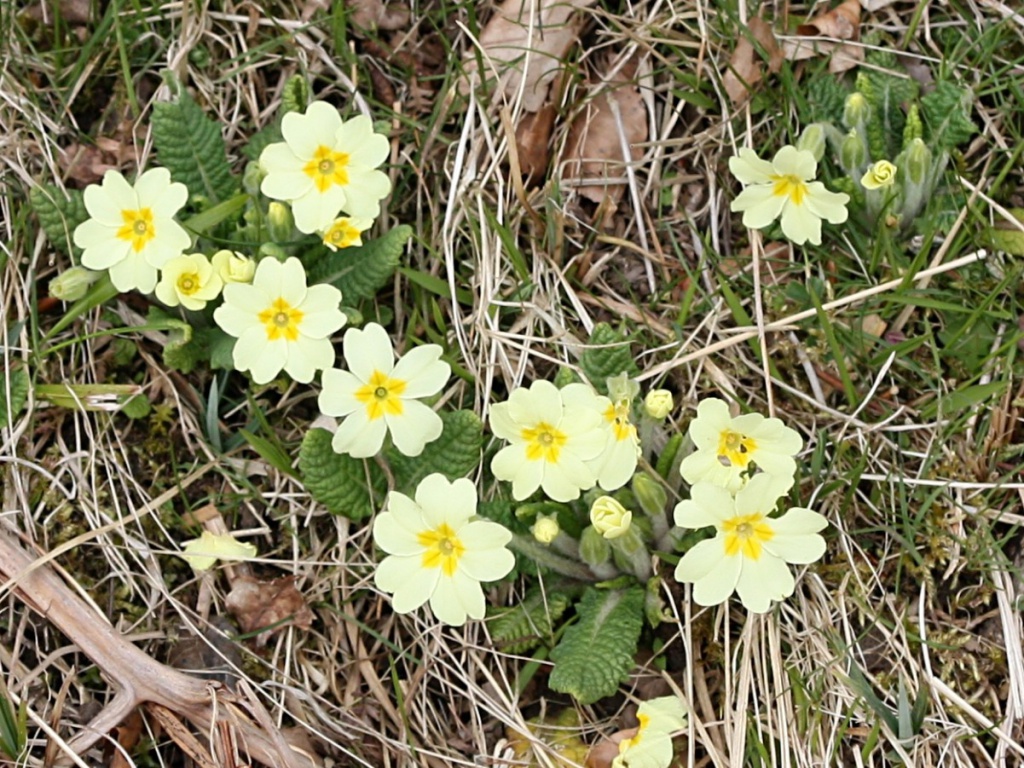
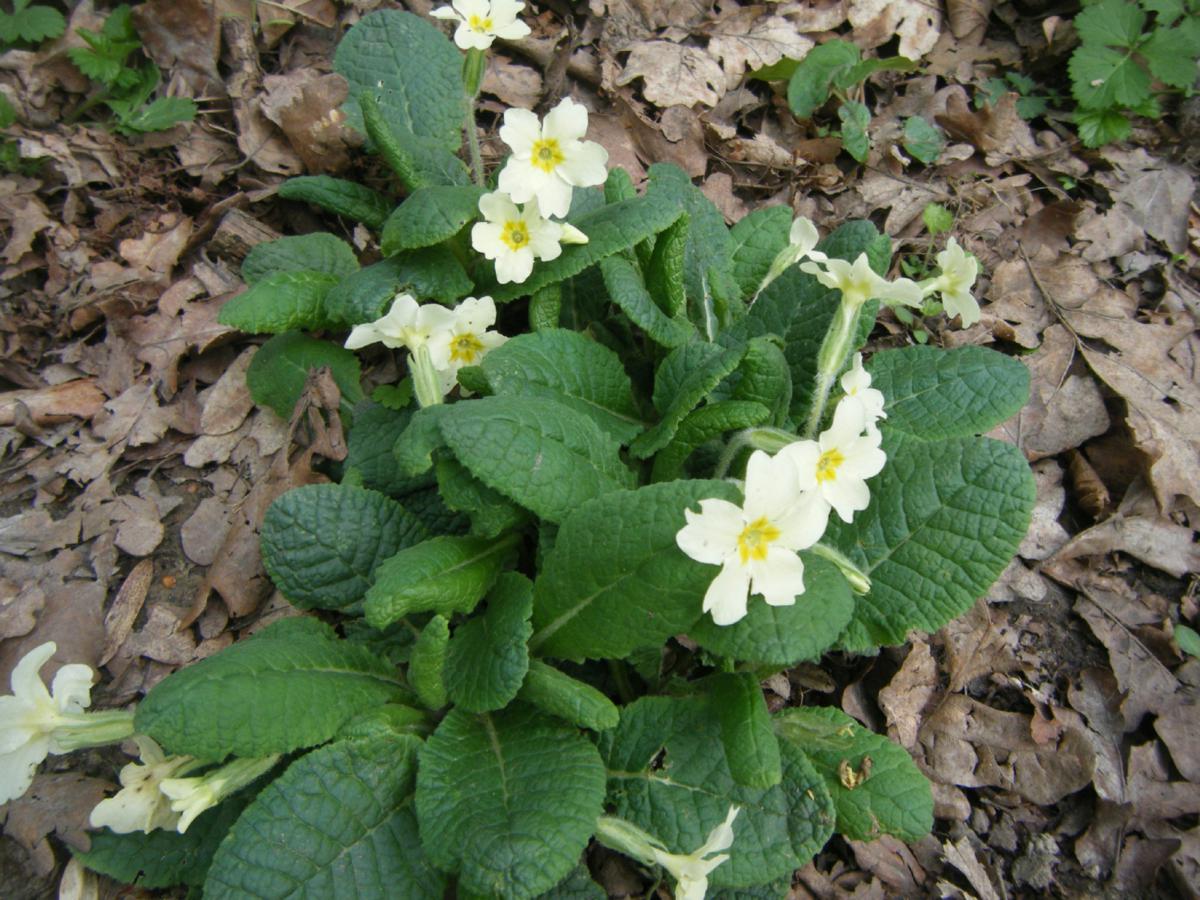
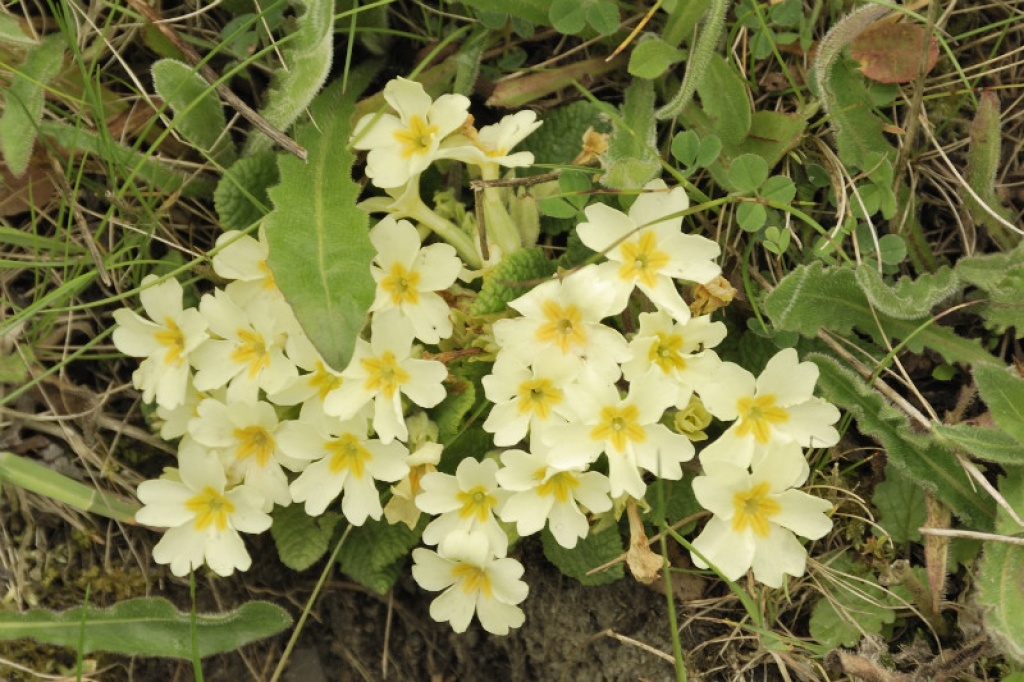
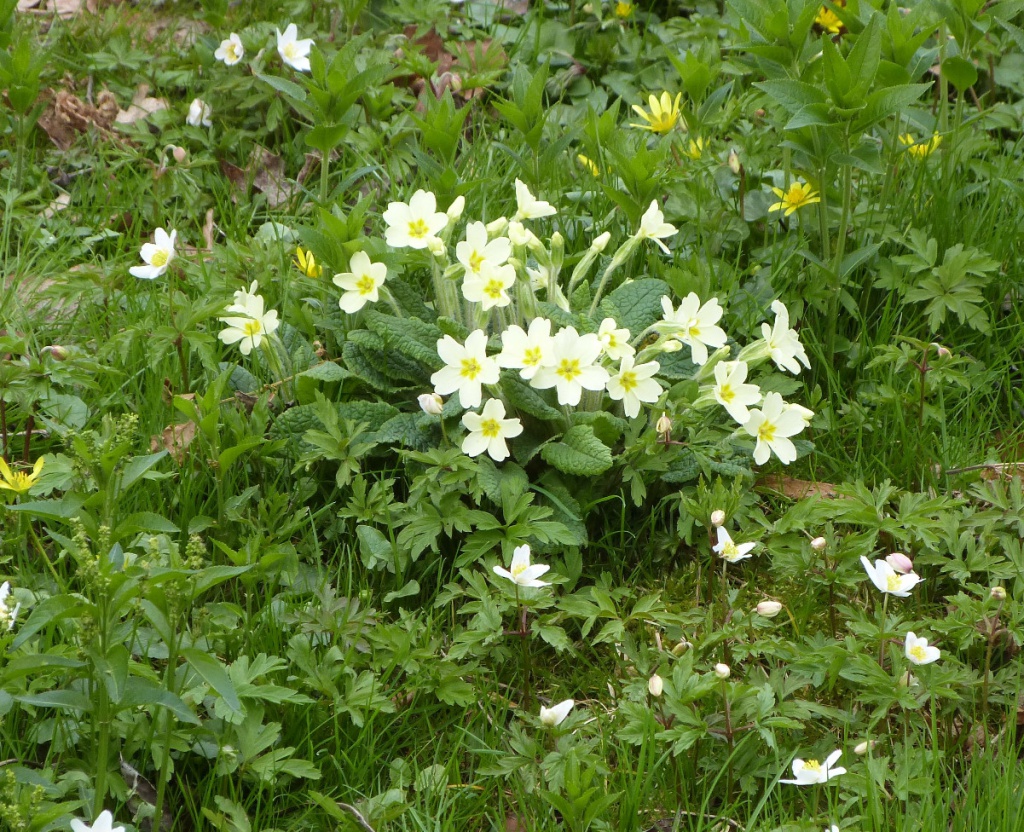
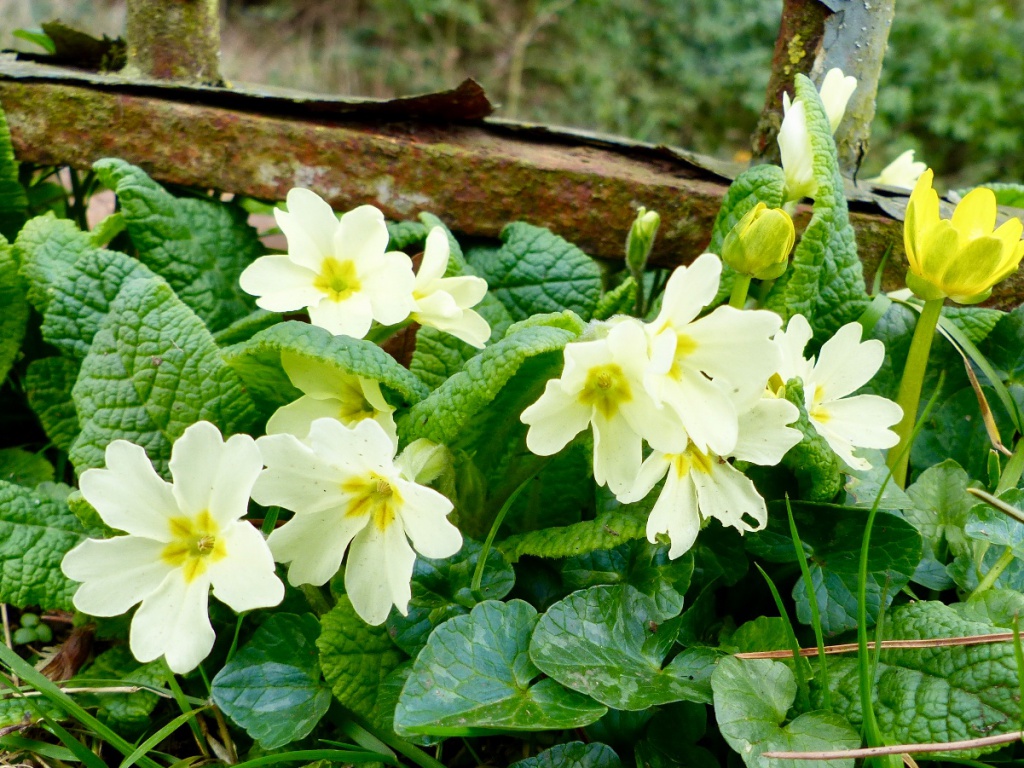
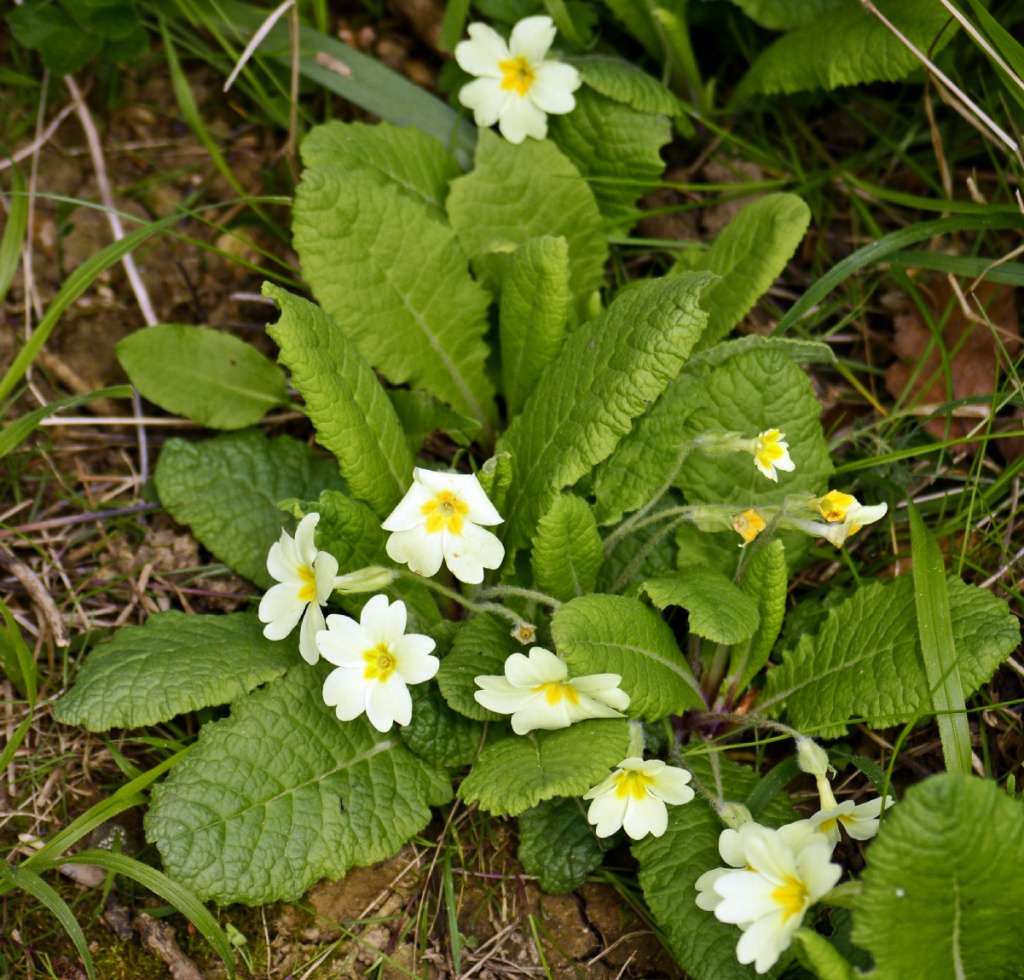
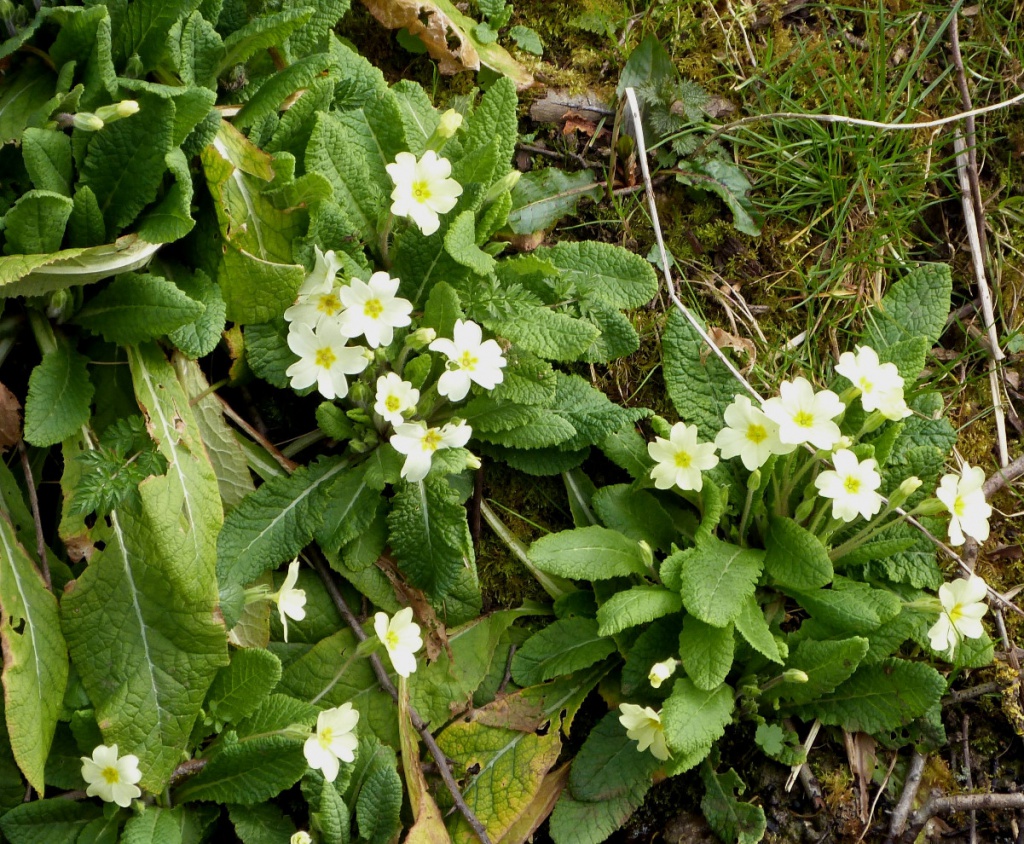
Low hairy plant. Leaves oval, tapered to the stalk, finely hairy, bright green above, lighter and hairy beneath. Flowers pale yellow, 20 to 40 mm solitary, usually with orange markings in the centre, fragrant.
Garden primroses and 'Polyanthas'

Escaped garden varieties can be very similar, but the native is usually hairier and with leaves gradually tapered to the base. Flowers are almost always yellow.
The true native is associated with old woodland and wooded habitats such as hedgebanks away from habitation; only plants found in these situations should be recorded.
Moist shaded habitats, woods, thickets, grassy banks and ditches.
March to May.
Perennial.
Widespread in Britain, but thought to be declining.
Fairly frequent in Leicestershire and Rutland. In the 1979 Flora survey of Leicestershire it was found in 134 of the 617 tetrads.
In the current Checklist (Jeeves, 2011) it is listed as native, old woodland; locally frequent.
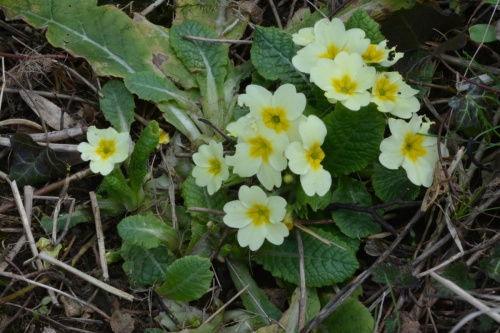 Barbara Cooper
Holwell Nature Reserve
15 April 2013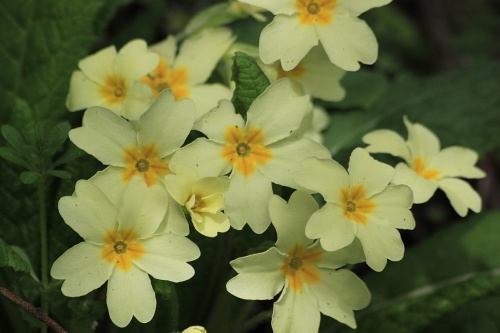 Paul Ruddoch
Melton Country Park
30 March 2015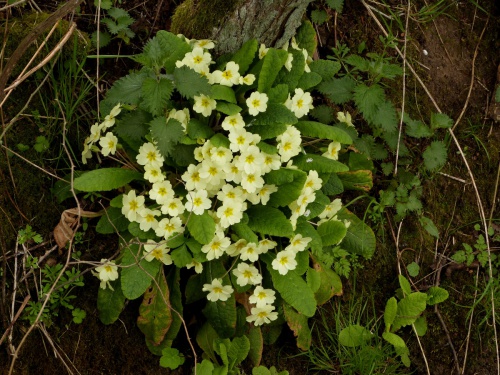 Graham Calow
Fosse Meadows, Sharnford
29 April 2013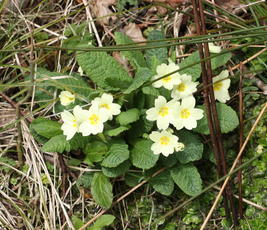 David Nicholls
Ulverscroft NR
09 April 2010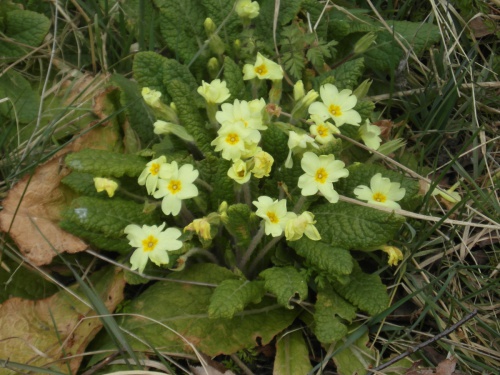 Alan Semper
Harby nature reserve
05 April 2013

Leicestershire & Rutland Map
Enter a town or village to see local records
MAP KEY:
Yellow squares = NBN records (all known data)
Coloured circles = NatureSpot records: 2025+ | 2020-2024 | pre-2020
UK Map
Species profile
- Common names
- Primrose
- Species group:
- flowering plant
- Kingdom:
- Plantae
- Order:
- Ericales
- Family:
- Primulaceae
- Records on NatureSpot:
- 299
- First record:
- 26/04/2007 (Calow, Graham)
- Last record:
- 11/05/2026 (Allen, Rob)
Total records by month
% of records within its species group
10km squares with records
The latest images and records displayed below include those awaiting verification checks so we cannot guarantee that every identification is correct. Once accepted, the record displays a green tick.
In the Latest Records section, click on the header to sort A-Z, and again to sort Z-A. Use the header boxes to filter the list.
Latest images
Latest records
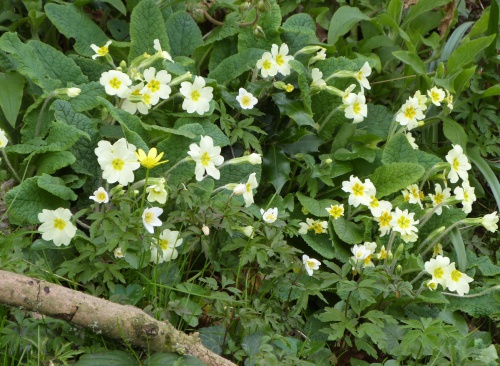 Graham Calow
Burbage Wood
28 March 2017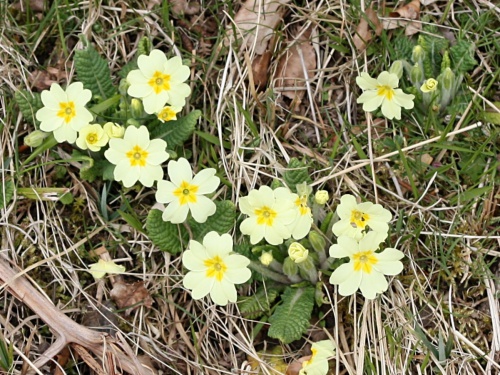 Mike Higgott
Bradgate Park
02 April 2015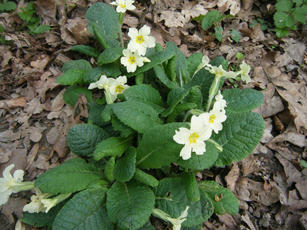 Graham Calow
Burbage Common and Woods
13 April 2011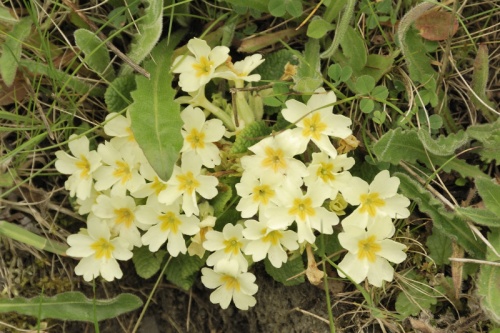 Barbara Cooper
Holwell Nature Reserve
17 May 2012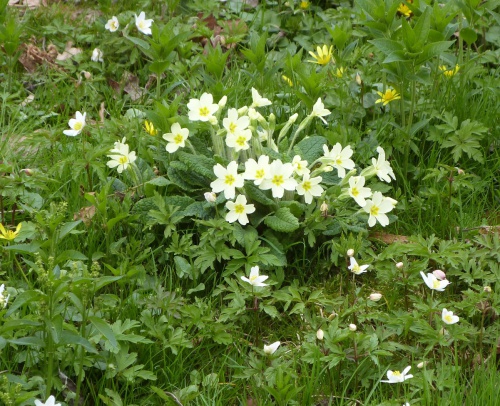 Graham Calow
Burbage Wood
28 March 2017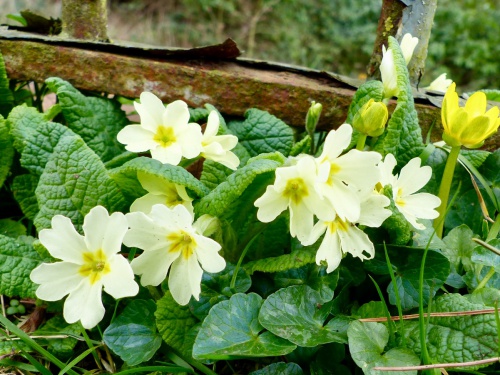 Ken Charity
Swithland Reservoir.
11 March 2017 Ditch bank at Fosse Meadows (taken 11.3.2009)..JPG) Graham Calow
Graham Calow
Fosse Meadows, Sharnford
11 March 2009
In ditch bank Lostash
Barnsdale Woods
19 April 2014 Verge opposite Aston Firs Sapcote SP 4608 9389 (taken 26.4.2007).JPG) Graham Calow
Graham Calow
Sapcote
26 April 2007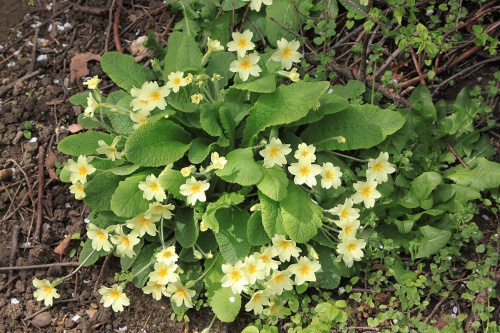 Paul Ruddoch
Melton Country Park
30 March 2015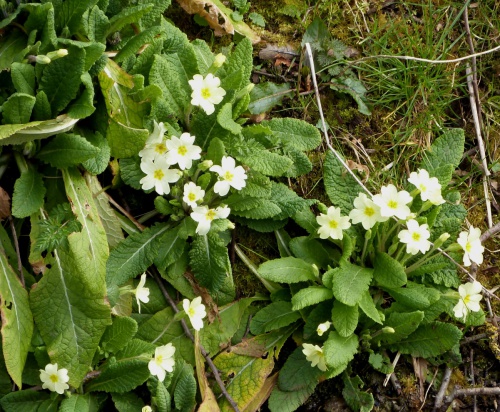 Graham Calow
Fosse Meadows, Sharnford
20 March 2015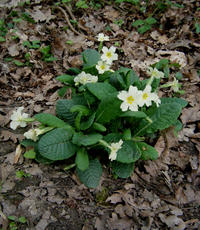 Graham Calow
Burbage Common and Woods
13 April 2011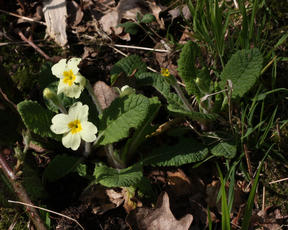 David Nicholls
Martinshaw Wood
09 April 2011

 Ditch bank at Fosse Meadows (taken 11.3.2009)..JPG)
 Verge opposite Aston Firs Sapcote SP 4608 9389 (taken 26.4.2007).JPG)



Chromatomyia primulae
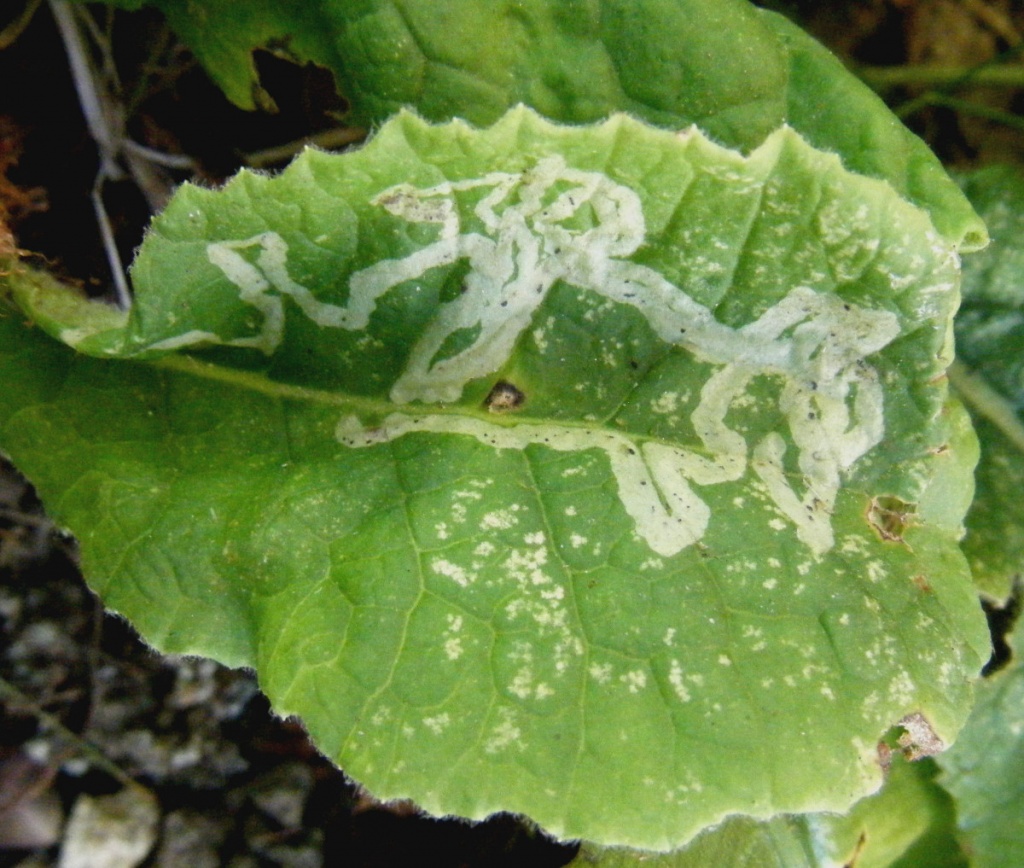
The larva of the Agromyzid fly Chromatomyia primulae mines the leaves of Primrose and Cowslip. The leafmine is white and in long, narrow corridors. Frass usually appears as large, well-spaced grains.