Phycitodes binaevella
Ermine Knot-horn
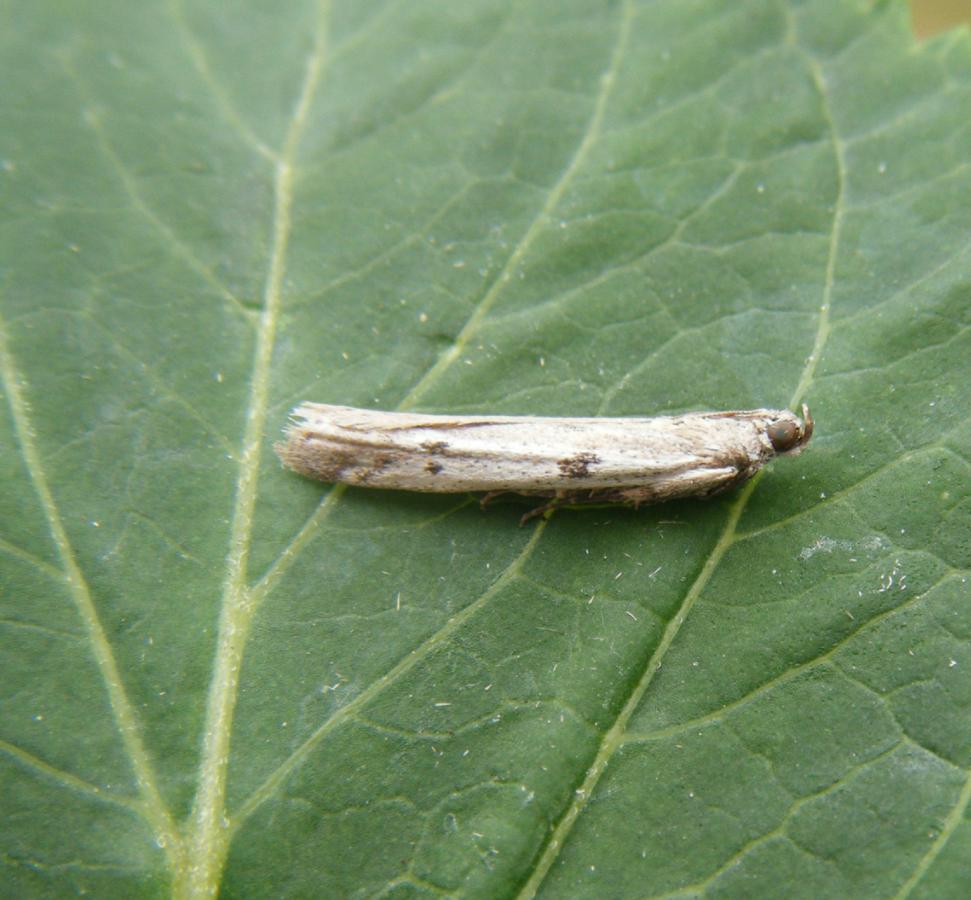
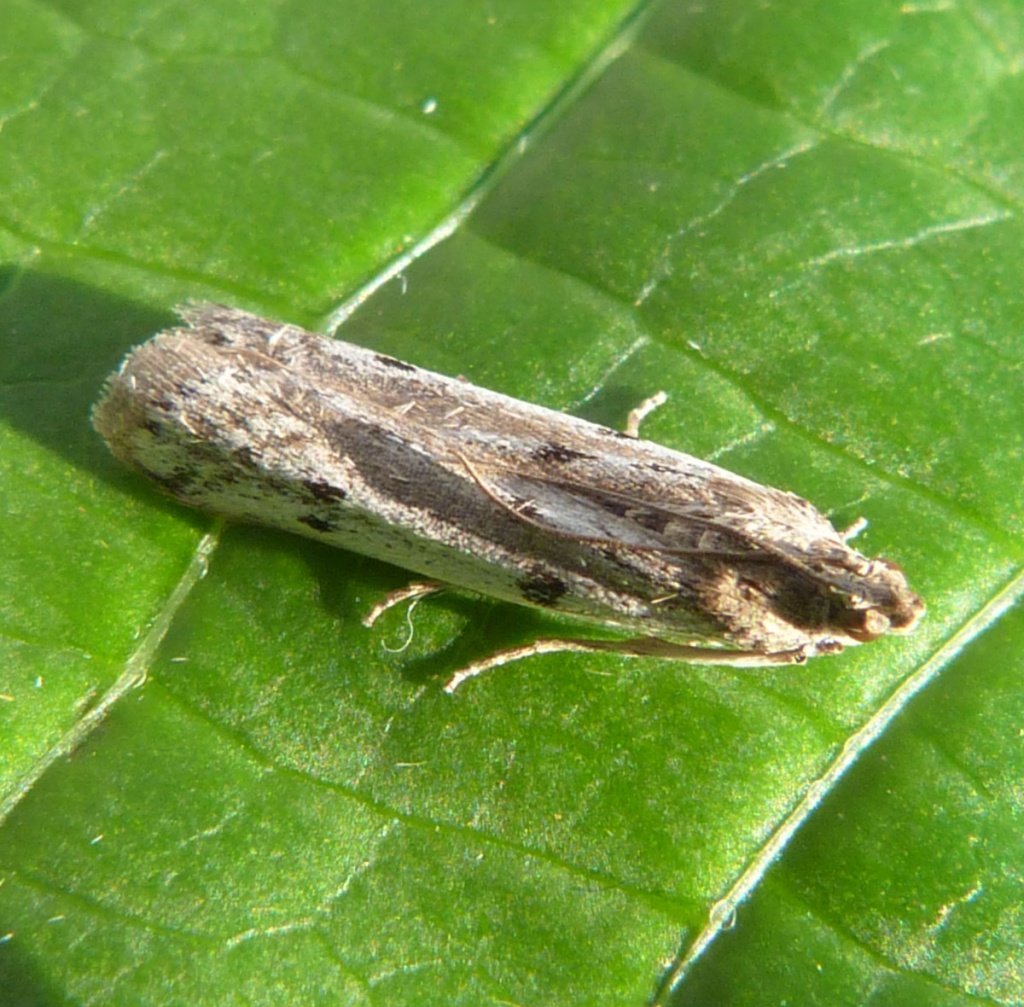
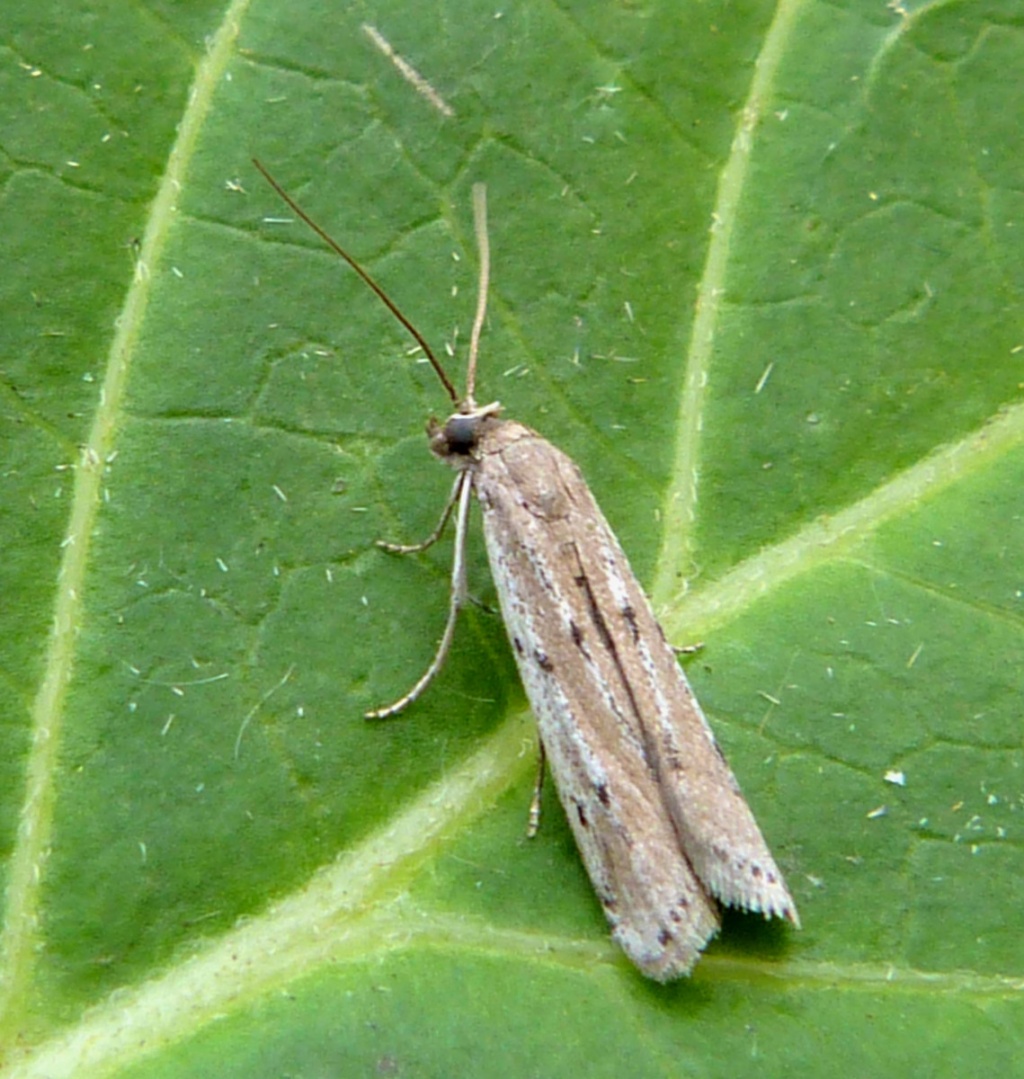
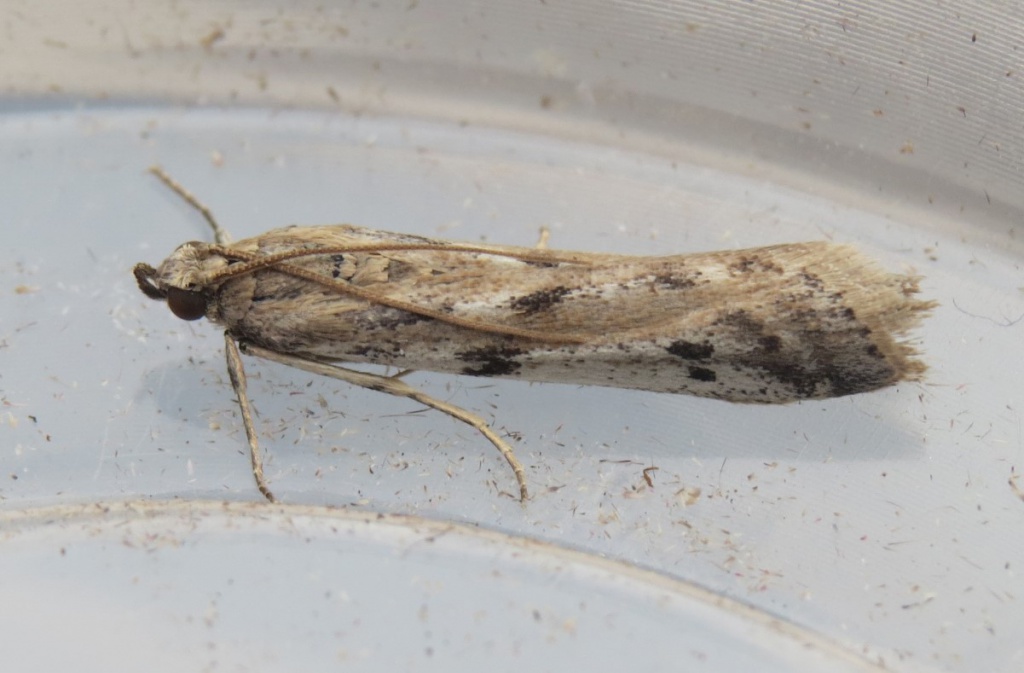
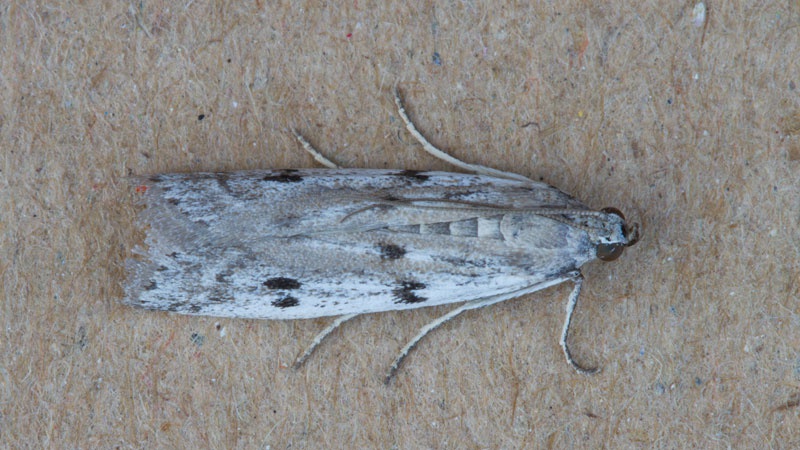
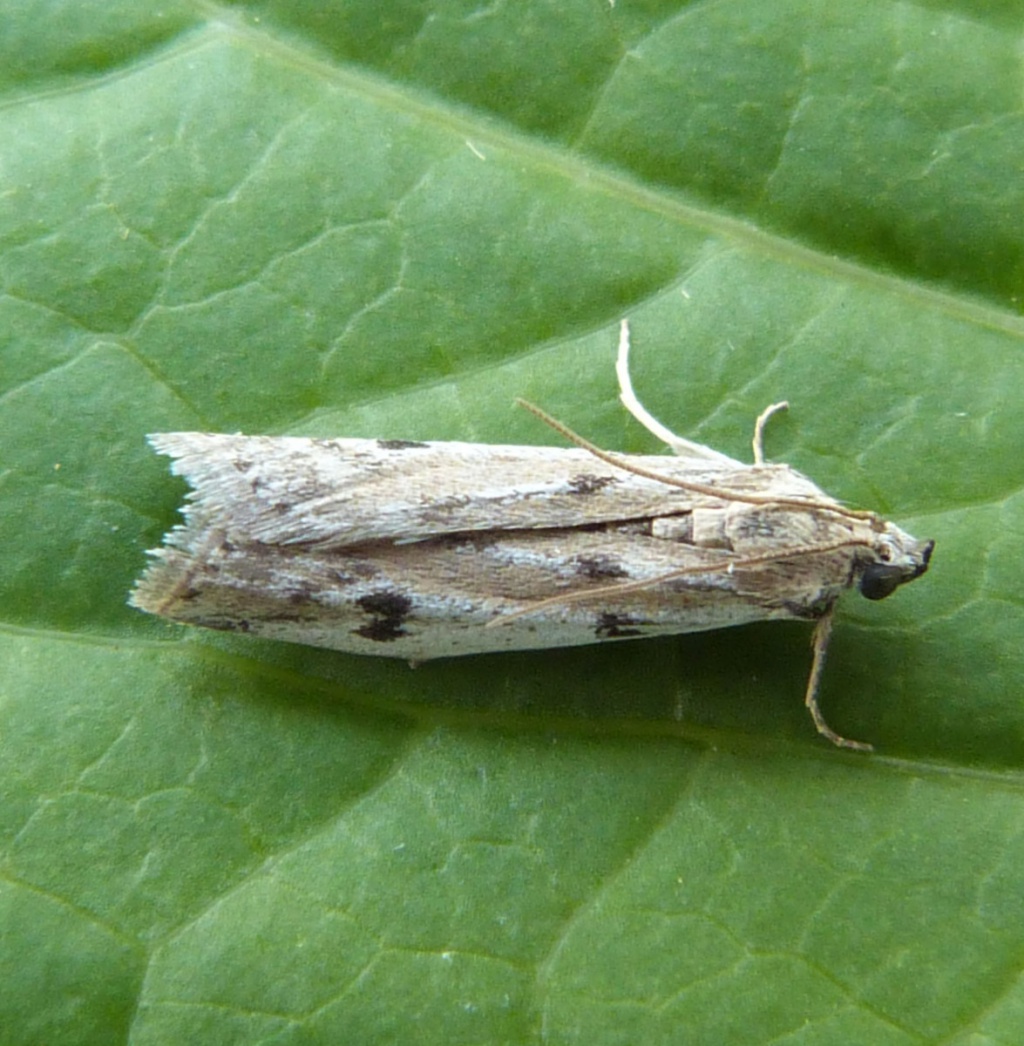
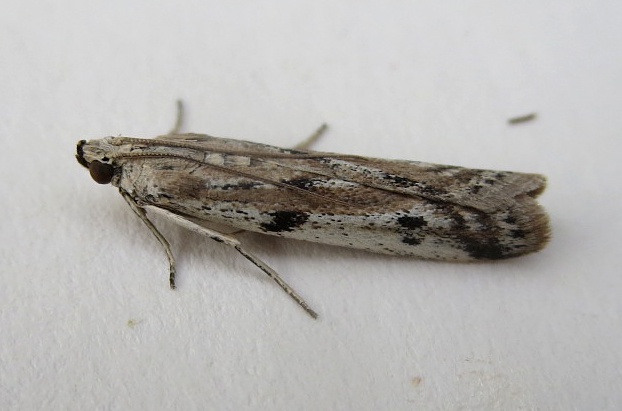
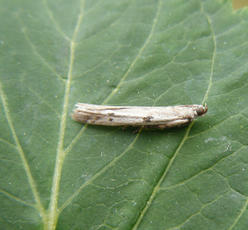
Wingspan 22-27 mm. The easiest of the three British species of Phycitodes to identify; it is the largest and has large blackish dots on a paler ground colour. The resting posture where the wings are rolled tightly around the body is common to the group.

Favouring areas where the larval food plant is present.
The single generation flies in July and August.
The larvae feed inside the flower heads of Spear Thistle
It occurs fairly frequently throughout England and Ireland. In the Butterfly Conservation’s Microlepidoptera Report 2011 this species was classified as common.
Fairly frequent but not common in Leicestershire & Rutland. L&R Moth Group status = B (scarce resident or restricted distribution or regular migrant)
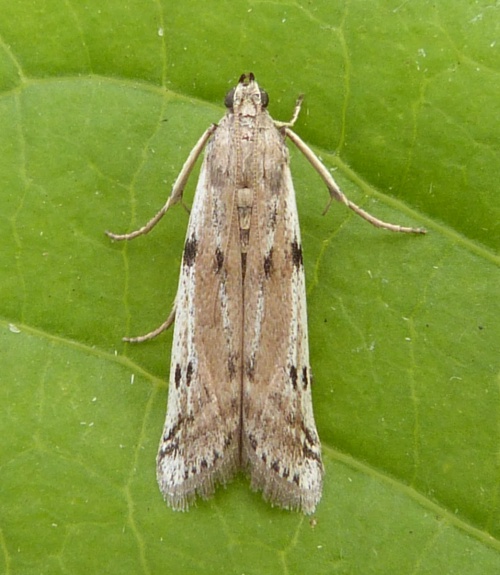 Graham Calow
Sapcote garden1
13 July 2013 Harecroft Crescent Sapcote SP49019371 (taken 8.7.2010),,,.JPG) Graham Calow
Graham Calow
Sapcote garden1
08 July 2010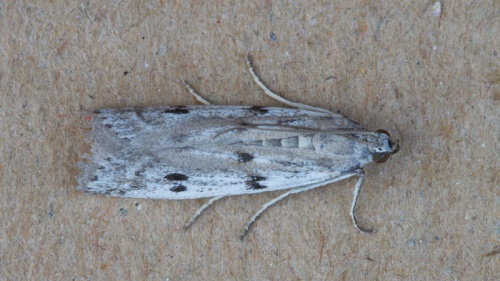 Rod Baker
Wigston
05 July 2013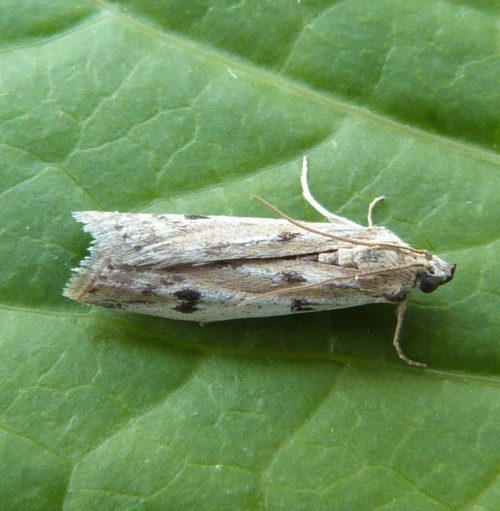 Graham Calow
Sapcote garden1
05 July 2013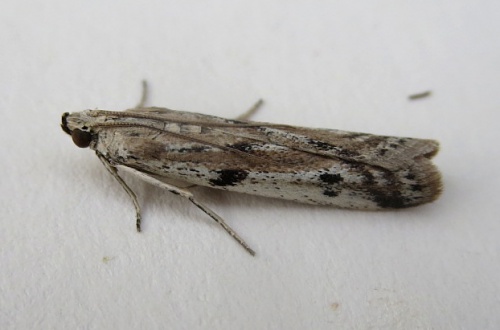 Pete Leonard
Harby
20 July 2015
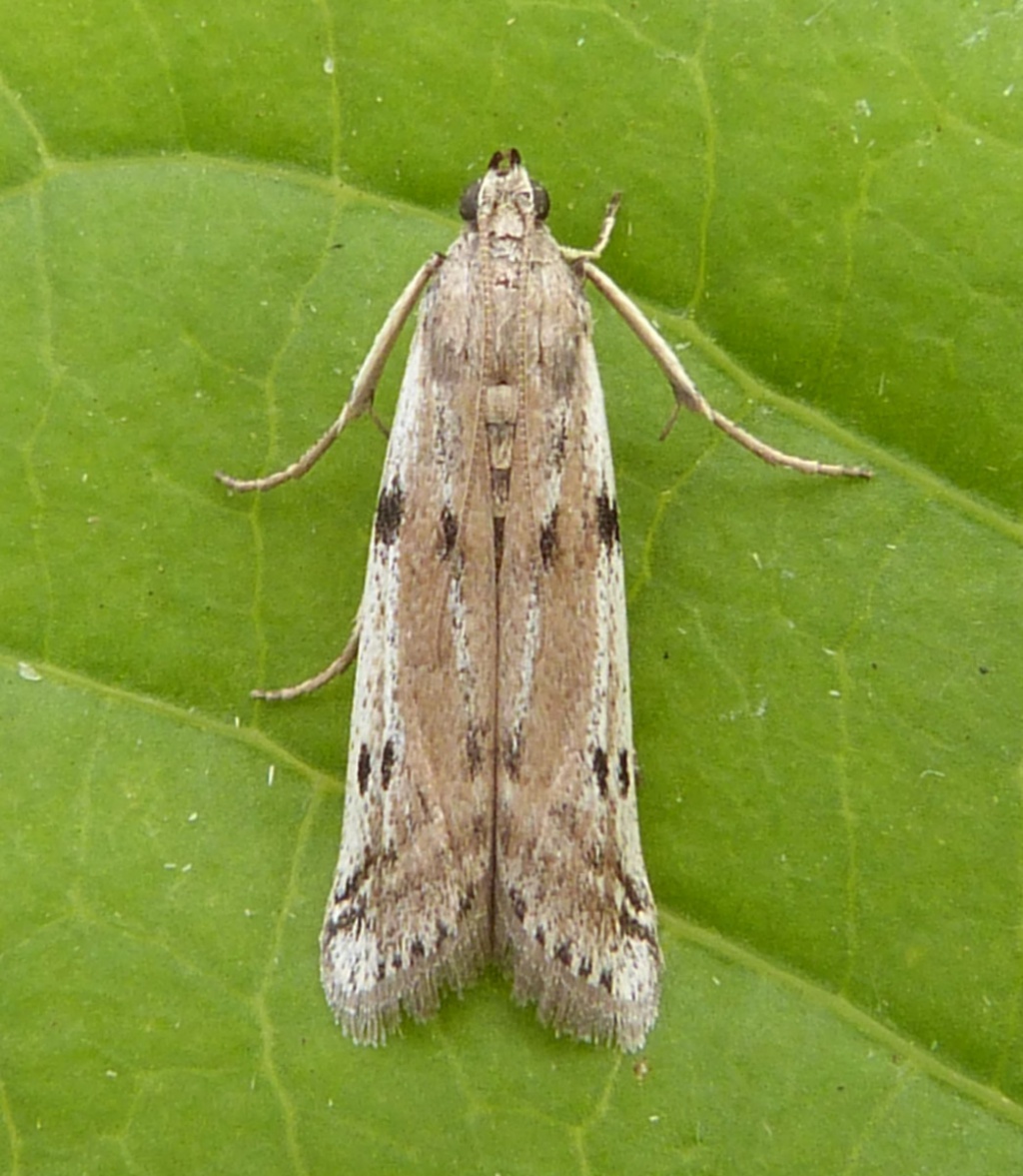
 Harecroft Crescent Sapcote SP49019371 (taken 8.7.2010),,,.JPG)
Leicestershire & Rutland Map
Enter a town or village to see local records
MAP KEY:
Yellow squares = NBN records (all known data)
Coloured circles = NatureSpot records: 2025+ | 2020-2024 | pre-2020
UK Map
Species profile
- Common names
- Ermine Knot-horn, Spotted Knot-horn
- Species group:
- insect - moth
- Kingdom:
- Animalia
- Order:
- Lepidoptera
- Family:
- Pyralidae
- Records on NatureSpot:
- 138
- First record:
- 14/07/2003 (Skevington, Mark)
- Last record:
- 21/07/2025 (Pugh, Dylan)
Total records by month
% of records within its species group
10km squares with records
The latest images and records displayed below include those awaiting verification checks so we cannot guarantee that every identification is correct. Once accepted, the record displays a green tick.
In the Latest Records section, click on the header to sort A-Z, and again to sort Z-A. Use the header boxes to filter the list.
Latest images
Latest records
 Graham Calow
Sapcote garden1
03 July 2011
resting posture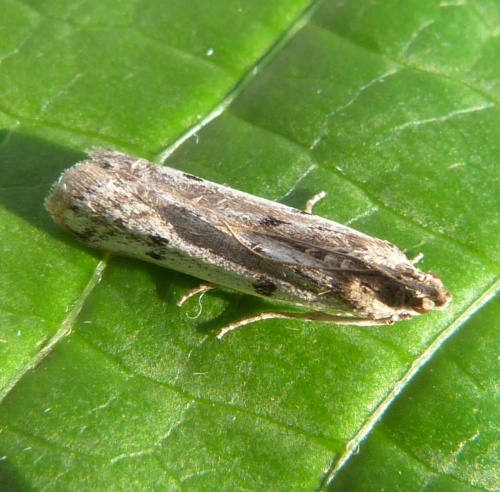 Graham Calow
Sapcote garden1
24 July 2012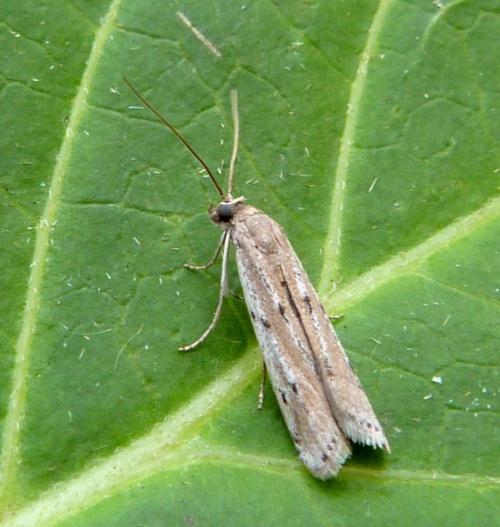 Graham Calow
Sapcote garden1
16 July 2012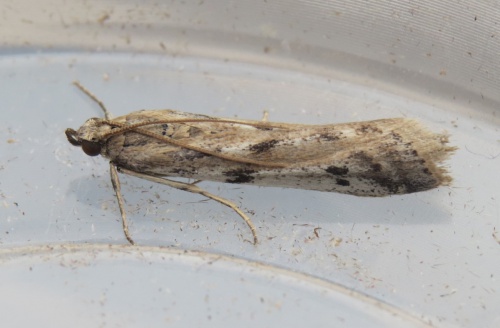 Jonesboy1
broughton astley
06 July 2016