Myolepta dubia
Myolepta dubia
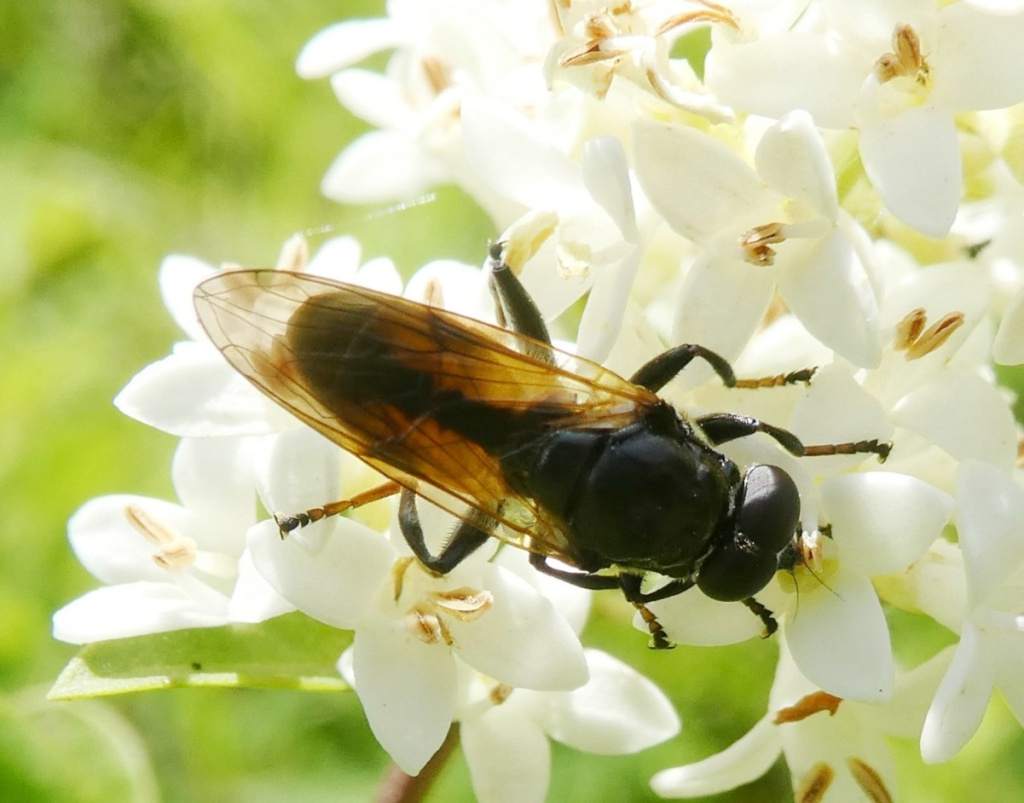
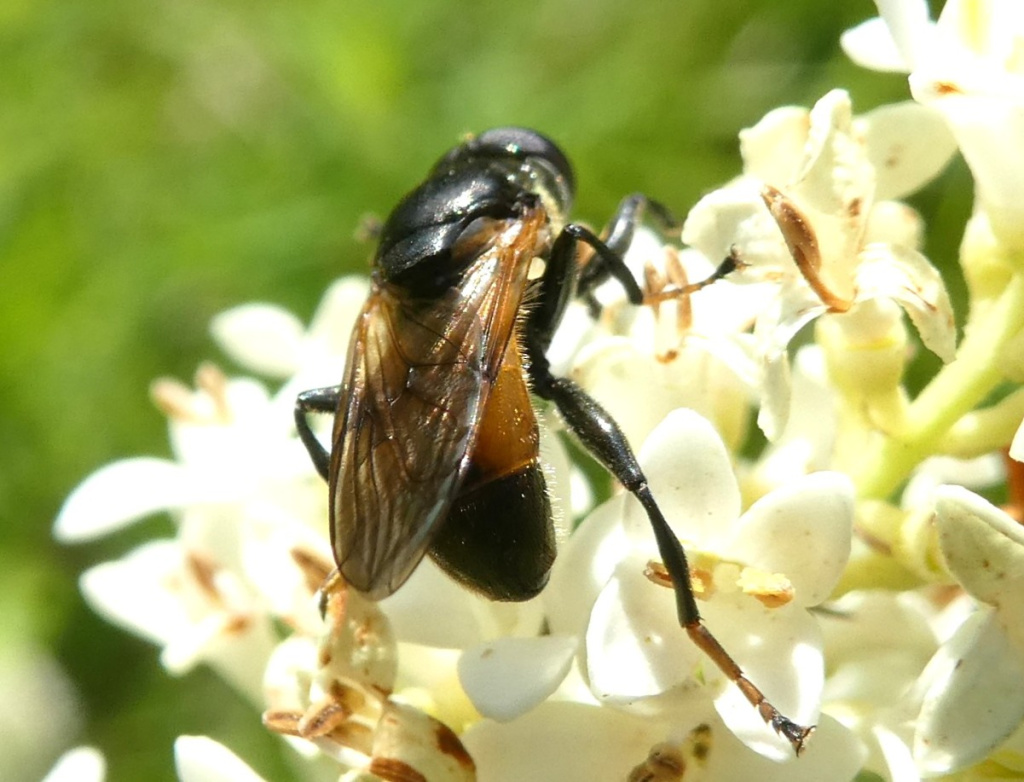
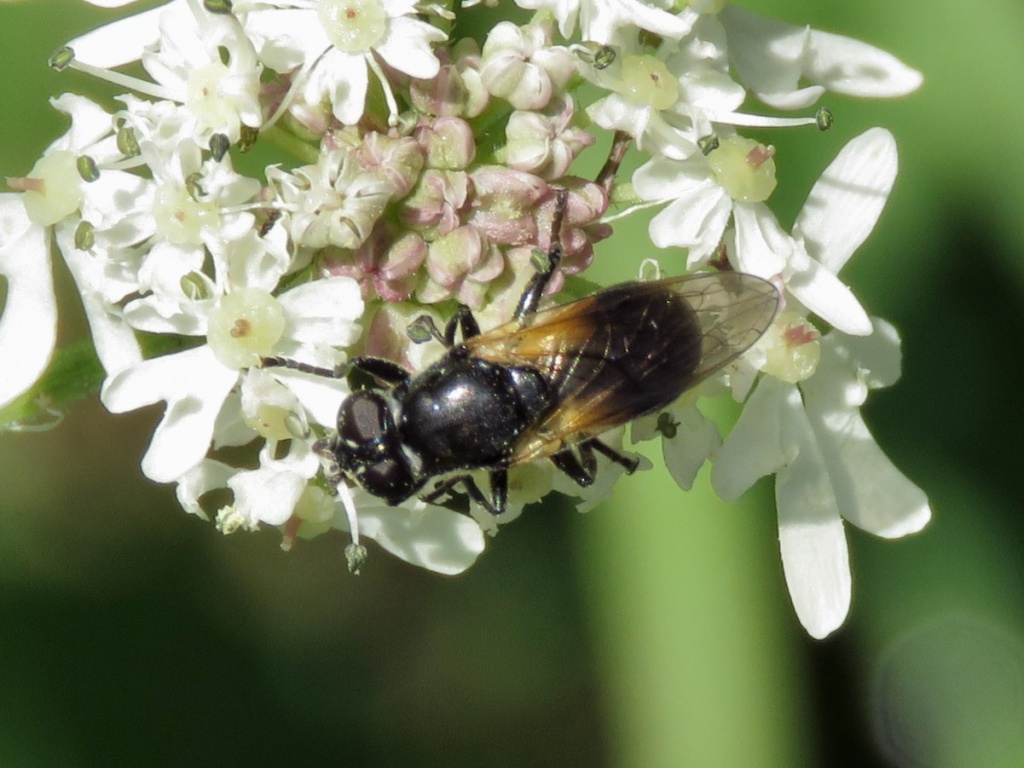
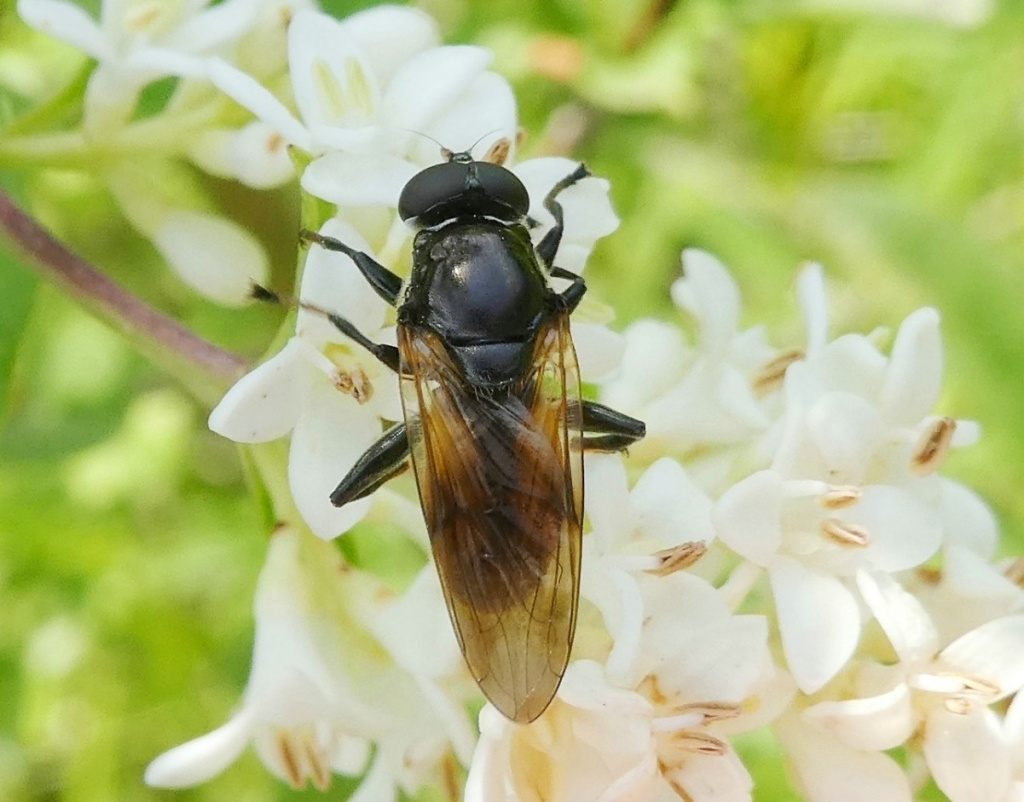
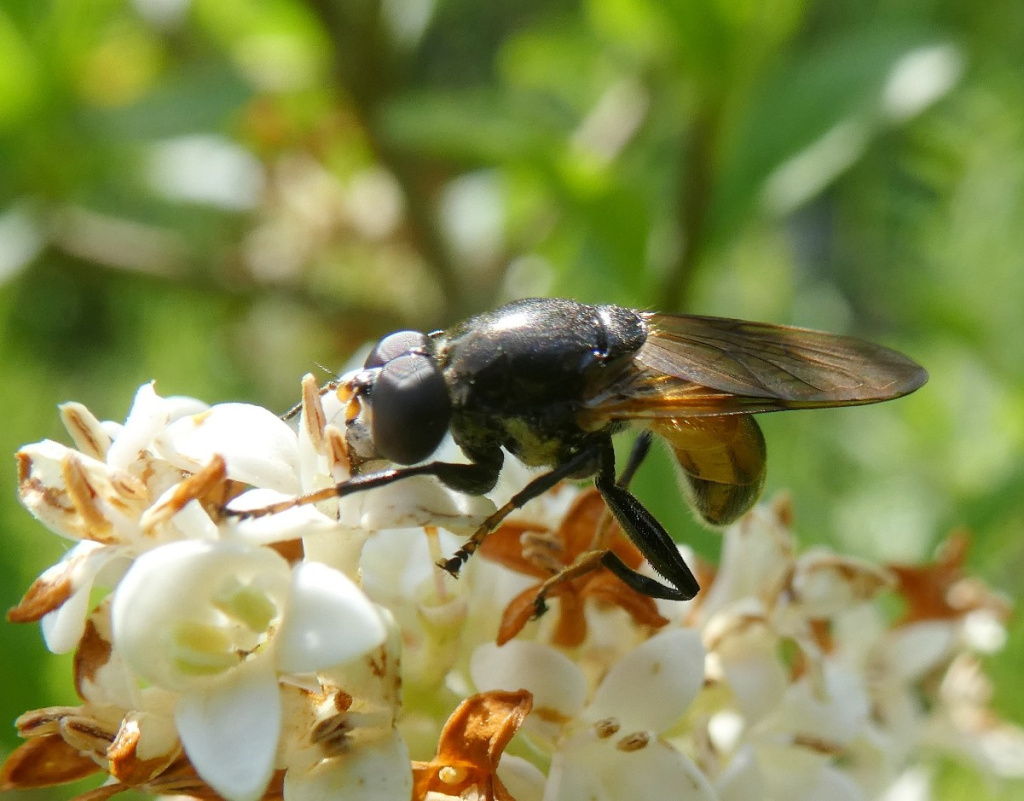
A medium-sized, black and orange hoverfly with yellow wing-bases.

Unless identified by a recognised expert, a photo is required. If the photo doesn't show the key ID features then in the comments box describe the size and identifying characters you have observed.
It is usually found in older woods and other places with old trees, though not always in the high quality locations that one might expect for a scarce saproxylic insect.
May to August, peaking in June and July.
The larvae develop in water-filled rot holes of various broadleaved trees and adults can sometimes be seen investigating such features. Adults visit the flowers of umbellifers, Dogwood and brambles.
Recorded widely but sparingly in southern Britain north to East Anglia and the Midlands, though possibly expanding northwards. Graded Nationally Scarce by Ball & Morris (2014, JNCC Species Status No. 9)
Rarely recorded in Leicestershire and Rutland which is on the northern edge of its range at present.
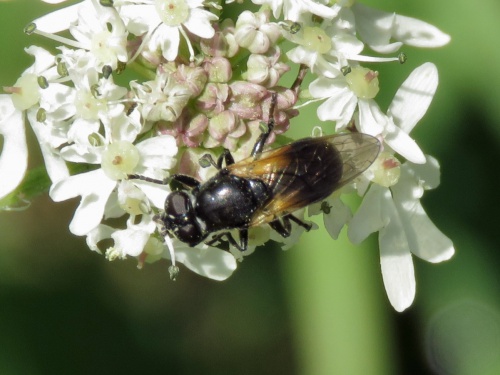 egaten
QEII Diamond Jubilee Wood
23 June 2020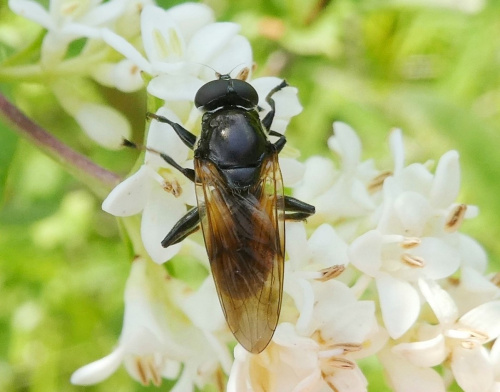 Kate Nightingale
Ketton Quarry NR
26 June 2020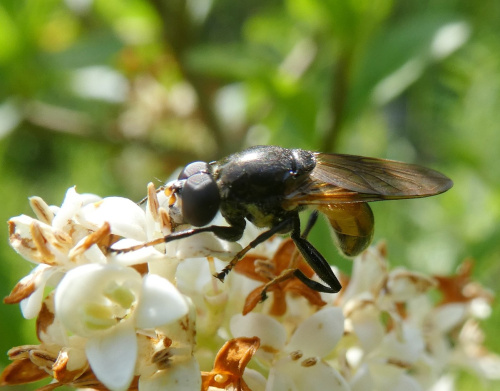 Kate Nightingale
Ketton Quarry NR
26 June 2020
Leicestershire & Rutland Map
Enter a town or village to see local records
MAP KEY:
Yellow squares = NBN records (all known data)
Coloured squares = NatureSpot records: 2025+ | 2020-2024 | pre-2020
UK Map
Additional images