

Marsh Woundwort - Stachys palustris
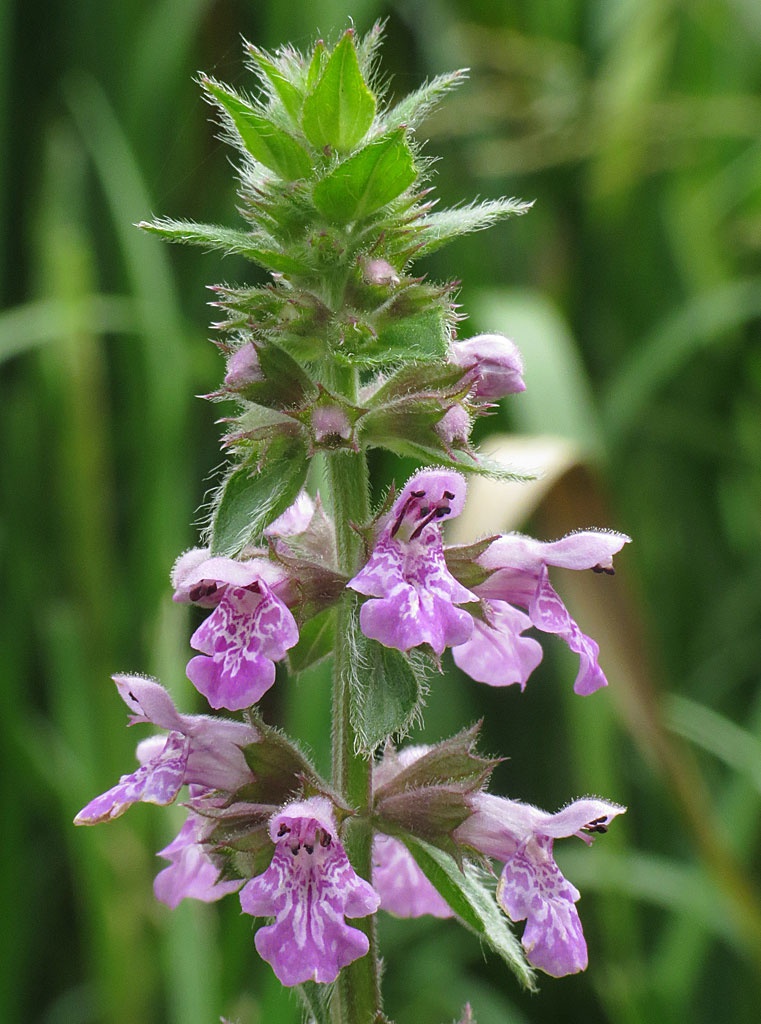
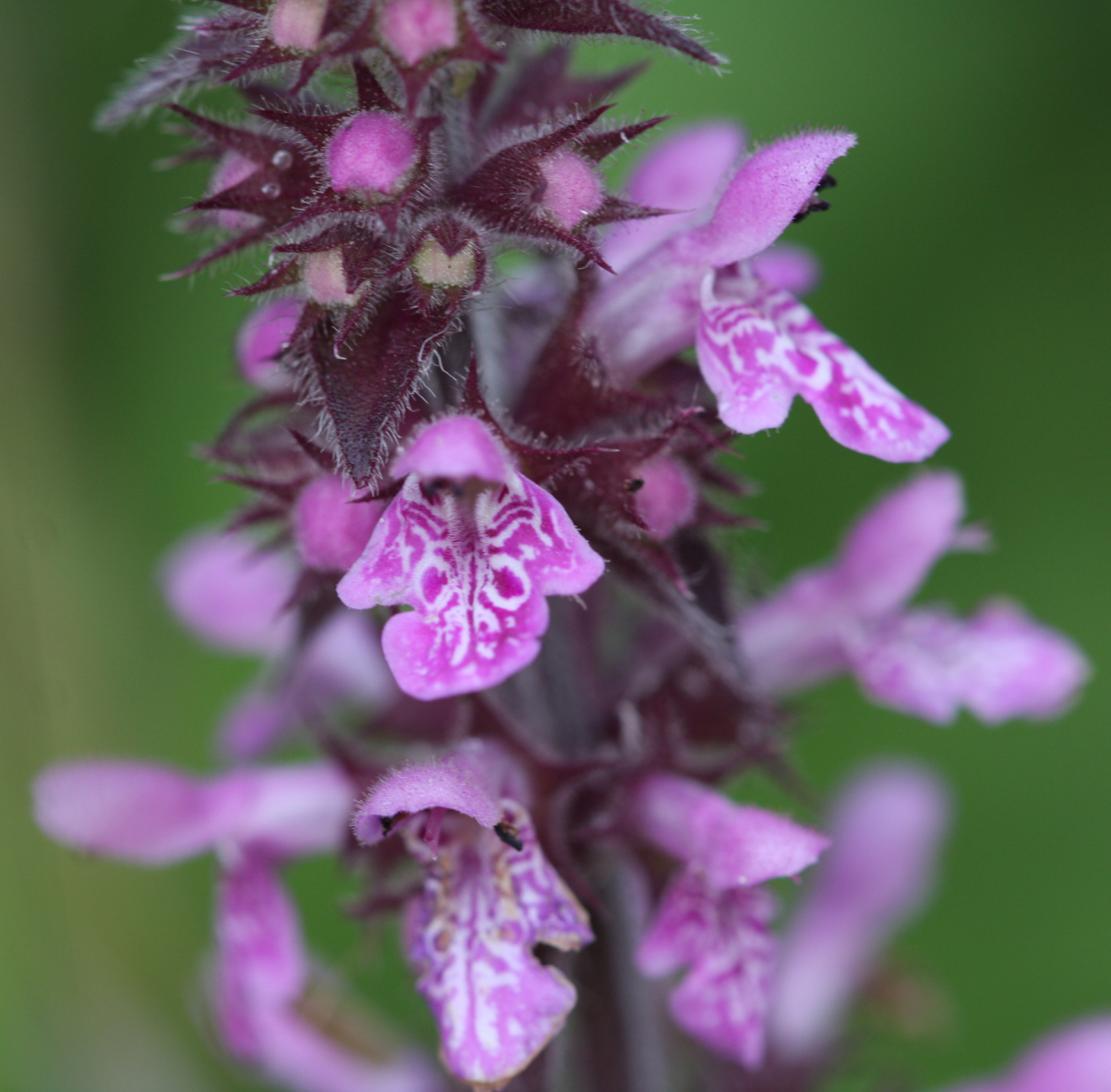
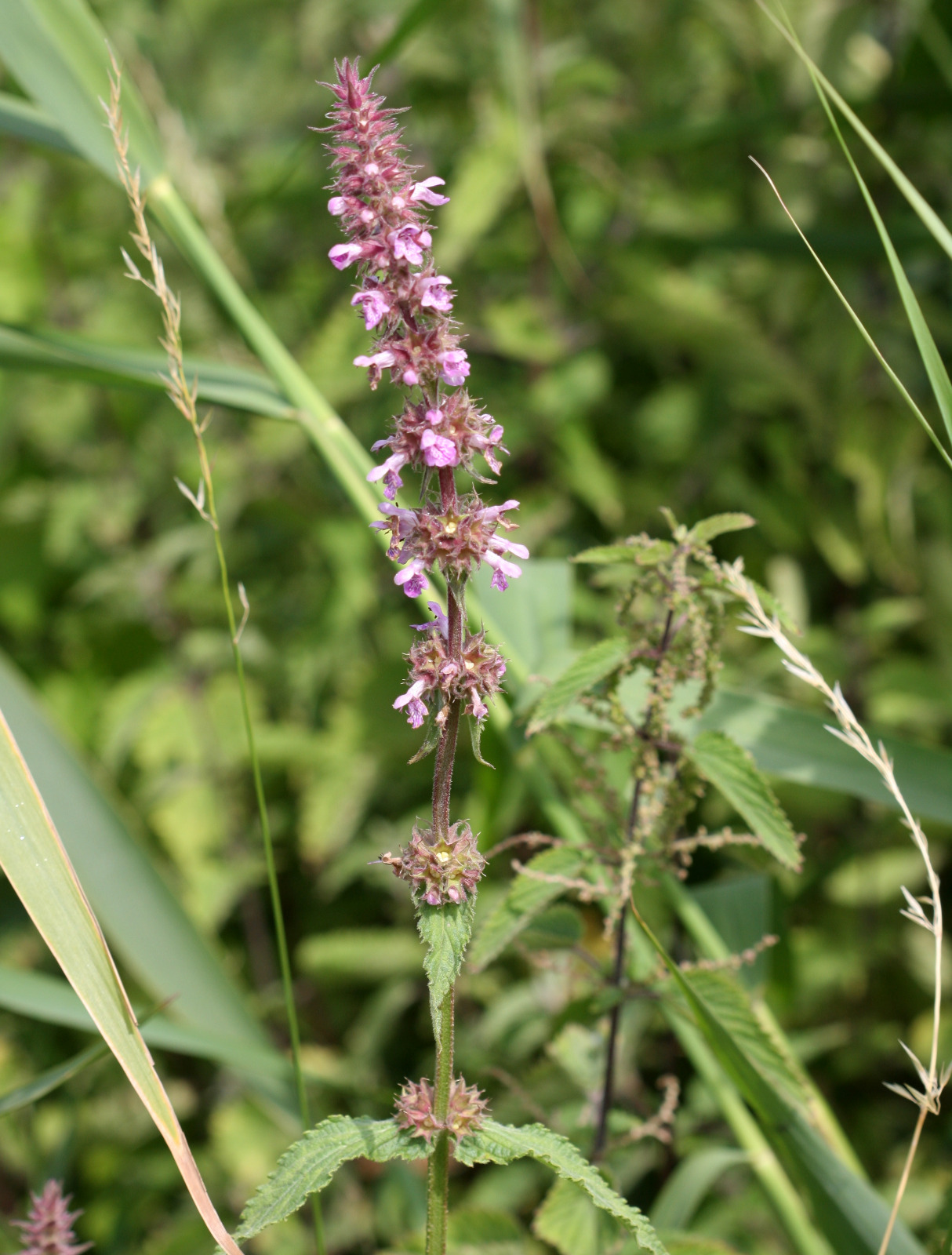
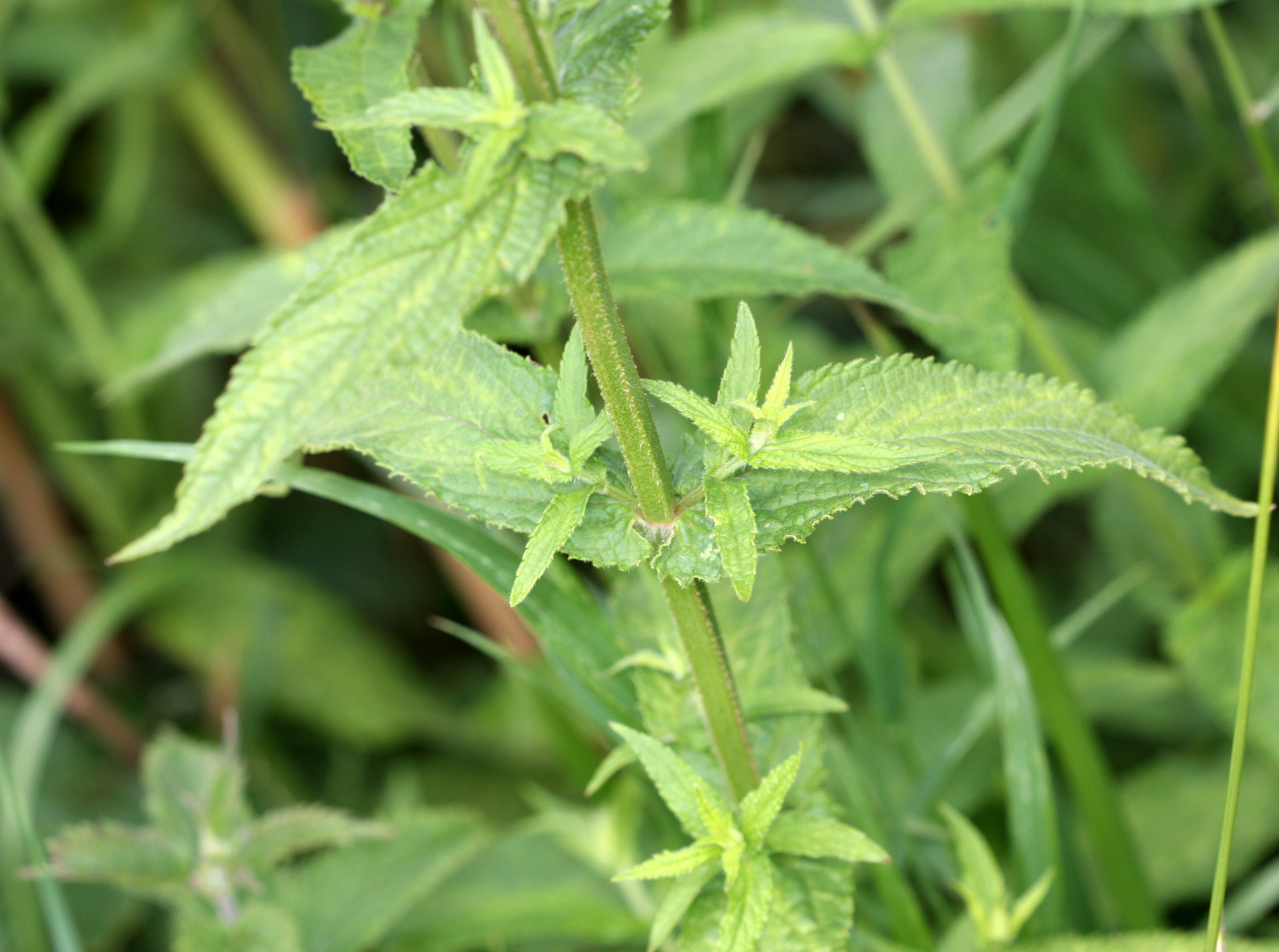
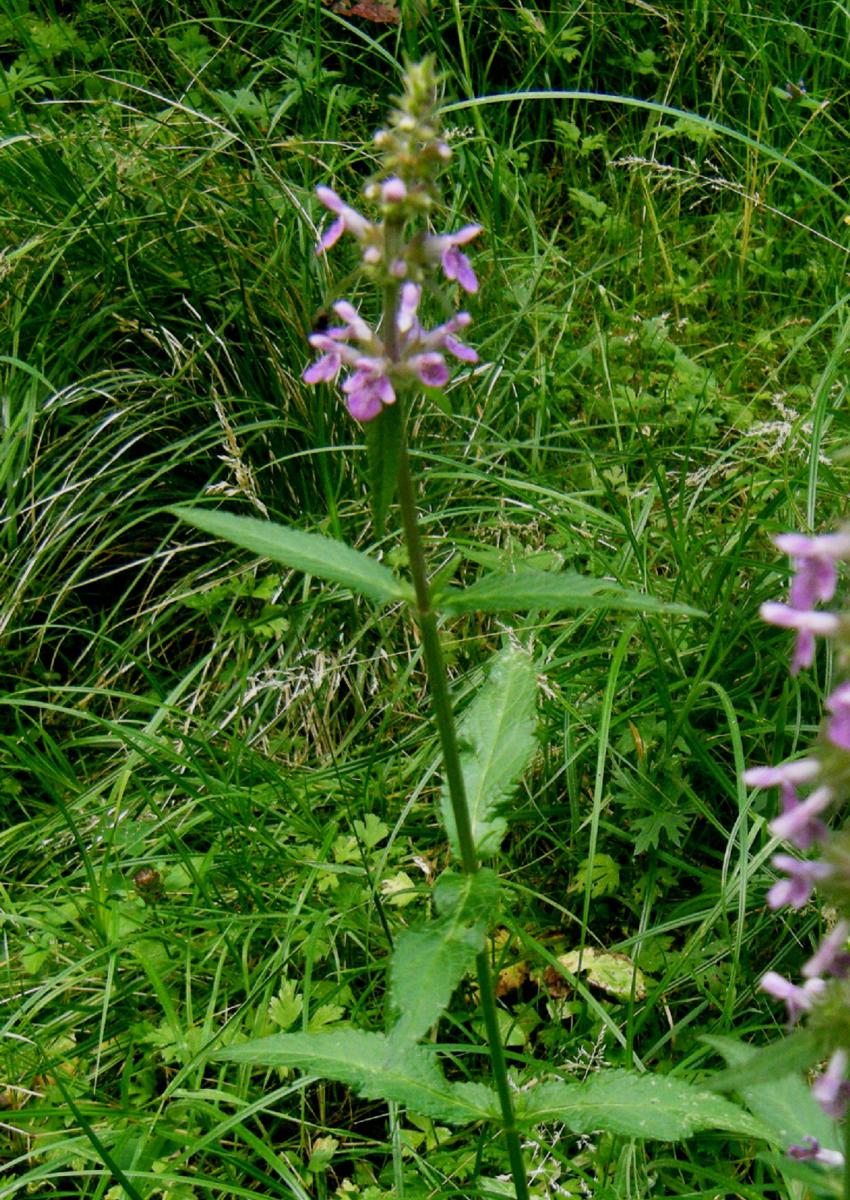
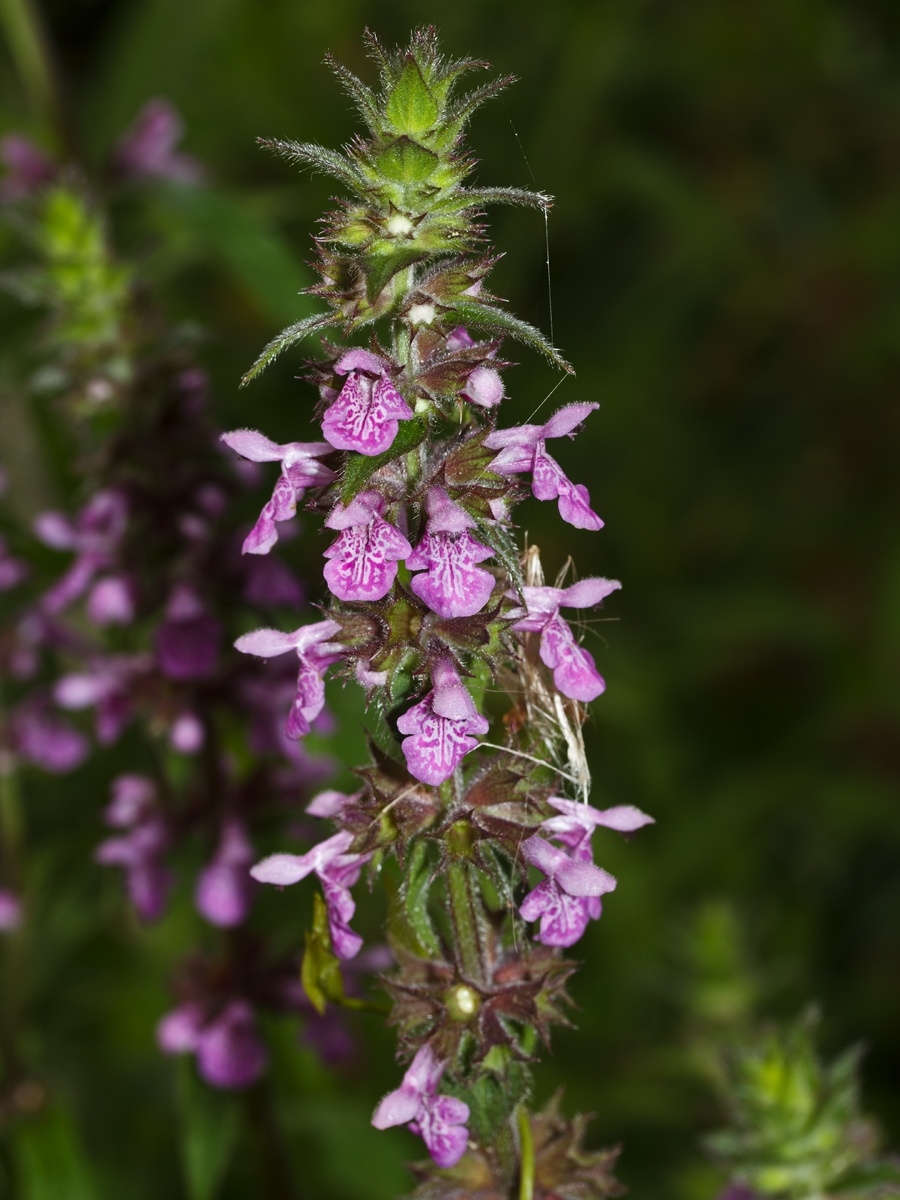
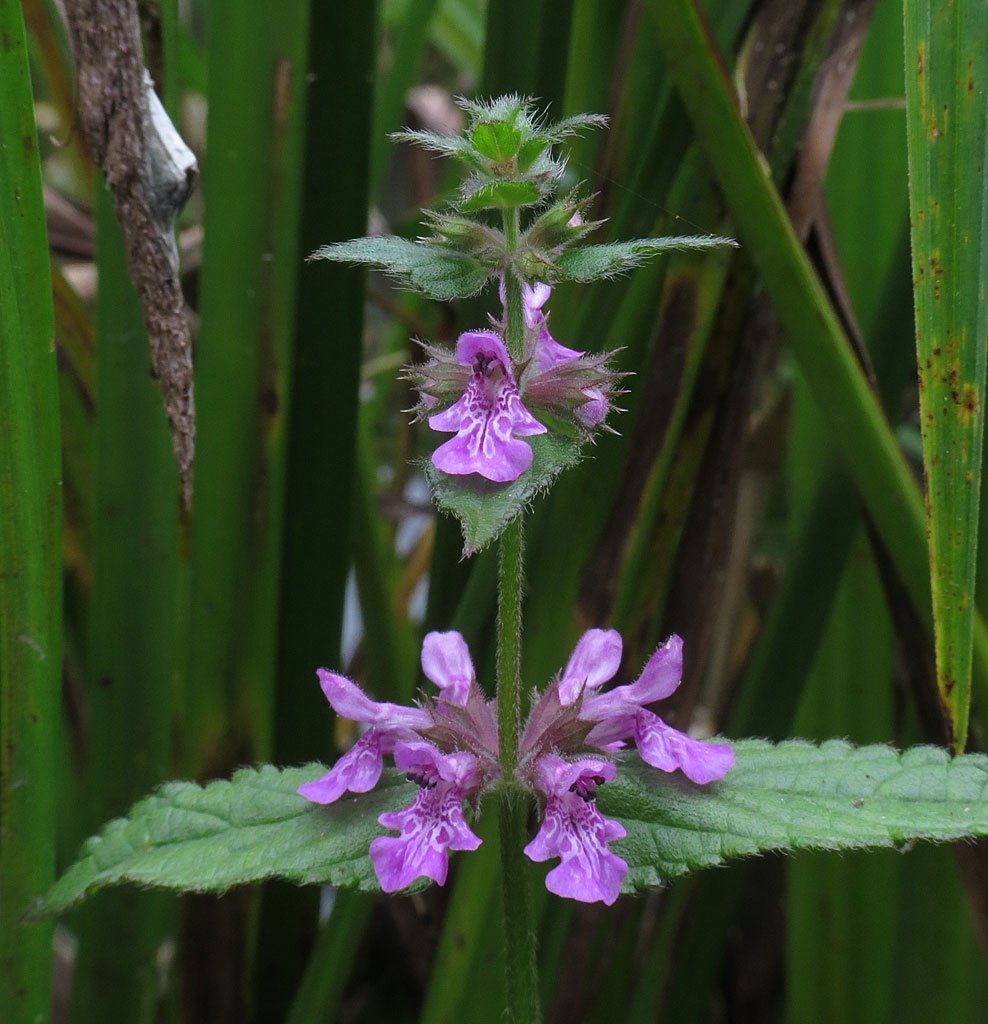
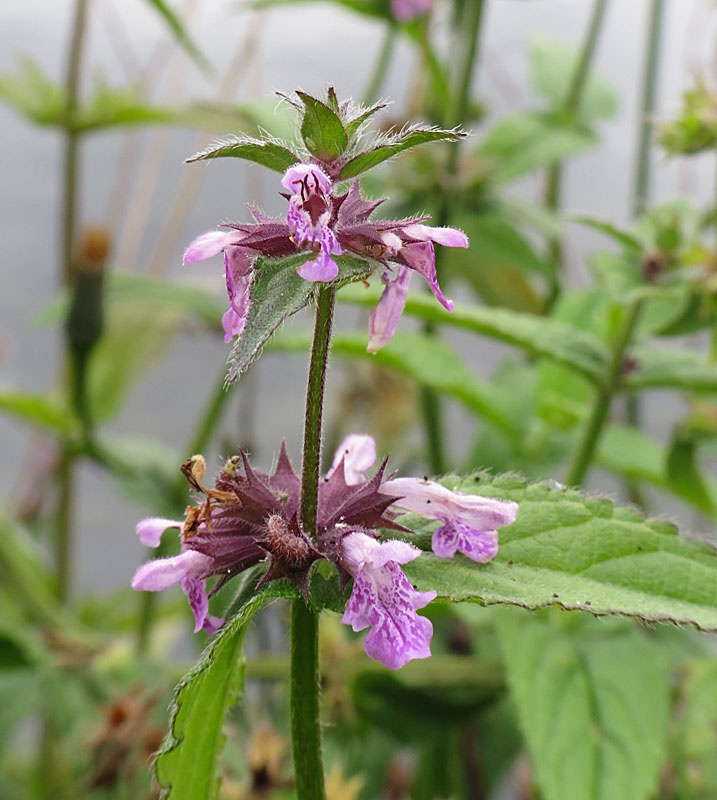
Medium to tall, hairy, faintly aromatic plant to 2 metres, stems erect. Leaves oblong to lanceolate with a heart shaped base, blunt toothed, only the lower stalked, the upper unstalked. Flowers purple, 12 to 15 mm long, the whorls forming a dense spike interrupted below.

Damp habitats, margins of ponds, rivers and canals, but also on disturbed ground and cultivated fields.
June to October.
Perennial.
Fairly frequent throughout most of Britain except for the Scottish Highlands.
Fairly frequent in Leicestershire and Rutland. In the 1979 Flora survey of Leicestershire it was found in 63 of the 617 tetrads.
 Drive to Springfield Farm Sapcote SP 4827 9273 (taken 31.7.2007).JPG) Graham Calow
Graham Calow
Sapcote
31 July 2007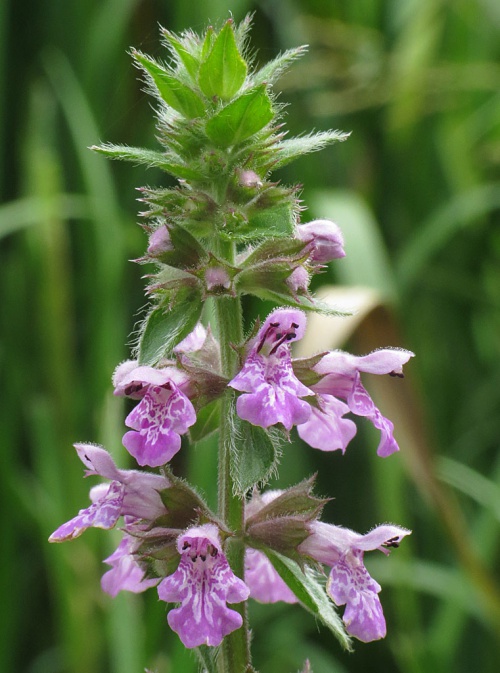 David Gould
Aylestone Meadows
15 August 2014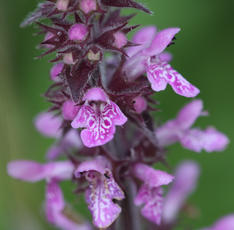 David Nicholls
Barrow Upon Soar
15 July 2011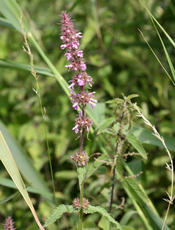 David Nicholls
Barrow Upon Soar
15 July 2011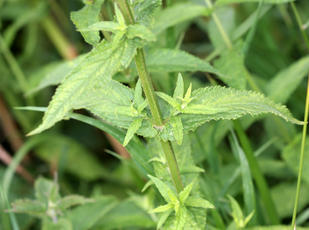 David Nicholls
Barrow Upon Soar
15 July 2011
leaves in pairs
 Drive to Springfield Farm Sapcote SP 4827 9273 (taken 31.7.2007).JPG)
Leicestershire & Rutland Map
Enter a town or village to see local records
MAP KEY:
Yellow squares = NBN records (all known data)
Coloured circles = NatureSpot records: 2025+ | 2020-2024 | pre-2020
UK Map
Species profile
- Common names
- Marsh Woundwort
- Species group:
- flowering plant
- Kingdom:
- Plantae
- Order:
- Lamiales
- Family:
- Lamiaceae
- Records on NatureSpot:
- 105
- First record:
- 31/07/2007 (Calow, Graham)
- Last record:
- 08/08/2025 (Bray, Ross)
Total records by month
% of records within its species group
10km squares with records
The latest images and records displayed below include those awaiting verification checks so we cannot guarantee that every identification is correct. Once accepted, the record displays a green tick.
In the Latest Records section, click on the header to sort A-Z, and again to sort Z-A. Use the header boxes to filter the list.
Latest images
Latest records
 Drive to Springfield Farm Sapcote SP 4827 9273 (taken 19.7.2006).JPG) Graham Calow
Graham Calow
Sapcote
31 July 2007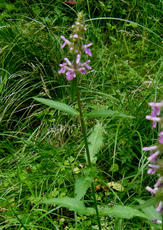 Graham Calow
Jubilee Walk, Leire
02 August 2011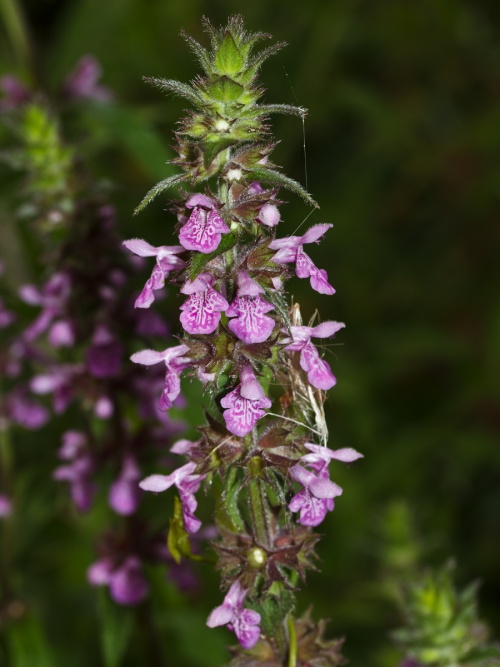 HAPeacock
St Marys Mills
19 August 2012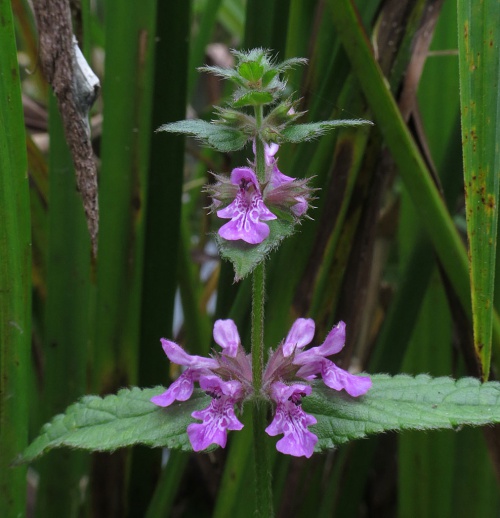 David Gould
Grand Union Canal, Aylestone, Leics.
04 September 2014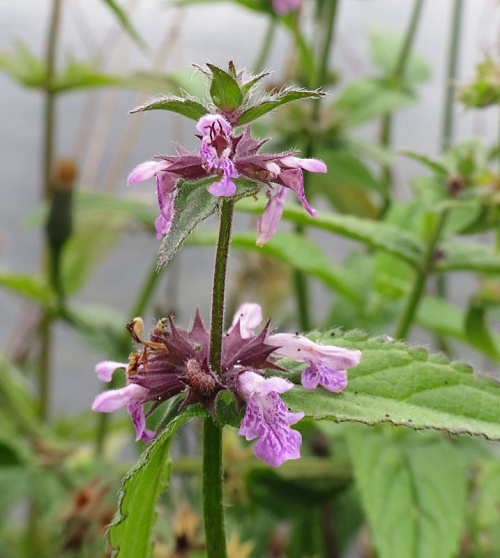 David Gould
Ratby Meadow, Enderby
14 September 2014
 Drive to Springfield Farm Sapcote SP 4827 9273 (taken 19.7.2006).JPG)

Amauromyza morionella
The larva of the Agromyzid fly Amauromyza morionella mines the leaves of various Stachys and Lamium species. The frass is conspicuous in the mine and the mine is initially linear, then develops into a white blotch, often enveloping the early mine.

Amauromyza (Cephalomyza) labiatarum
The larva of the Agromyzif fly Amauromyza labiatarum mines the leaves of various plants including Dead-nettles and Woundworts, producing a mine with a narrow gallery leading to a largish blotch on the upper surface. Frass is green and indistinct in the gallery - small grains may be seen at the gallery edge.
Amauromyza (Cephalomyza) labiatarum
The larva of the Agromyzif fly Amauromyza labiatarum mines the leaves of various plants including Dead-nettles and Woundworts, producing a mine with a narrow gallery leading to a largish blotch on the upper surface. Frass is green and indistinct in the gallery - small grains may be seen at the gallery edge.