

Hop - Humulus lupulus
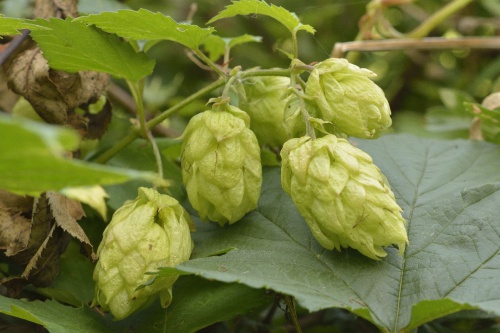
Climbing plant supported by tough backward pointing hairs on the stems. The leaves are opposite. The flowers are unisexual and pendulous. The green female flower resembles a soft pine cone.

Hedgerows, riverbanks and scrub.
Flowering July and August.
Perennial herb.
Fairly frequent in England and Wales less common further north.
Has a curious distribution in Leicestershire and Rutland but is fairly common in the Soar valley. In the 1979 Flora survey of Leicestershire it was found in 202 of the 617 tetrads.
 Barbara Cooper
Long Clawson
13 September 2015 Graham Calow
Narborough Road, Cosby
17 June 2016 Ken Charity
Anstey Bottom Green
31 July 2016
Humulus lupulus. Peter Smith
Watermead Park
27 August 2015
Female flowers Graham Calow
Broughton Astley, Sewage Treatment Works
11 June 2015 Alan Semper
Harby roadside
27 August 2011


Leicestershire & Rutland Map
Enter a town or village to see local records
MAP KEY:
Yellow squares = NBN records (all known data)
Coloured circles = NatureSpot records: 2025+ | 2020-2024 | pre-2020
UK Map
Species profile
- Common names
- Hop
- Species group:
- flowering plant
- Kingdom:
- Plantae
- Order:
- Rosales
- Family:
- Cannabaceae
- Records on NatureSpot:
- 113
- First record:
- 03/05/2007 (Dave Wood)
- Last record:
- 28/09/2025 (Mabbett, Craig)
Total records by month
% of records within its species group
10km squares with records
The latest images and records displayed below include those awaiting verification checks so we cannot guarantee that every identification is correct. Once accepted, the record displays a green tick.
In the Latest Records section, click on the header to sort A-Z, and again to sort Z-A. Use the header boxes to filter the list.
Latest images
Latest records
 Graham Calow
Cotesbach Hall land (near car parking area)
19 June 2023 Graham Calow
Narborough Road, Cosby
17 June 2016 Graham Calow
Narborough Road, Cosby
17 June 2016 Alan Semper
Harby roadside
07 October 2012 Peter Smith
Thurmaston
27 August 2015
Male flowers David Nicholls
Barrow Upon Soar
15 July 2011 Graham Calow
Ullesthorpe
30 April 2011 Barbara Cooper
King's Brook
04 June 2015 Alan Semper
Harby NR
27 August 2014 Graham Calow
Witherley
18 June 2015 Alan Semper
Hose, roadside hedge
21 October 2012 David Nicholls
Barrow Upon Soar
15 July 2011 Graham Calow
Ullesthorpe
30 April 2011 David Nicholls
Watermead Country Park
06 September 2012 Graham Calow
Ullesthorpe Stewardship Farm
15 June 2015 Graham Calow
Witherley
18 June 2015 Alan Semper
Harby roadside
07 October 2012 Alan Semper
Harby roadside
07 October 2012 Alan Semper
Hose, roadside hedge
21 October 2012 Alan Semper
Hose, roadside hedge
21 October 2012 Alan Semper
Hose, roadside hedge
21 October 2012 Alan Semper
Harby NR
27 August 2014 Alan Semper
Stathern, path G22
15 August 2014 Graham Calow
Broughton Astley
11 June 2015 Alan Semper
Harby NR
27 August 2014


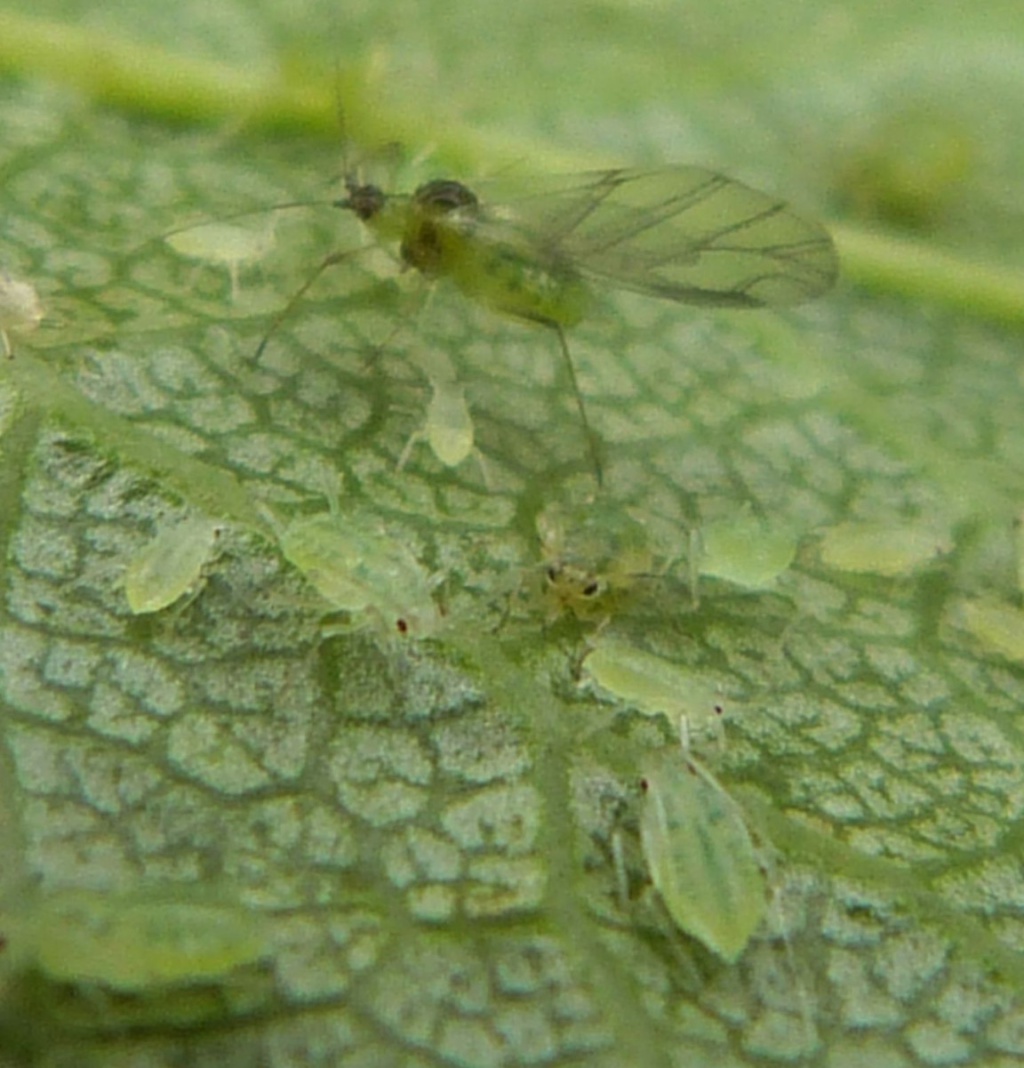
Damson-hop aphid
The Damson-hop Aphid (Phorodon humuli) host alternates from Blackthorn or Plum species (Prunaceae) to Hops. Phorodon humuli apterae are small to medium sized, whitish to pale yellowish green and relatively shiny. The abdomen is marked with three dark green longitudinal stripes.
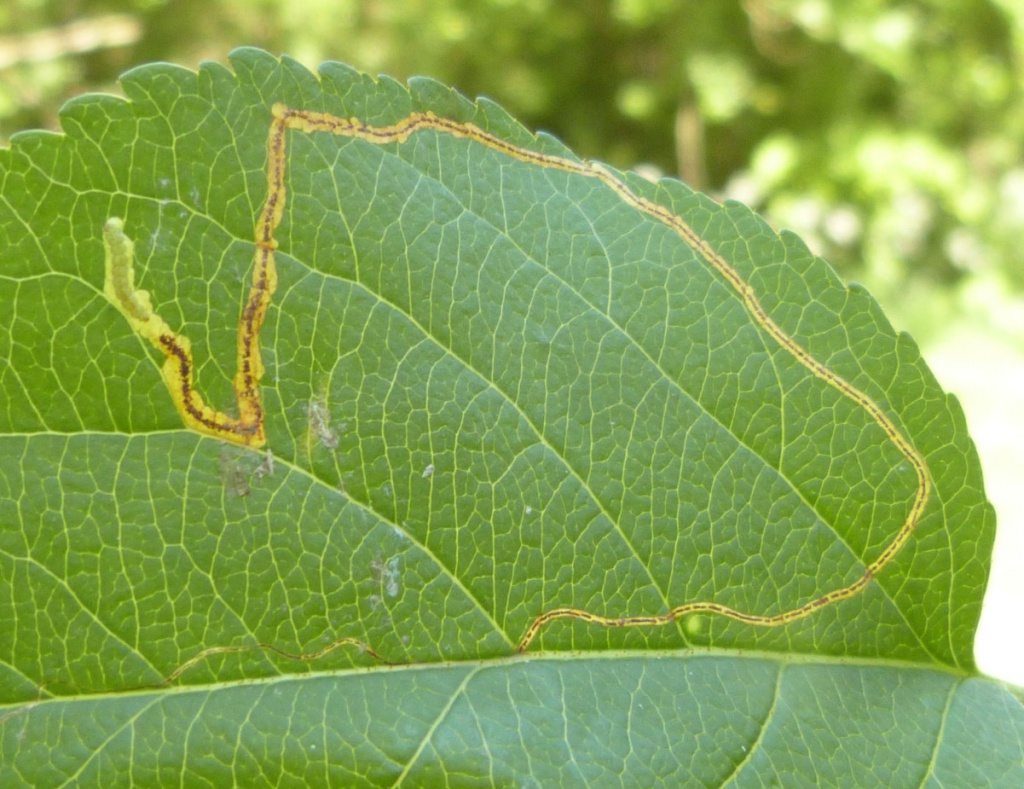
Apple Leaf Miner
Lyonetia clerkellais a tiny moth (wingspan 7 to 9 mm) with a silvery appearance but very attractively patterned when seen under magnification.
The larva produces a leafmine on a number of species, especially Cherry, Apple, Rowan, Hawthorn, Blackthorn and other trees and shrubs in the Rosaceae family. It is also commonly found on Birch and occasionally on Hop (Humulus lupulus). The mine is long smoothly curved gallery with frass in a central line; older mines look whitish. The larva is long and slender. It has a segmented body and 6 dark feet.
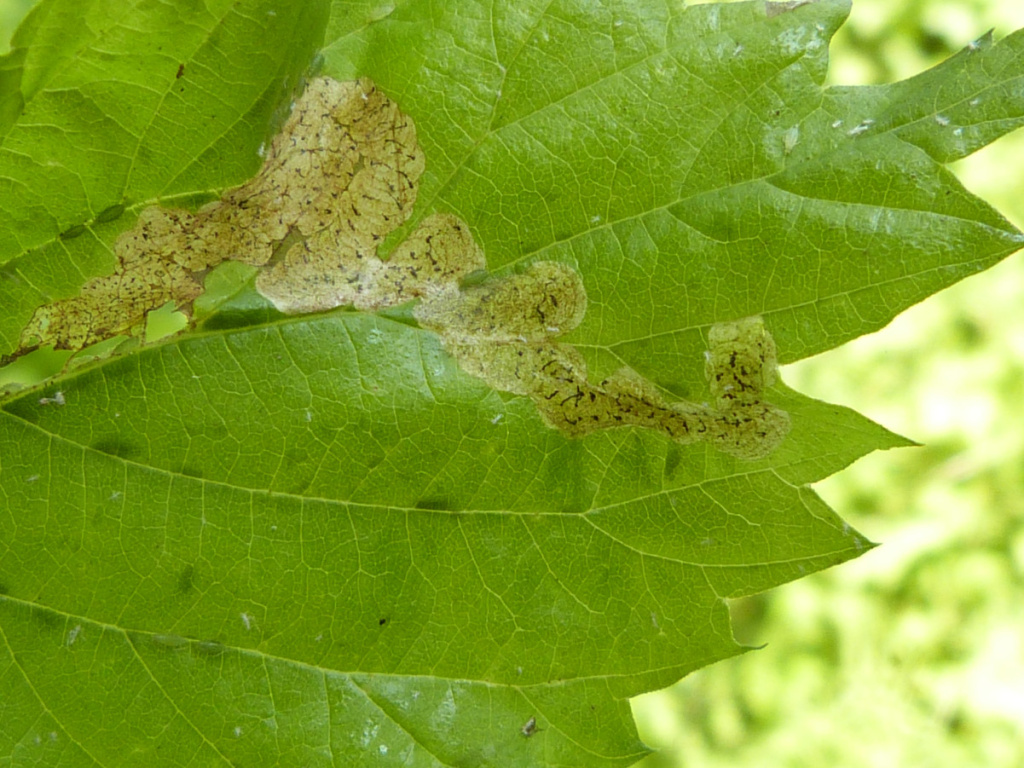
Agromyza anthracina
The larva of the Agromyzid fly Agromyza anthracina mines the leaves of Common Nettle and other related host plants including Hop. The mine usually starts away from the leaf edge and has a coiled intestine like start; it has frass in long threads in the broader part of the mine.
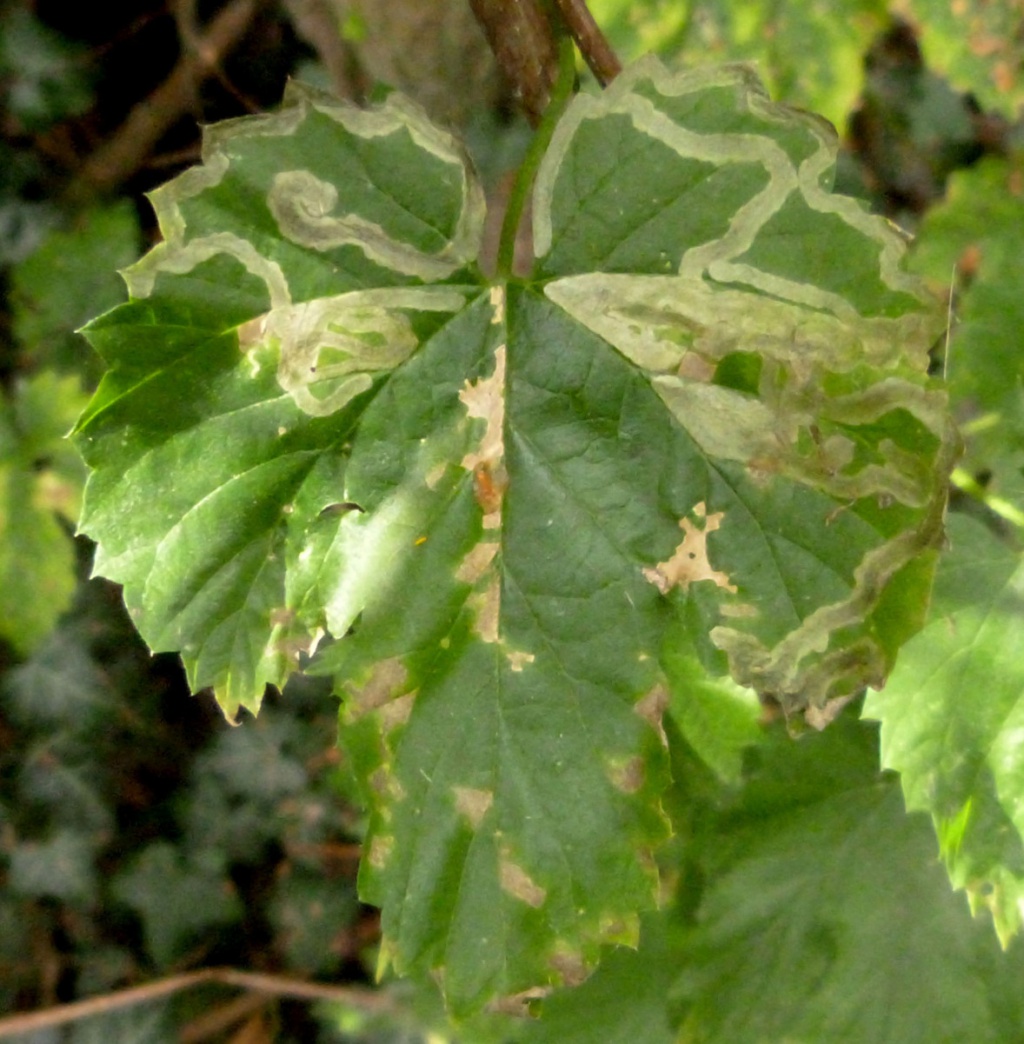
Agromyza flaviceps
The larva of the Agromyzid fly Agromyza flaviceps mines the leaves of Hop creating a long upper surface gallery widening towards the end and with greenish, diffused frass.