

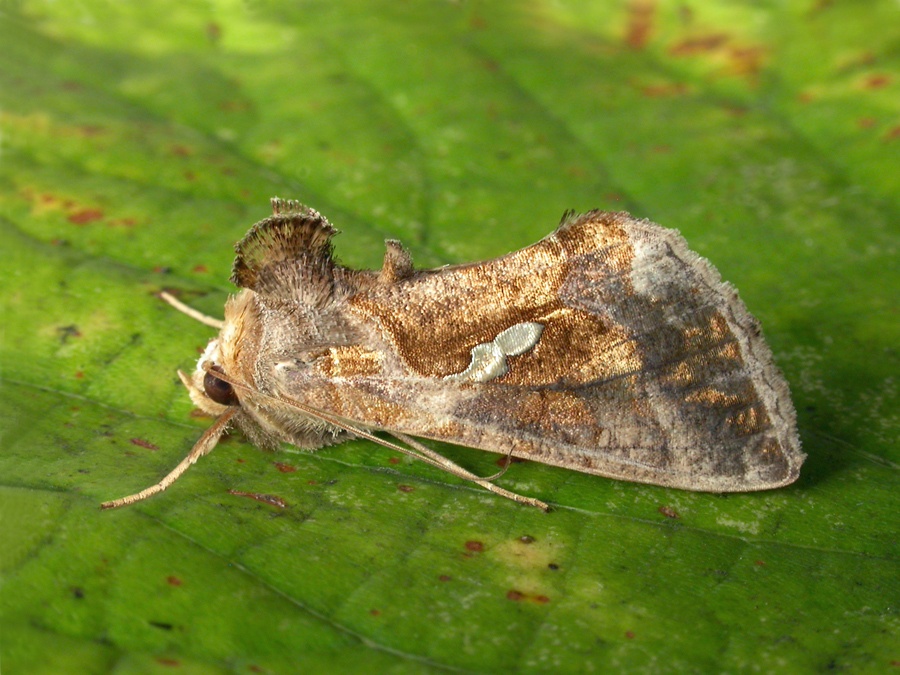
Golden Twin-spot - Chrysodeixis chalcites
Wingspan 33 to 44 mm.

An immigrant species that is usually found near to the coast.
The most typical time of occurrence is between September and November, when moths are sometimes found at light-traps.
On the continent, the caterpillars feed on such plants as chrysanthemum and viper's bugloss.
An immigrant species into the British Isles, with usually several reported every year, mainly from the south and south-east coasts. The species is also sometimes imported as larvae on fruit and flowers. In a recent survey to determine the status of all macro moths in Britain this species was classified as a migrant.
It appears to be uncommon in Leicestershire and Rutland, where there are few records. L&R Moth Group status = D (rare or rarely recorded). It is believed that the Ravenstone record of 2006 is the first record for VC55.
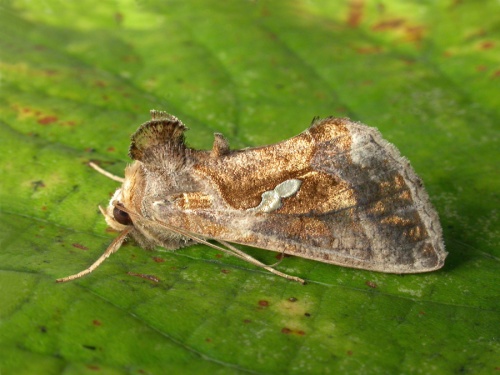 Keith Tailby
Ravenstone
19 October 2006
First record for VC 55
Leicestershire & Rutland Map
Enter a town or village to see local records
MAP KEY:
Yellow squares = NBN records (all known data)
Coloured circles = NatureSpot records: 2025+ | 2020-2024 | pre-2020
UK Map
Species profile
- Common names
- Golden Twin-spot
- Species group:
- insect - moth
- Kingdom:
- Animalia
- Order:
- Lepidoptera
- Family:
- Noctuidae
- Records on NatureSpot:
- 1
- First record:
- 19/10/2006 (Keith Tailby)
- Last record:
- 19/10/2006 (Keith Tailby)
Total records by month
% of records within its species group
10km squares with records
The latest images and records displayed below include those awaiting verification checks so we cannot guarantee that every identification is correct. Once accepted, the record displays a green tick.
In the Latest Records section, click on the header to sort A-Z, and again to sort Z-A. Use the header boxes to filter the list.