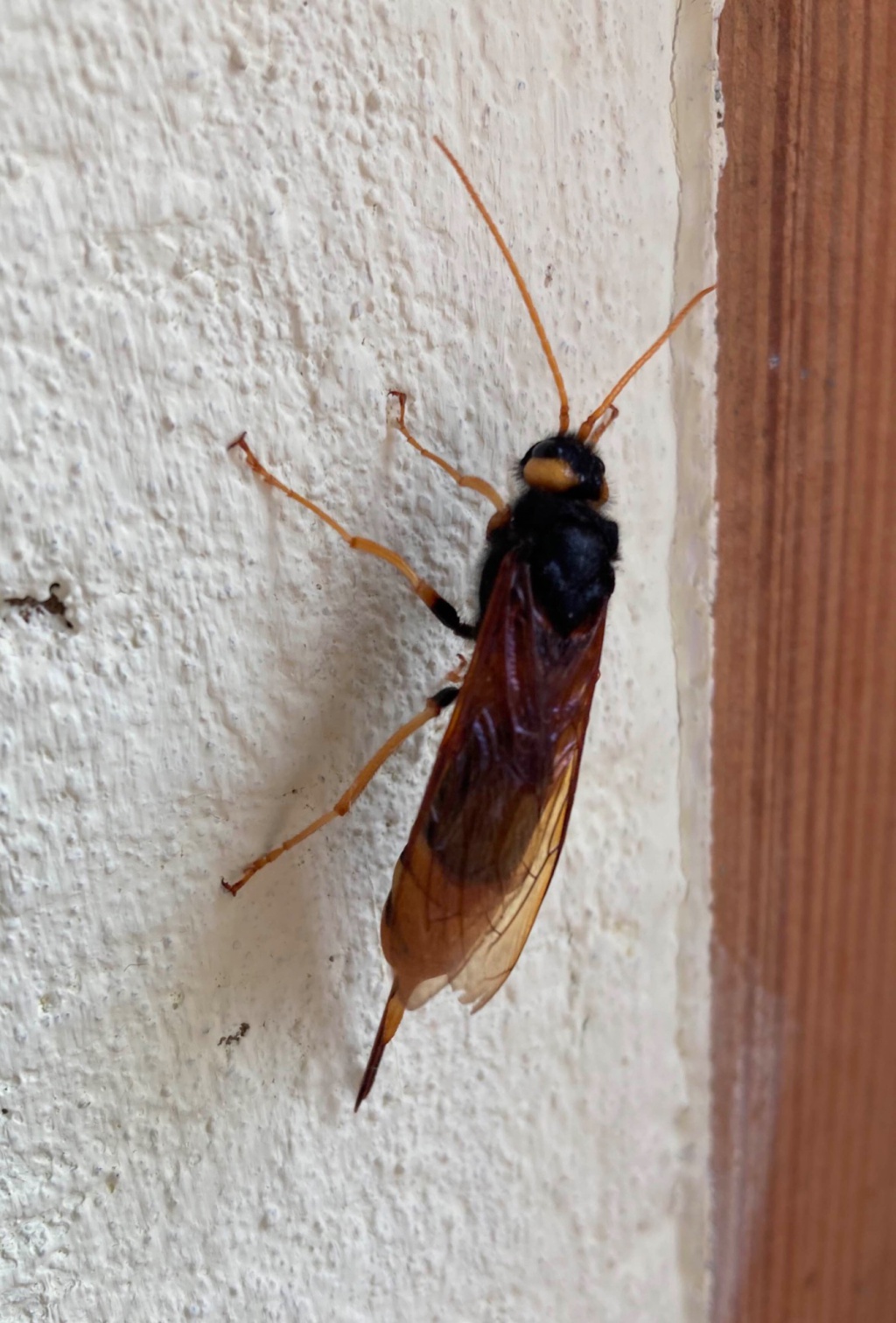
Giant Woodwasp - Urocerus gigas
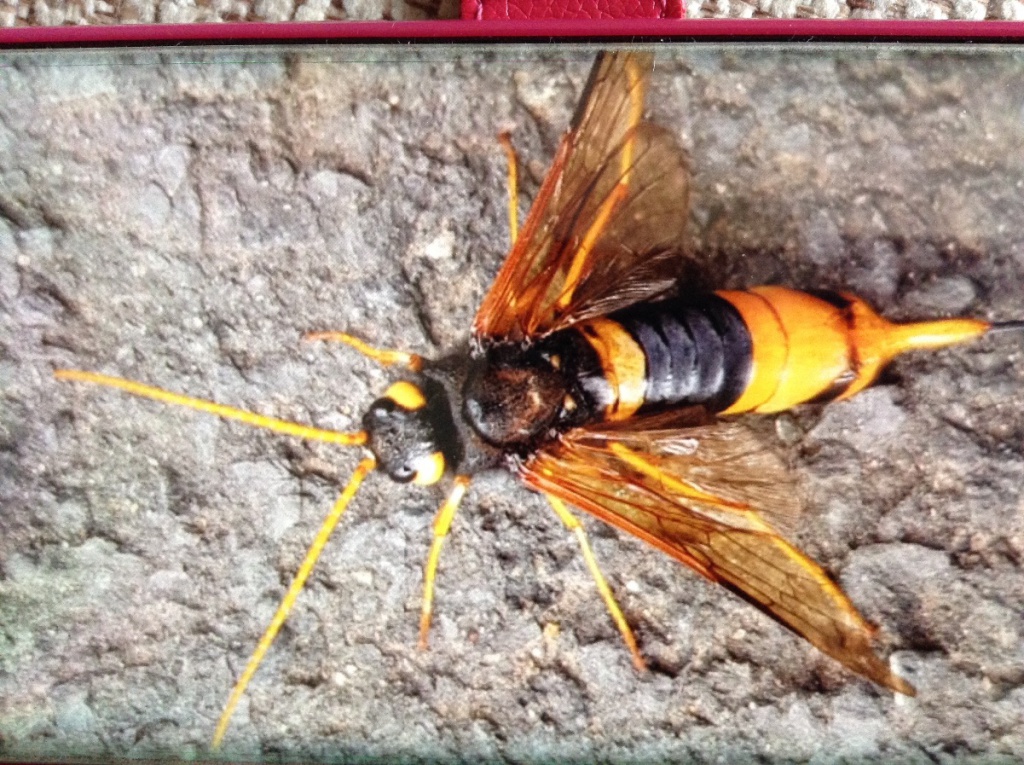
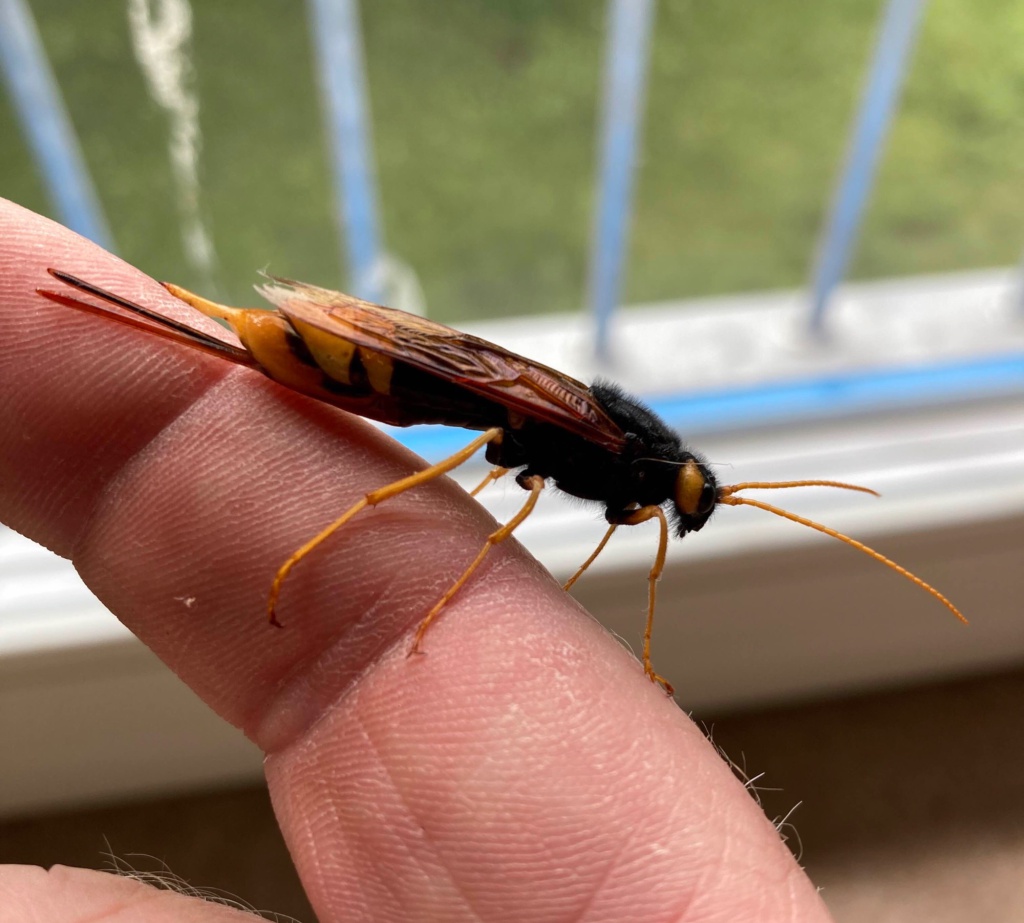
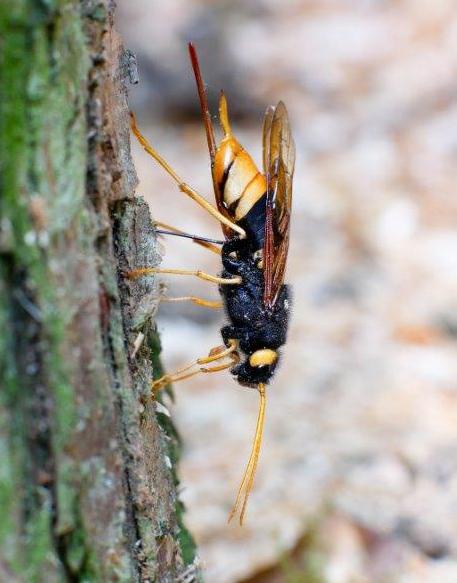
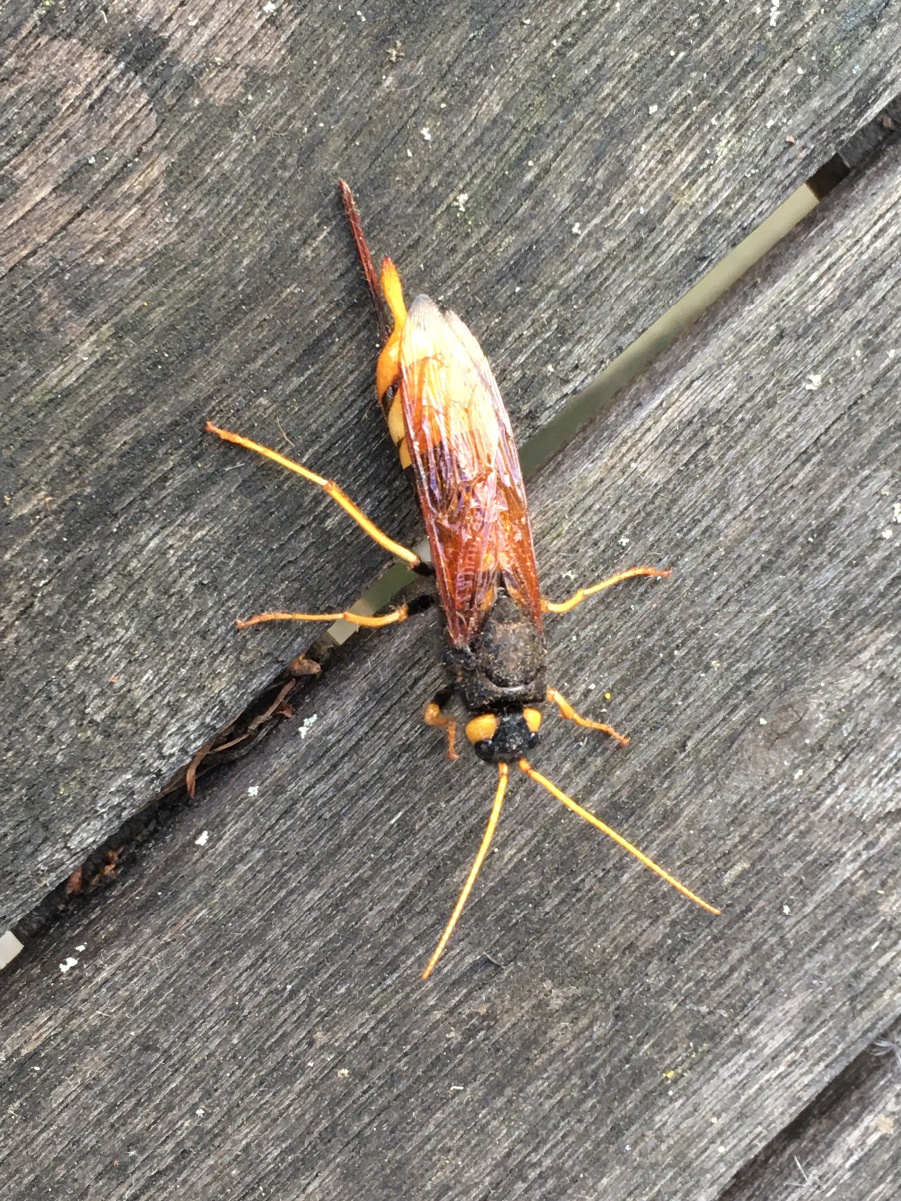
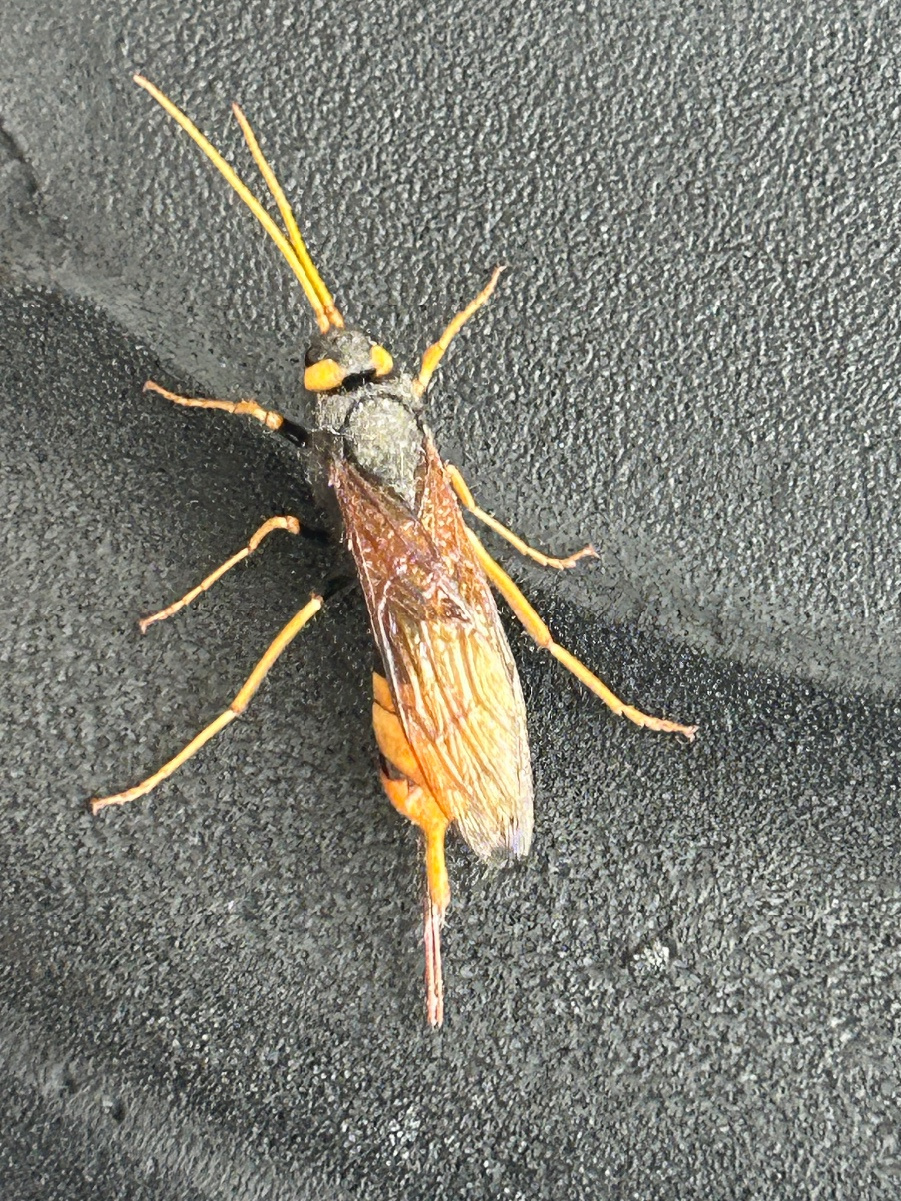
The last tergite of the abdomen has a strong, projecting spike, thus giving the group its common name of horntail. This is a very large (up to 4 cm long) sawfly with a distinctive yellow and black banded abdomen.
Indicator Species - Leicestershire, Leicester & Rutland Local Nature Recovery Strategy.

Photographs required.
Usually found in or near coniferous woods.
May to October.
Urocerus gigas targets weakened, dying, fire-damaged, or freshly felled coniferous trees. It cannot digest raw wood fiber (lignin and cellulose) on its own and relies on an obligate mutualism with a wood-rotting basidiomycete fungus, Amylostereum chailletii. By colonizing freshly dead timber, it initiates wood decay processes in conifer canopy gaps, opening up structural wood to saproxylic fungi, beetles, and microbial communities. The female wasps carry fungal spores inside specialized internal pouches at the base of their ovipositor. When laying eggs deep into conifer wood, the female injects both eggs and fungal spores. The fungus spreads through the xylem, breaking down dense lignin and softening the wood and the wasp larvae feed on the fungal hyphae and the pre-digested wood pulp created by the fungus.
Widespread.
Uncommon.
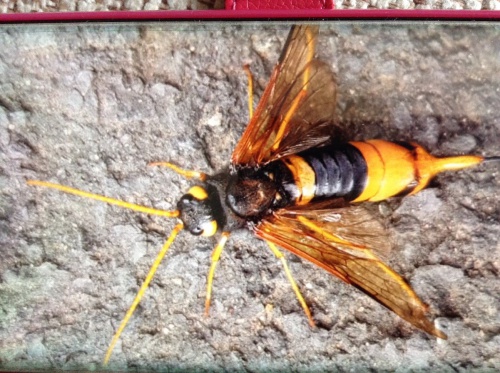 Carole Lunn
Measham
14 July 2020 Katie Field
Wymondham, Leicestershire
20 July 2023 Andy Lear
Launde Park Wood
21/06/2017
egg-laying on Cedar log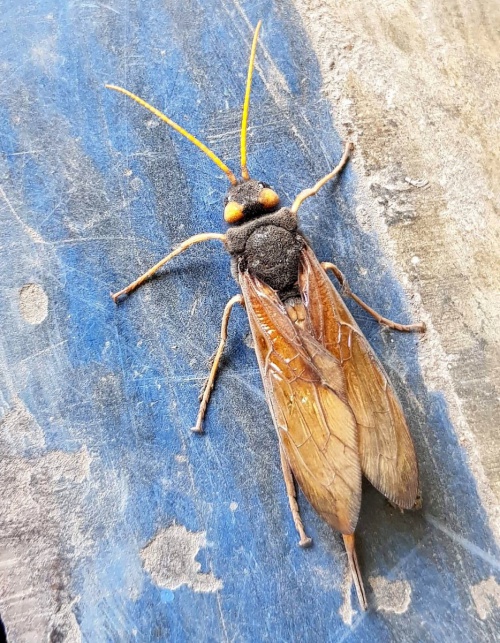 Conner Ockenden
Enderby, Grove Park, Thorpe Way
11 July 2019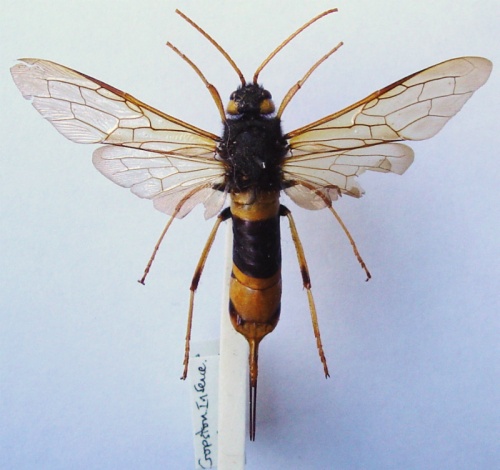 JesWoodhead
Cropston
26 July 1990 Katie Field
Wymondham
18 July 2021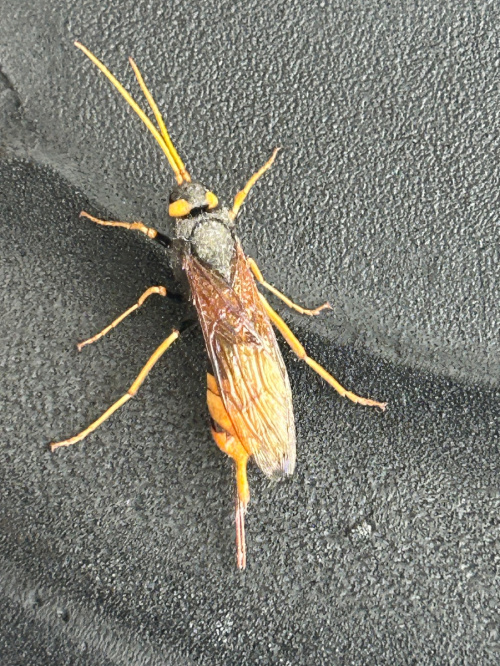 Bradders
Tesco Ashby
06 July 2026


Leicestershire & Rutland Map
Enter a town or village to see local records
MAP KEY:
Yellow squares = NBN records (all known data)
Coloured circles = NatureSpot records: 2025+ | 2020-2024 | pre-2020
UK Map
Species profile
- Common names
- Giant Wood Wasp, Greater Horntail Wasp, Giant Horntail
- Species group:
- insect - hymenopteran
- Kingdom:
- Animalia
- Order:
- Hymenoptera
- Family:
- Siricidae
- Records on NatureSpot:
- 18
- First record:
- 07/08/1924 (Wesley, Isaac)
- Last record:
- 06/07/2026 (Bradbury, Amanda)
Total records by month
% of records within its species group
10km squares with records
The latest images and records displayed below include those awaiting verification checks so we cannot guarantee that every identification is correct. Once accepted, the record displays a green tick.
In the Latest Records section, click on the header to sort A-Z, and again to sort Z-A. Use the header boxes to filter the list.
Latest images
Latest records
 Chris Hipkiss
Wymondham
28 September 2015 Katie Field
Wymondham, Leicestershire
20 July 2023 Roy Denney
Warren Hills
30 July 2023
Giant Horntail Wasp