

The Four-spotted - Tyta luctuosa
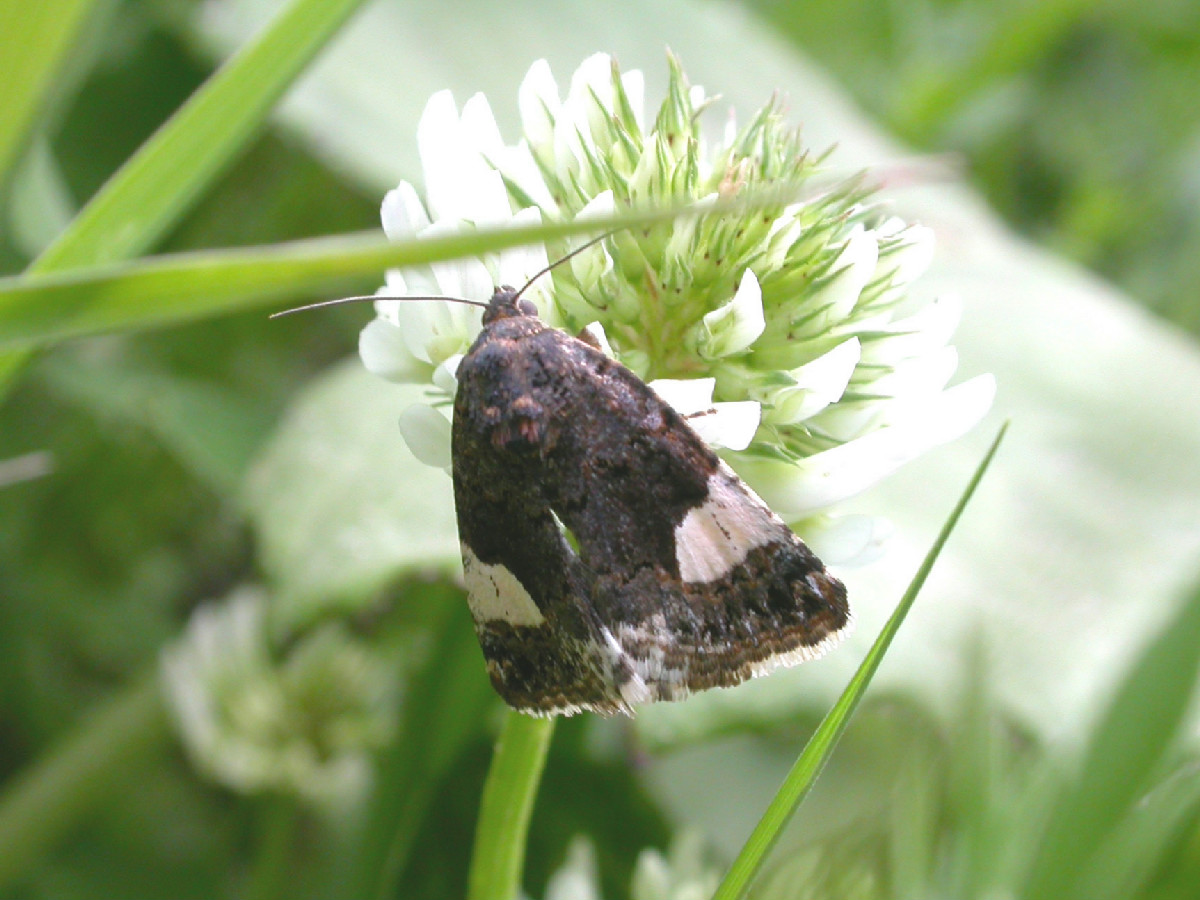
Wingspan 22 to 25 mm. Large white spots one extending two-thirds of the way along the leading edge of the brownish black forewing, and white band on the hindwing are diagnostic of this rather distinctive moth.

It can be found in dry, sandy or chalky terrain and wasteland.
It is on the wing between May and August, and flies from dusk into the night.
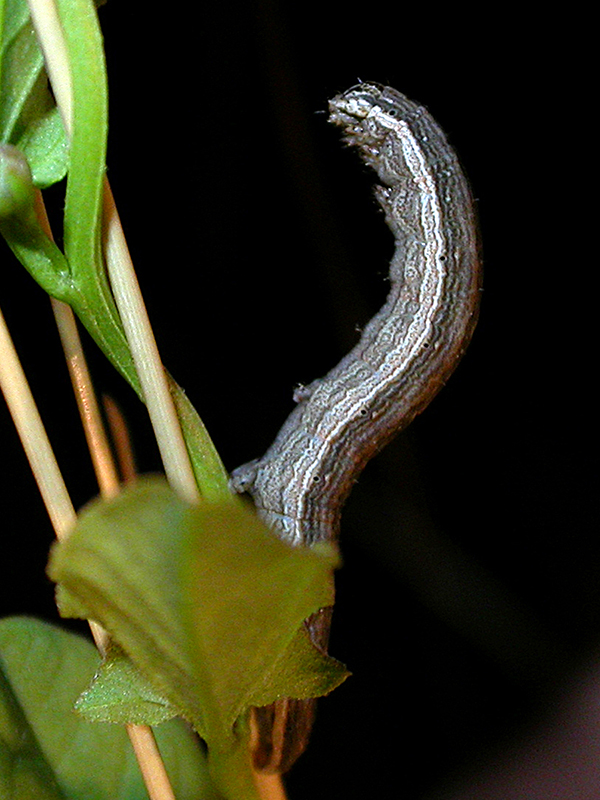
The larvae feed on field Bindweed and prefer the buds of flowers.
This scarce and vulnerable species was once widely distributed in the south, but is now restricted to a few small populations in Dorset, the Brecks and elsewhere. In a recent survey to determine the status of all macro moths in Britain this species was classified as Nationally Scarce A.
It appears to be uncommon in Leicestershire and Rutland, where there are few records. L&R Moth Group status = D (rare or rarely recorded).
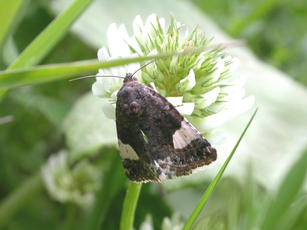 Adrian Russell
Ketton
17 June 2006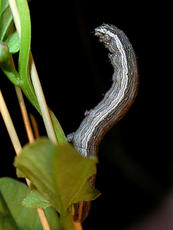 Mark Skevington
Grange Top Quarry
27 June 2005
larva on Field Bindweed
Leicestershire & Rutland Map
Enter a town or village to see local records
MAP KEY:
Yellow squares = NBN records (all known data)
Coloured circles = NatureSpot records: 2025+ | 2020-2024 | pre-2020
UK Map
Species profile
- Common names
- Four-spotted, Four-spotted Moth
- Species group:
- insect - moth
- Kingdom:
- Animalia
- Order:
- Lepidoptera
- Family:
- Noctuidae
- Records on NatureSpot:
- 2
- First record:
- 27/06/2005 (Skevington, Mark)
- Last record:
- 17/06/2006 (Russell, Adrian)
Total records by month
% of records within its species group
10km squares with records
The latest images and records displayed below include those awaiting verification checks so we cannot guarantee that every identification is correct. Once accepted, the record displays a green tick.
In the Latest Records section, click on the header to sort A-Z, and again to sort Z-A. Use the header boxes to filter the list.