

Early Meadow-grass - Poa infirma
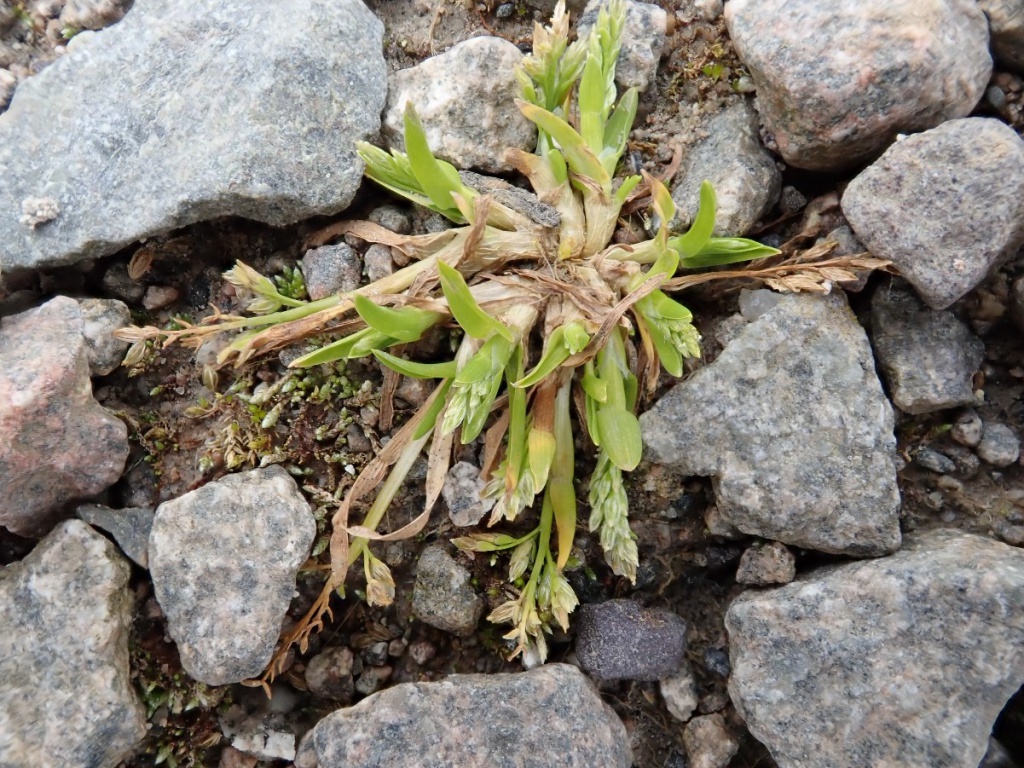
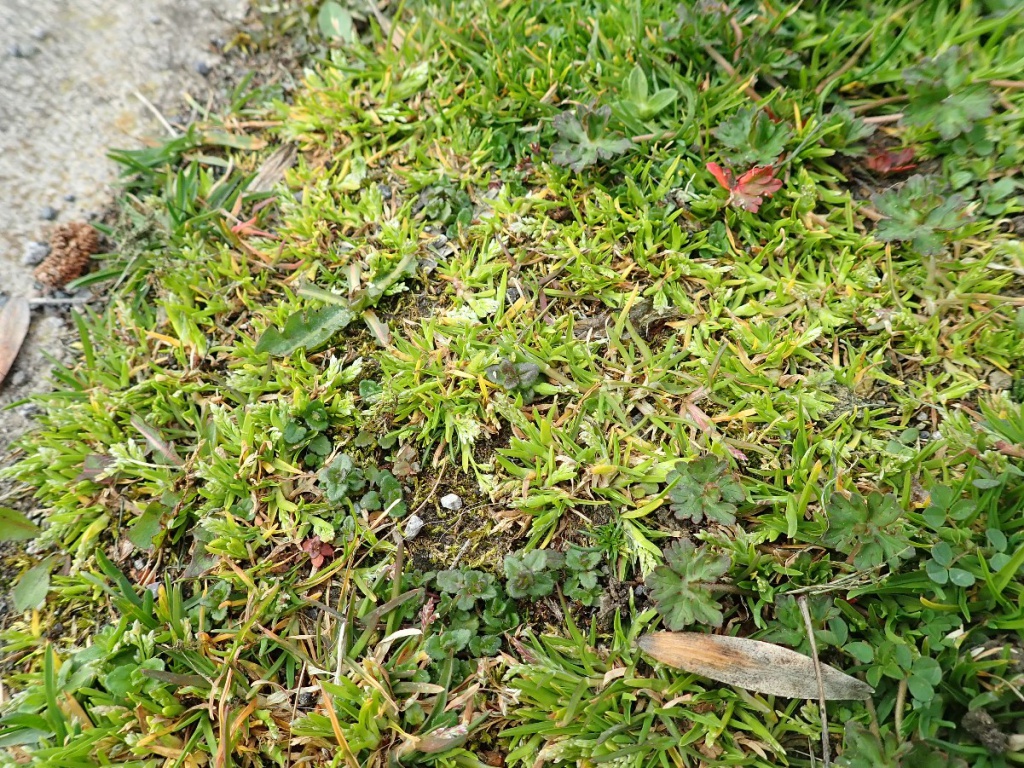
In the field Poa infirma is a little more slender than Poa annua, but the real character that picks out plants to look at in more detail is its light green colour. Anthers provide the best diagnostic characters.
Poa annua

Anthers 0.2mm - 0.5mm, 1 - 1.5 times as long as wide, panicle branches erect/sub-erect at fruiting stage (Poa annua has larger, longer anthers and usually reflexed panicle branches at fruiting)
Unless identified by a recognised expert, a photo is required and the specimen should be examined with a microscope. In the comments box, state the key or ID method used and describe the size and identifying characters. Retain a specimen of this species for verification.
Most often found growing near the sea in open, trampled grassland, on cliff-top paths, tracksides, picnic sites, lawns and car parks, and in stabilised dunes and other sandy places, but more recently has been recorded inland.
This species may flower as early as January to April and some populations may have disappeared before most botanists are recording.
Annual.
This species has experienced a very considerable extension of range including more inland records.
New to Leicestershire and Rutland in 2019.
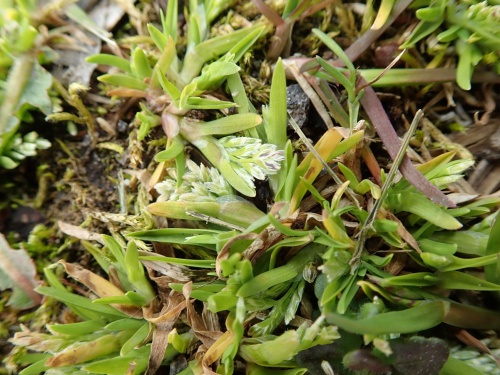 Geoffrey Hall
Moira, National Forest YHA
22 March 2019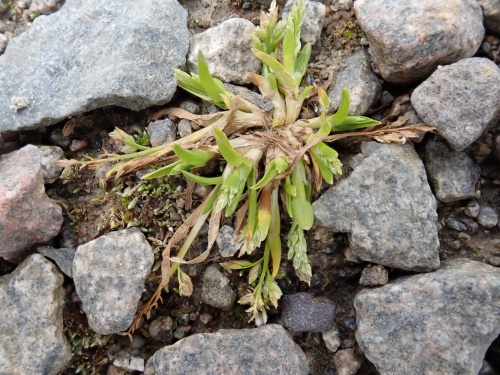 Geoffrey Hall
Moira, National Forest YHA
22 March 2019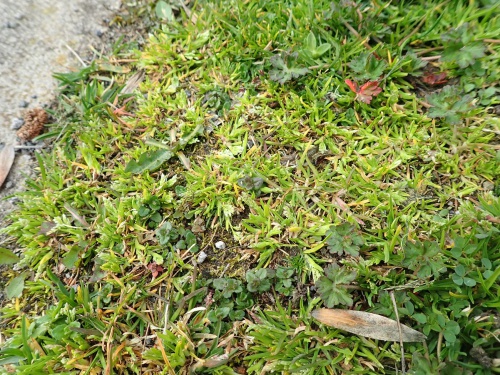 Geoffrey Hall
Moira, National Forest YHA
22 March 2019
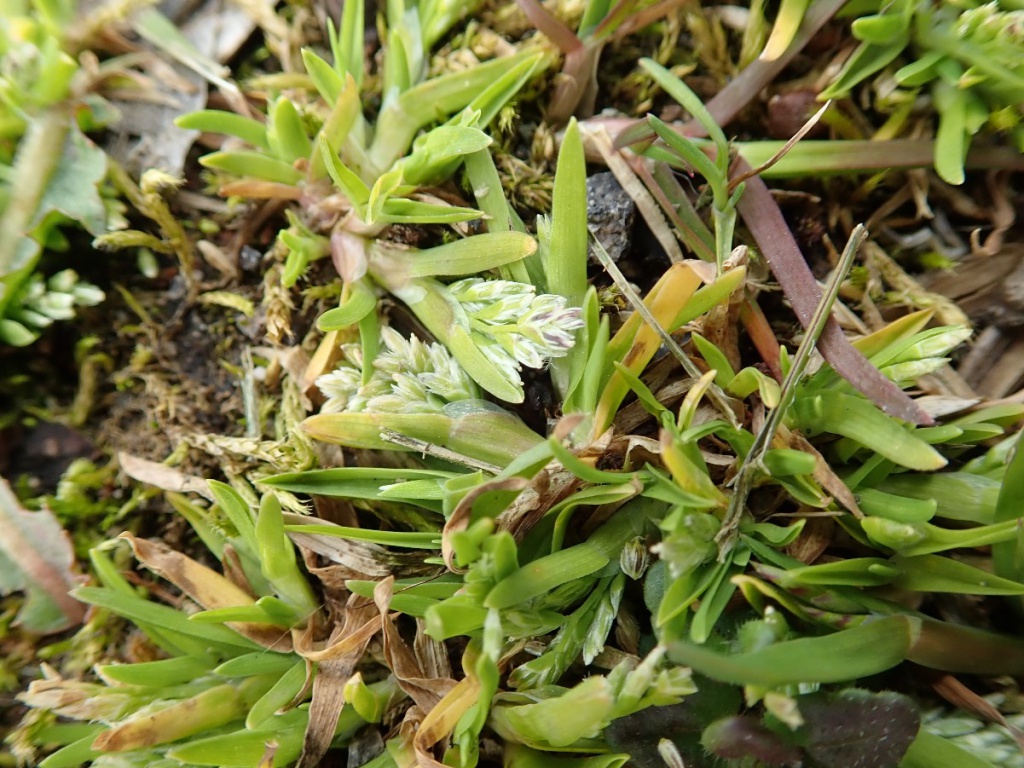
Leicestershire & Rutland Map
Enter a town or village to see local records
MAP KEY:
Yellow squares = NBN records (all known data)
Coloured circles = NatureSpot records: 2025+ | 2020-2024 | pre-2020
UK Map
Species profile
- Common names
- Early Meadow-grass
- Species group:
- flowering plant
- Kingdom:
- Plantae
- Order:
- Poales
- Family:
- Poaceae
- Records on NatureSpot:
- 1
- First record:
- 22/03/2019 (Hall, Geoffrey)
- Last record:
- 22/03/2019 (Hall, Geoffrey)
Total records by month
% of records within its species group
10km squares with records
The latest images and records displayed below include those awaiting verification checks so we cannot guarantee that every identification is correct. Once accepted, the record displays a green tick.
In the Latest Records section, click on the header to sort A-Z, and again to sort Z-A. Use the header boxes to filter the list.