

Common Knapweed - Centaurea nigra sensu lato (=nigra/debauxii)
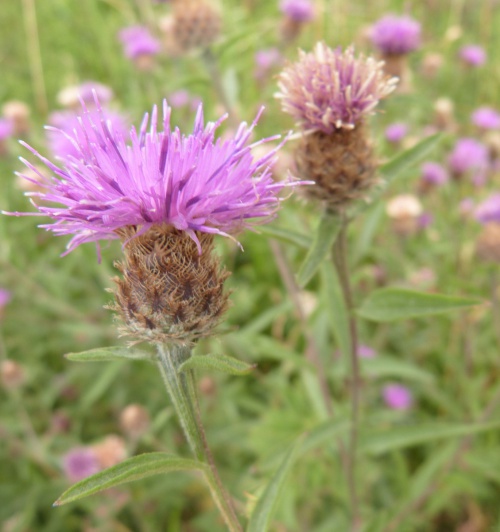
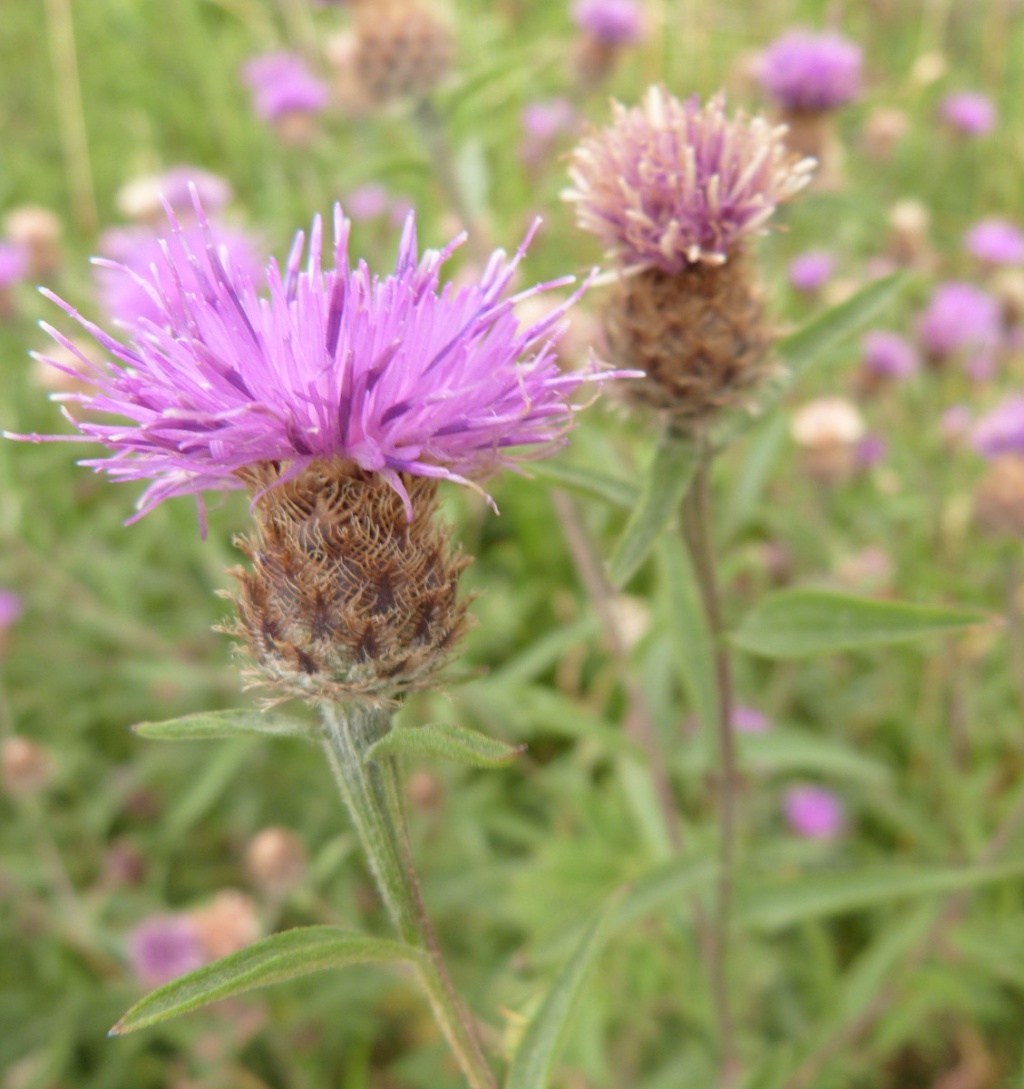
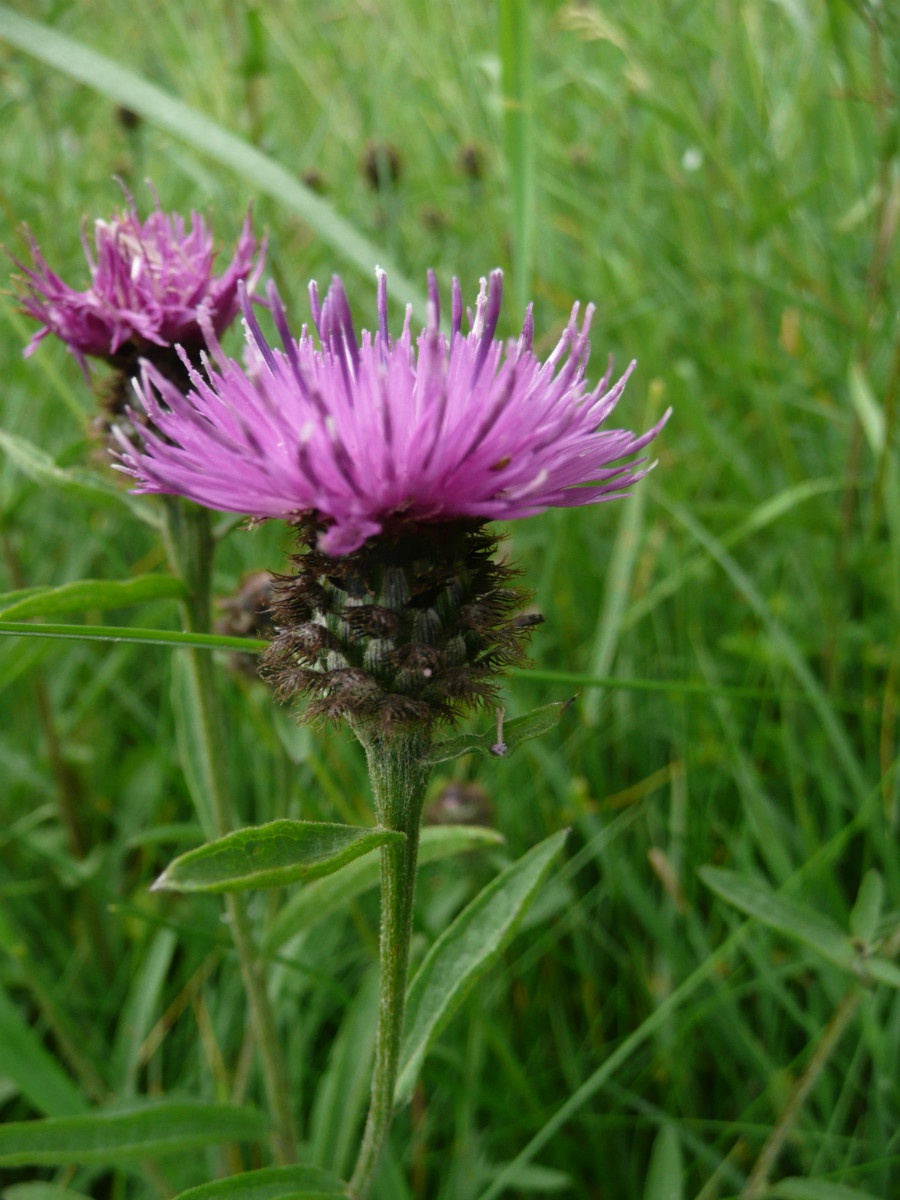
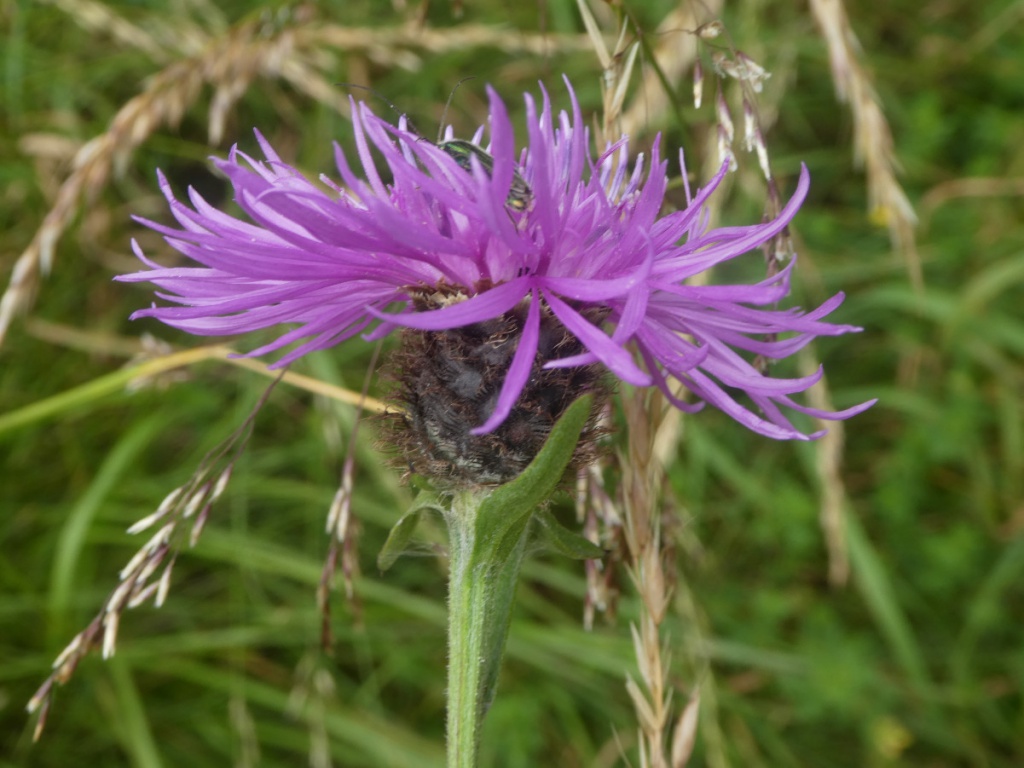
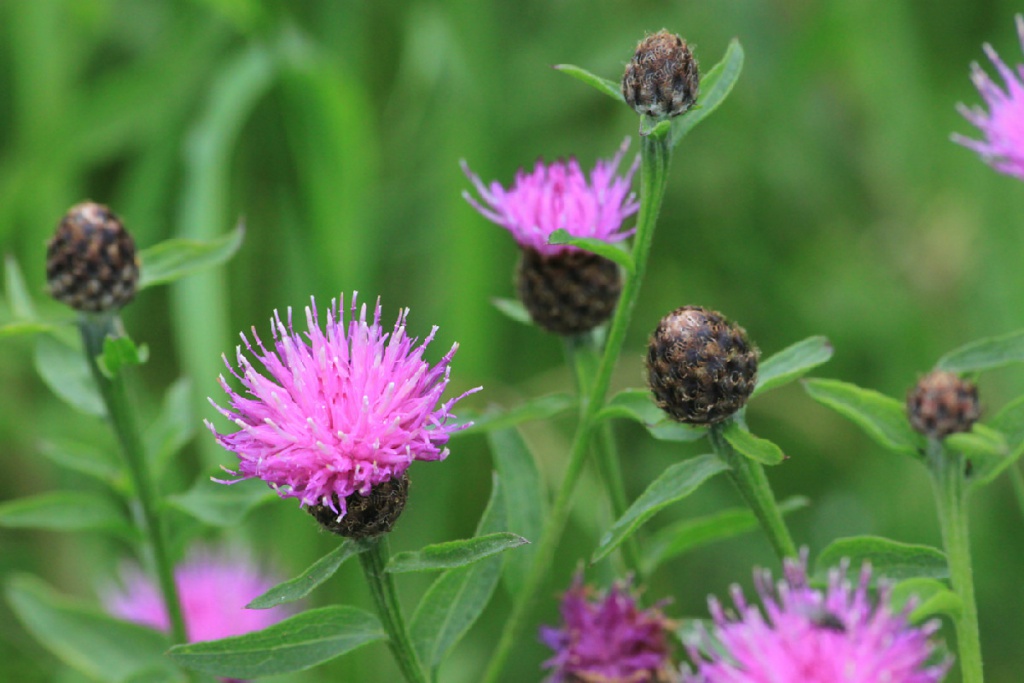
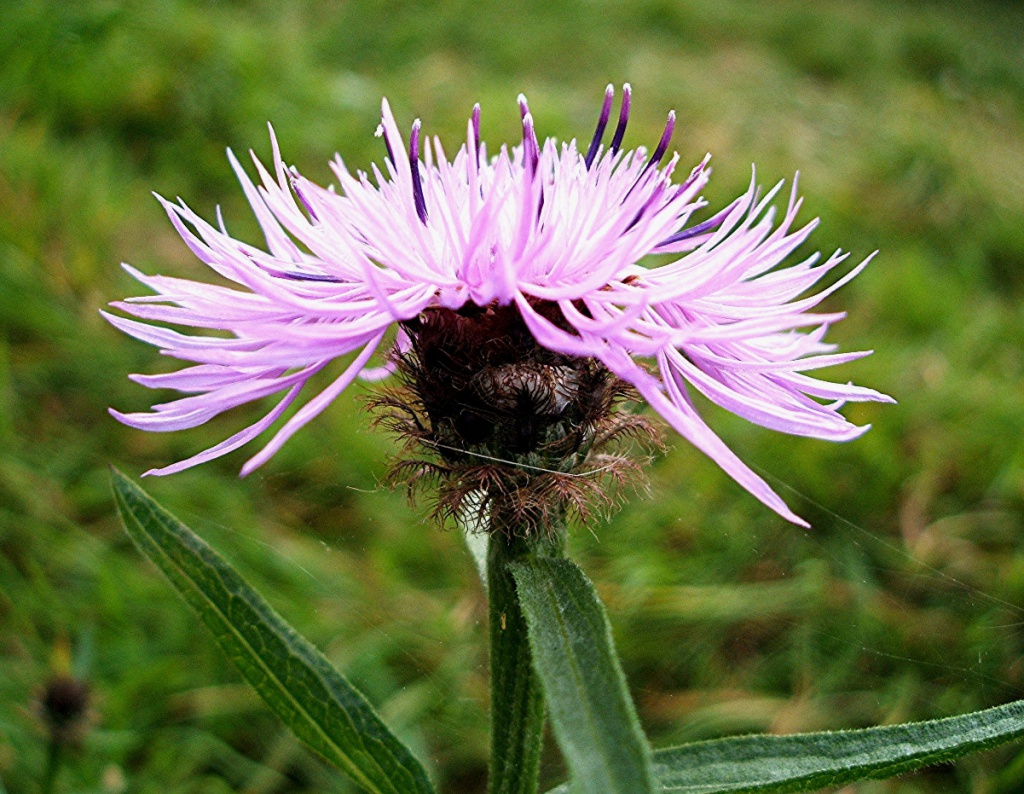
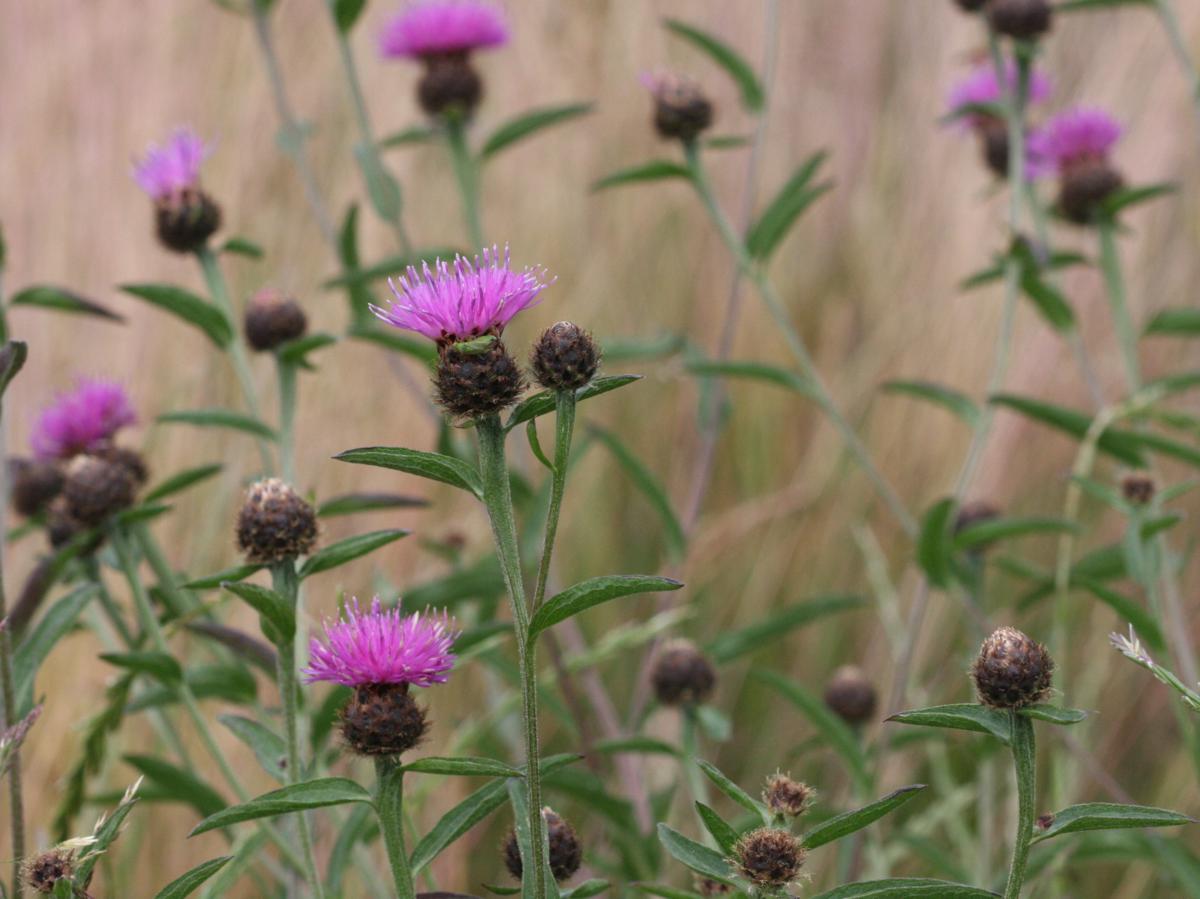
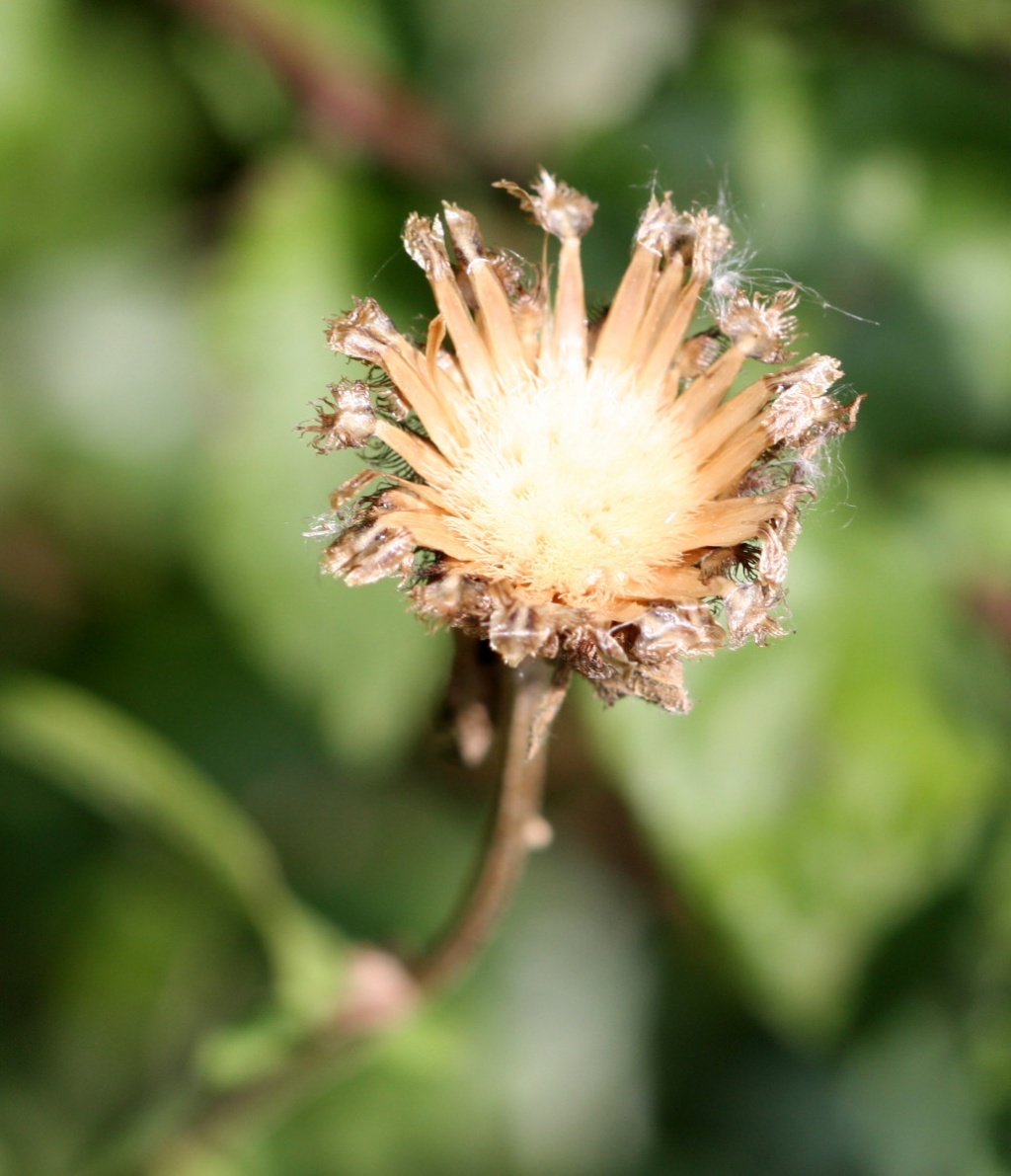
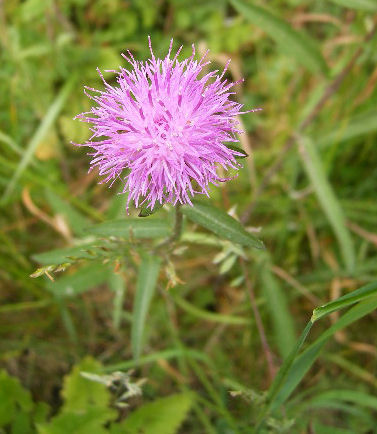
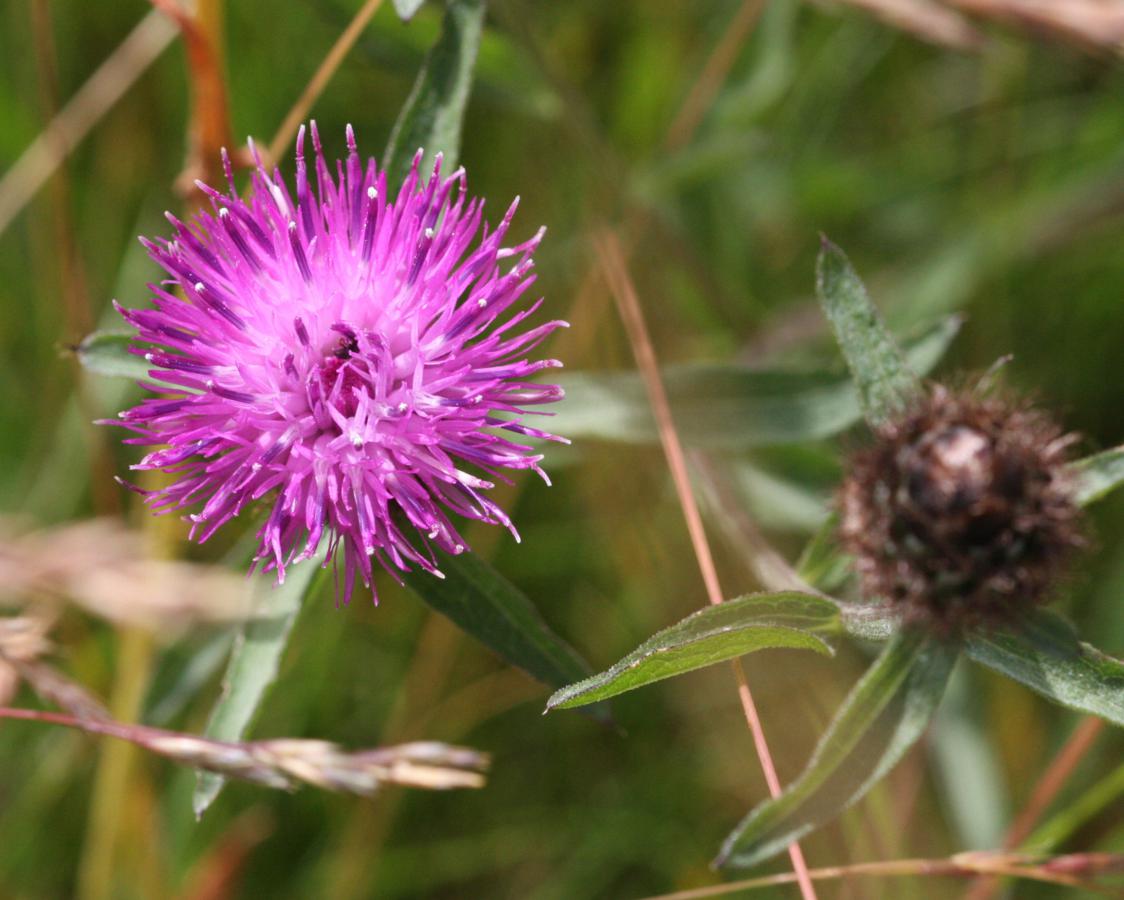
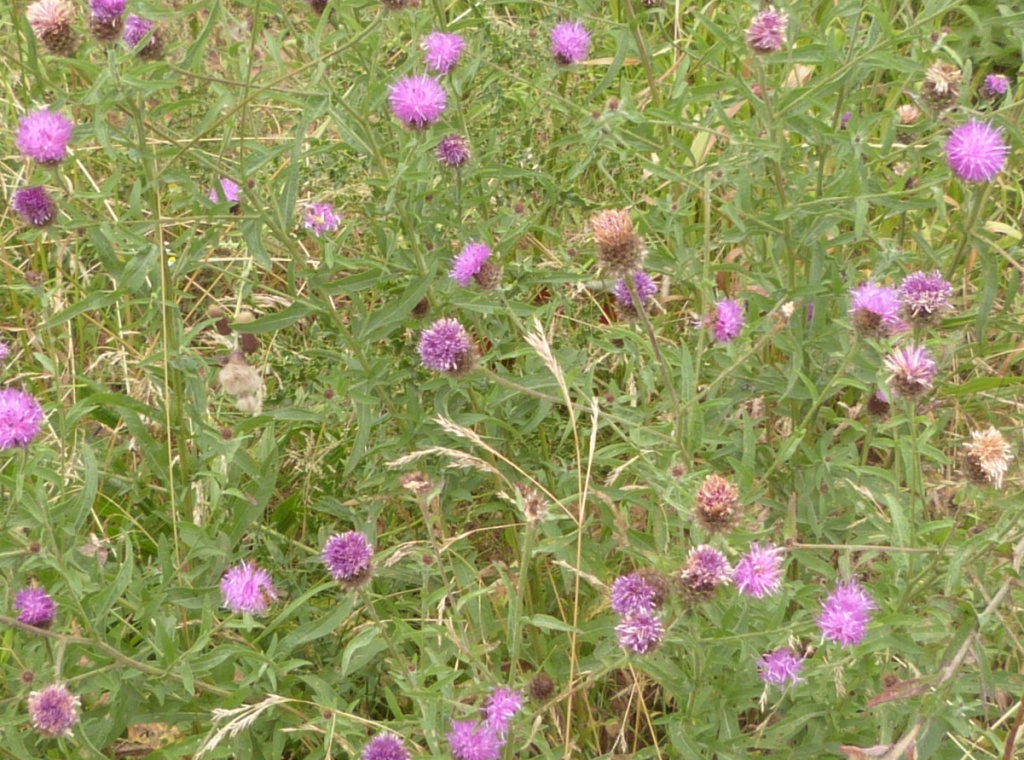
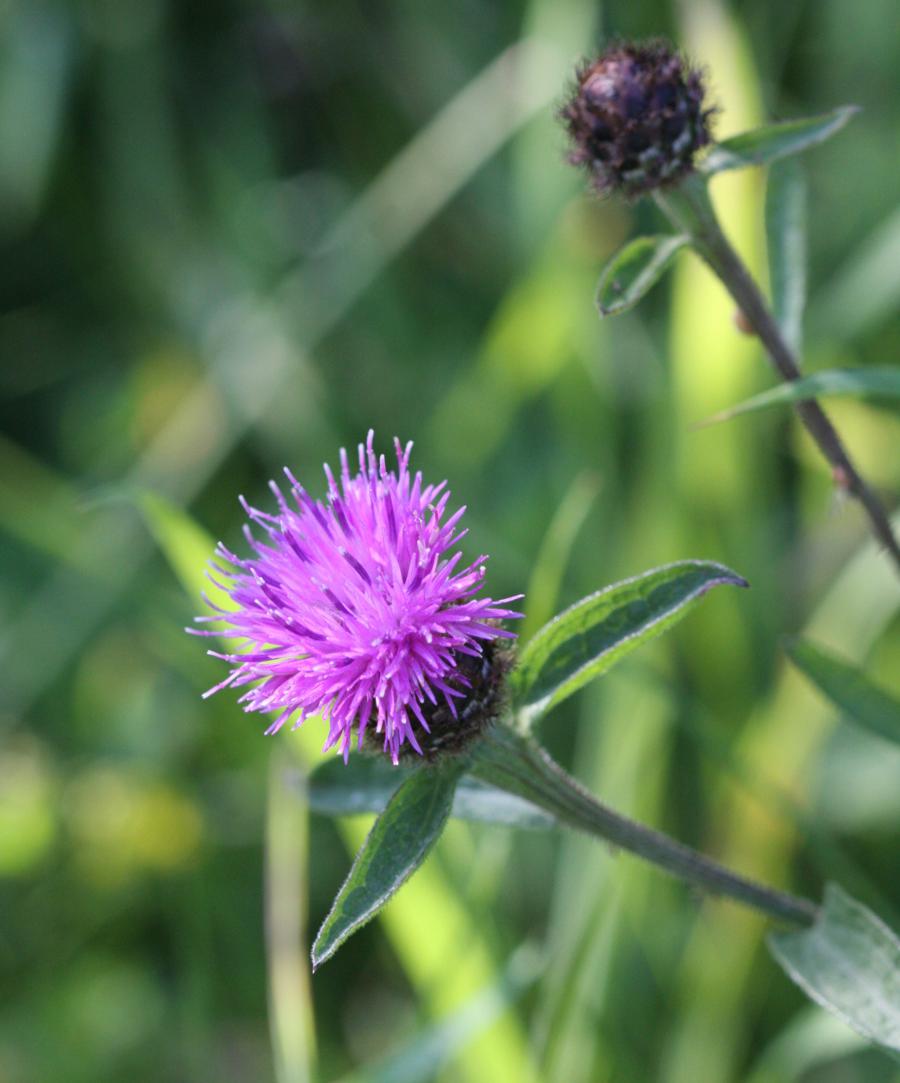
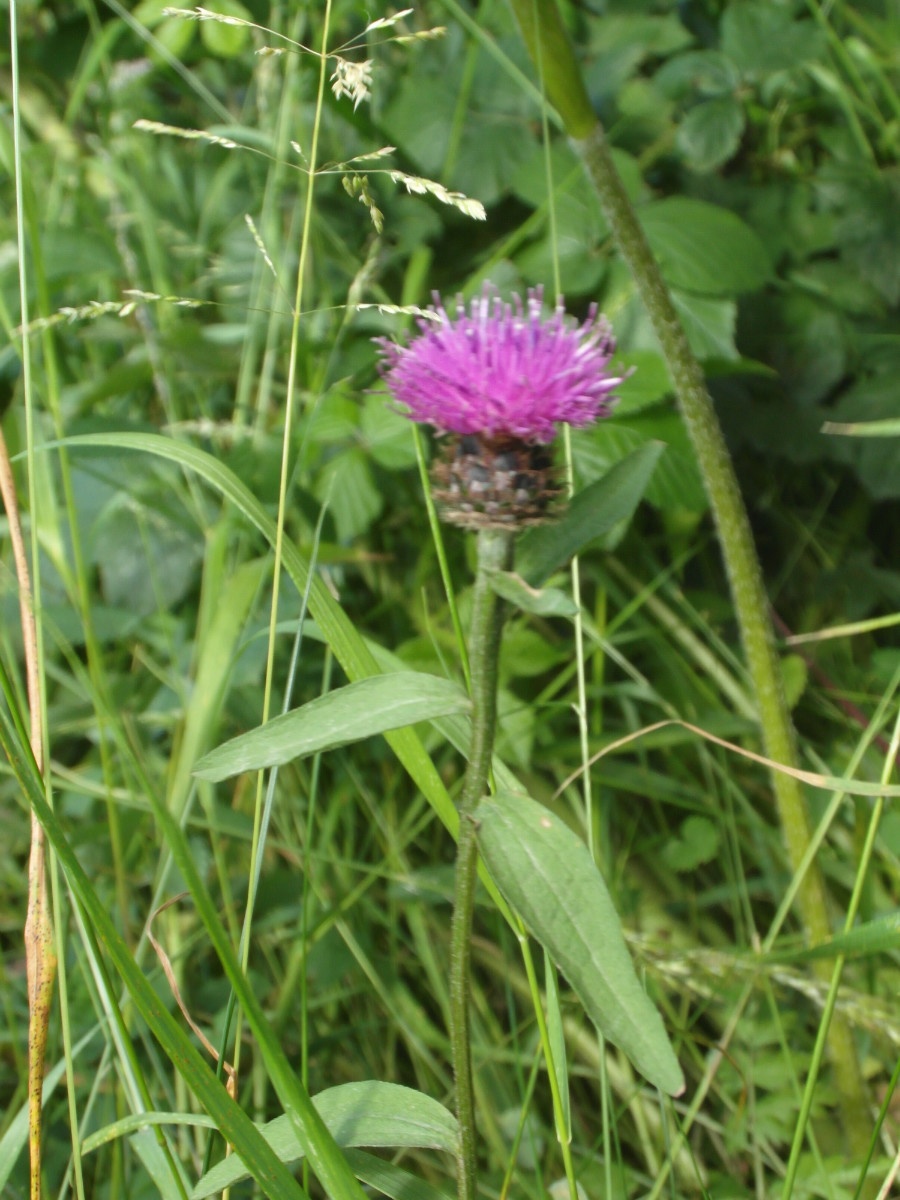
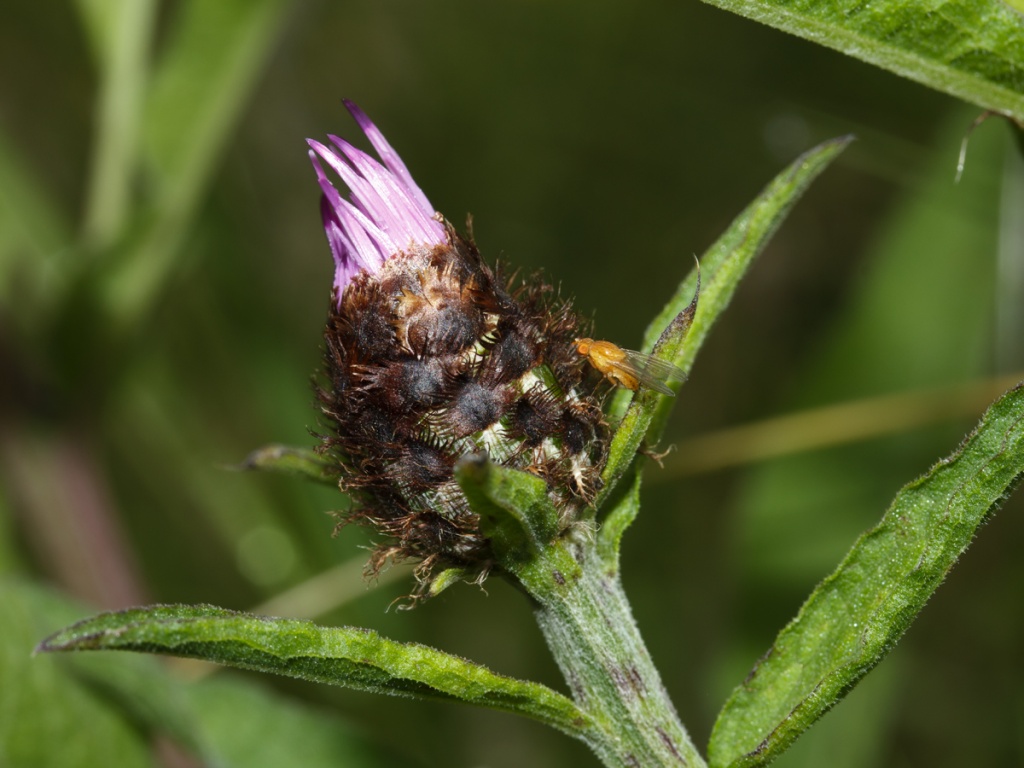
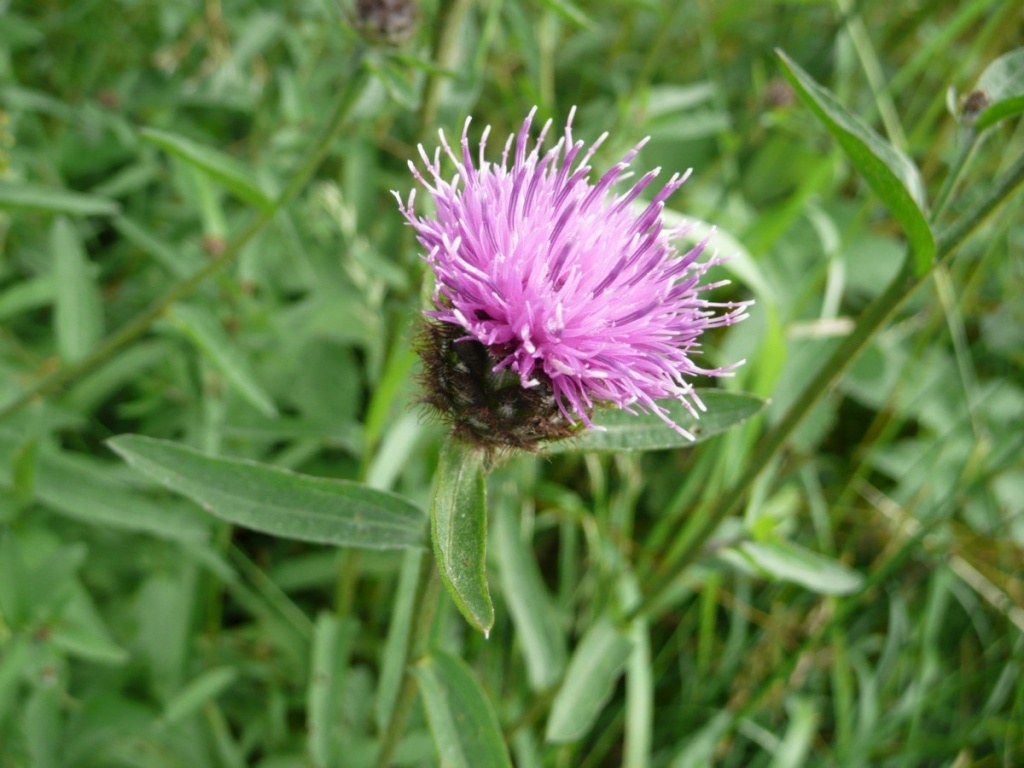
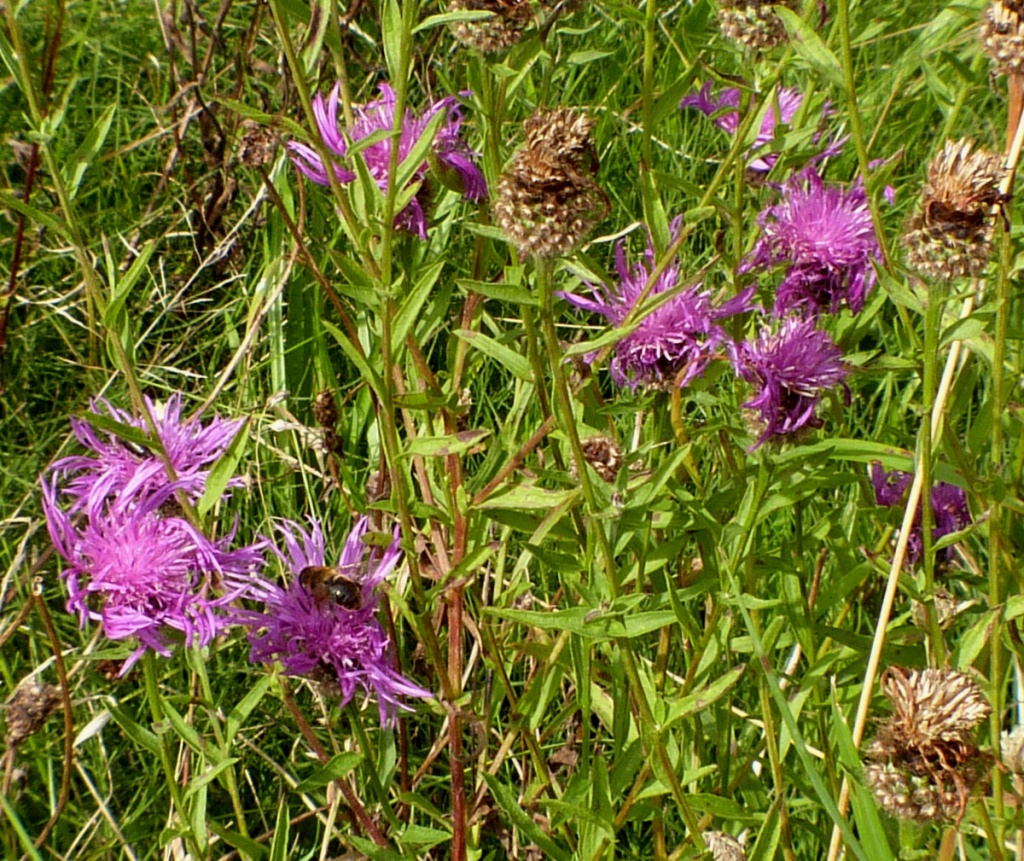
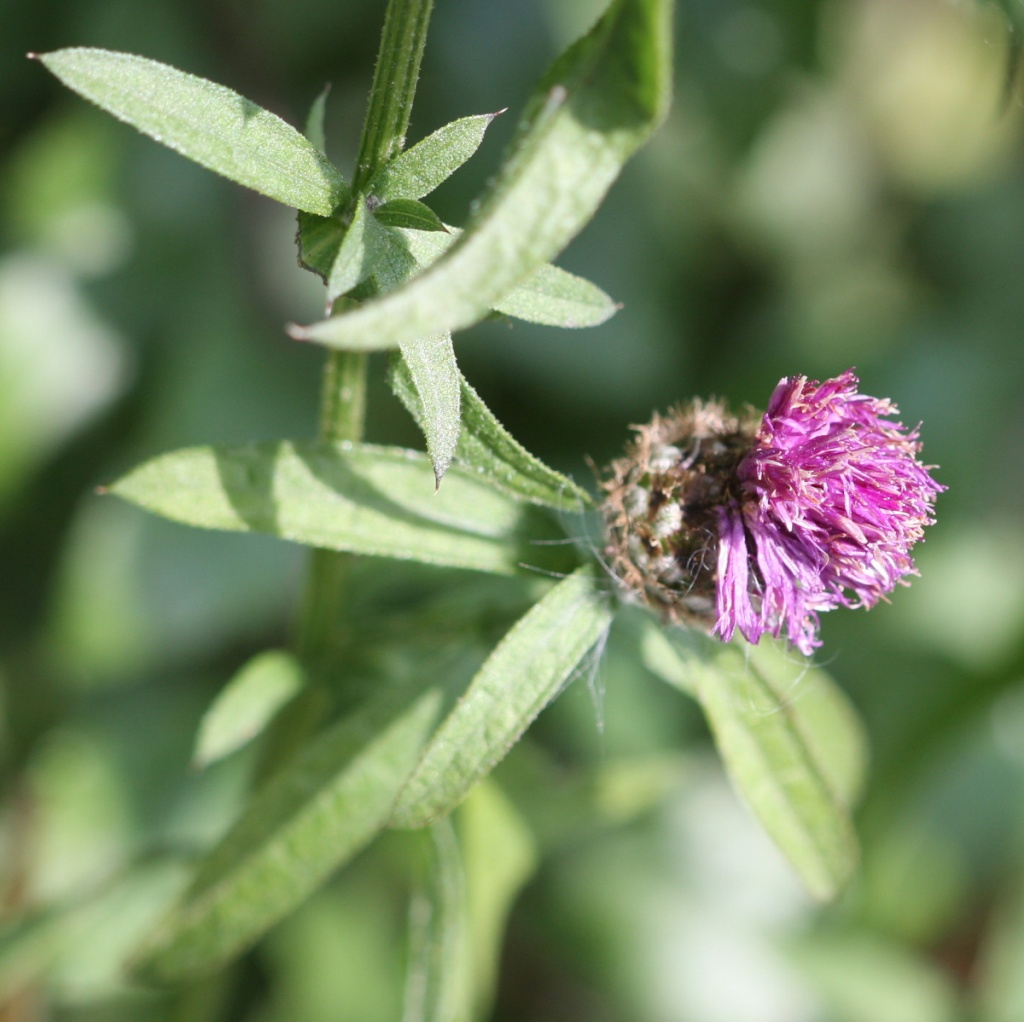
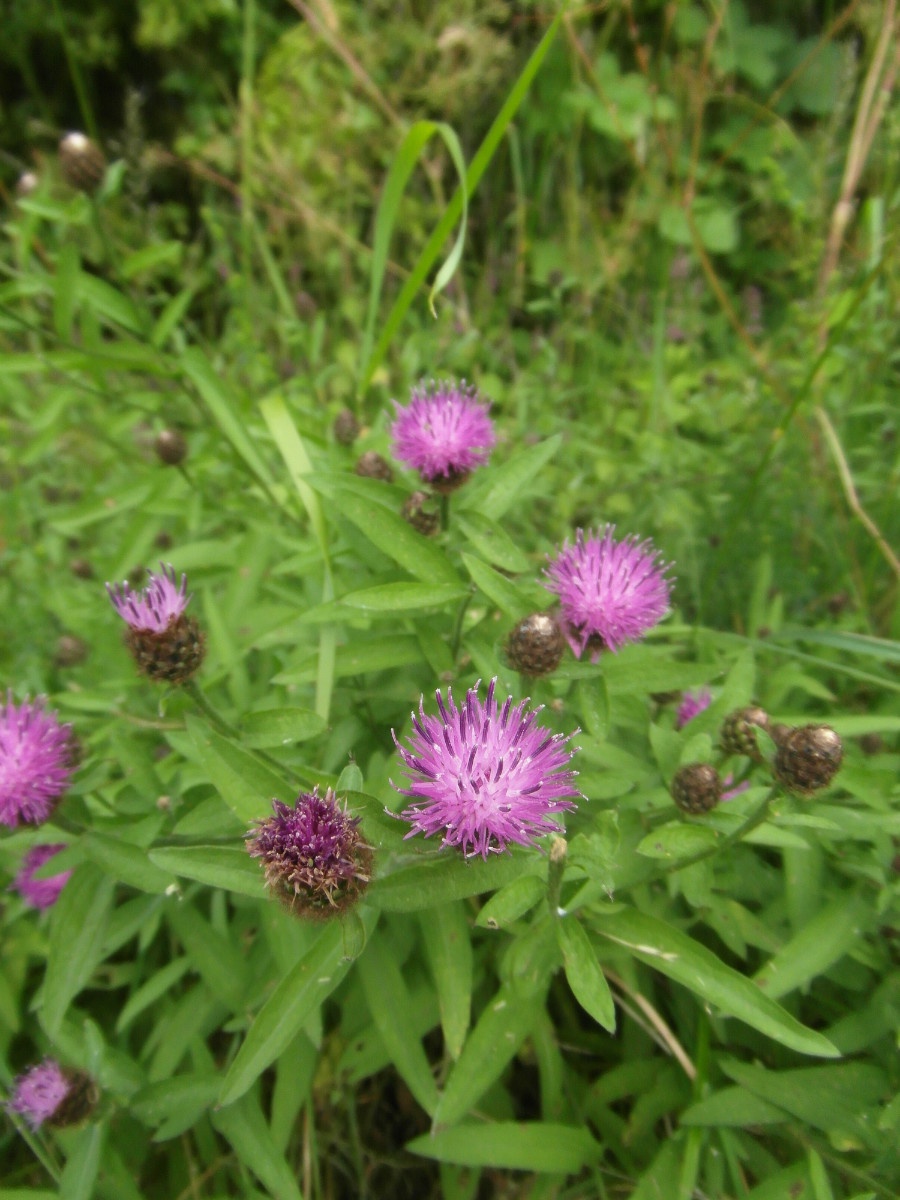
Medium to tall hairy plant with erect stems, branched or unbranched. Thickened below the flowerhead. Flowerheads purple, 20 to 40 mm, solitary or in branched clusters, the florets all equal in length. Flower bracts with a broad, blackish triangular fringed appendage, concealing the adjacent bracts. Centaurea nigra and Centaurea debauxii are very similar and require detailed examination (see ID aids below) - there are also other quite similar species and hybrids. Unless you are able to get expert confirmation to species level, please record Common Knapweed as Centaurea nigra sensu lato.
Greater Knapweed Centaurea scabiosa.
C. debeauxii may be present, on more calcareous soils or introduced via seed or building rubble; it was formerly considered to be C nigra subsp. nemoralis.
Centaurea jacea (Brown Knapweed) has brown phyllaries and is a very rare alien species. There is only one VC55 record from Evington in 2018, but it may be introduced in wildflower mixes. Its hybrid with C. nigra (C. x gerstlaureri) has dark brown phyllaries and has not been found in VC55.
See the Identification Aid below for help on separating the Centaurea nigra look-alikes.

The Centaurea species and the subspecies in the table below all have black phyllaries with long, thin teeth in the apical portion.
For photos of phyllaries see here.
Note that Centaurea jacea (Brown Knapweed) has brown phyllaries and is a very rare alien species. There is only one VC55 record from Evington in 2018, but it may be introduced in wildflower mixes. Its hybrid with C. nigra (C. x gerstlaureri) has dark brown phyllaries and has not been found in VC55.
To identify Centaurea you need to examine the phyllaries along the mid-line of the inflorescence only.


Notes
1. Despite its name, C. debeauxii does not always occur on chalk. It may be introduced in wildflower seed mixes or with building materials.
2. This variety is often introduced in wildflower seed mixes and could be confused with Greater Knapweed, Centaurea scabiosa, but the phyllaries are different.
Geoffrey Hall
Version 2: 03 May 2022
Roadsides, flower meadows, hedgebanks and waste ground.
June to September.
Perennial.
Very common throughout Britain.
Very common in Leicestershire and Rutland. In the 1979 Flora survey of Leicestershire it was found in 561 of the 617 tetrads.
 Graham Calow
A5 Witherley
06 August 2015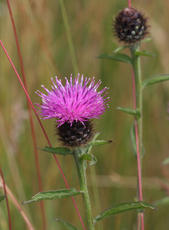 David Nicholls
Lea Meadows
07 July 2011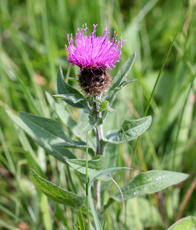 David Nicholls
Burbage Common
01 July 2011 Fosse Meadows (taken 8.10.2007),,.JPG) Graham Calow
Graham Calow
Fosse Meadows, Sharnford
08 October 2007
var. radiata Fosse Meadows (Taken 17.9.2008).JPG) Graham Calow
Graham Calow
Fosse Meadows, Sharnford
17 September 2008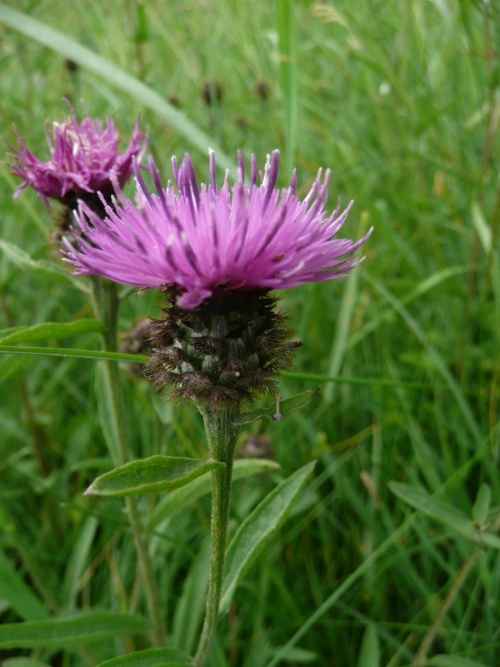 Barbara Cooper
Clawson Hill
03 July 2013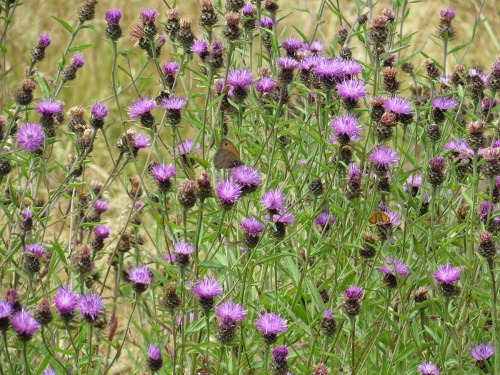 David Gould
Croft Hill, Leics
17 July 2014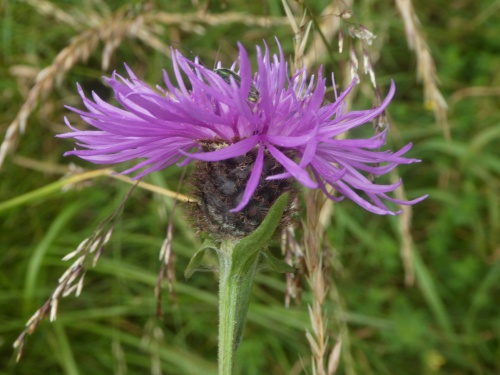 Melinda Bell
Ashby,A511
13 July 2019
var. radiata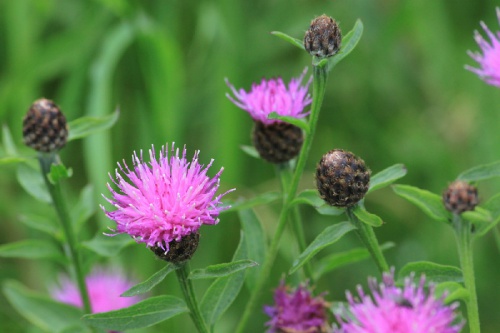 Paul Ruddoch
Melton Mowbray Country Park
28 June 2014
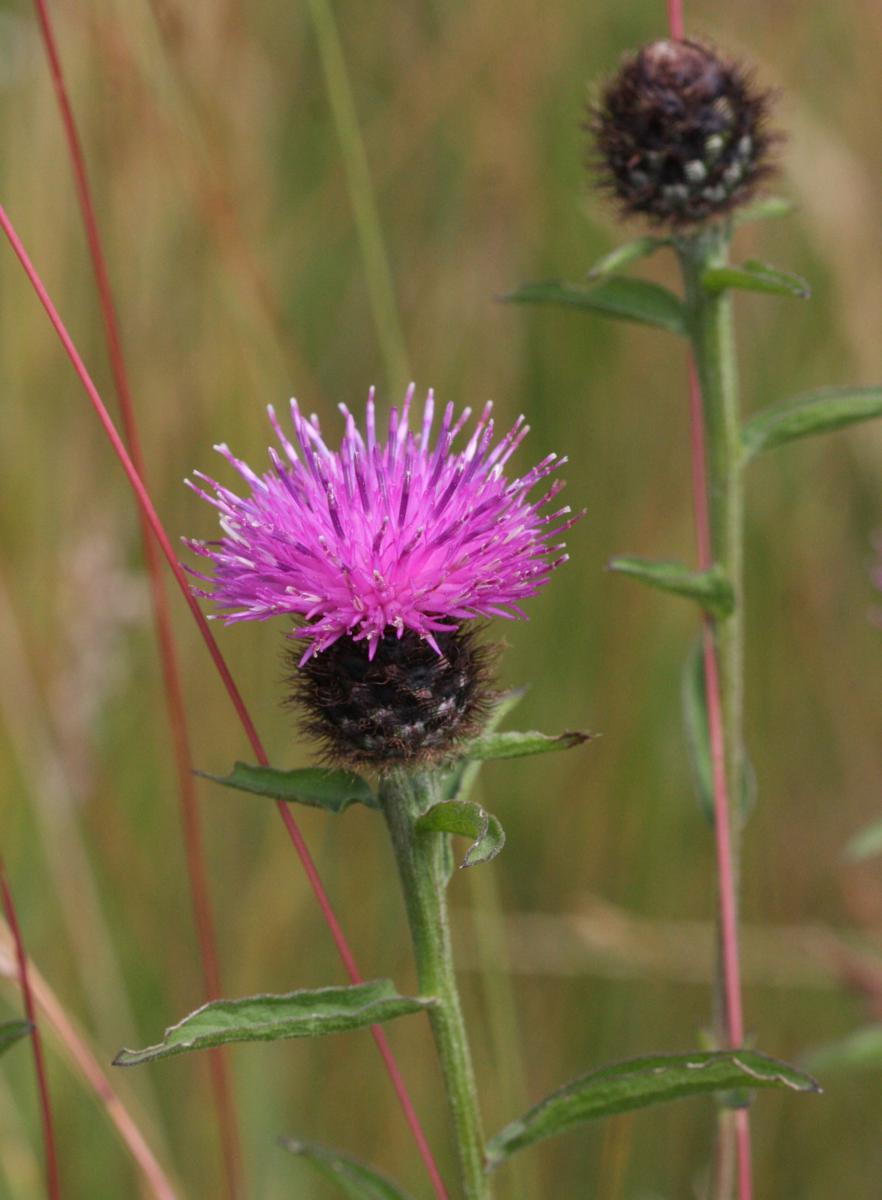
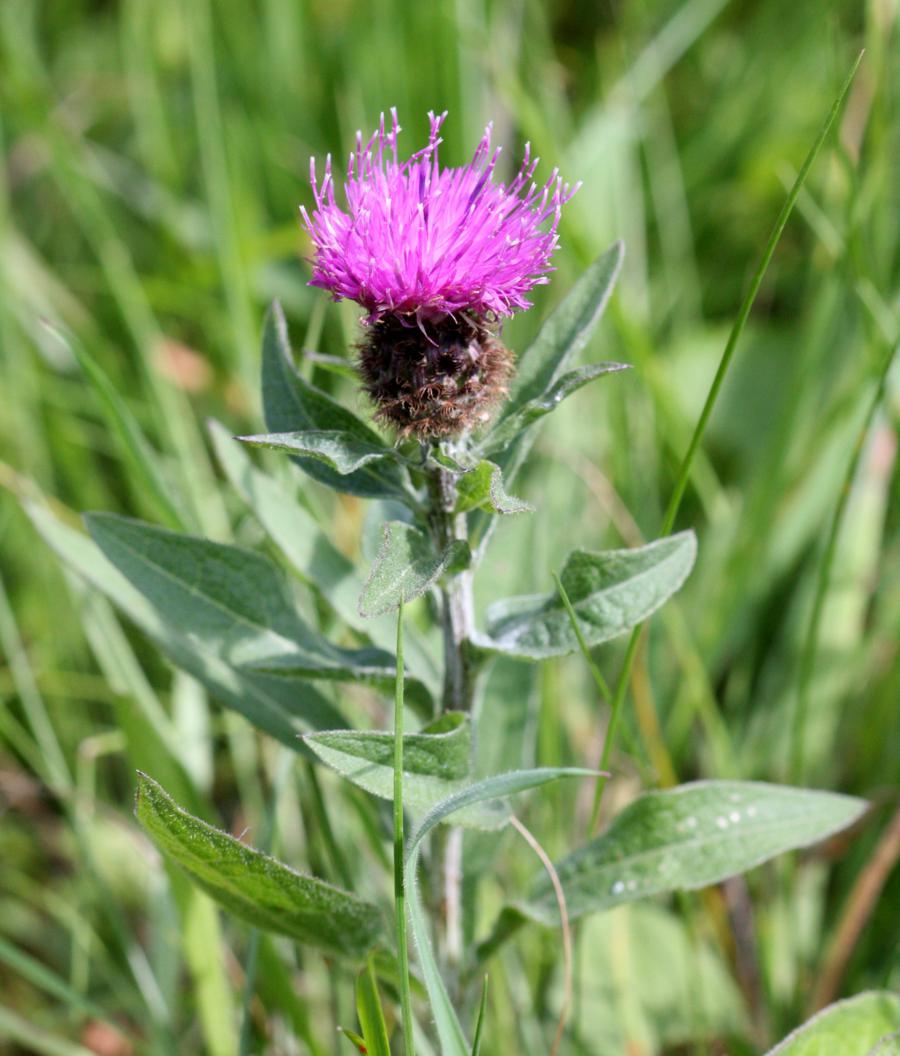
 Fosse Meadows (taken 8.10.2007),,.JPG)
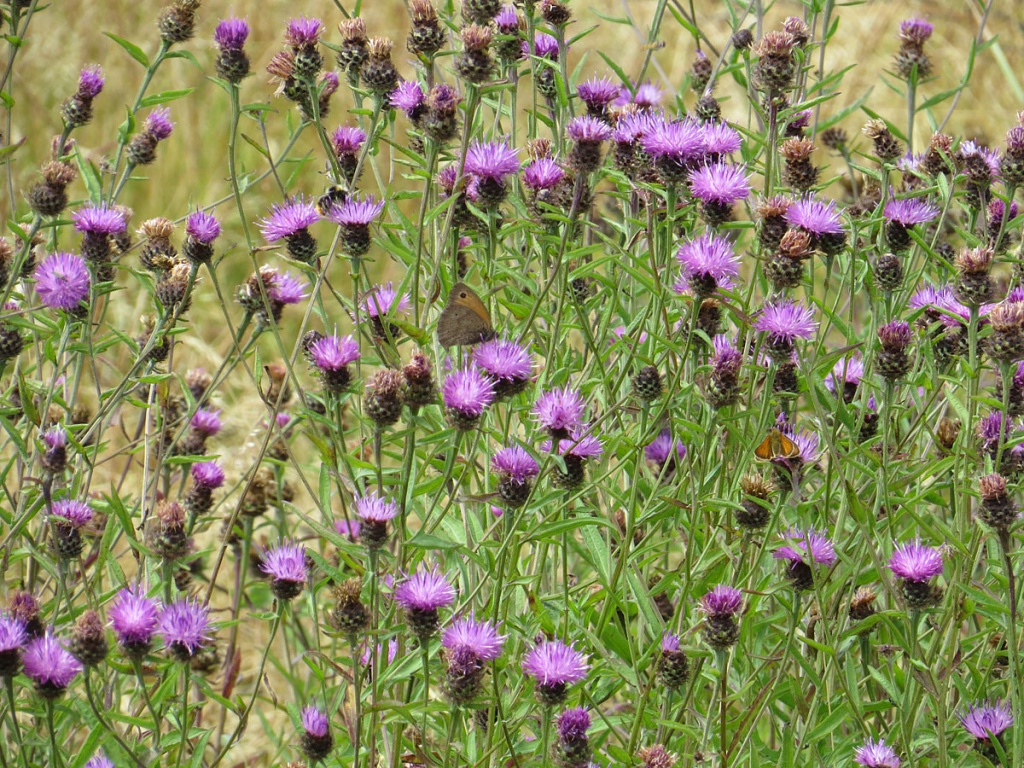
 Fosse Meadows (Taken 17.9.2008).JPG)
Leicestershire & Rutland Map
Enter a town or village to see local records
MAP KEY:
Yellow squares = NBN records (all known data)
Coloured circles = NatureSpot records: 2025+ | 2020-2024 | pre-2020
UK Map
Species profile
- Common names
- Common Knapweed, Hardhead, Black Knapweed
- Species group:
- flowering plant
- Kingdom:
- Plantae
- Order:
- Asterales
- Family:
- Asteraceae
- Records on NatureSpot:
- 637
- First record:
- 01/07/1998 (John Mousley)
- Last record:
- 08/07/2026 (Markham, Marian)
Total records by month
% of records within its species group
10km squares with records
The latest images and records displayed below include those awaiting verification checks so we cannot guarantee that every identification is correct. Once accepted, the record displays a green tick.
In the Latest Records section, click on the header to sort A-Z, and again to sort Z-A. Use the header boxes to filter the list.
Latest images
Latest records
 Graham Calow
Fosse Meadows, Sharnford
08 October 2007
var. radiata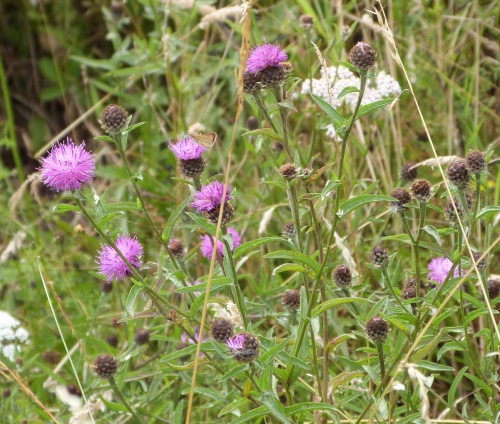 Graham Calow
Verge of M69 Sapcote
27 July 2016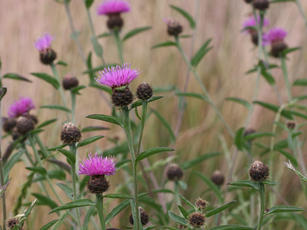 David Nicholls
Lea Meadows
07 July 2011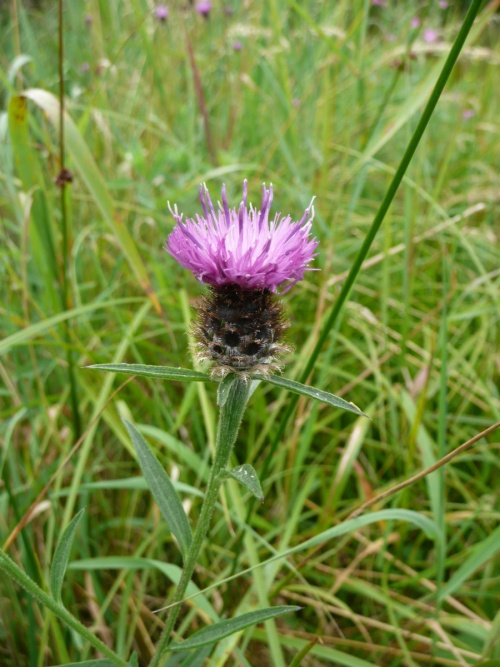 Barbara Cooper
Long Clawson
13 August 2012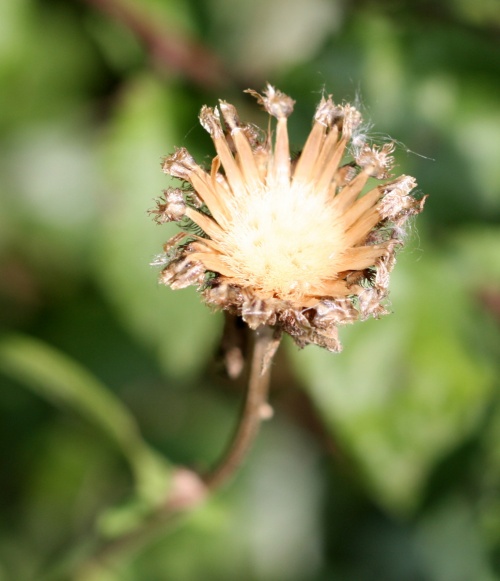 David Nicholls
Ashby Canal, Shackerstone
15 September 2012 Leicester Road Sapcote SP 4988 9324 (taken 25.7.2007).JPG) Graham Calow
Graham Calow
Sapcote
25 July 2007 Back Brook near Fosse Marsh Sapcote SP 4967 9217 (taken 7.6.2006)..JPG) Graham Calow
Graham Calow
Sapcote
07 June 2006 Ron.stevens
Broughton Astley
05 June 2011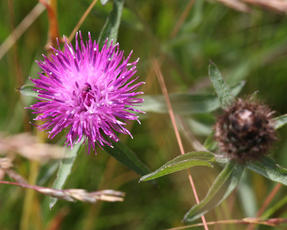 David Nicholls
Lea Meadows
07 July 2011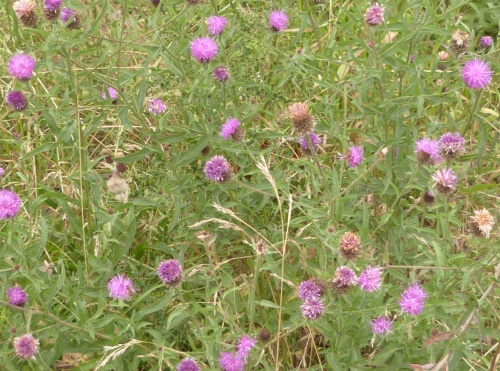 Graham Calow
A5 Witherley
06 August 2015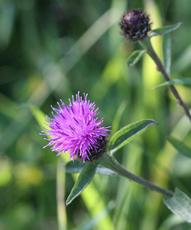 David Nicholls
Ratby Disused Railway
09 July 2011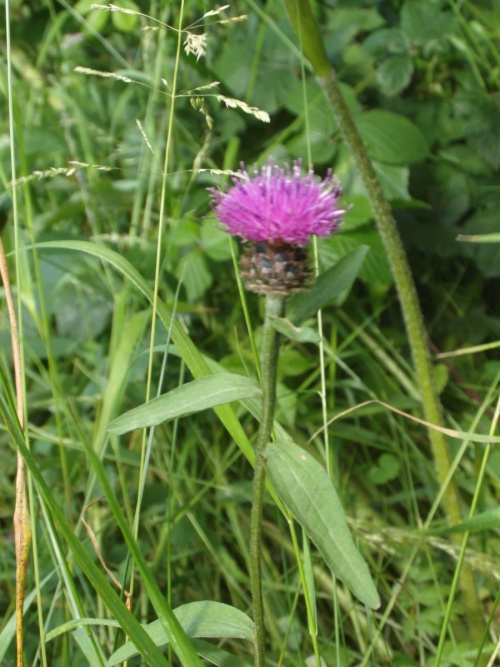 Alan Semper
Harby, canal nr bridge 41
01 July 2012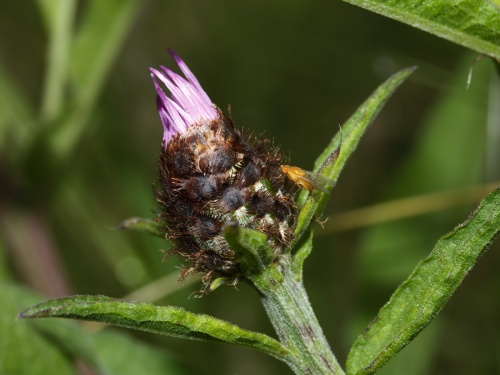 HAPeacock
Goss Meadows
05 July 2012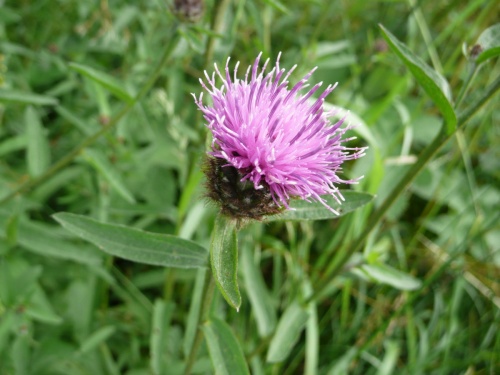 Barbara Cooper
Clawson Hill
12 July 2012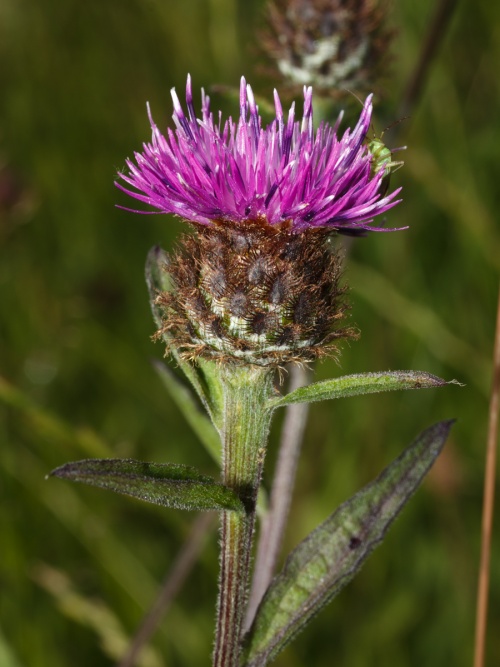 HAPeacock
Top Field
24 July 2012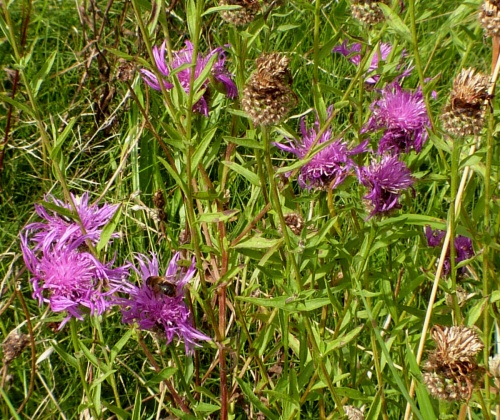 Graham Calow
Ullesthorpe Stewardship Farm
31 August 2012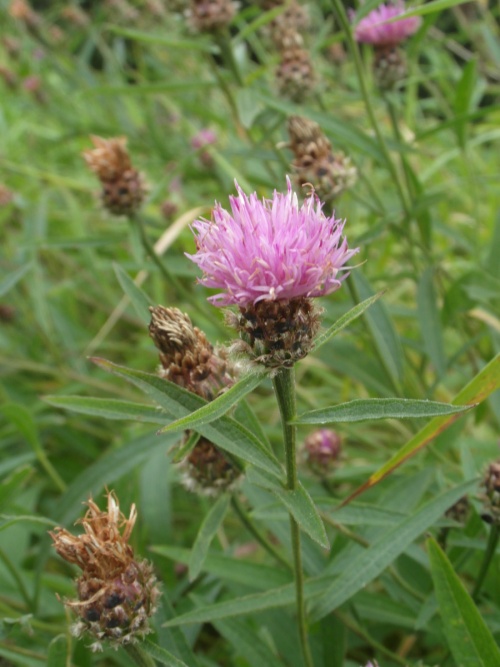 Alan Semper
Harby, path G29
31 August 2012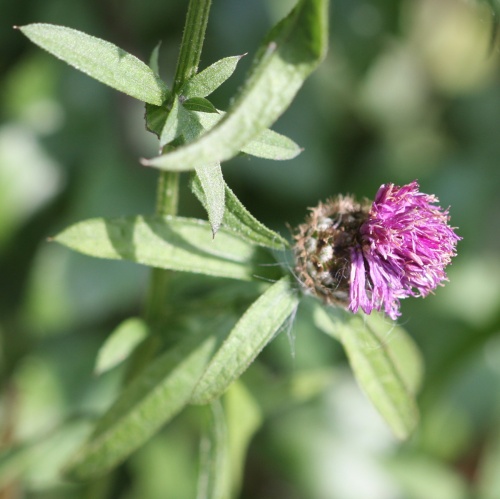 David Nicholls
Ashby Canal, Shackerstone
15 September 2012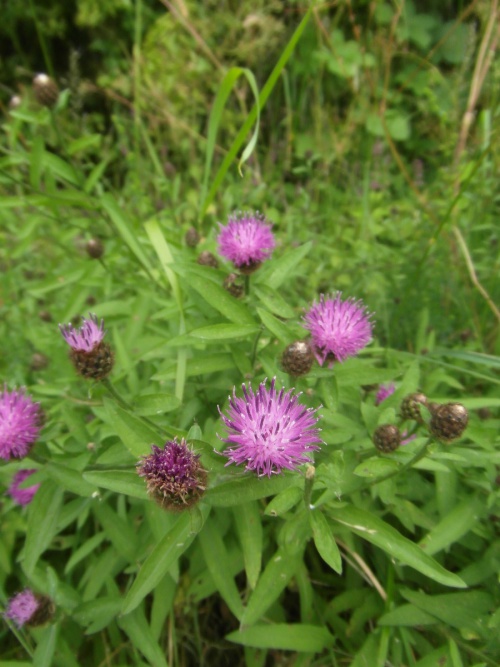 Alan Semper
Harby Nature Reserve
08 July 2013
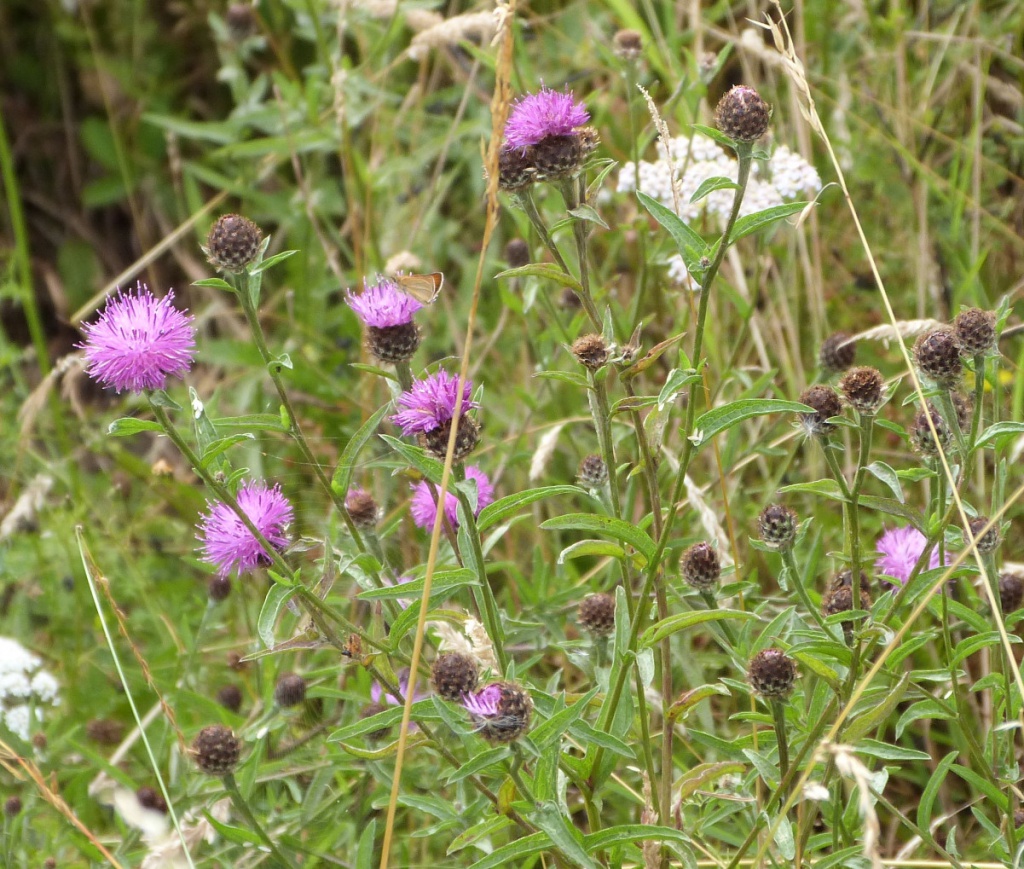

 Leicester Road Sapcote SP 4988 9324 (taken 25.7.2007).JPG)
 Back Brook near Fosse Marsh Sapcote SP 4967 9217 (taken 7.6.2006)..JPG)


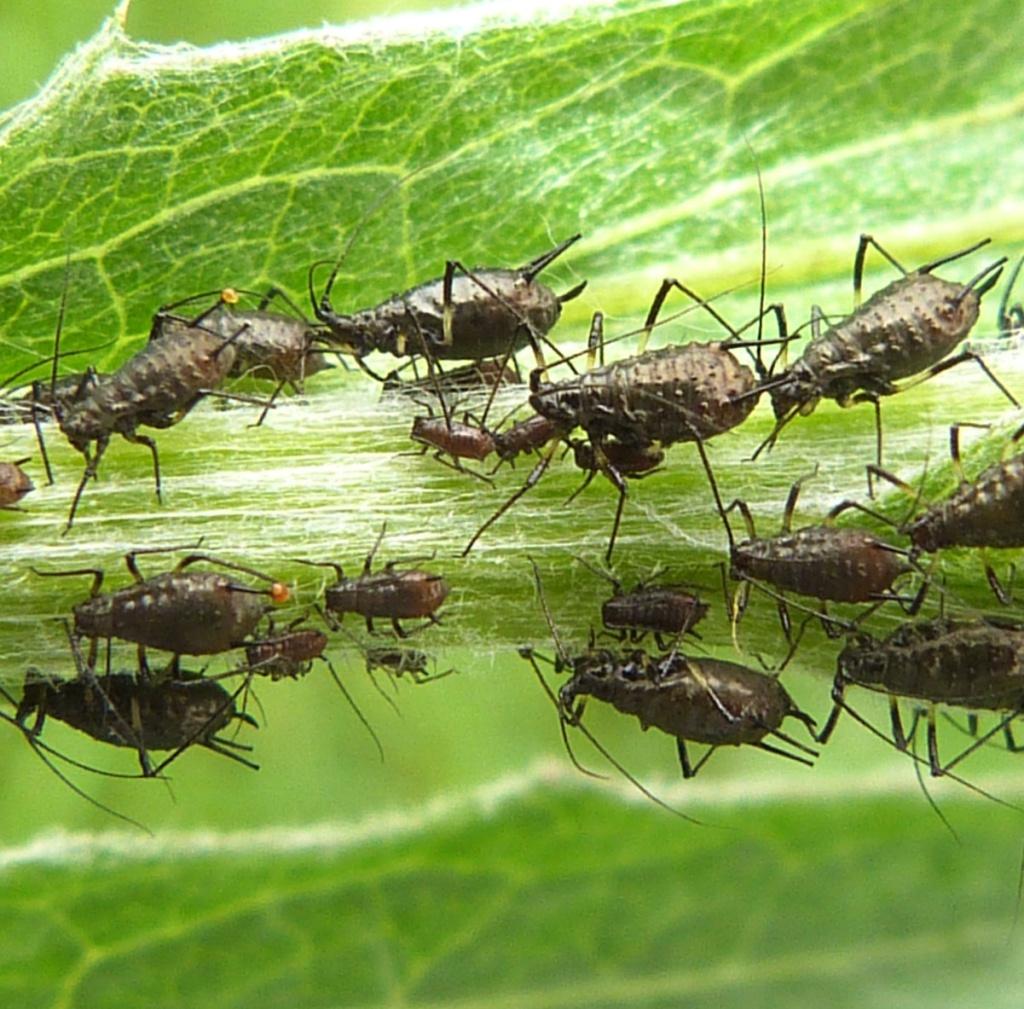
Large Knapweed Aphid
The Large Knapweed Aphid (Uroleucon jaceae) lives on various knapweeds (Centaurea spp.) and a few other species of Asteraceae, but not generally on other thistles. It is a large blackish aphid that can appear dark metallic green. The abdominal tergites 2-4 often have small marginal tubercles. The femora have the basal half pale and distal half dark, with a rather sharp transition between them. The tibiae are totally black. The siphunculi are reticulated over the distal 0.16-0.27 of their length and are 1.3-1.8 times the length of the cauda. The cauda is dark and bears 18-30 hairs. The body length of apterae is 3.0-4.5 mm long.
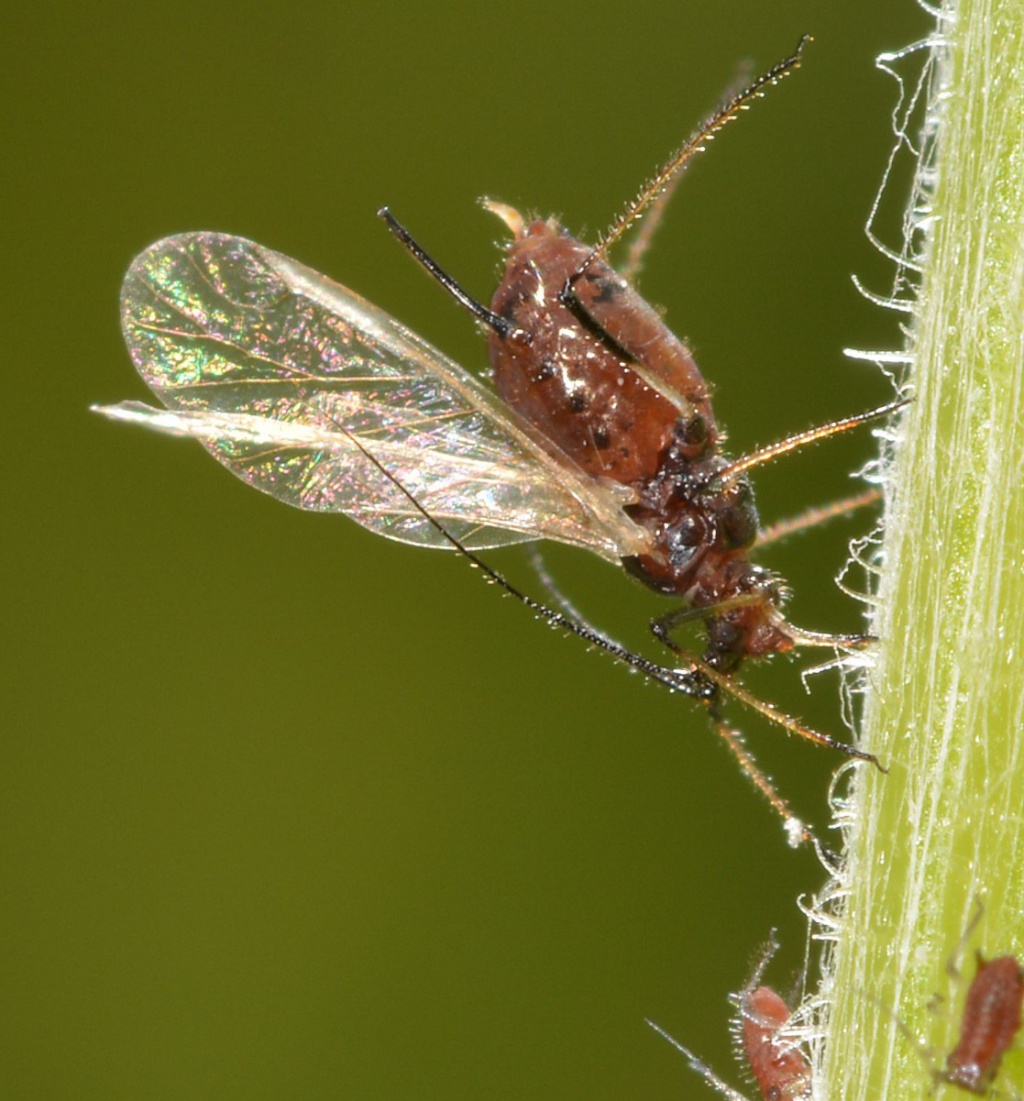
Yellow-legged Knapweed Aphid
The Yellow-legged Knapweed Aphid (Uroleucon jaceicola) lives on the stems of Common Knapweed. In spring it is found mainly low on stem, but moves to the upper parts later on. Apterae of Uroleucon jaceicola are dark bronze-brown but in this species the legs are mainly yellowish and the cauda (tail) is also pale.
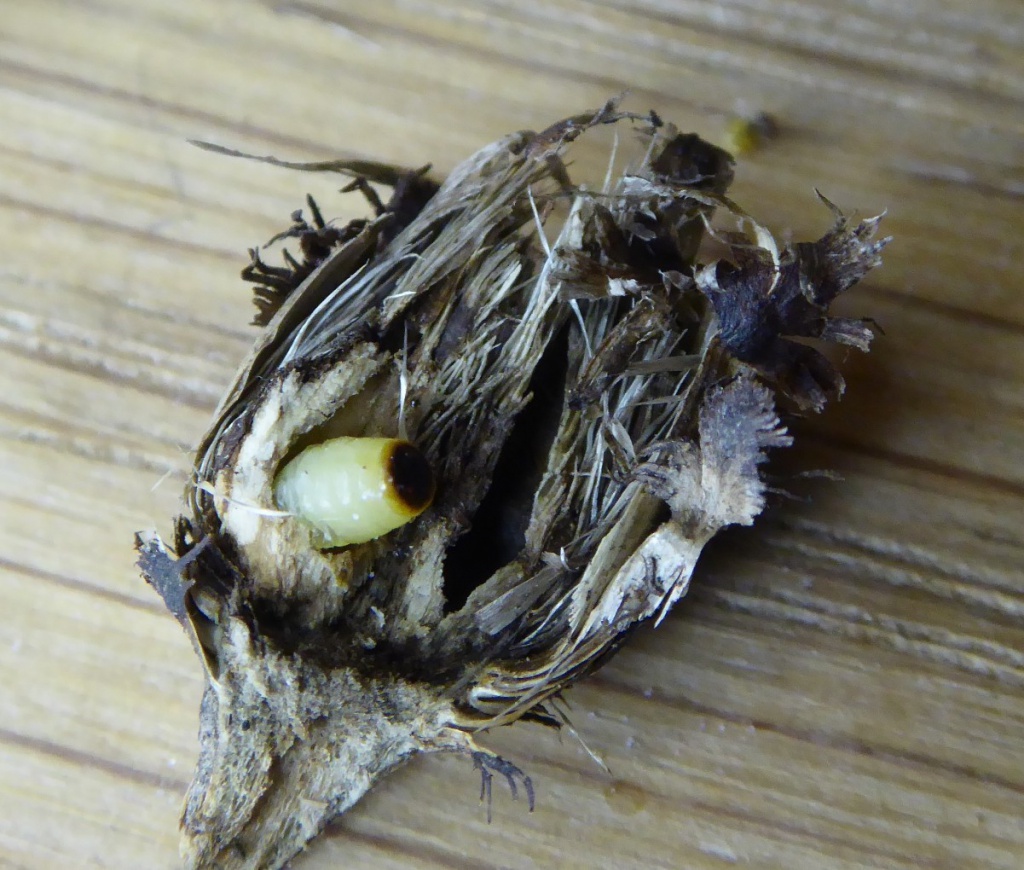
Urophora jaceana
The larva of the fly Urophora jaceana produces galls on the flower heads of Knapweed (most often Common Knapweed) which incorporates the receptacle and achenes. The gall is hard and woody; usually affecting most of the flower head and with several chambers, each with one larva. The larva has a tough dark brown posterior plate which blocks the entrance to the gall.
The gall is not obvious form the outside, but can be found by squeezing the dead flowers of Knapweed in autumn and winter; the gall can be felt as a hard lump inside the flower head.
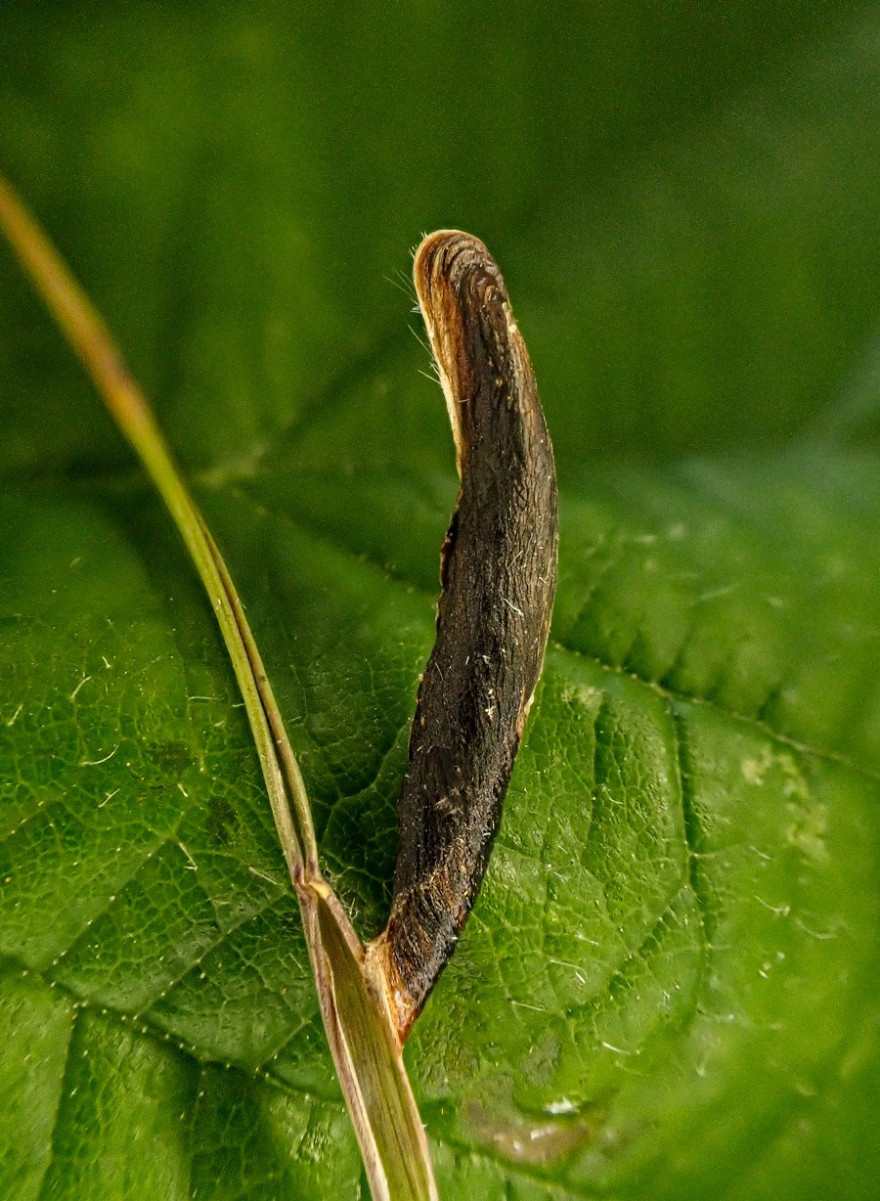
Coleophora conspicuella
The cased larva of the moth Coleophora conspicuella feeds on Knapweed. The larva should be reared through and species confirmed by gen det.