

Common Ivy - Hedera helix
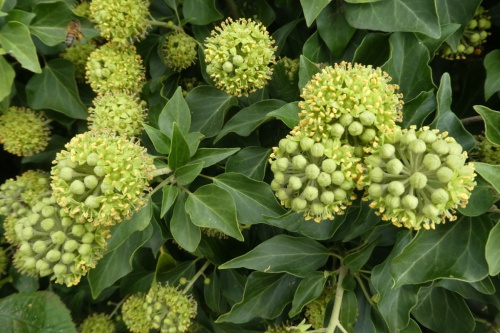
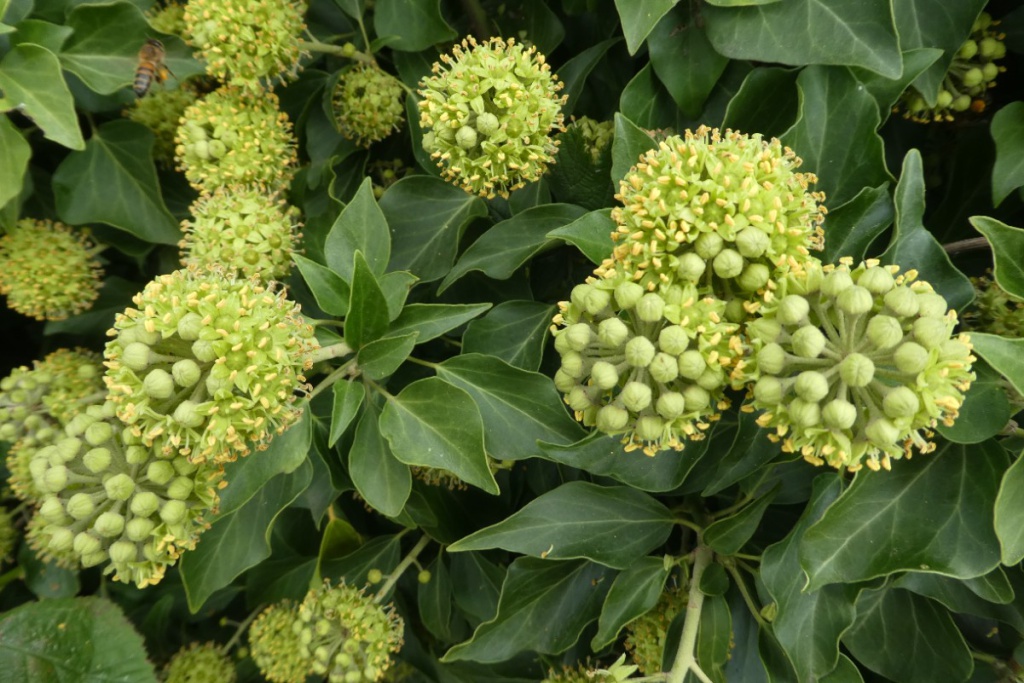
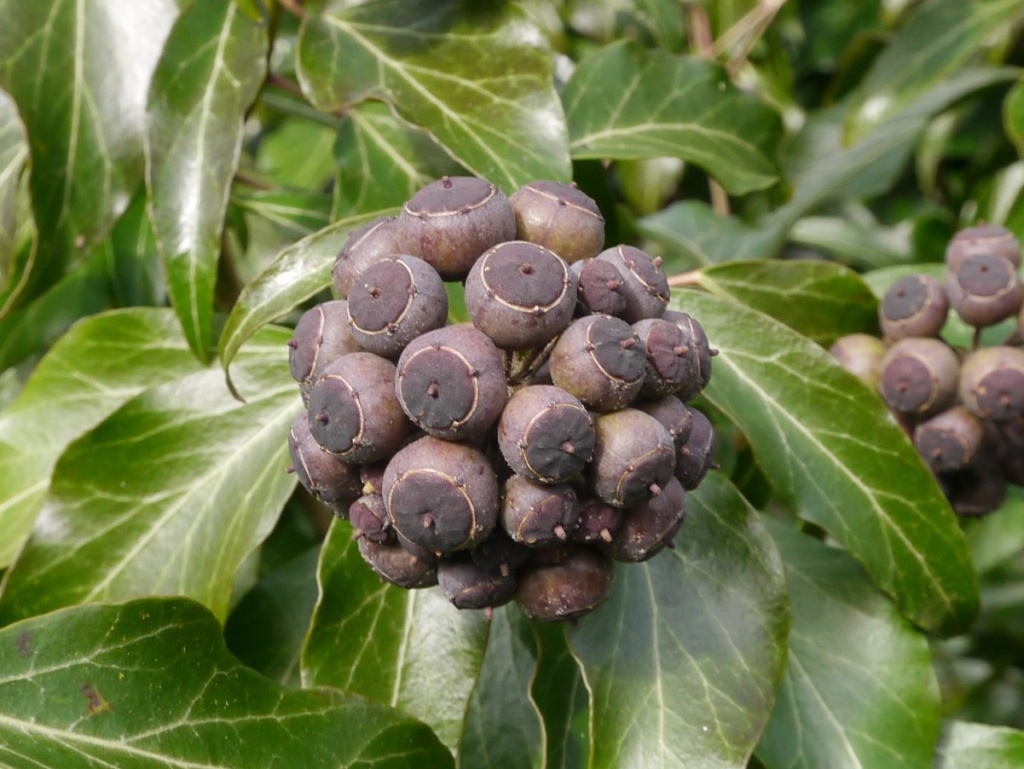
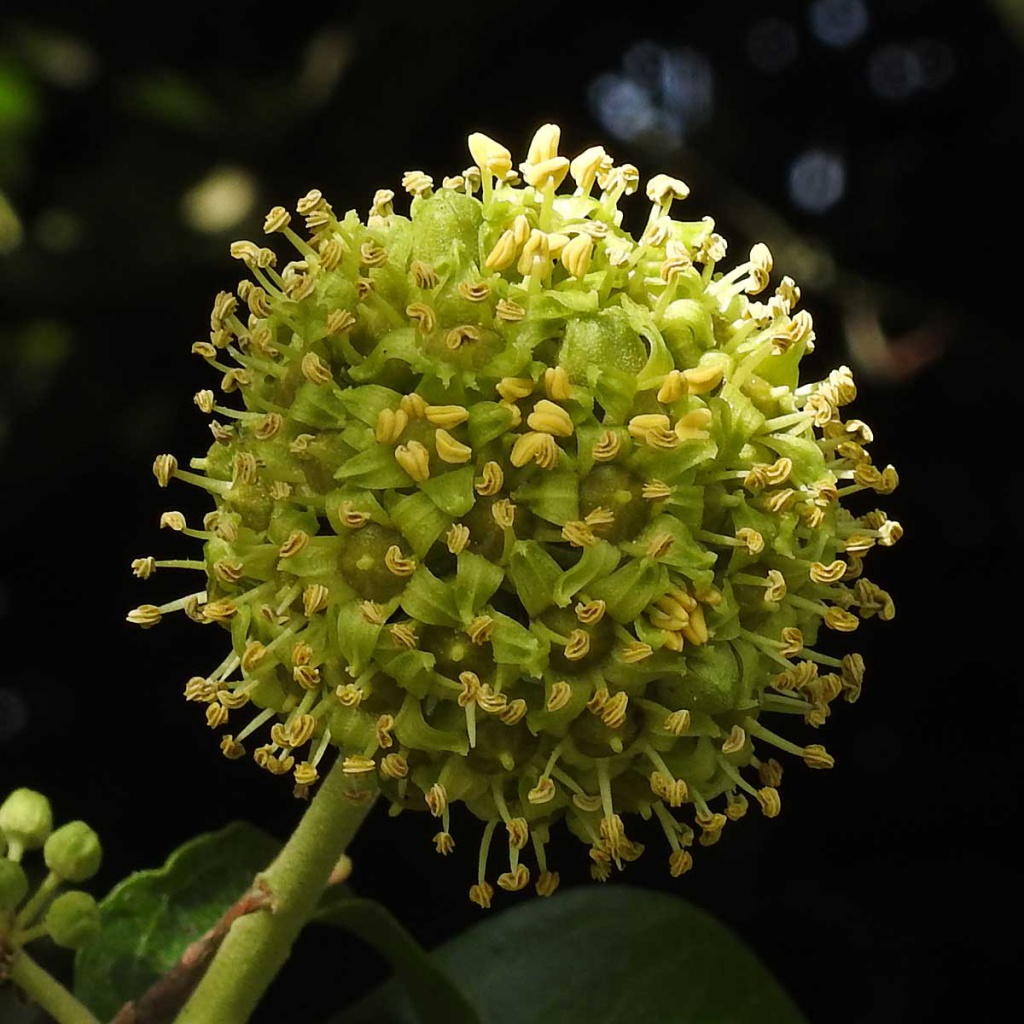
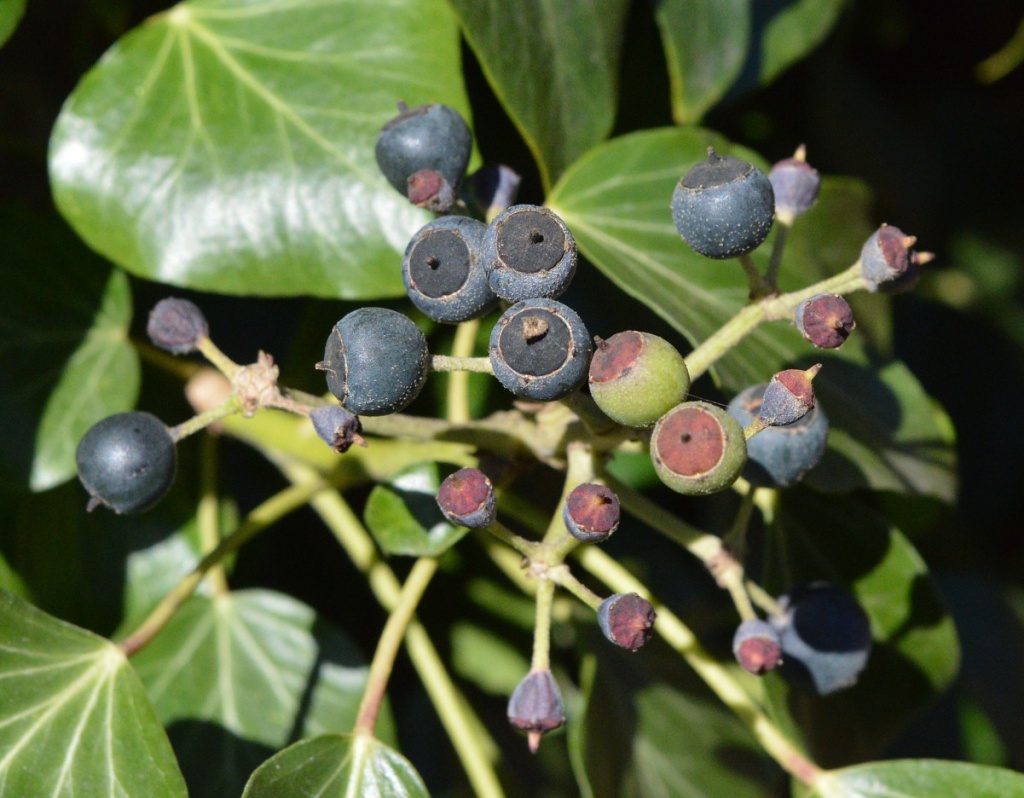
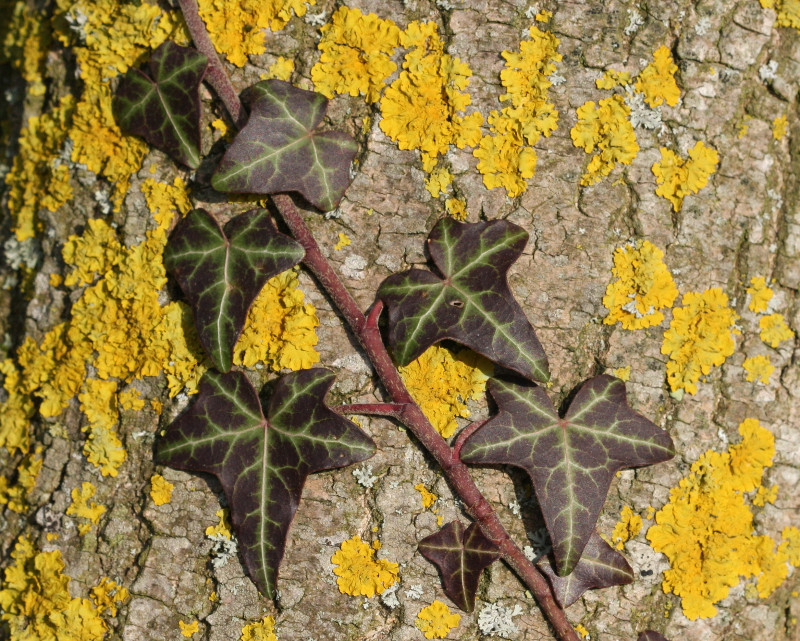
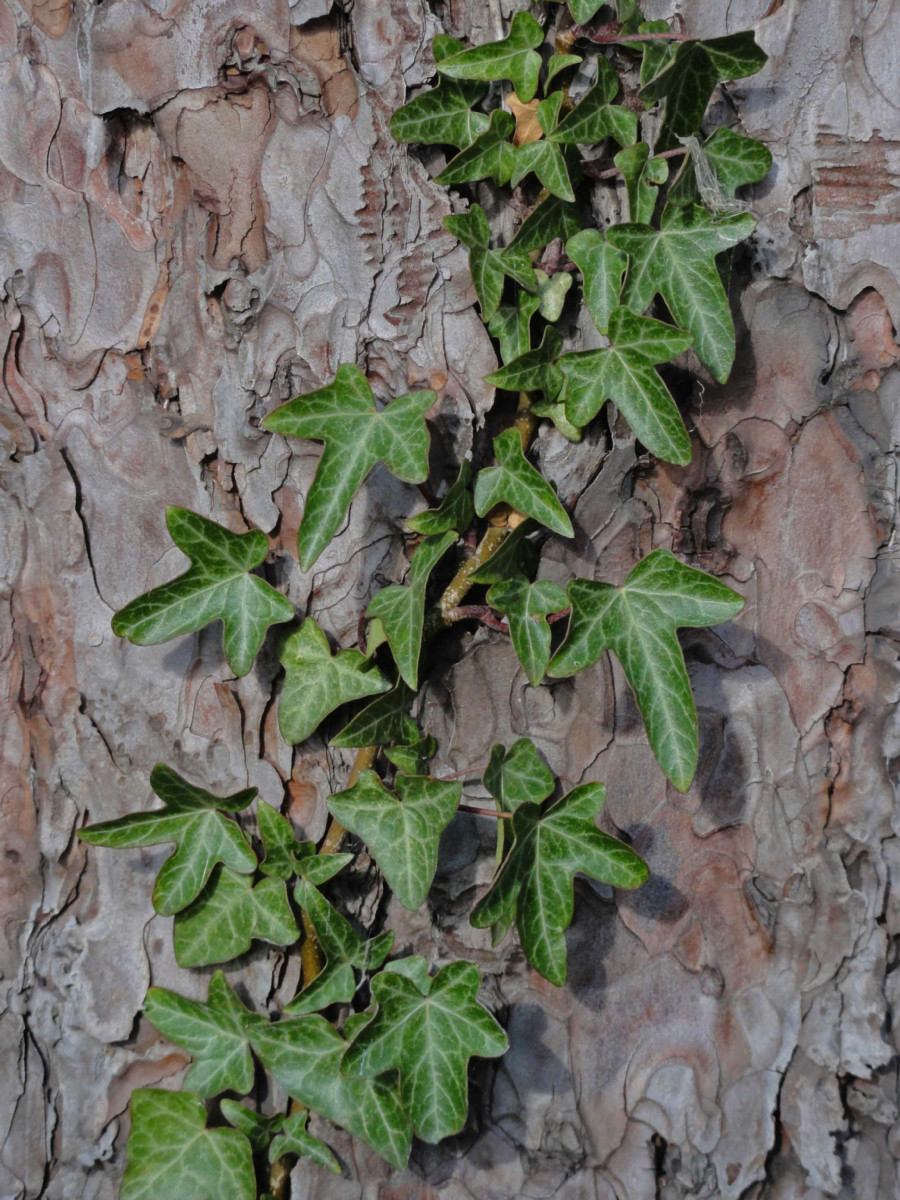
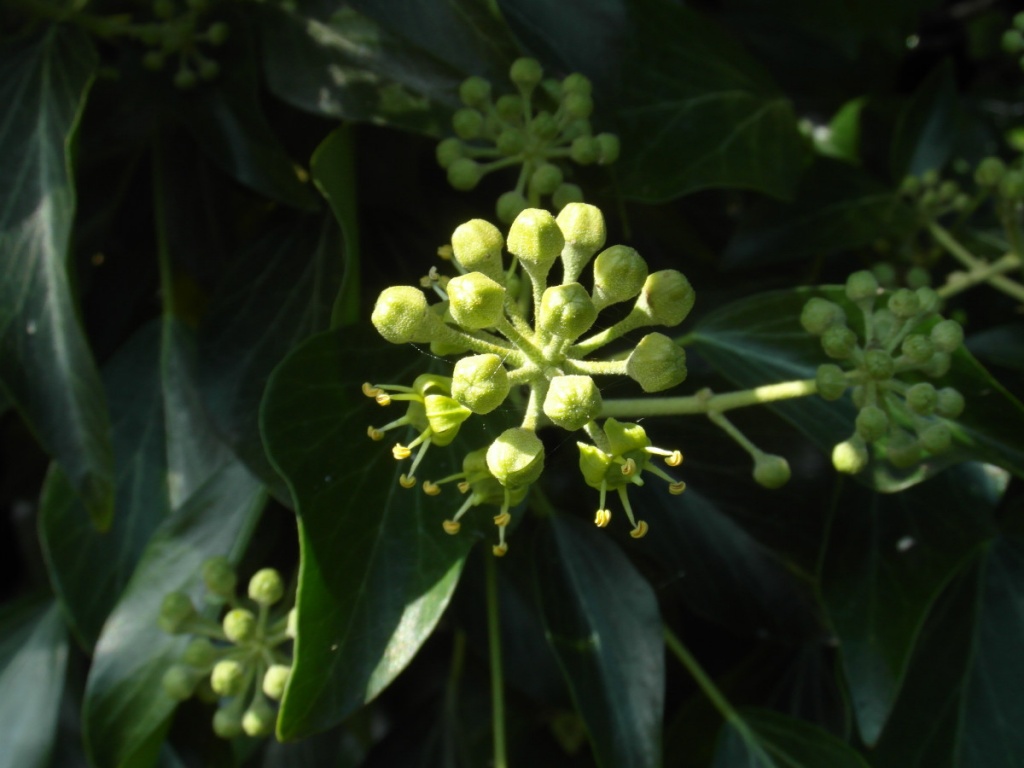
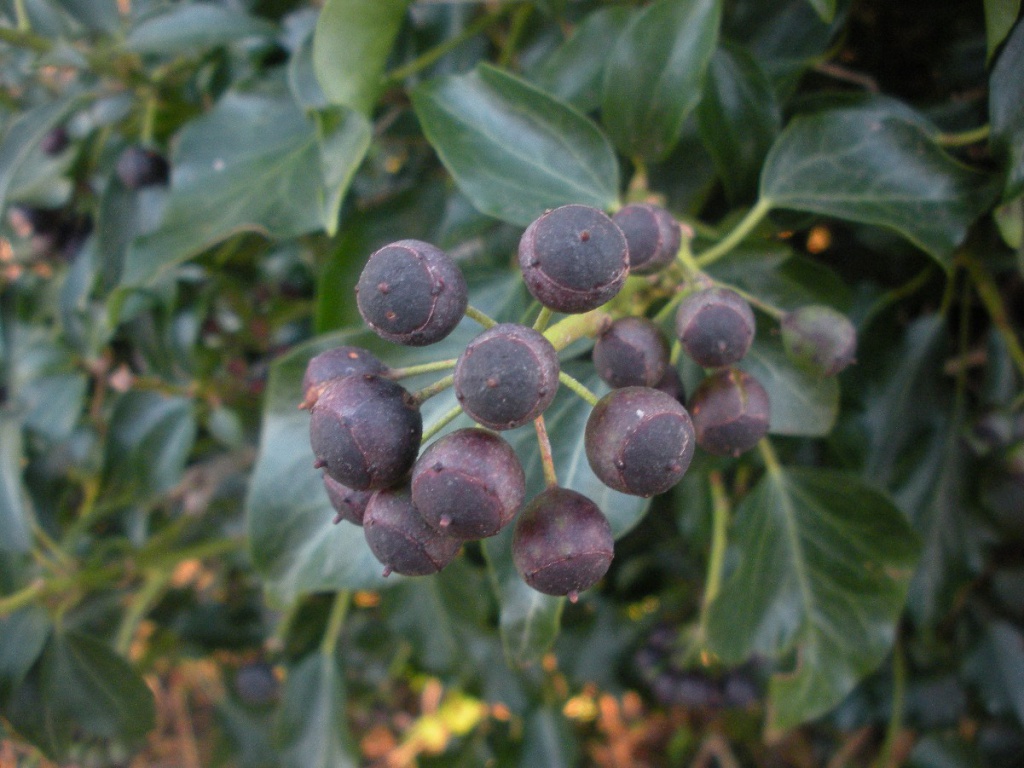
A woody climber to 30 metres, though often less. Leaves deep shiny green and leathery, often with paler veins, those of immature plant often 3 to 5 lobed, those of mature flowering branches are heart shaped or elliptical and all untoothed. Flowers yellowish-green with yellow anthers, 7 to 9 mm, borne in small, rather dense umbels, petals eventually reflexed. Fruit globose, 6 to 8 mm dull black when ripe in bunches.

Woodland, hedgerows, walls and old buildings.
September to November.
Evergreen.
Very common throughout Britain.
Very common in Leicestershire and Rutland. In the 1979 Flora survey of Leicestershire it was found in 591 of the 617 tetrads.
 Frank Bedford
Ashby Burton Rd. Ingles Hill
25 September 2021 Peter Smith
Heather
26 February 2017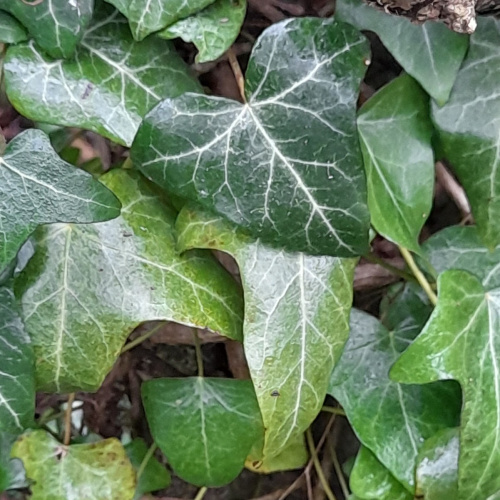 Kaye Axon
Enderby, Seine Lane
11 February 2024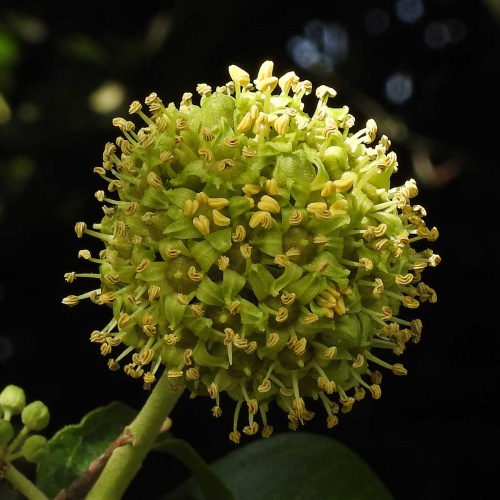 David Gould
G.U. Canal, Aylestone
25 September 2016 Barbara Cooper
Long Clawson
27 February 2022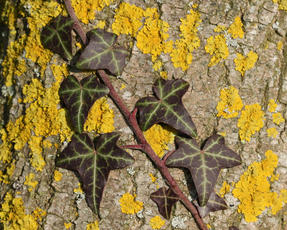 David Nicholls
Cow Lane, Ratby
17 December 2011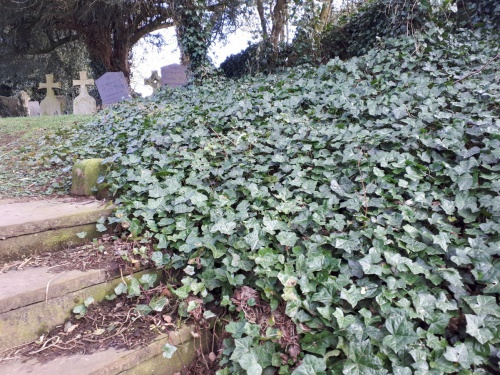 gnspencer
Waltham on the wolds church yard
17 March 2021


Leicestershire & Rutland Map
Enter a town or village to see local records
MAP KEY:
Yellow squares = NBN records (all known data)
Coloured circles = NatureSpot records: 2025+ | 2020-2024 | pre-2020
UK Map
Species profile
- Common names
- Ivy
- Species group:
- flowering plant
- Kingdom:
- Plantae
- Order:
- Apiales
- Family:
- Araliaceae
- Records on NatureSpot:
- 868
- First record:
- 11/05/1992 (John Mousley;Steve Grover)
- Last record:
- 07/04/2026 (Bates, Adam)
Total records by month
% of records within its species group
10km squares with records
The latest images and records displayed below include those awaiting verification checks so we cannot guarantee that every identification is correct. Once accepted, the record displays a green tick.
In the Latest Records section, click on the header to sort A-Z, and again to sort Z-A. Use the header boxes to filter the list.
Latest images
Latest records
 Frank Bedford
Ashby Burton Rd. Ingles Hill
25 September 2021 Church Walk Gitty near New Walk Sapcote SP 4895 9326 (taken 8.12.2006).JPG) Graham Calow
Graham Calow
Sapcote
08 December 2006
Berries Peter Smith
Cropston Reservoir
17 September 2011 Peter Smith
Cropston Reservoir
17 September 2011 Fran Marsland
Broughton Astley
17 July 2012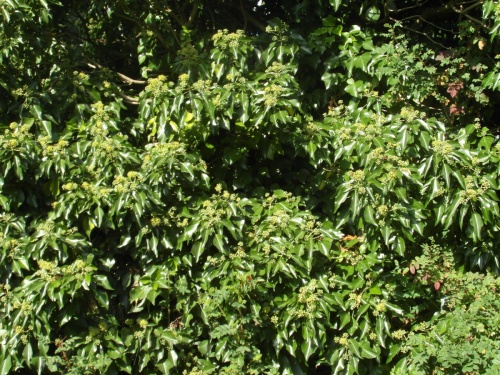 Alan Semper
Harby garden
18 September 2012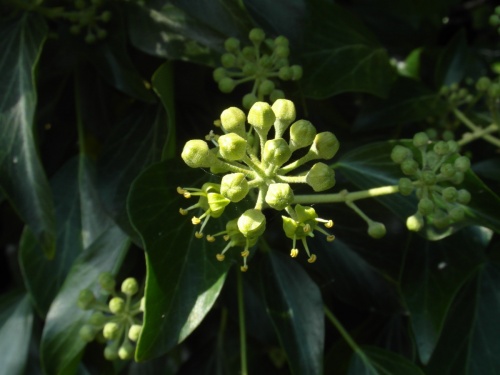 Alan Semper
Harby garden
18 September 2012 Church Street Sapcote SP 4880 9318 (taken 16.9.2006).JPG) Graham Calow
Graham Calow
Sapcote
16 September 2006
Flowers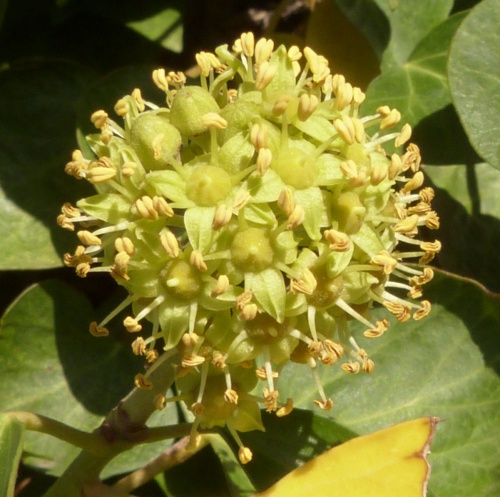 Graham Calow
Witherley
26 September 2015
flower David Gould
The Spearwort Fields
13 November 2016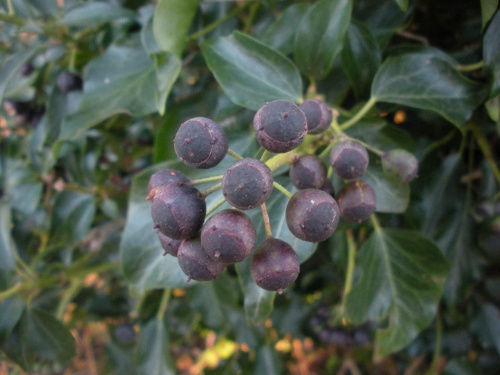 Craig Mabbett
main street peatling parva
24 January 2015

 Church Walk Gitty near New Walk Sapcote SP 4895 9326 (taken 8.12.2006).JPG)



 Church Street Sapcote SP 4880 9318 (taken 16.9.2006).JPG)


Boeremia hedericola
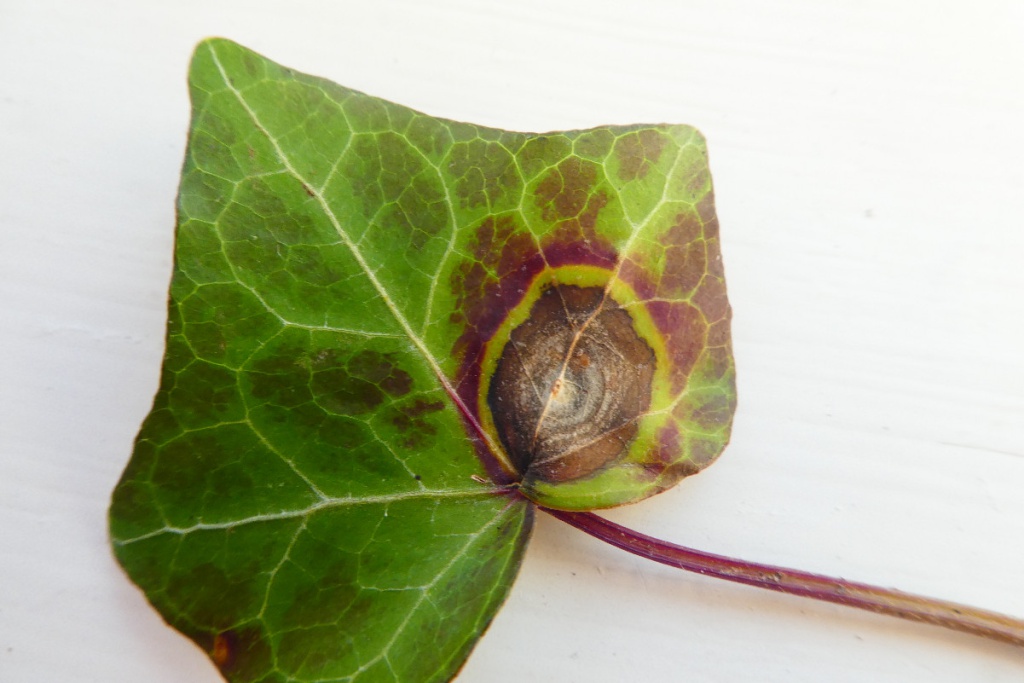
Boeremia hedericola is a Coelomycetes fungus which produces large distinctive spots on the leaves of various Ivy species (Araliaceae). It only produces asexual spores from the tiny brown pycnidia (fruiting bodies).
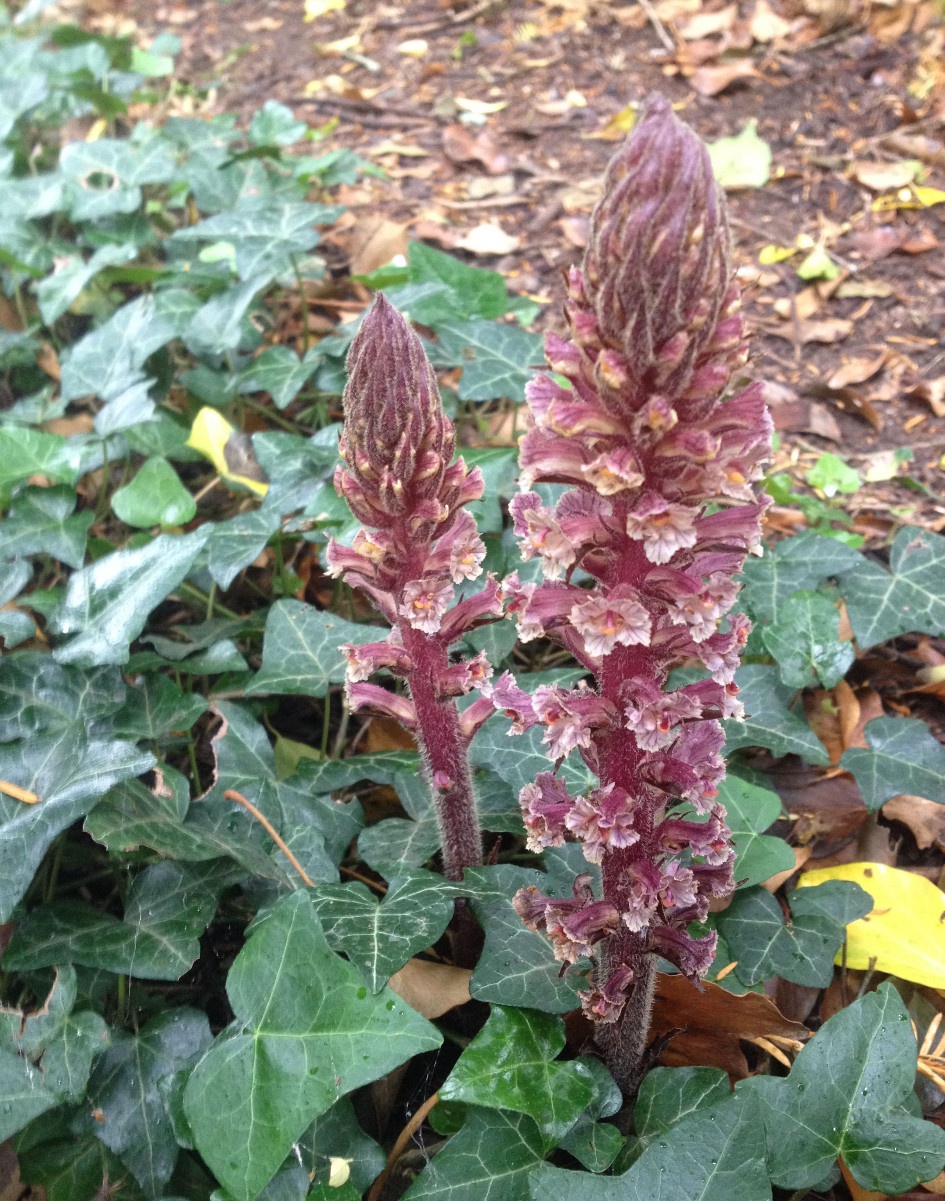
Ivy Broomrape
Ivy Broomrapeis a perennial herb producing red-purple flowering spikes. It is completely parasitic on Ivy.
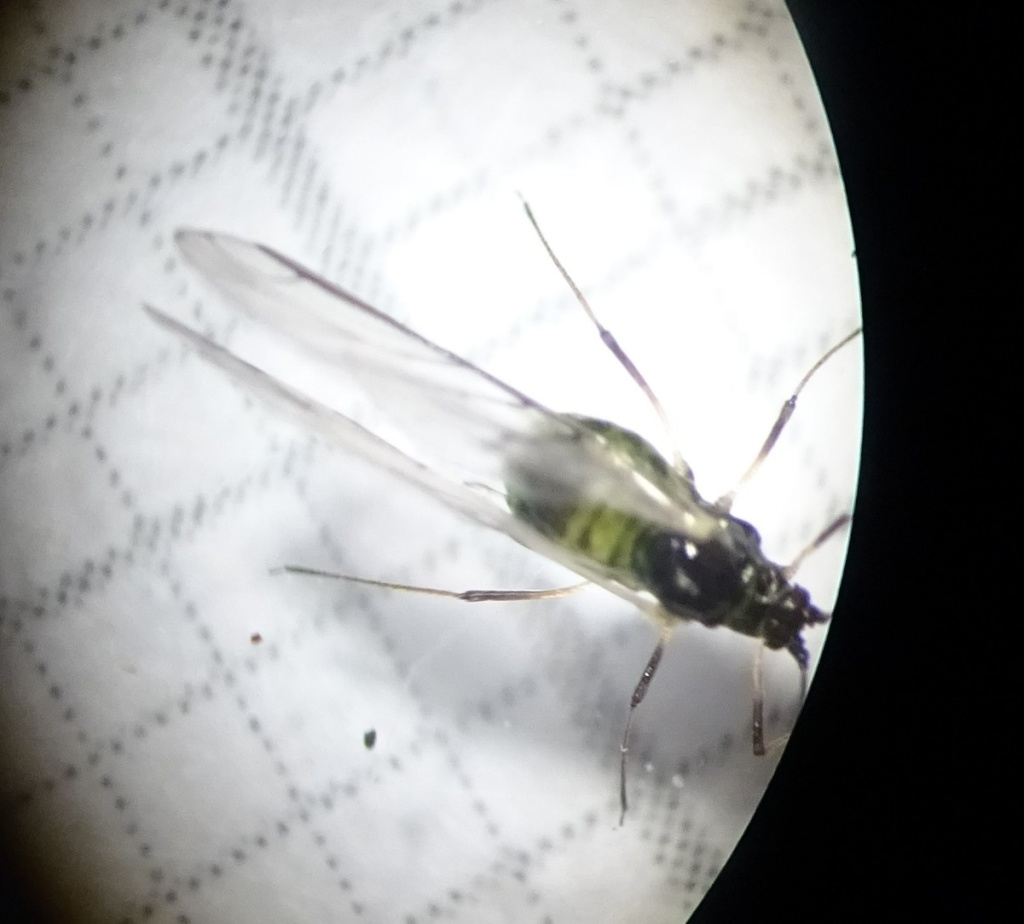
Ivy Aphid
The apterae of the aphid Aphis hederae are dark greenish. The antennae are mostly pale, only darkened from the middle of segment 5 to the apex. The alate has strong transverse dark bands on most tergites. The species does not host alternate, it feeds only on Ivy living on the young shoots and foliage.
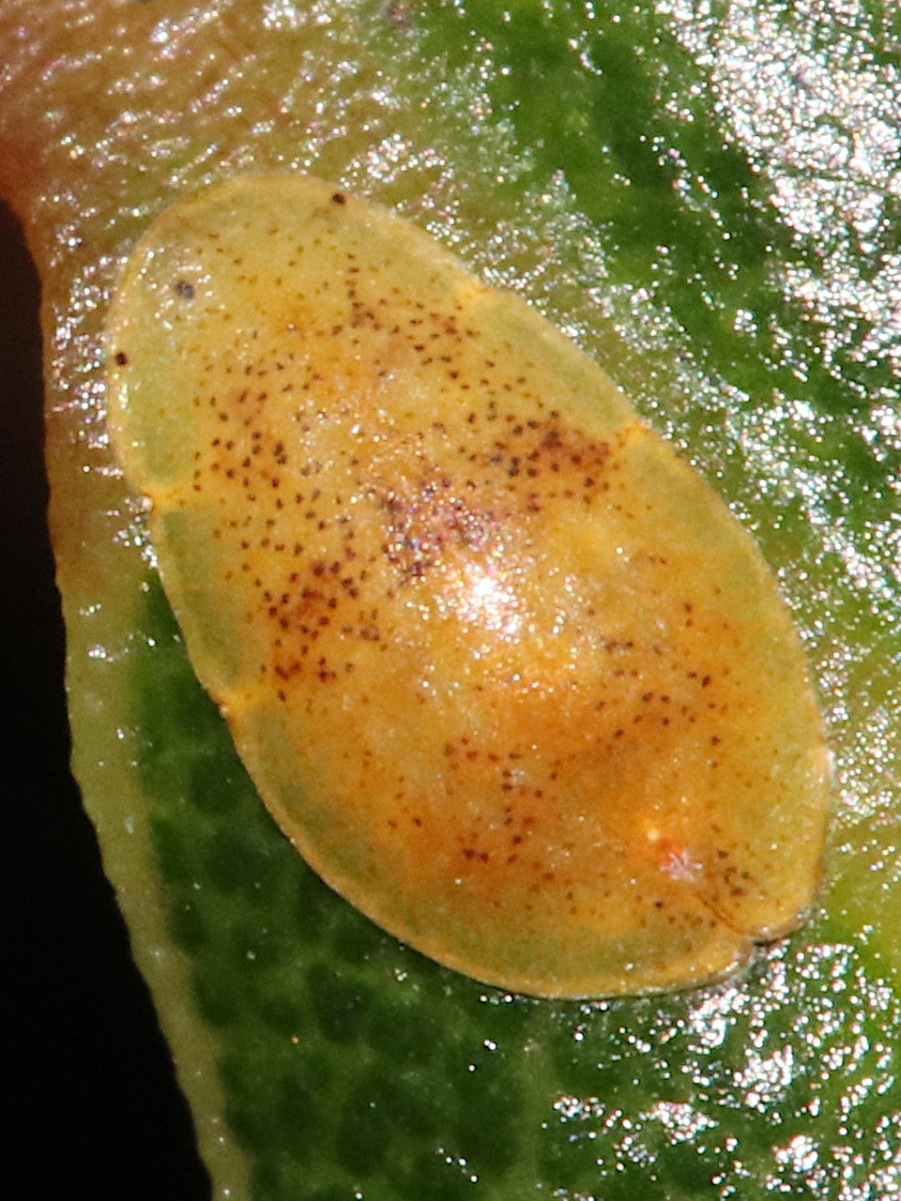
Brown Soft-scale
The adult female Brown Soft-scale (Coccus hesperidum) is oval, flattish, translucent pale-yellow to yellow-brown, often mottled with brown spots; body length up to 5 mm and width 2.5 mm. Adult males, however, resemble small flies but never feed and die within a day or two of emergence. It uses a large number of host plants including Ivy.
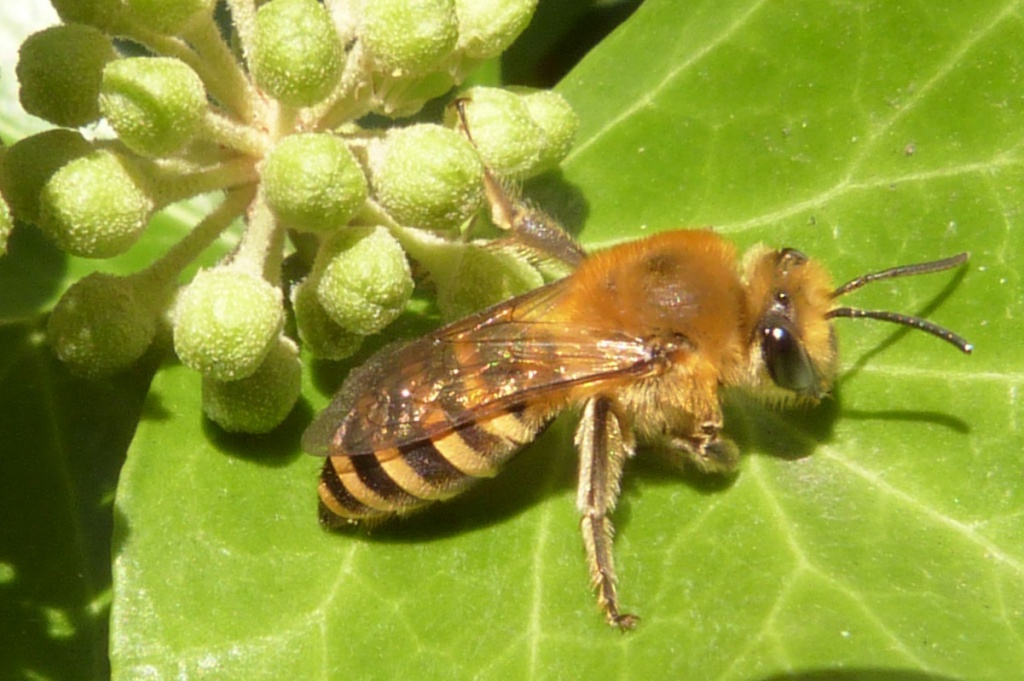
Ivy Bee
The Ivy Bee (Colletes hederae) is the largest of the UK banded Colletes species. The forewing of the female measures 9.5-10mm, the male 8-8.5mm. The broad buff-coloured bands and orange thorax of a freshly emerged female are distinctive, though care needs to be taken with males or faded specimens. It is most easily recorded in autumn hen it can be seen visiting the flowers of Ivy.
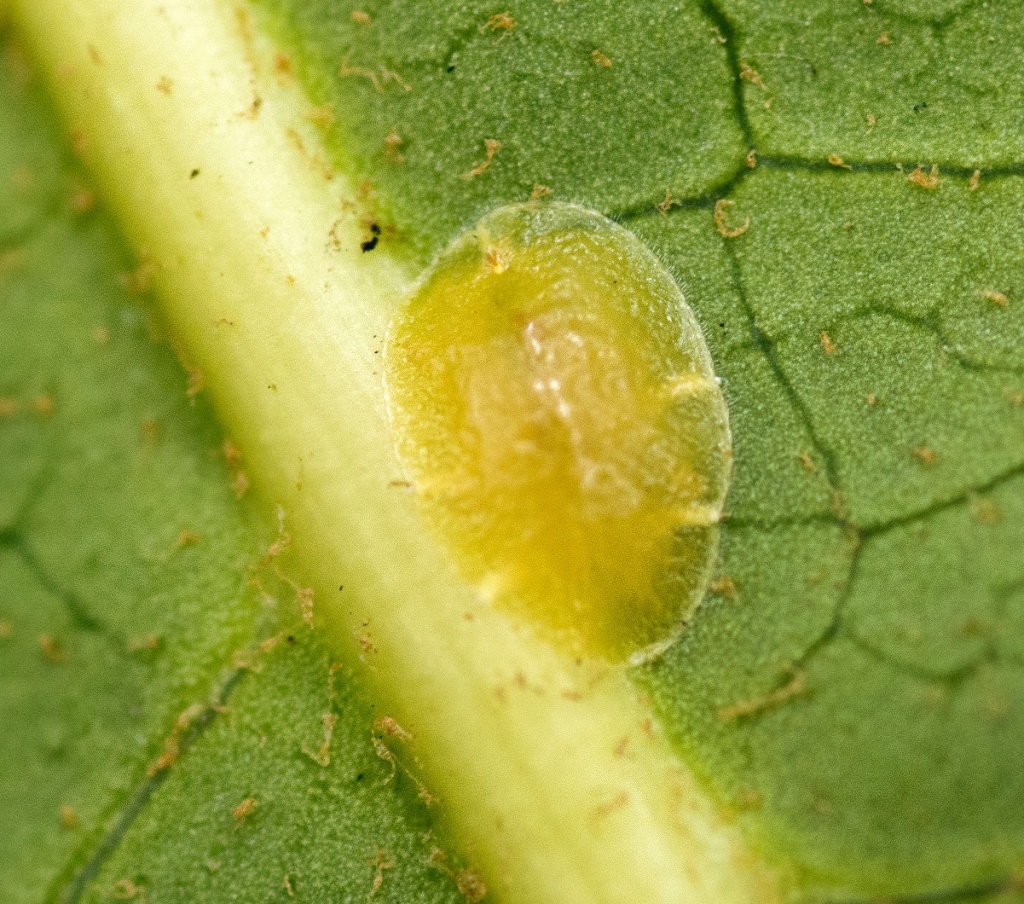
Viburnum Cushion Scale
The Viburnum Cushion Scale (Lichtensia viburni) is mainly found on the foliage of Laurustinus (Viburnum tinus) and Ivy. Adult females are flat, oval, pale yellow and up to 4mm long. Males are 2.5mm long, white and elongate ovals. In May-June the females become covered with a white fluffy wax coating in which the eggs are laid. The larvae hatch from the eggs in late June.