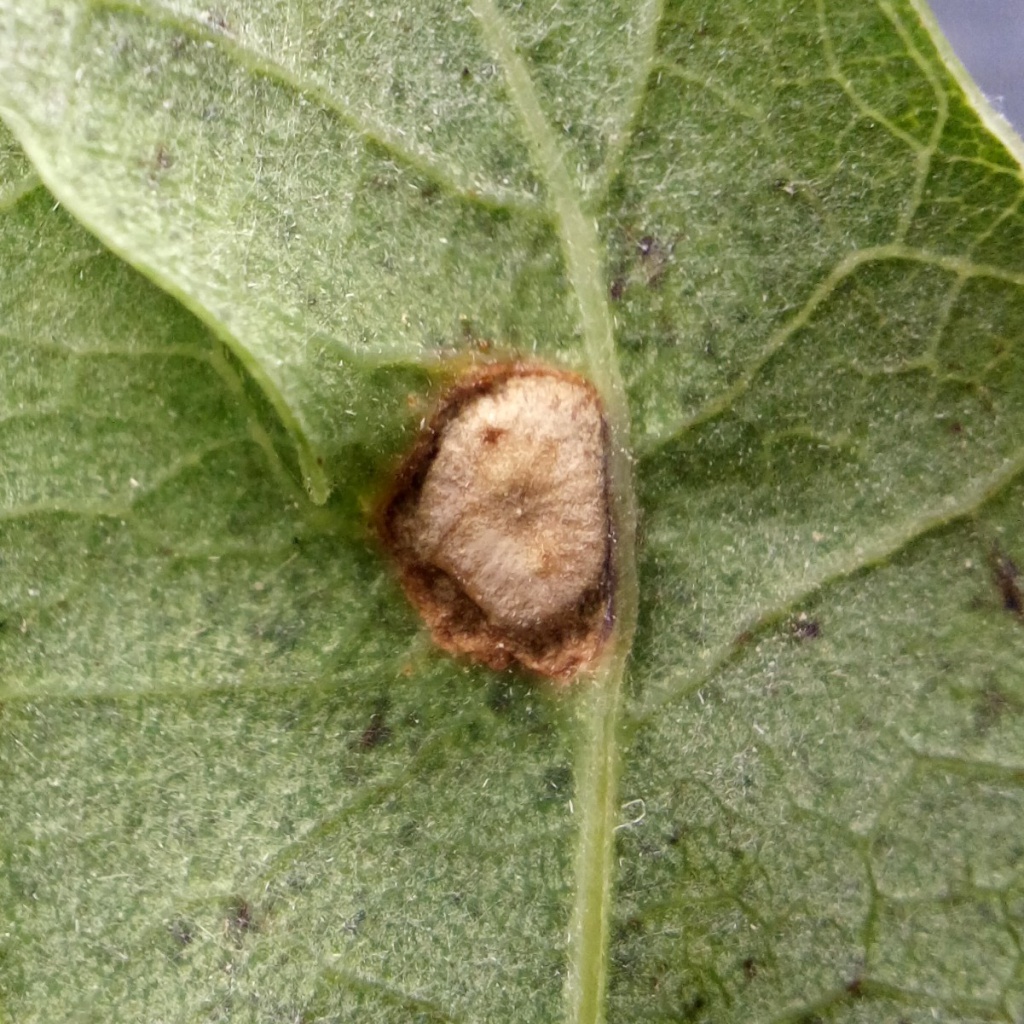
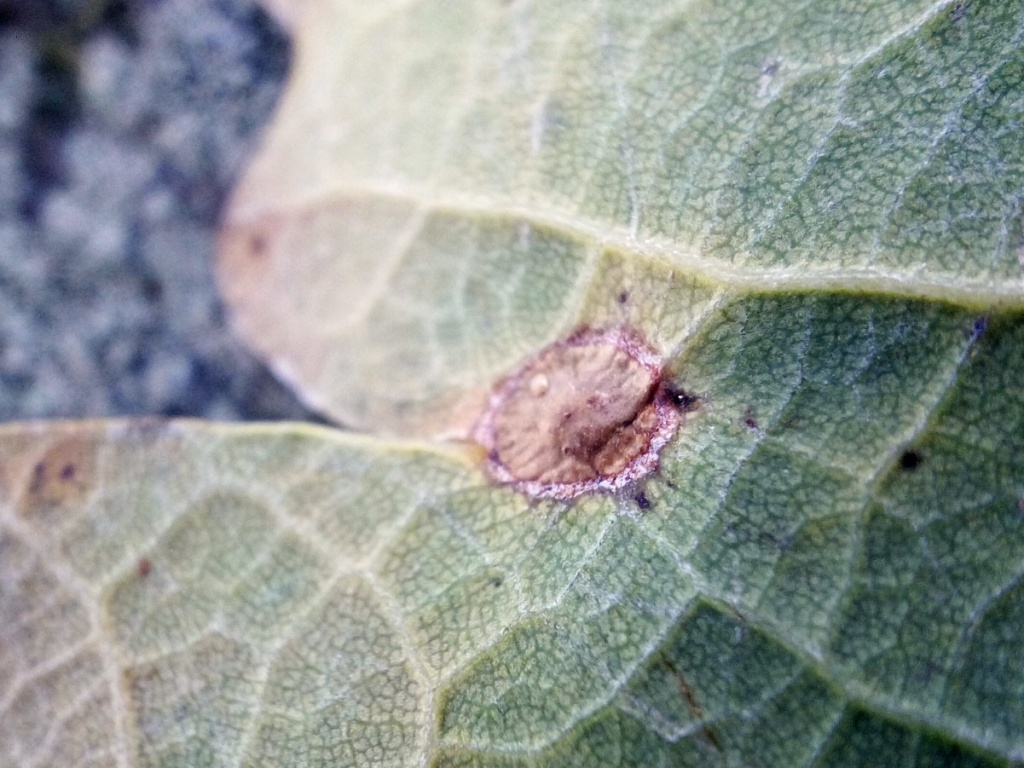
Blister Gall - Neuroterus numismalis f. sexual
Neuroterus numismalis is a gall wasp that has two generations per year.
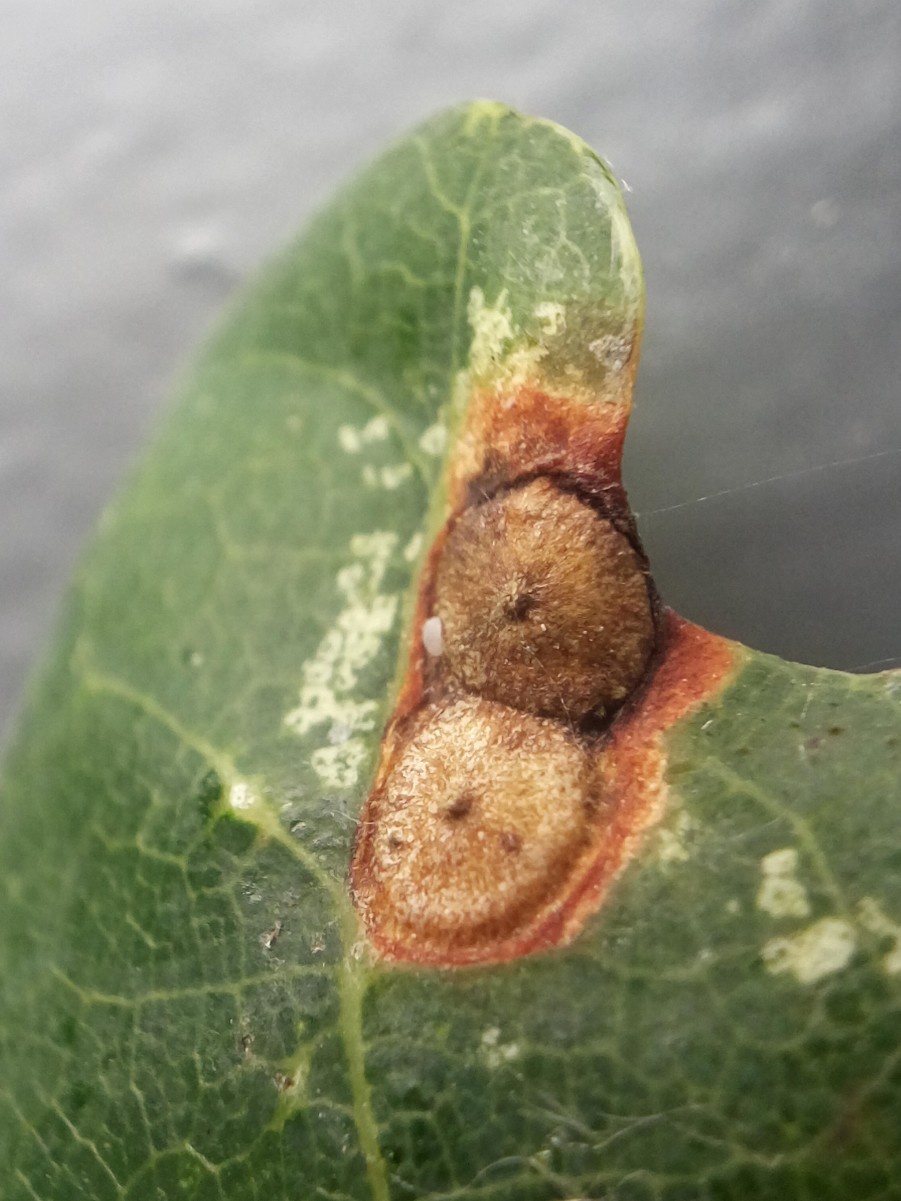
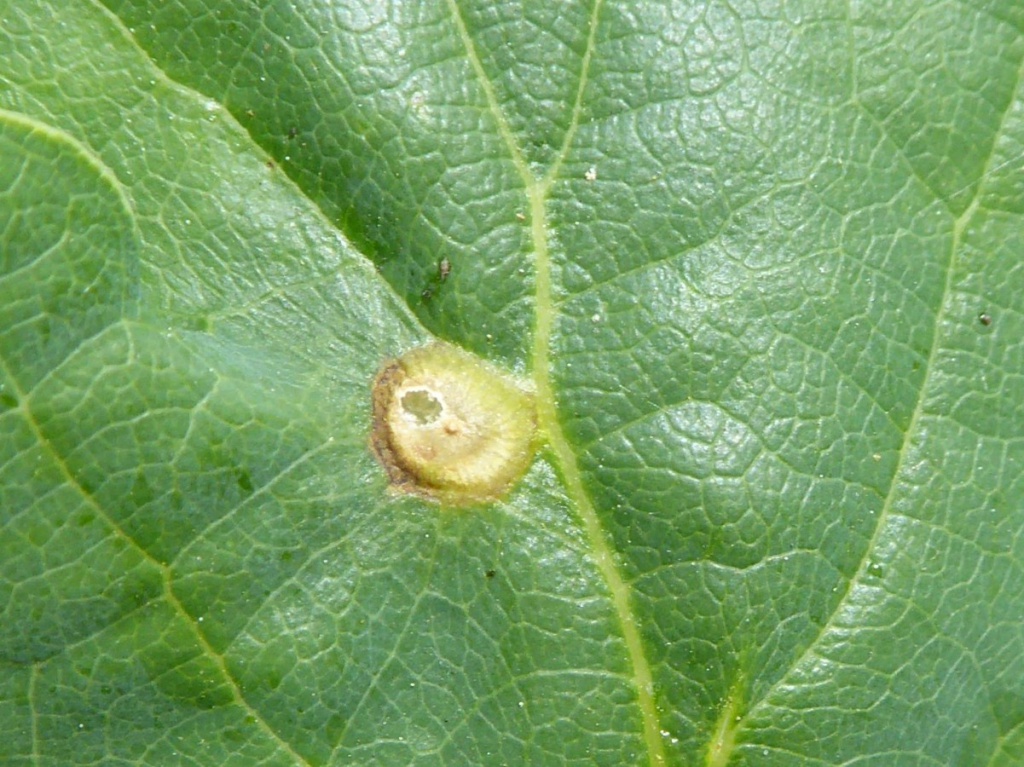
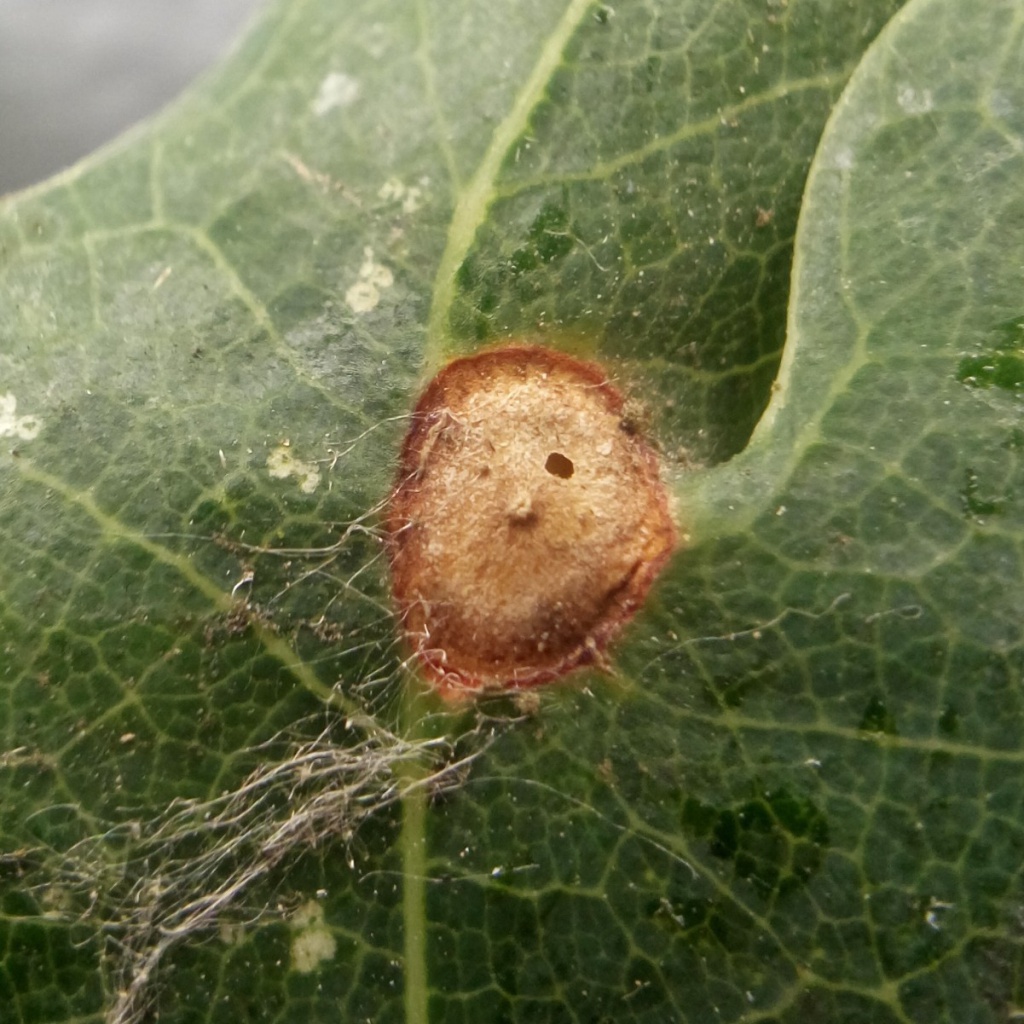
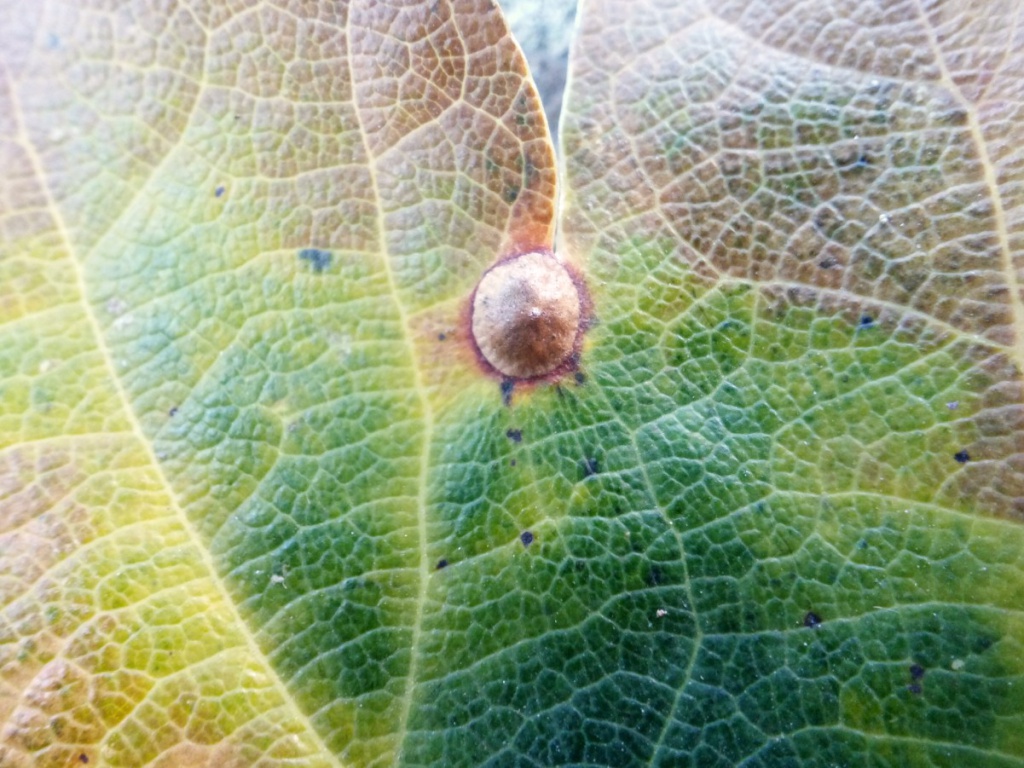
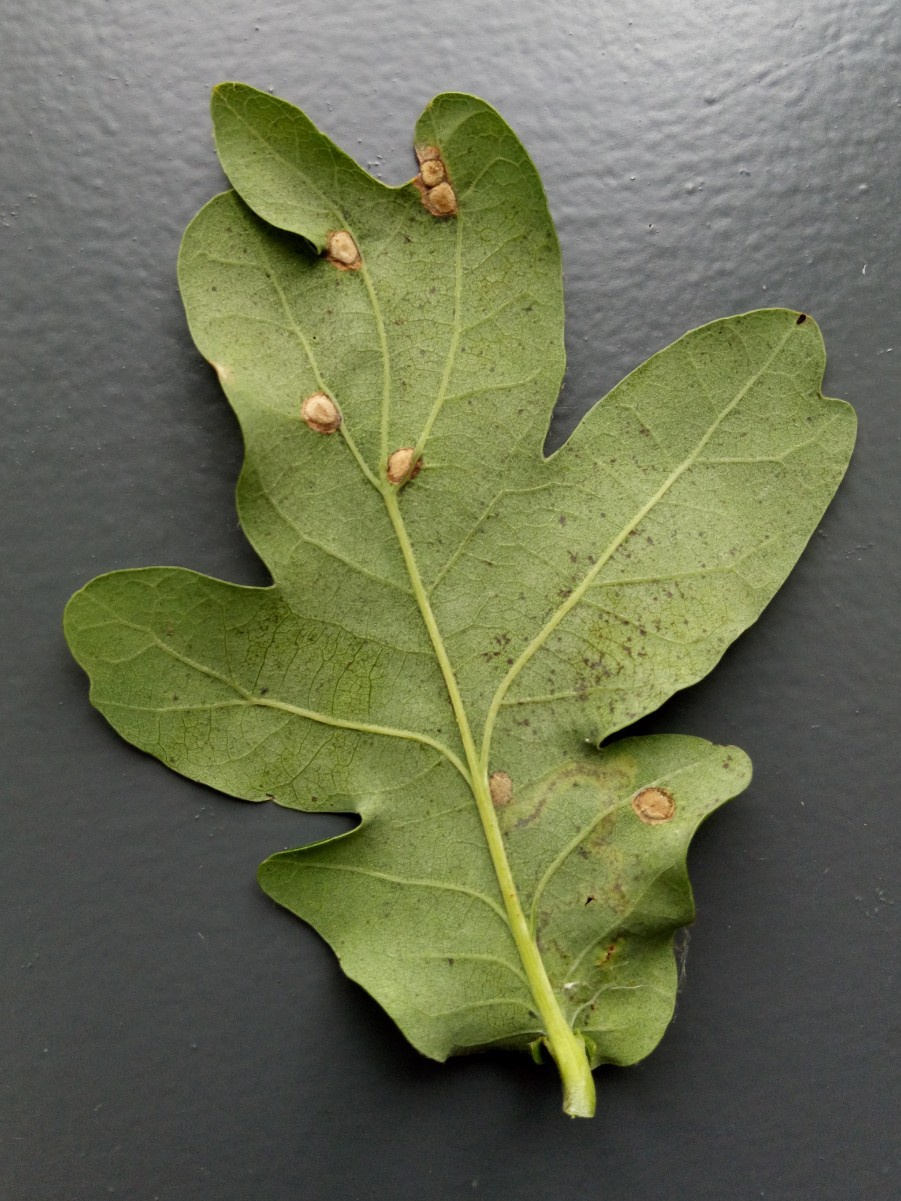
The sexual generation causes a circular Blister Gall that is visible on both sides of an Oak leaf. It is about 3mm across; green at first then brown. The blister has lines radiating from the centre and the exit hole may be in the upper or lower surface.

Under "Species", please select "f. agamic" or "f. sexual" as appropriate. Provide photographs of the gall on the host plant, and note the host species.
English, Sessile and Turkey Oaks.
Spring
The Silk-button Galls are the agamic generation and can be seen from August to October, until the leaves fall in autumn. Each gall contains a single cell holding one wasp. The larva will mature in August but remain in the gall on the ground throughout the winter, emerging the following year from February to April.
The females that emerge in spring lay their unfertilised eggs on Oak leaves, causing the Blister Galls of the sexual generation. Male and female wasps emerge from the Blister Galls in mid-summer and their fertilised eggs result in the next generation of Silk-button Galls.
Common and widespread in Britain.
Common in Leicestershire and Rutland but recorded less often than the agamic form.
See British Plant Galls (Redfern & Shirley, 2023)
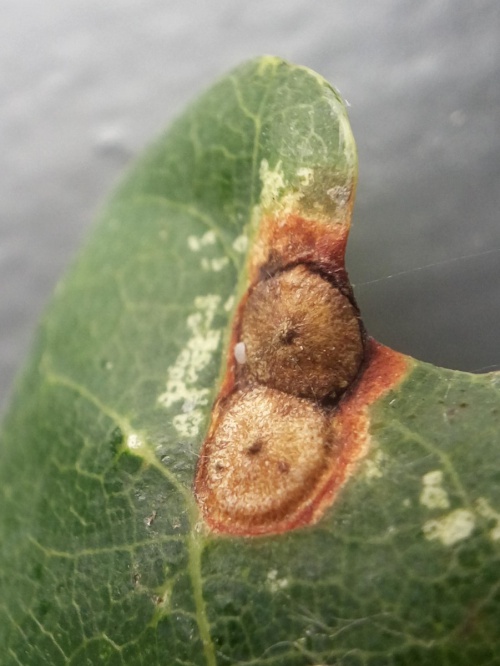 Peter Smith
Leicester, Abbey Park
29 July 2022
Sexual generation. Upper side of oak leaf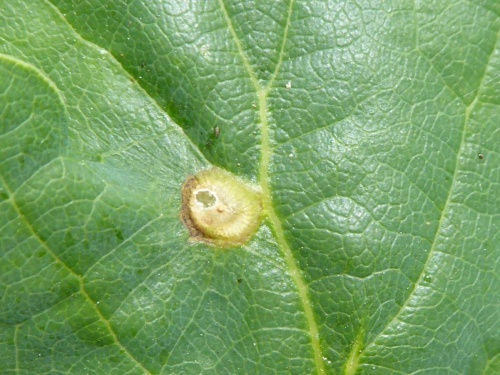 sue
sue
Bagworth, nut wood
01 June 2020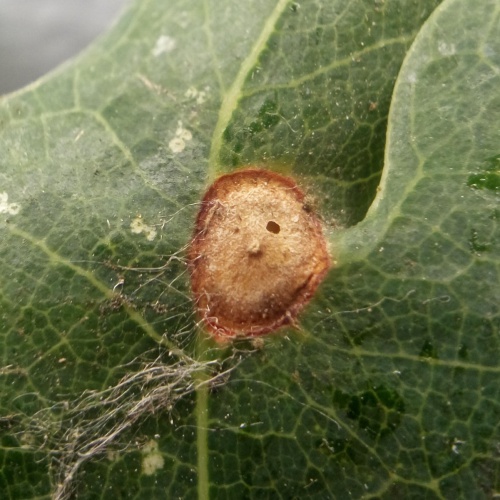 Peter Smith
Leicester, Abbey Park
29 July 2022
Sexual generation. Upper side.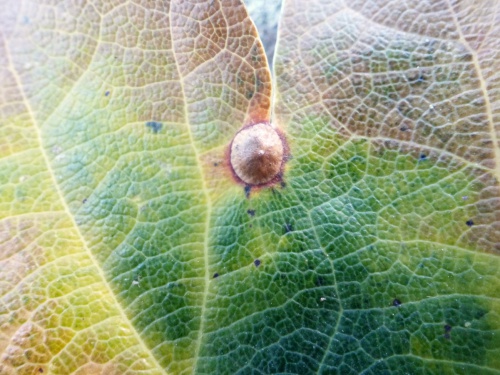 Peter Smith
Shepshed, Morley Quarry
23 November 2022
Upper side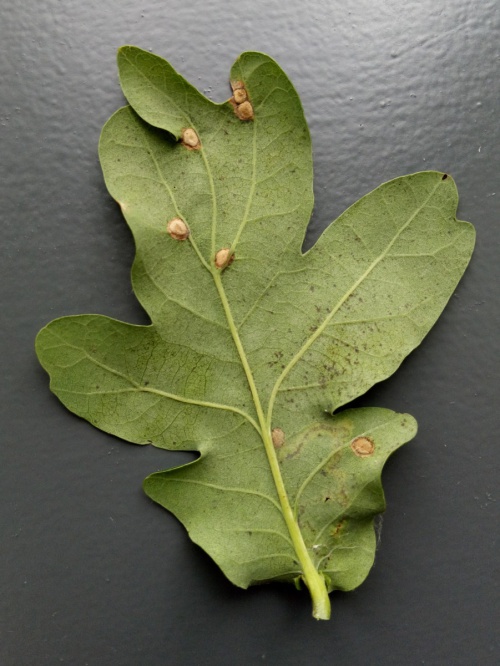 Peter Smith
Leicester, Abbey Park
29 July 2022
Underside of leaf
Leicestershire & Rutland Map
Enter a town or village to see local records
MAP KEY:
Yellow squares = NBN records (all known data)
Coloured circles = NatureSpot records: 2025+ | 2020-2024 | pre-2020
UK Map
Species profile
- Common names
- Blister-gall Causer
- Species group:
- insect - hymenopteran
- Kingdom:
- Animalia
- Order:
- Hymenoptera
- Family:
- Cynipidae
- Records on NatureSpot:
- 19
- First record:
- 14/05/2014 (Clough, Jerry)
- Last record:
- 20/08/2025 (Graves, Hazel)
Total records by month
% of records within its species group
10km squares with records
The latest images and records displayed below include those awaiting verification checks so we cannot guarantee that every identification is correct. Once accepted, the record displays a green tick.
In the Latest Records section, click on the header to sort A-Z, and again to sort Z-A. Use the header boxes to filter the list.
Latest images
Latest records
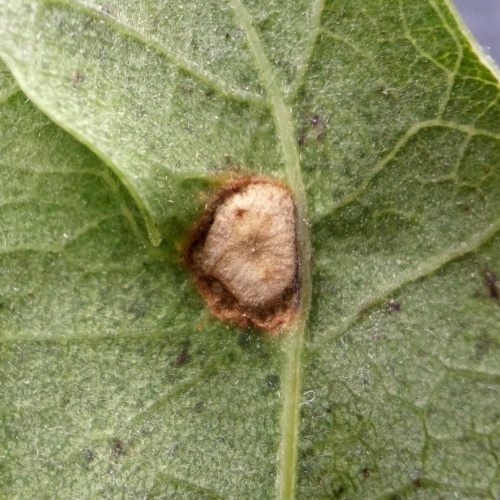 Peter Smith
Leicester, Abbey Park
29 July 2022
Sexual generation. Underside.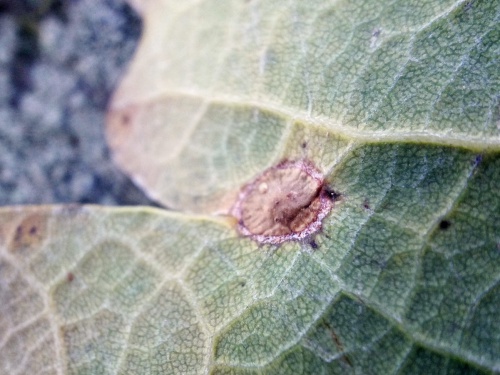 Peter Smith
Shepshed, Morley Quarry
23 November 2022
Lower side