Homoporus
Homoporus
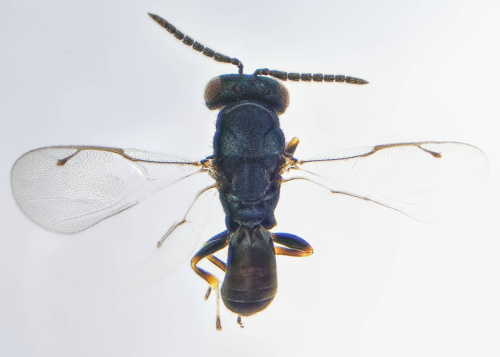
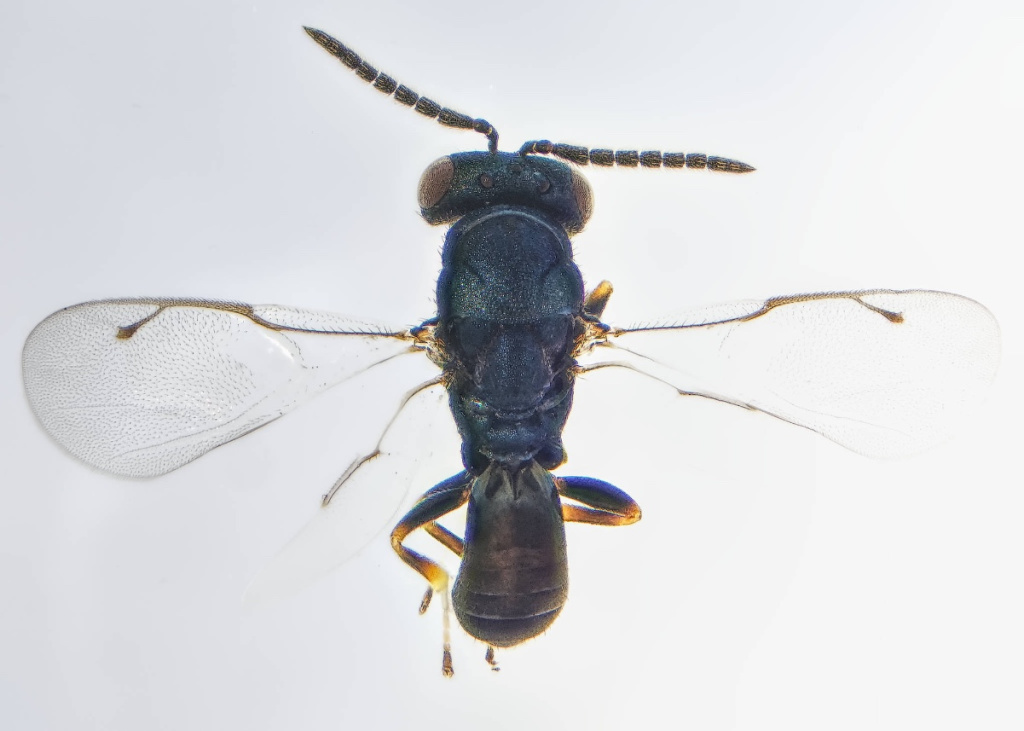
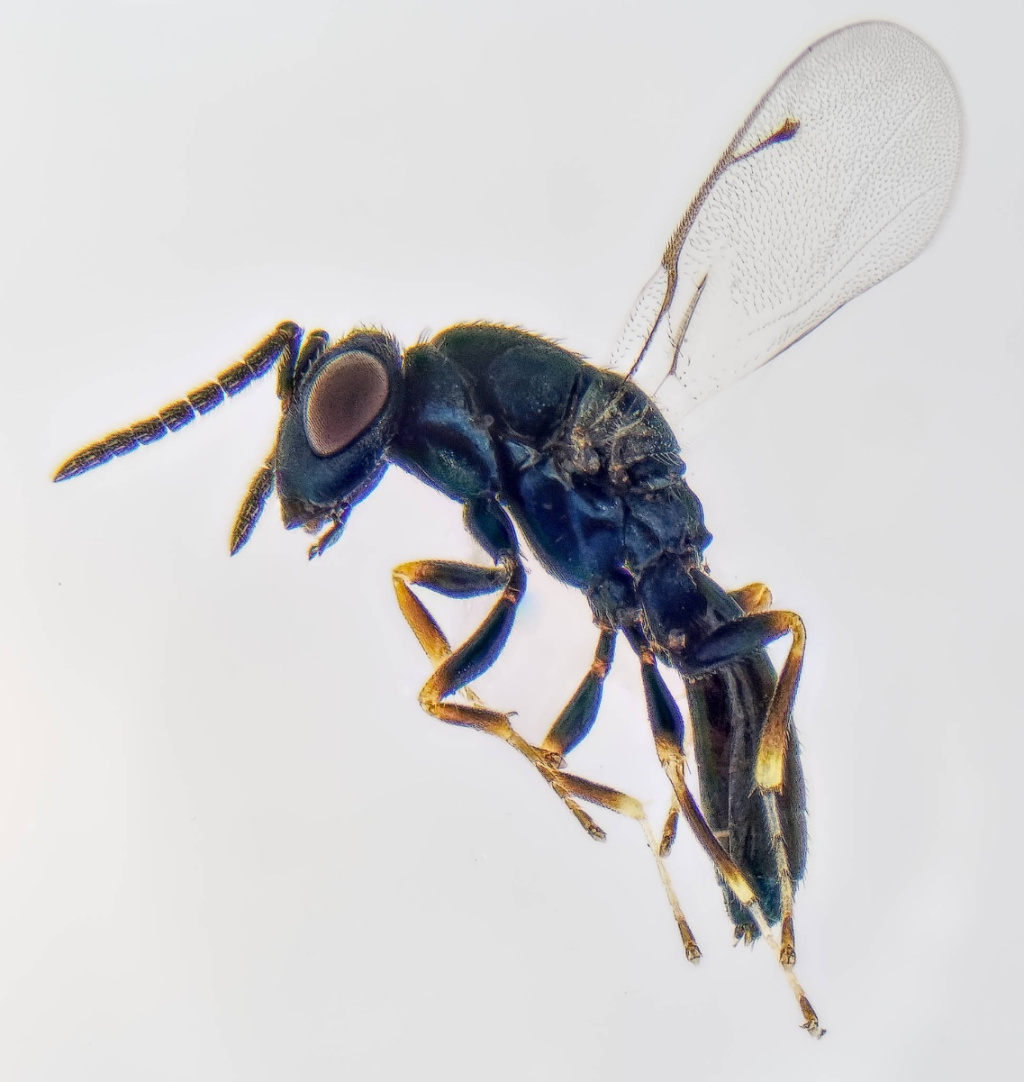
Around 10 UK species. Typically 1.5–3.5mm in length. The head and mesosoma (thorax) are usually metallic dark green, bluish-green, or bronze with reticulate sculpturing. The gaster (abdomen) is commonly dark brown to black with metallic reflections, though in several species it is partly or largely yellow or pale orange ventrally or centrally.
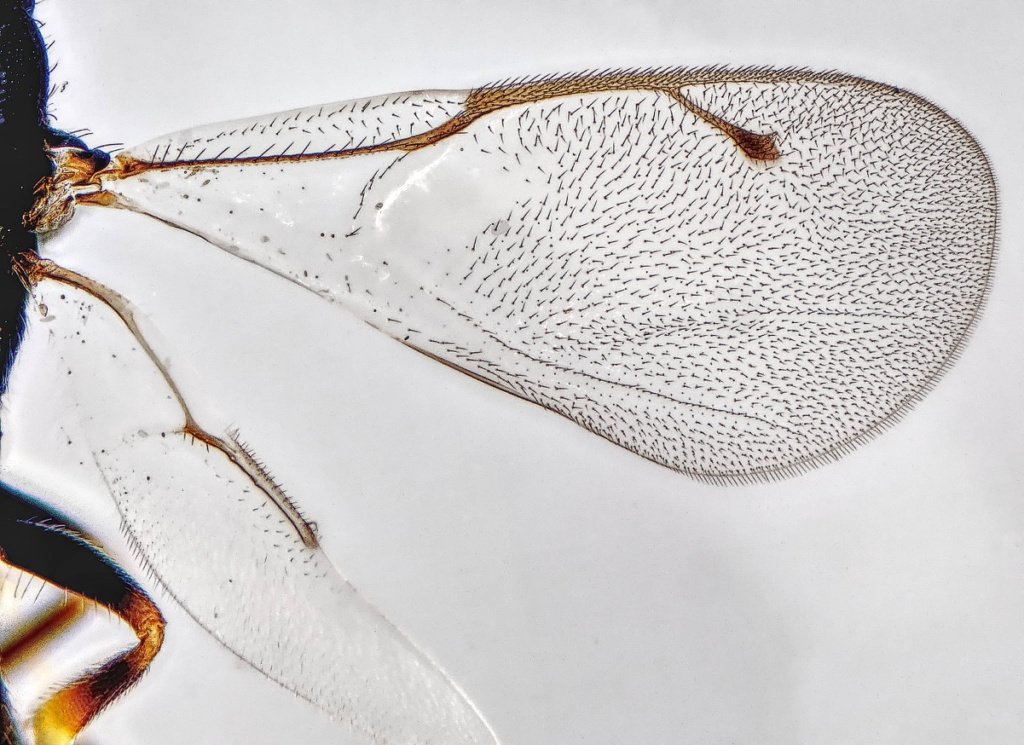
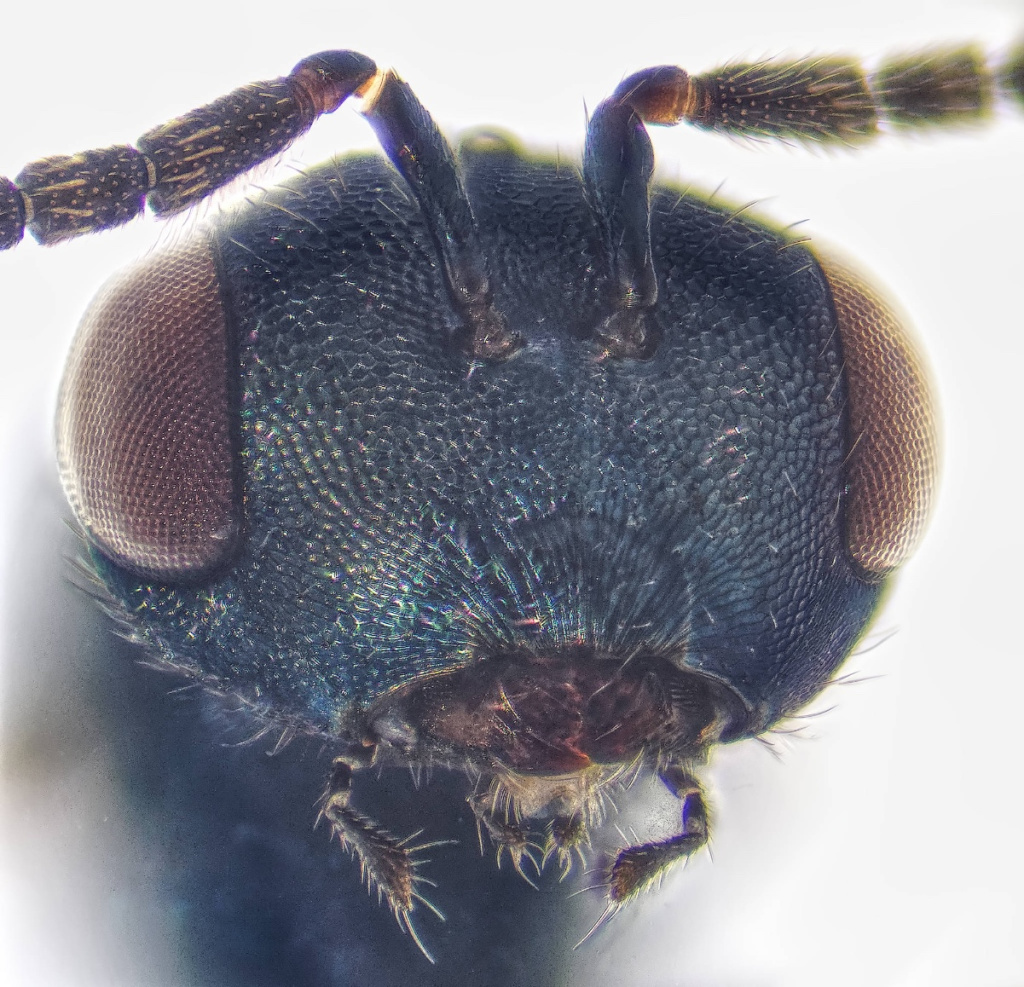
Antennae 12-segmented, inserted near the center of the face; female formula typically 11263 (1 scape, 1 pedicel, 2 anelli, 6 funicular segments, 3-segmented clava) or rarely 11353 (H. pulchripes). Lower clypeal margin is usually truncate or shallowly emarginate (occasionally with 2 small teeth, as in H. japonicus). Mandibles are either both 4-toothed, or heterodont with the left mandible 3-toothed and the right 4-toothed. Pronotal collar is rounded and not sharply margined. The propodeum is relatively short, lacks a distinct median carina, and has a very short or indistinct nucha. Hind tibia bears 2 apical spurs. Forewing has a well-developed speculum and a marginal vein typically 1.6–3.5X as long as the stigmal vein.

Unless identified by a recognised expert, a photo is required and the specimen should be examined with a microscope. In the comments box, state the key or ID method used and describe the size and identifying characters.
Parasitoids of stem-boring and gall-forming Diptera and Hymenoptera.
Unknown.
Unknown.
Graham, MWR de V. (1969) The pteromalidae of north-western Europe (Hymenoptera: Chalcidoidea). Bull. Br. Mus. nat. Hist. (Ent.) Suppl. 16.
 AJ Cann
Rutland Water Sharples Meadow
18 September 2026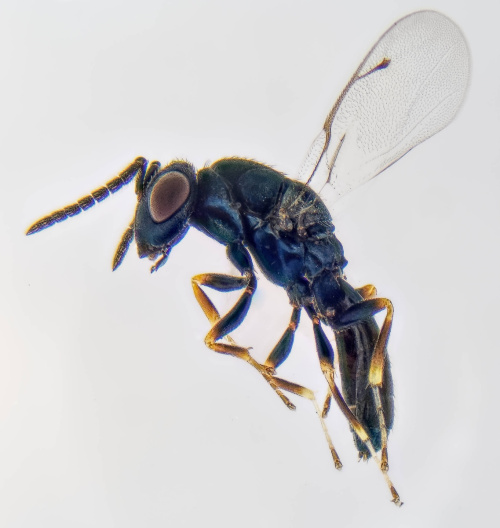 AJ Cann
Rutland Water Sharples Meadow
18 September 2026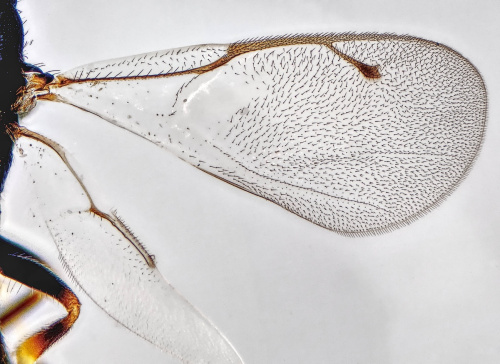 AJ Cann
Rutland Water Sharples Meadow
18 September 2026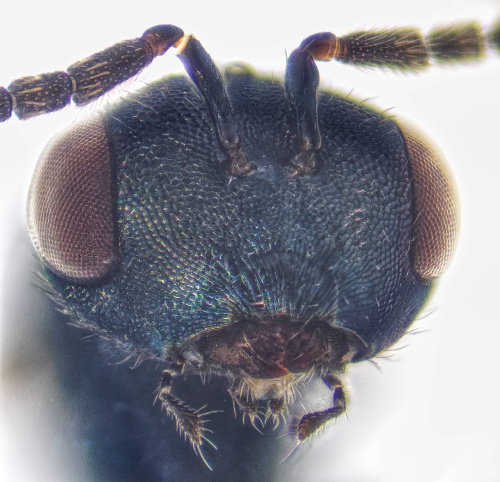 AJ Cann
Rutland Water Sharples Meadow
18 September 2026
Leicestershire & Rutland Map
Enter a town or village to see local records
MAP KEY:
Yellow squares = NBN records (all known data)
Coloured squares = NatureSpot records: 2025+ | 2020-2024 | pre-2020
UK Map
Additional images
No additional images available for this species.