Stenomacrus
Stenomacrus
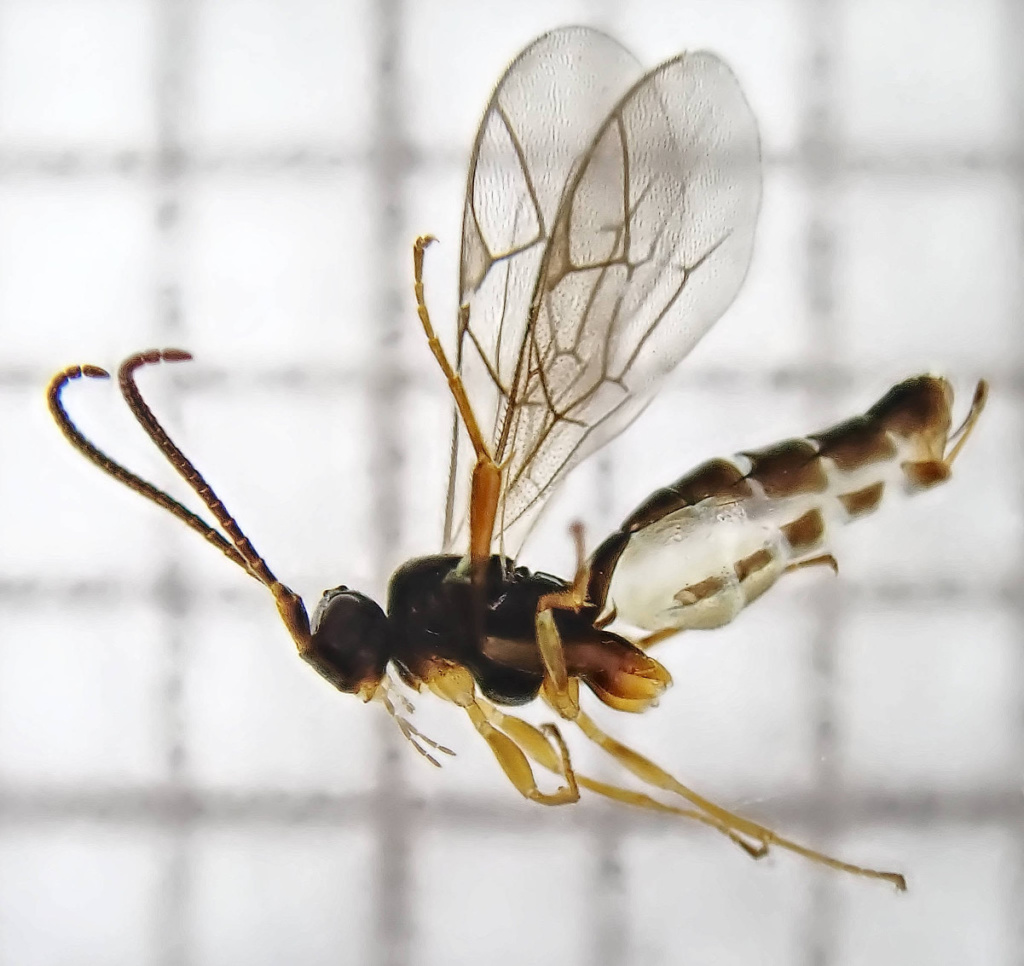
Length 2-6mm. The face is strongly convex and seamlessly fused with the clypeus (forming a uniformly convex surface with no separating groove). The labrum is exposed (visible beneath the clypeus margin), distinguishing it from some related genera. Mandibles are slender, strongly tapered, and twisted inwards, featuring a reduced lower tooth that is often much shorter than the upper tooth. Scape (the basal segment of the antenna) is long and subcylindrical (at least twice as long as wide). Mesosoma (thorax) generally smooth and polished with notauli (blades/grooves on the mesoscutum) usually absent or heavily reduced. The areolet (the small closed cell in the middle of the fore wing) is typically absent. Metasoma (abdomen): The first tergite has its spiracles located anterior to the midlength. The ovipositor is short, typically shorter than the apical depth of the metasoma, and is straight or only slightly curved.

Unless identified by a recognised expert, a photo is required and the specimen should be examined with a microscope. In the comments box, state the key or ID method used and describe the size and identifying characters.
Stenomacrus species are primarily specialize as parasitoids of fungus-breeding flies, specifically Diptera of the family Sciaridae (dark-winged fungus gnats) and occasionally related Mycetophilidae. Larval koinobiont endoparasitoids. This means the female wasp oviposits inside a living fly larva, allowing the host to continue growing and feeding before the parasitoid larva eventually consumes it from the inside out, typically pupating inside or near the host remains. Because their sciarid hosts thrive in damp environments rich in decaying plant matter, fungi, or damp soil (including greenhouses, leaf litter, and rotting wood), Stenomacrus species are frequently encountered in moist woodlands, shaded undergrowths, and occasionally agricultural or greenhouse settings where fungus gnats become pest burdens.
Common but under recorded.
Unknown.
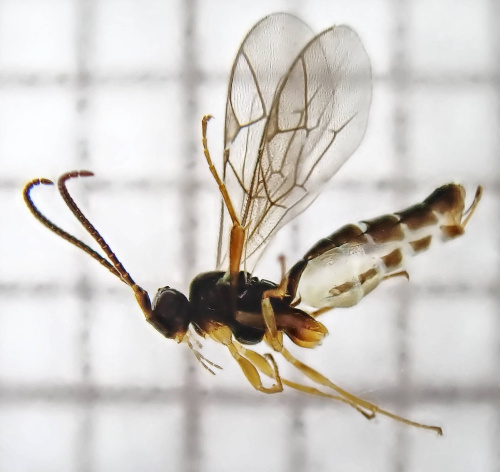 Graham Calow
Sapcote, land behind William Spencer Avenue
30 October 2026
specimen examined
Leicestershire & Rutland Map
Enter a town or village to see local records
MAP KEY:
Yellow squares = NBN records (all known data)
Coloured squares = NatureSpot records: 2025+ | 2020-2024 | pre-2020
UK Map
Additional images
No additional images available for this species.