

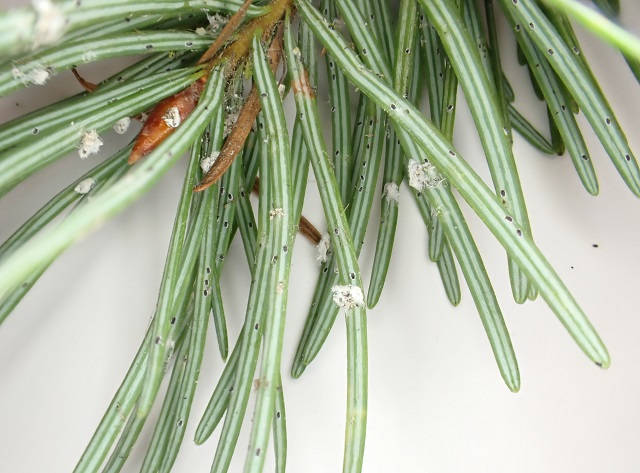
A Leicester Literary and Philosophical Society Natural History Section trip to Knighton Park made an Interesting discovery. More...
You don't always expect to find much in the way of invertebrates on a winter field trip with Leicester Literary and Philosophical Society - Natural History Section, so we were pleased to find what looked like woolly aphids in Knighton Park on Saturday 13th December. But what were they? Hazel Graves, who had spotted them, took a small sample home to look at in more detail and discovered that they are Adelgids, Adelges cooleyi (or Gilletteella cooleyi), some times known as the Gall Adelgid.
Adelges cooleyi causes a gall on the shoots of Spruce (Picea), and the form that were found are overwintering sistentes of Adelges cooleyi. Sistentes are wingless, parthenogenetic female adelgids that have a period of diapause in the first instar. You can read more about the lifecycle of Adelges cooleyi on the Influential Points website, the best source of information on aphids and their allies. Adelgids have a complicated lifecycle!
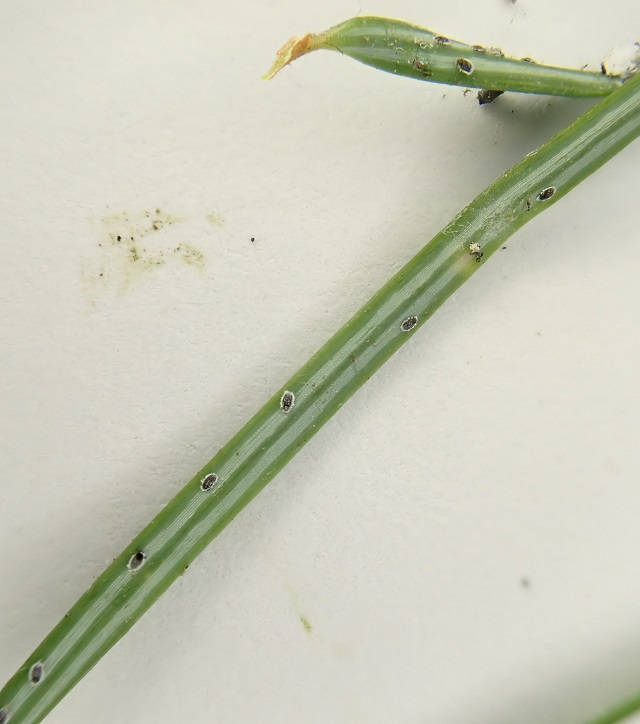
Sistentes on the underside of spruce needles
Adelgids are closely related to aphids but lack the cauda (tail) and cornicles (or siphuncules, the pair of small upright backward-pointing tubes found on the dorsal side of aphids, that exude droplets of a quick-hardening defensive fluid called cornicle wax).
There's only one previous record in VC55, at Holwell Nature Reserve in 2023. This is surely a species that is more widely distributed across VC55 than the records indicate.
(Photos: Hazel Graves)