

White Dead-nettle - Lamium album
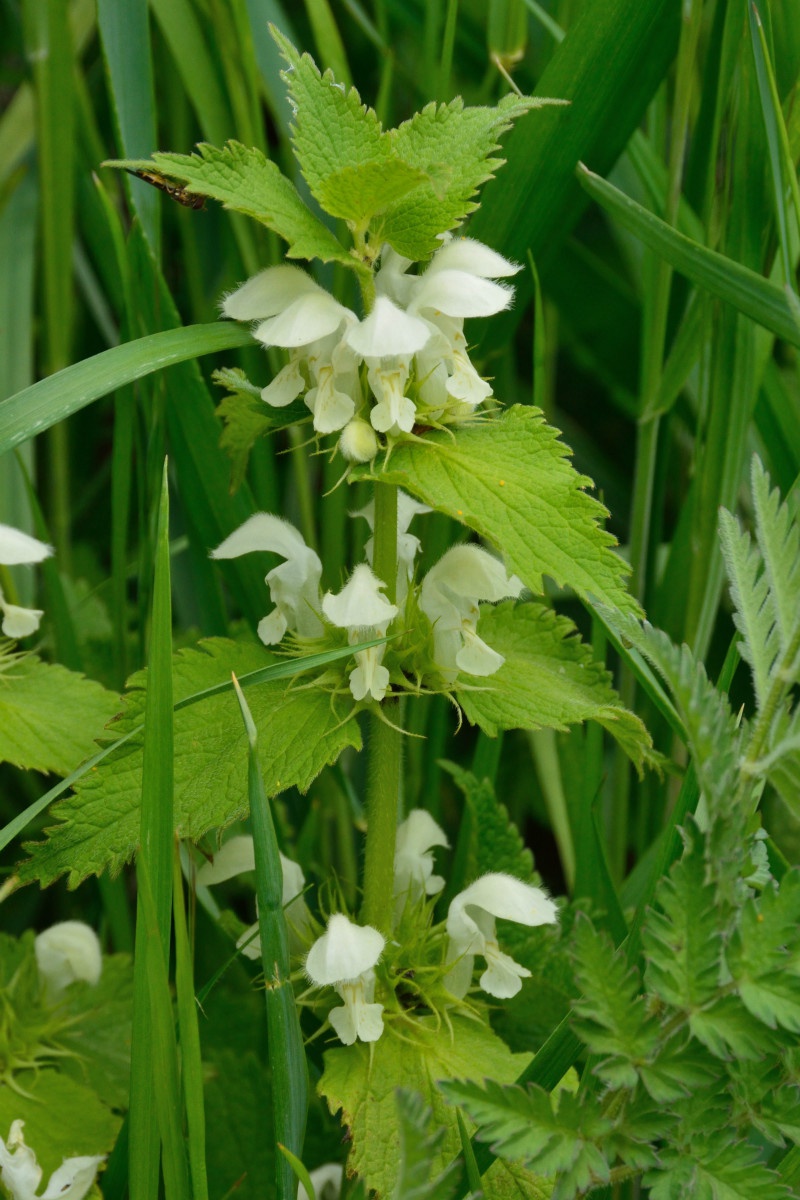
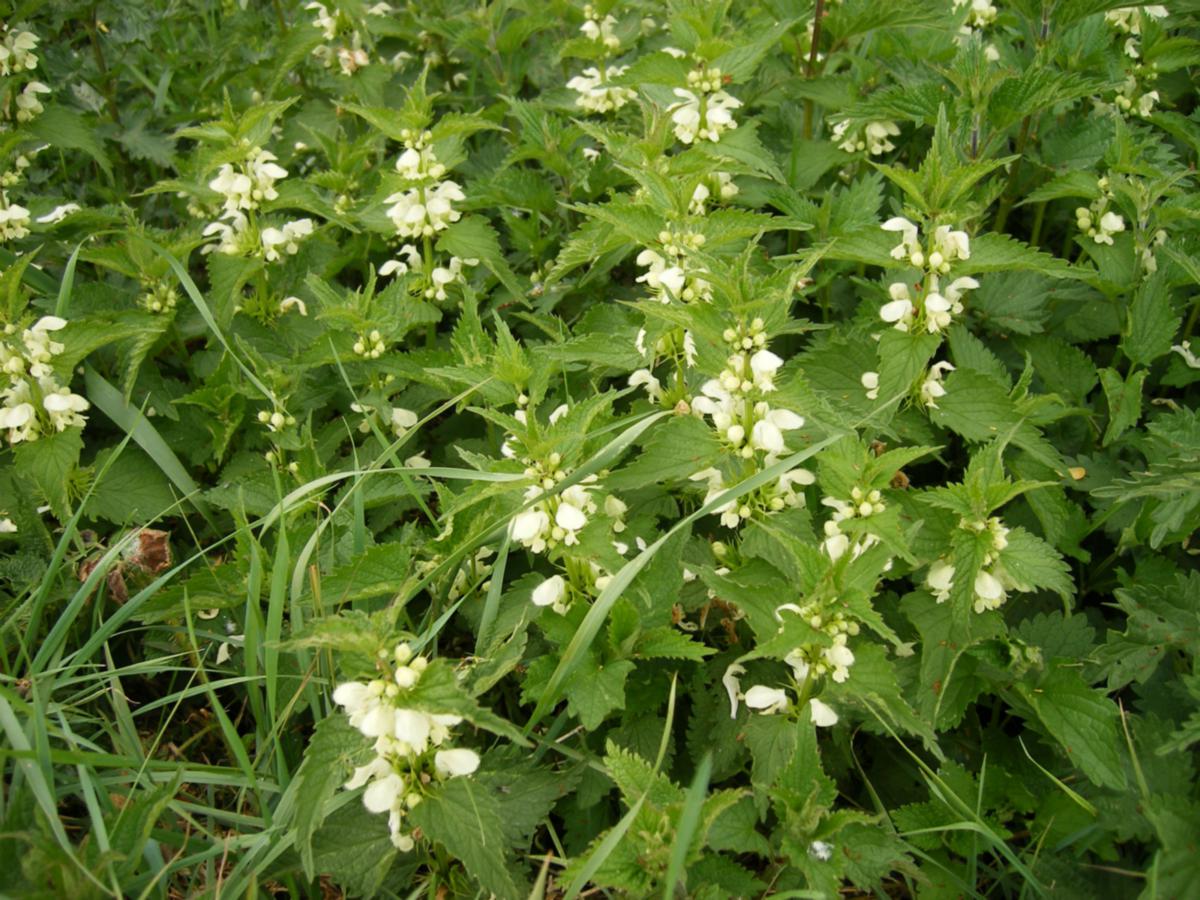
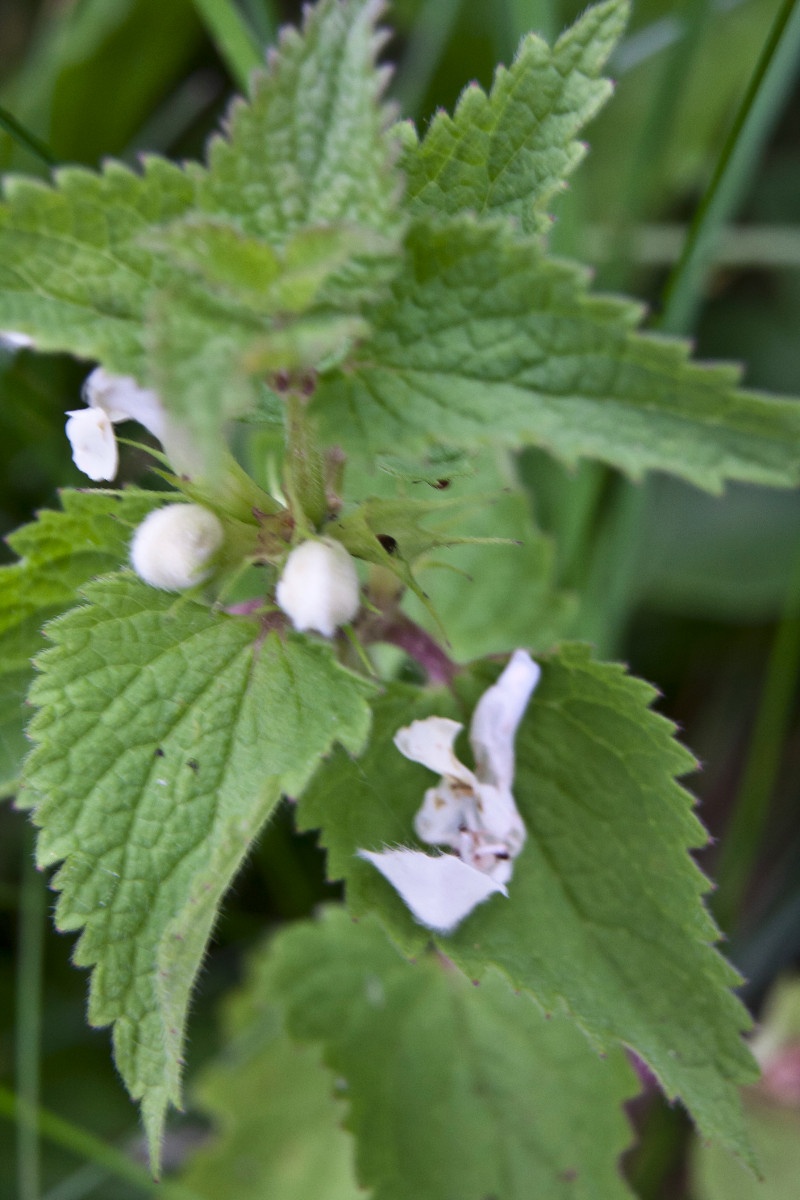
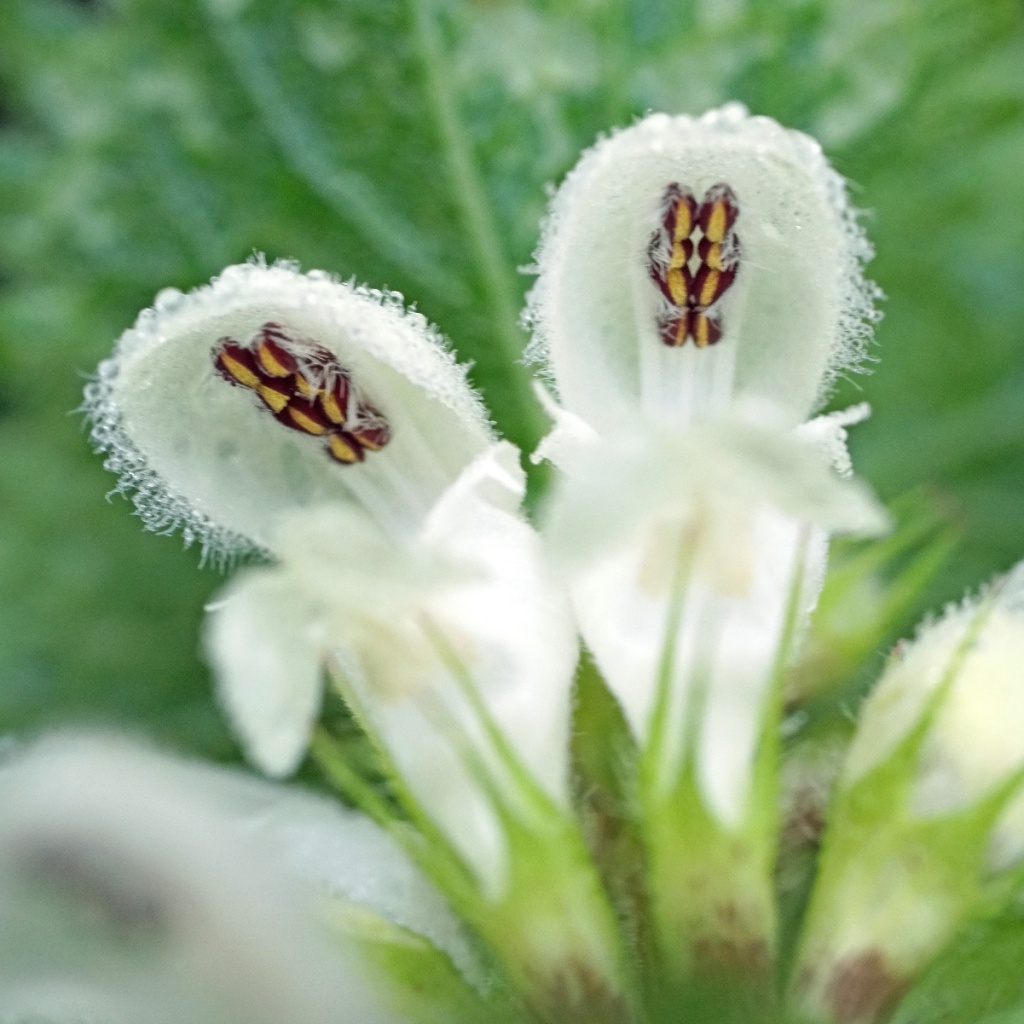
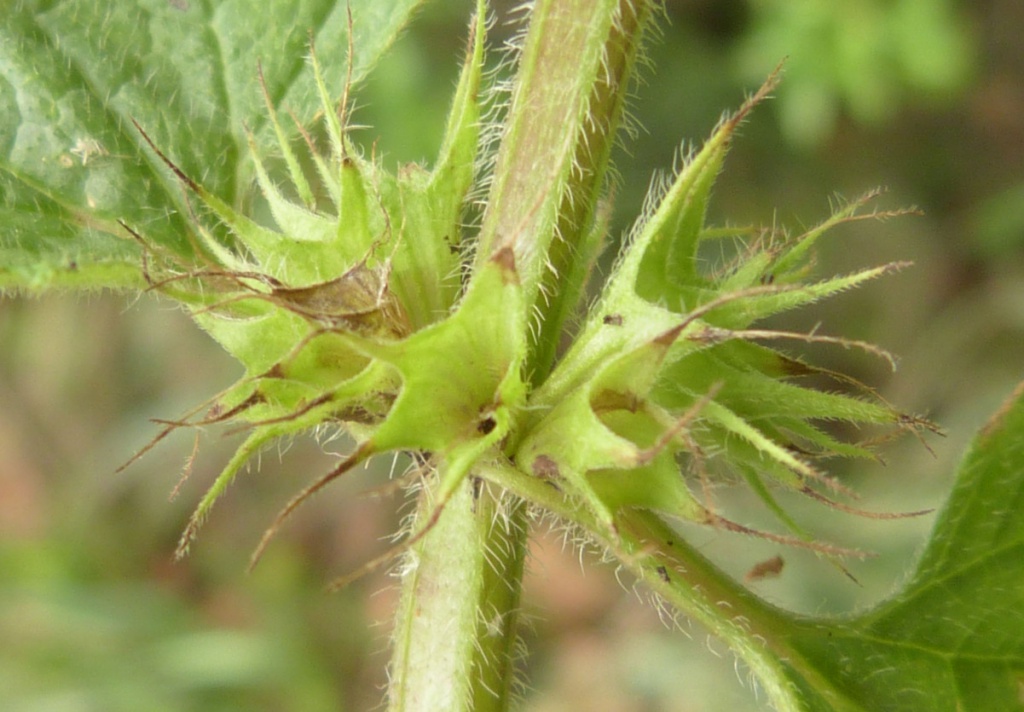
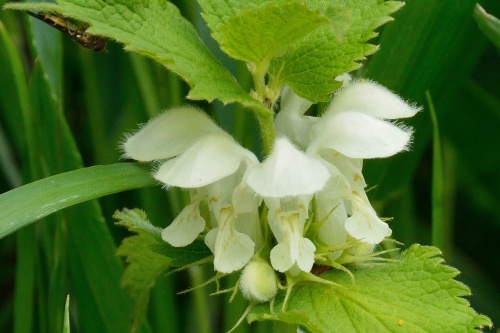
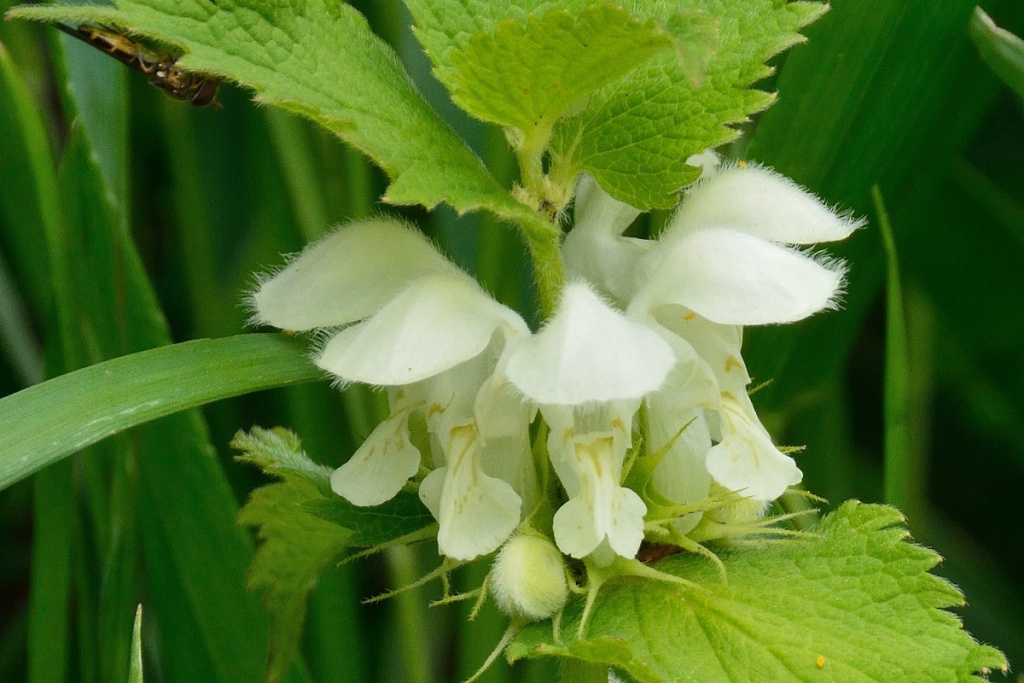
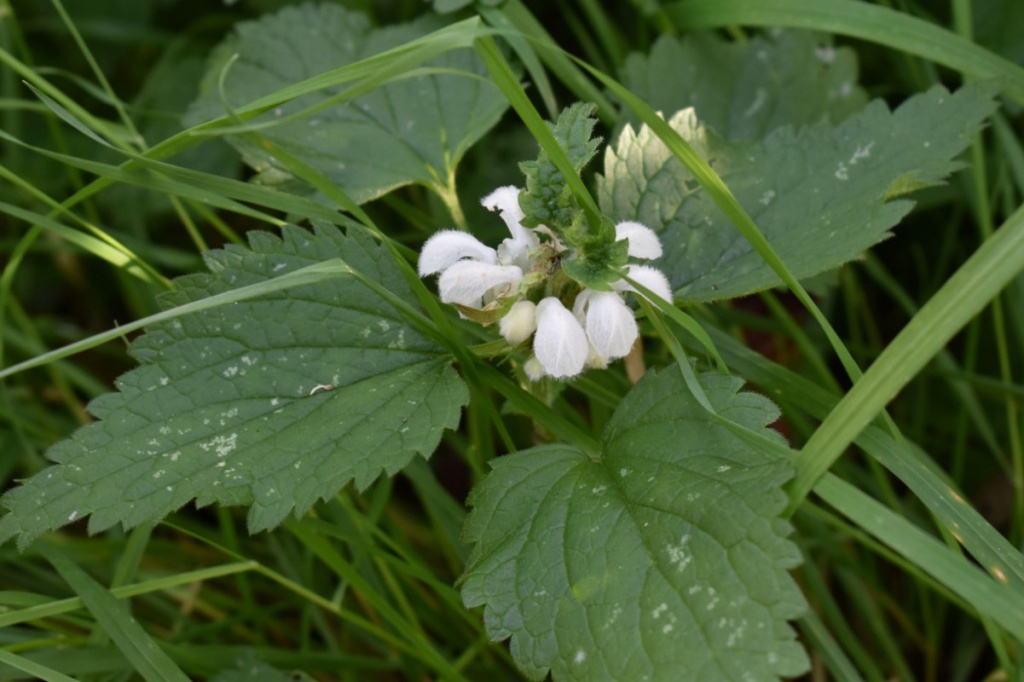
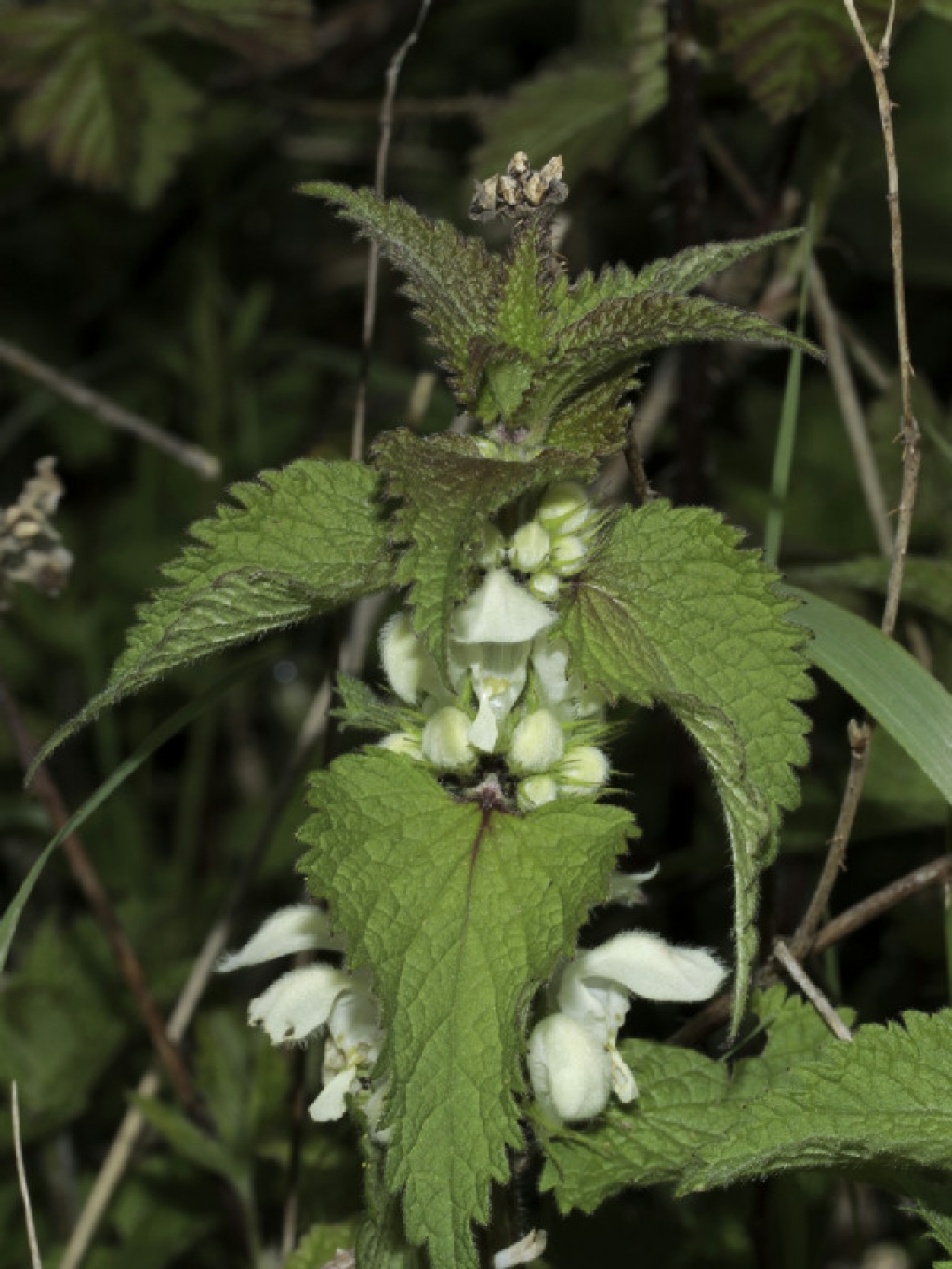
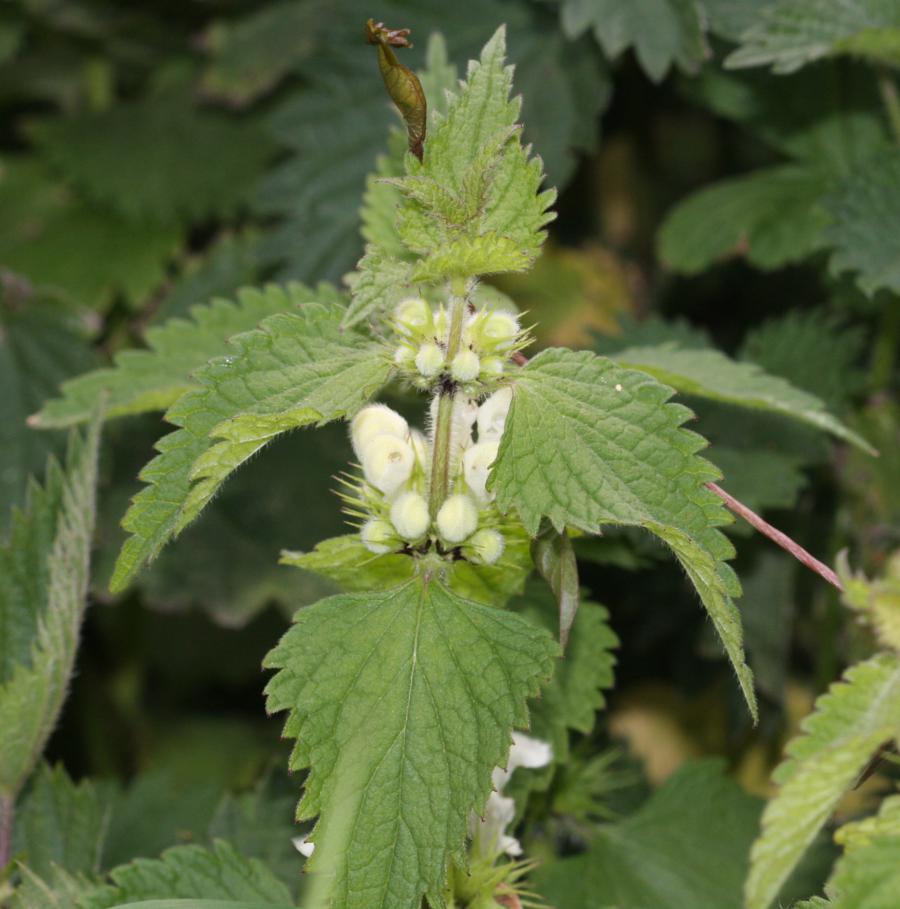
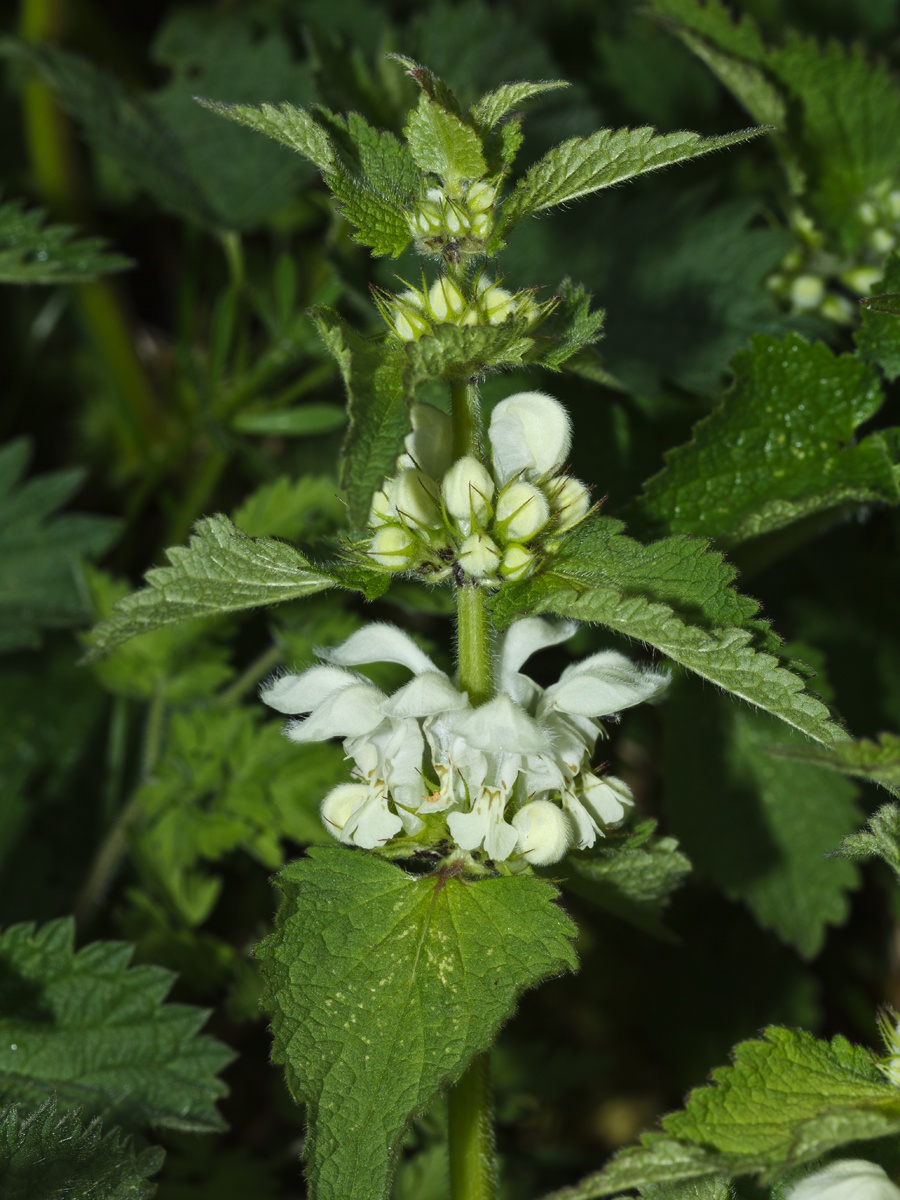
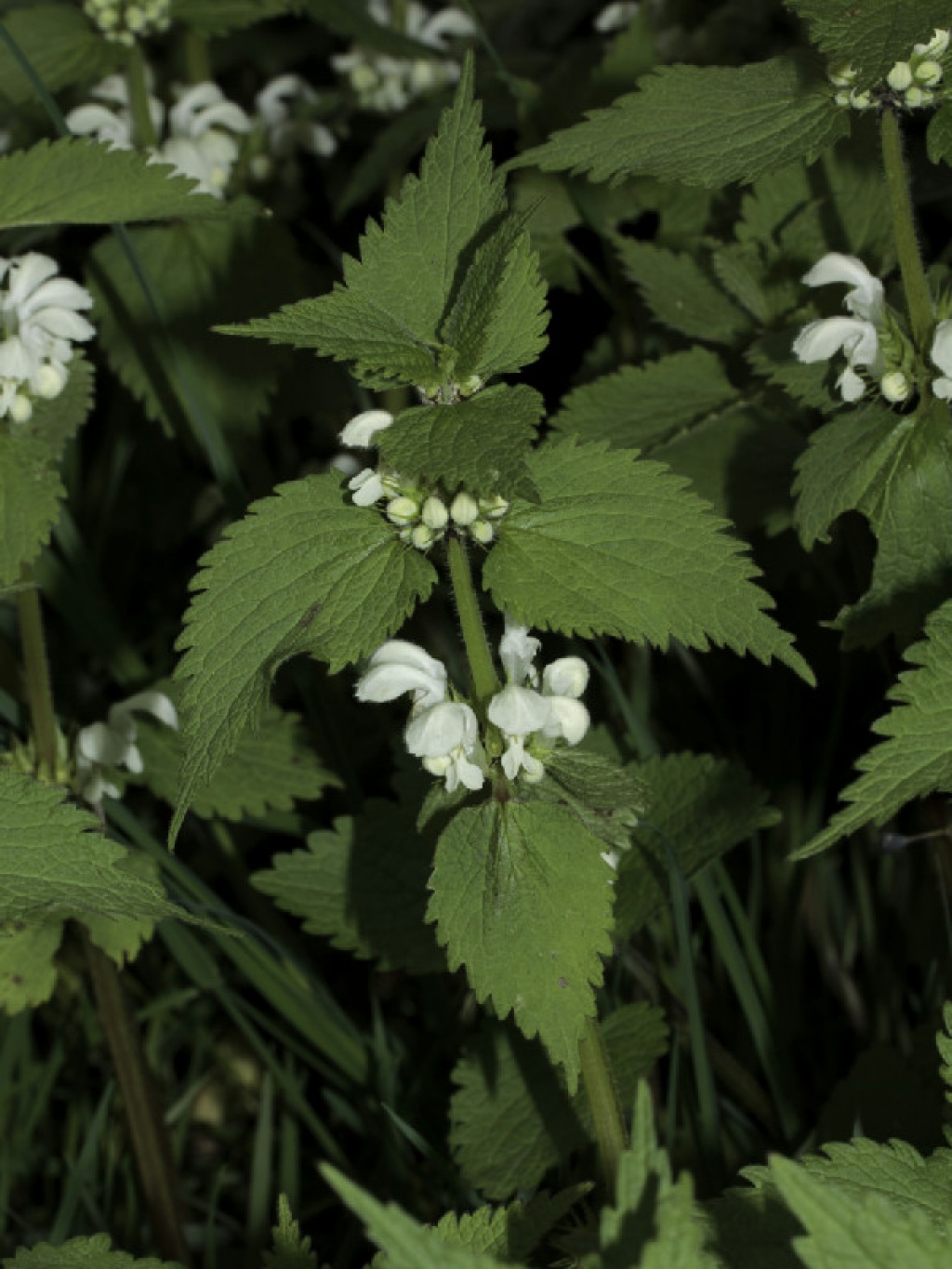
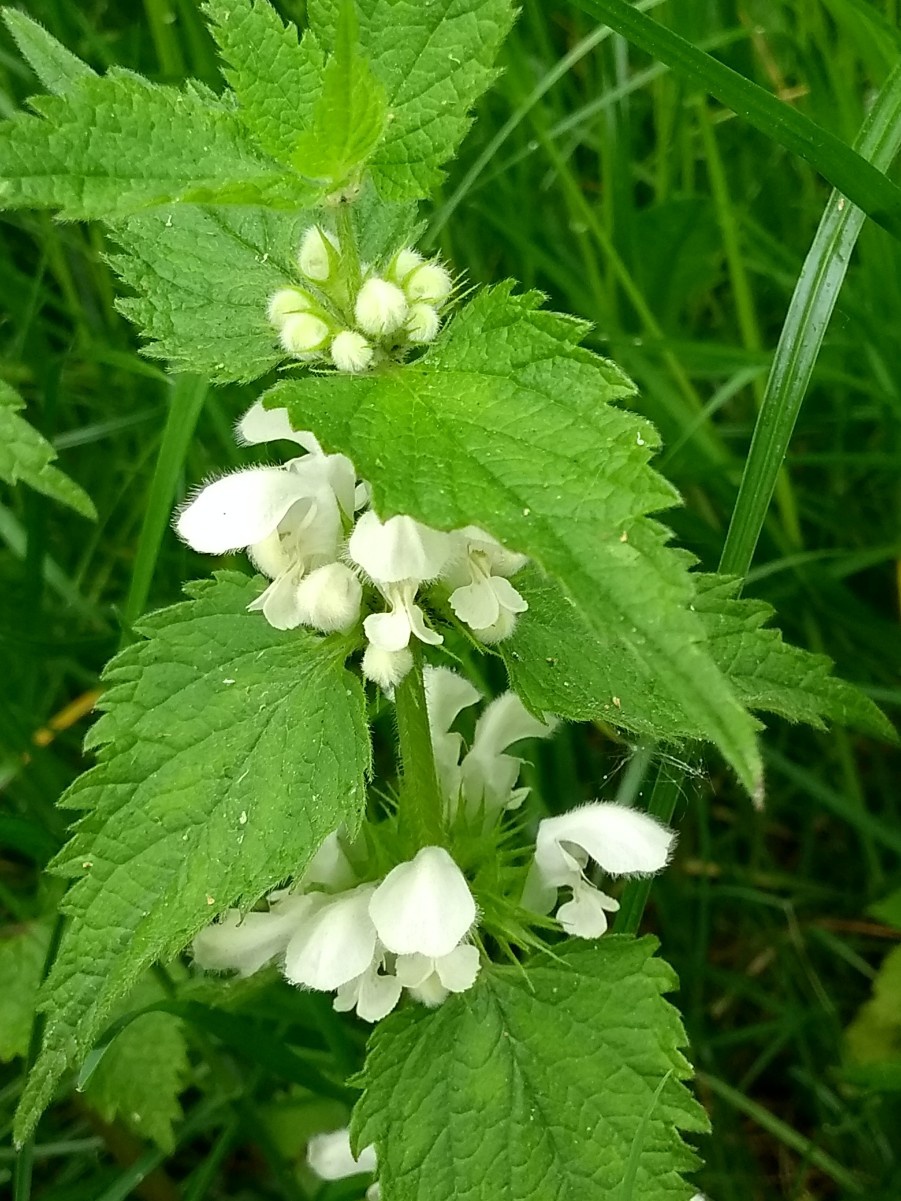
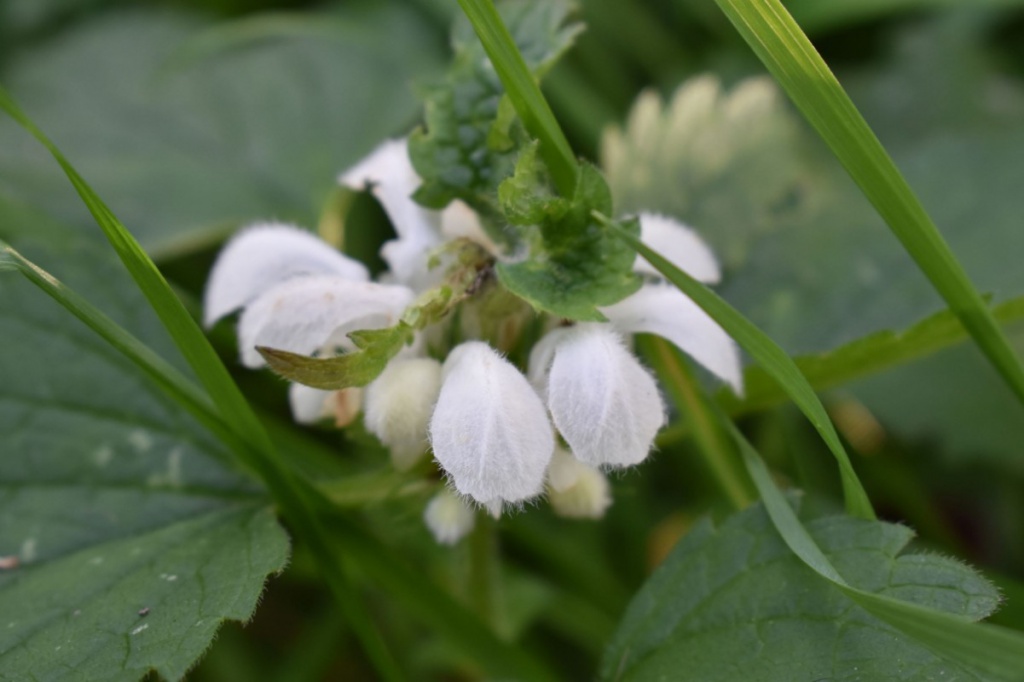
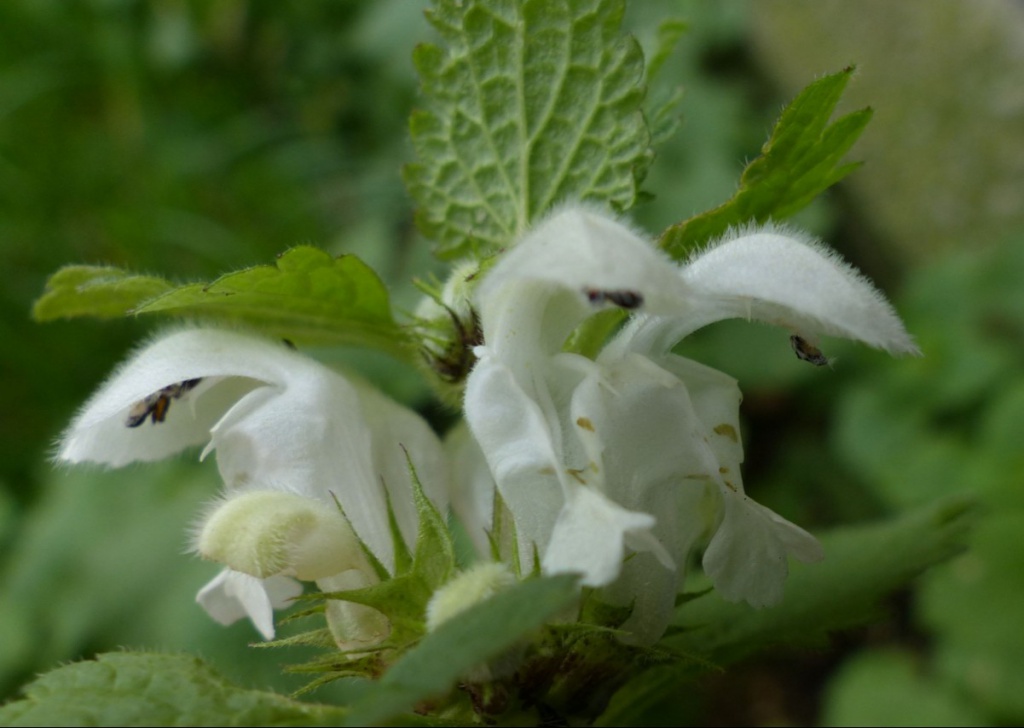
Short to medium, faintly aromatic and patch forming plant. Stoloniferous, stems spreading to erect. Leaves heart shaped to oval, toothed and stalked. Flowers white 20 to 25 mm long the corolla tube curved near the base. The upper lip is very hairy, the lower lip with 2-3 small teeth.

Grassy habitats, hedgerows, roadside verges.
April to November.
Perennial.
Very common throughout most of Britain, but scarcer in northern Scotland and parts of Wales and Ireland.
Very common in Leicestershire and Rutland. In the 1979 Flora survey of Leicestershire it was found in 601 of the 617 tetrads.
 Old Fosse Sapcote SP 5031 9289 (taken 18.10.2006)..JPG) Graham Calow
Graham Calow
Sapcote
18 October 2006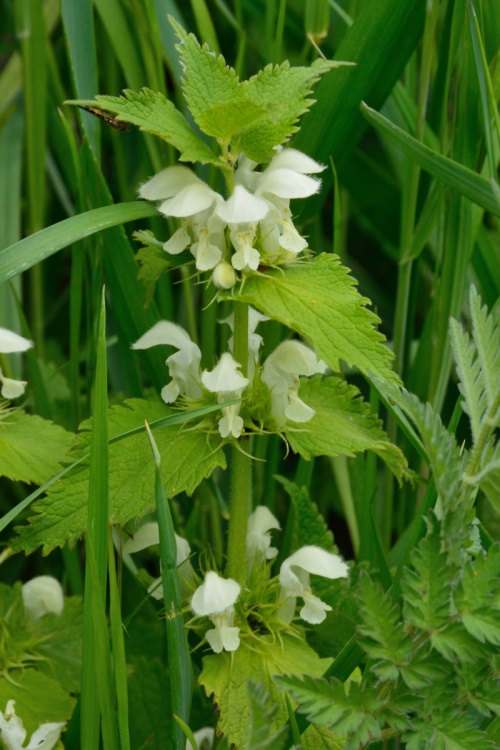 Barbara Cooper
Grantham canal
19 May 2013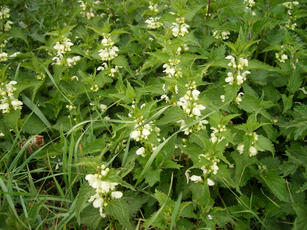 Ron.stevens
Broughton Astley
15 May 2011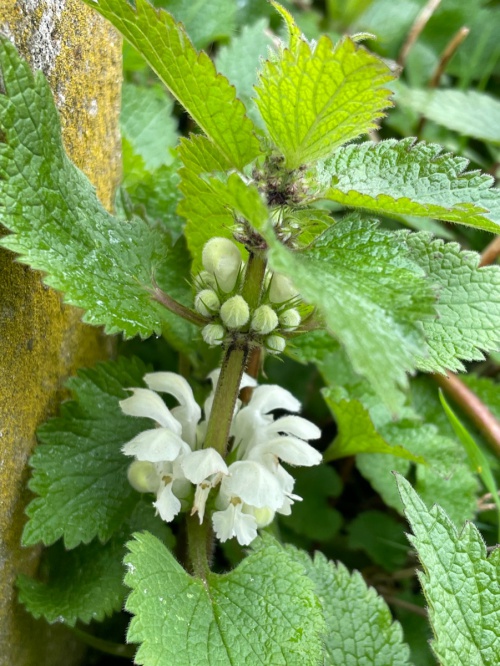 CAPochin
Kimberley Road Allotments
18 March 2021
White Dead-nettle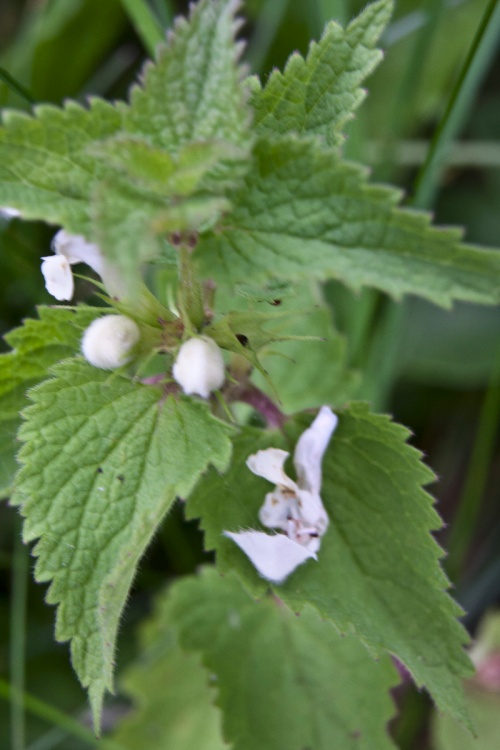 Fran Marsland
Broughton Astley
17 July 2012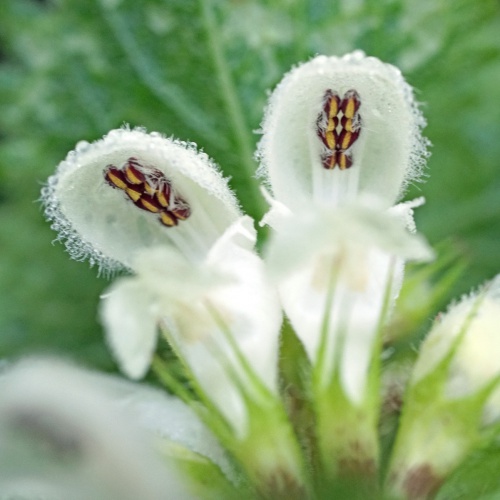 AJ Cann
Narborough Bog
07 October 2018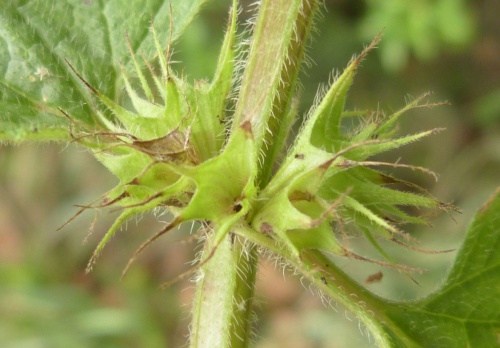 Graham Calow
Thurlaston, Desford Road (North)
22 June 2020
 Old Fosse Sapcote SP 5031 9289 (taken 18.10.2006)..JPG)

Leicestershire & Rutland Map
Enter a town or village to see local records
MAP KEY:
Yellow squares = NBN records (all known data)
Coloured circles = NatureSpot records: 2025+ | 2020-2024 | pre-2020
UK Map
Species profile
- Common names
- White Deadnettle, White Dead-nettle
- Species group:
- flowering plant
- Kingdom:
- Plantae
- Order:
- Lamiales
- Family:
- Lamiaceae
- Records on NatureSpot:
- 939
- First record:
- 21/09/2005 (Brice Ebert;Emma Williams)
- Last record:
- 11/04/2026 (Nicholas Humphreys)
Total records by month
% of records within its species group
10km squares with records
The latest images and records displayed below include those awaiting verification checks so we cannot guarantee that every identification is correct. Once accepted, the record displays a green tick.
In the Latest Records section, click on the header to sort A-Z, and again to sort Z-A. Use the header boxes to filter the list.
Latest images
Latest records
 Barbara Cooper
Grantham canal
19 May 2013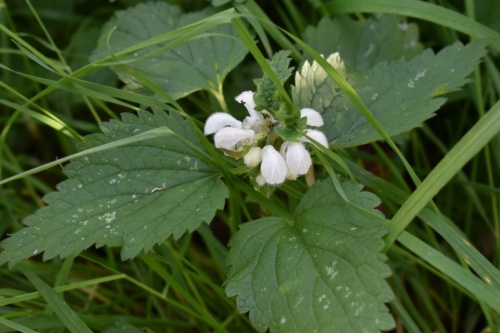 stepgray4
Bridleway near Wymeswold
15 November 2020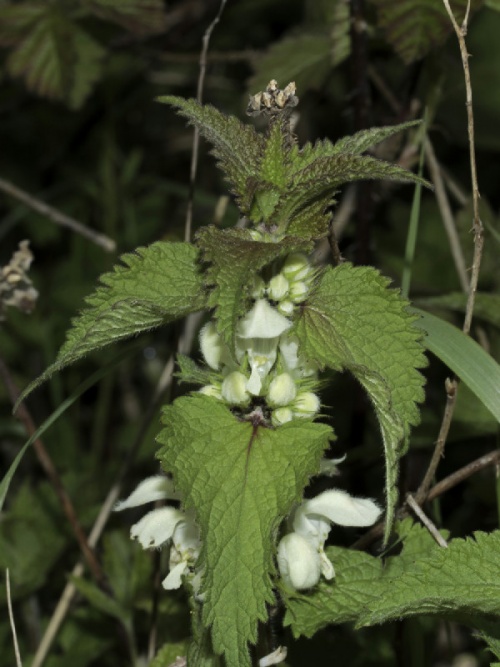 HAPeacock
Goss Meadows
24 April 2012 David Nicholls
Hill Hole Quarry
02 June 2011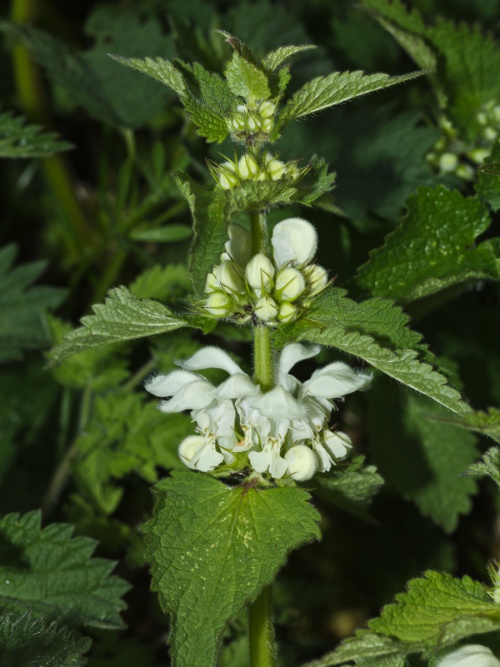 HAPeacock
The Orchards
09 May 2013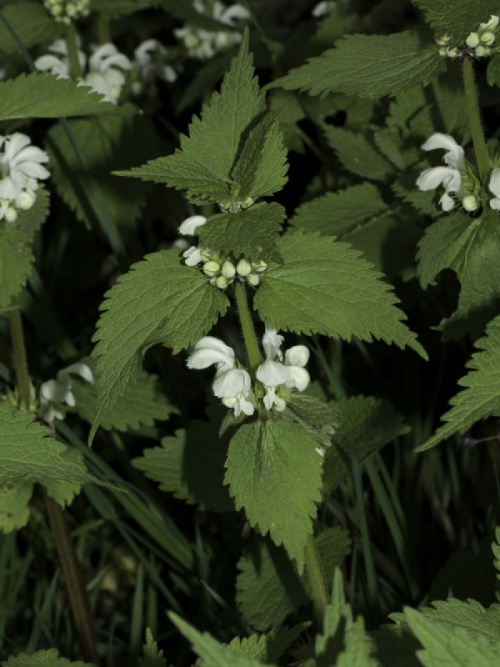 HAPeacock
Gilroes Cemetery
24 April 2012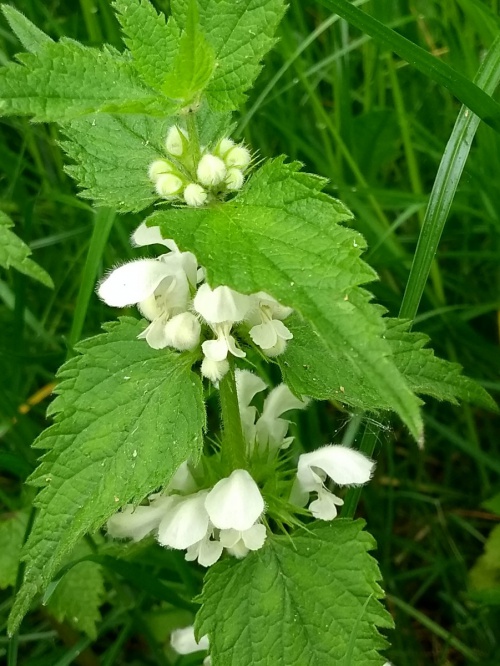 Helen O'Brien 2
Stoke Golding, Pine Close Verge
06 June 2021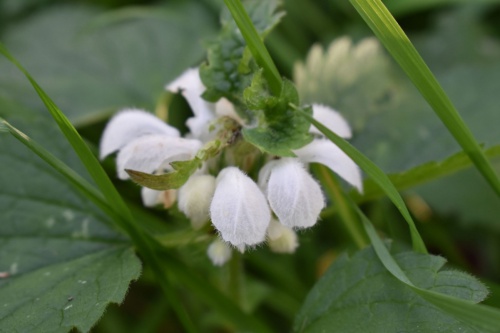 stepgray4
Bridleway near Wymeswold
15 November 2020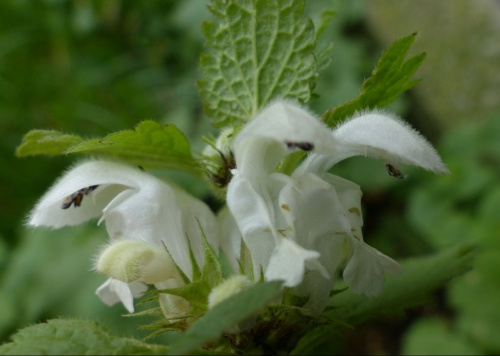 Ron.stevens
Broughton Astely Allotment
31 December 2018
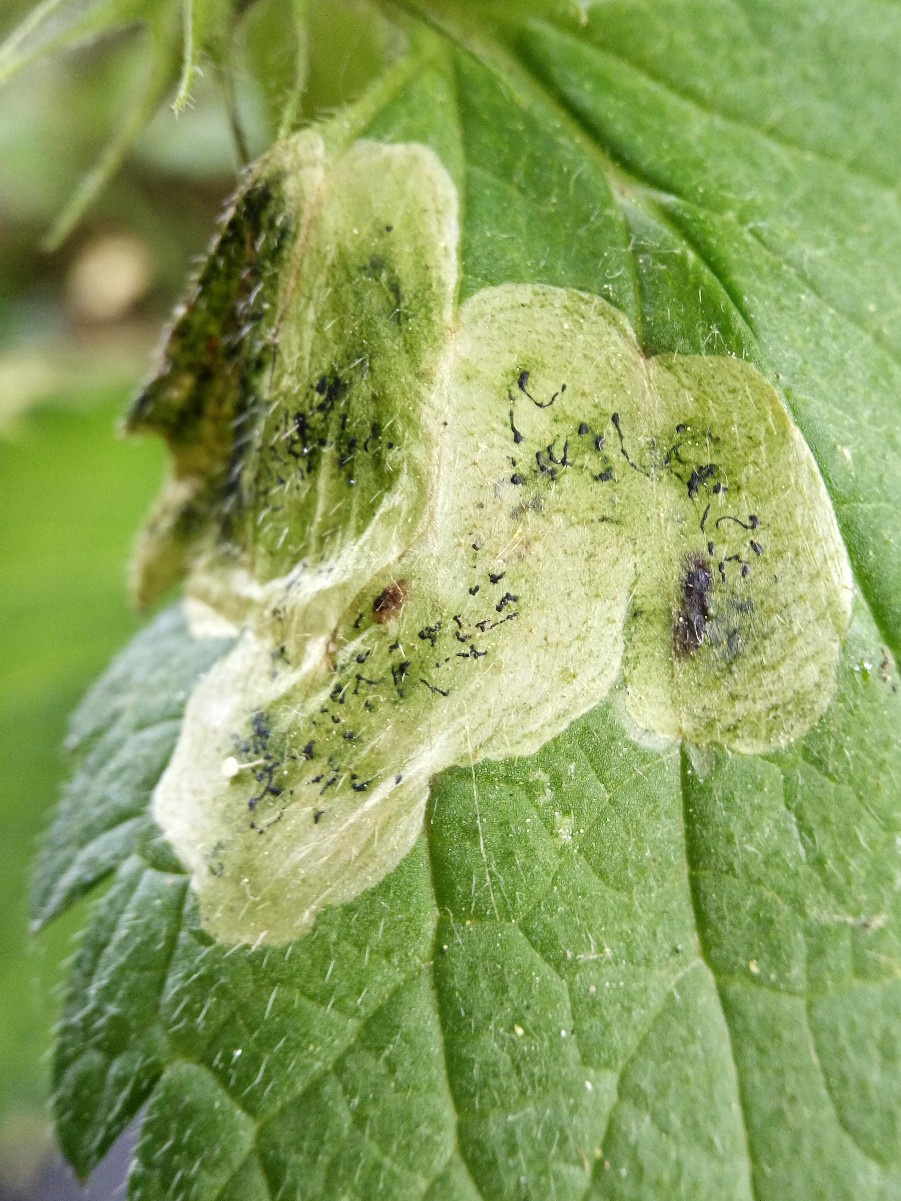
Agromyza flavipennis
The larvae of the Agromyzid fly Agromyza flavipennis mine the leaves of Lamium species such as White Dead-nettle as well as Yellow Archangel and Ground-ivy, creating a large pale blotch at the edge of the leaf.

Amauromyza (Cephalomyza) labiatarum
The larva of the Agromyzif fly Amauromyza labiatarum mines the leaves of various plants including Dead-nettles and Woundworts, producing a mine with a narrow gallery leading to a largish blotch on the upper surface. Frass is green and indistinct in the gallery - small grains may be seen at the gallery edge.